
8 Best Corded Drills in 2026
This post contains affiliate links. As an Amazon Associate, we earn from qualifying purchases.
For relentless power and unlimited runtime, the DEWALT DWD115K Corded Drill is our best overall pick, thanks to its high-amperage motor and balanced design. We also highlight top choices for mixing, hammer drilling, and budget-friendly tasks. Corded drills solve the problem of battery fade, delivering consistent torque for outlet-accessible projects. Our recommendations are based on evaluating specifications, manufacturer data, and patterns in expert round-ups and owner feedback to guide your choice.
Top 8 Corded Drills in the Market
Certain content that appears on this site comes from Amazon. This content is provided "as is" and is subject to change or removal at any time.
The Best Corded Drills, Reviewed
DEWALT DWD115K Corded Drill
What We Like
- 8-amp motor for heavy-duty drilling applications
- 2,500 RPM top speed for fast drilling and driving
- Mid-handle grip provides increased balance and comfort
- All ball-bearing construction for greater durability
Trade-offs
- Cord limits mobility, tying you to an outlet
- Requires managing the weight and length of the power cord
- Lacks the portability of a cordless model
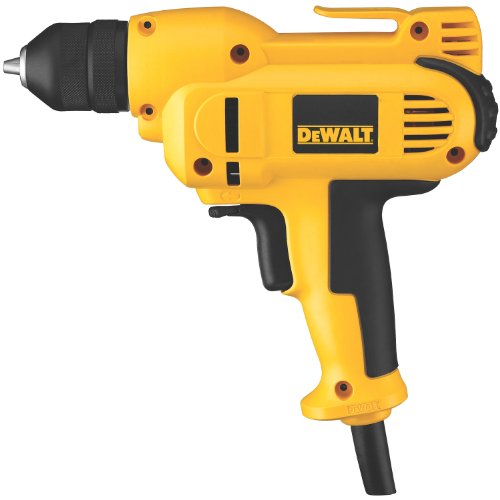
An 8-amp motor and a 2,500 RPM top speed mean this drill won’t bog down in tough materials like hardwoods or metals, and it can maintain that power indefinitely without a battery to recharge. The mid-handle grip and balanced design make it easier to control during demanding tasks, while the all-metal chuck ensures your bits stay put. For anyone who needs reliable, sustained power for a workshop or a big project where an outlet is always nearby, this DeWalt delivers the consistent performance that makes it a primary tool.
The clear trade-off is the cord, which adds clutter and limits your range. You’re always aware of it, and this makes the tool less suited for quick jobs across a room or on a ladder. If your work is strictly stationary, this is a minor issue. However, if you need to move around constantly, a cordless model or a more specialized tool like the DEWALT DW130V Spade Handle Drill for mixing might be a better fit, despite this model’s superior speed and handling for general drilling.
DEWALT DW130V Spade Handle Drill
What We Like
- Variable speed reversing switch for mixing control
- Spade handle design improves leverage and stability
- Soft grip reduces user fatigue
Trade-offs
- At 7.5 lbs, it's heavier than a compact drill like the Genesis GD38B.
- Its 13.1-inch width demands significant storage space.
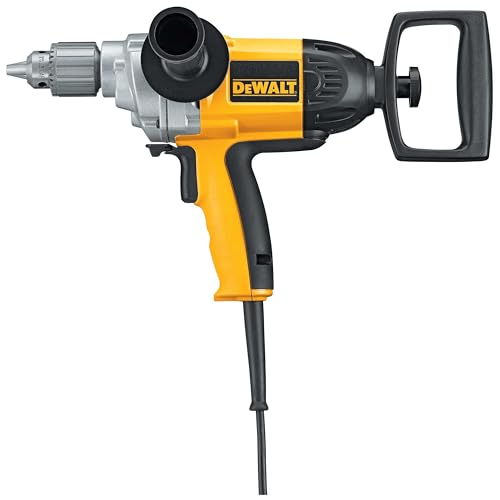
The DEWALT DW130V uses a 9-amp motor that, according to the manufacturer, provides enough power for any job site application. Its variable speed range goes up to 550 RPM, which is intended to offer increased torque for drilling and mud mixing. A spade handle provides leverage, and the reversing switch is designed to avoid air bubbles when mixing.
You pay for that capability with bulk and weight. The DW130V is a dedicated workhorse, not an all-rounder. For drilling a series of pilot holes or driving screws overhead, its heft becomes a liability. If your primary need is general carpentry or assembly, a more compact and lighter model like the DEWALT DWD115K will serve you far better. But when the job calls for mixing a five-gallon bucket of thinset or boring through a timber, this drill’s design makes the hard work manageable.
BLACK+DECKER BEHD201 Hammer Drill
What We Like
- Powerful 6.5 Amp motor for masonry
- Convenient 2-position function switch
- Adjustable 3-position side handle
- Corded design for unlimited runtime
Trade-offs
- Tool only, no bits or case included
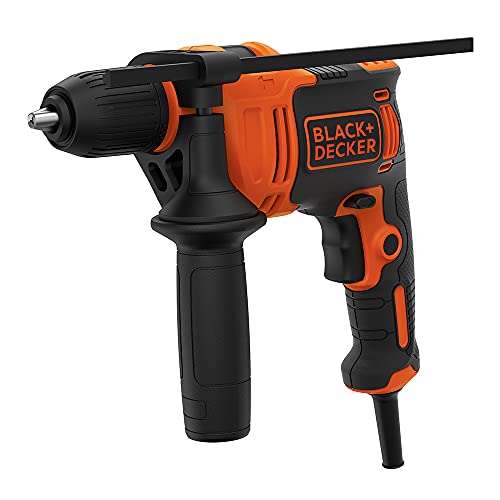
A 6.5 Amp motor delivering 48,000 blows per minute gives you the focused power to bore into concrete or brick without hesitation. This BLACK+DECKER is a straightforward solution for the occasional masonry task, like setting anchors for a deck or installing a mailbox. The two-position switch and adjustable side handle make it simple to operate, while the cord means you’ll never be waiting on a battery charge mid-job. It’s built for the homeowner who needs to punch through hard materials a few times a year, not for daily professional demolition.
Weighing just 1.0 pound, the BLACK+DECKER BEHD201 is exceptionally easy to handle overhead or carry up a ladder, though that minimal mass can mean less stability when its hammer function pounds into very dense masonry. Its design is purpose-built for the occasional concrete or brick project, not as a daily-use driver for all materials.
RYOBI Compact Corded Drill/Driver
What We Like
- Lightweight and compact for overhead work
- Variable speed trigger for control
- Good for light-to-medium wood and plastic tasks
- Includes a convenient carry bag
Trade-offs
- 3/8-inch chuck limits bit shank size
- Not intended for concrete or masonry
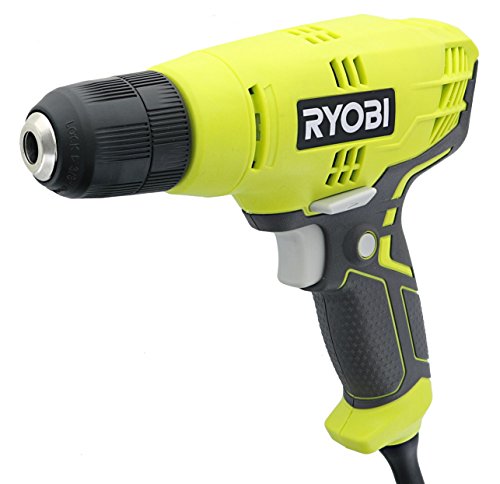
This corded drill from Ryobi is built for light-to-medium tasks like making holes or driving screws into wood, fiberglass, or plastics. Its 5.5-amp motor and variable speed trigger provide power and control for such work, including assembling furniture. It is not intended for concrete.
The trade-off for that compact, lightweight design is a 3/8-inch chuck and a motor meant for medium duty. You won’t be drilling into concrete, and larger paddle bits or heavy-duty spade bits are off the table. For those bigger mixing or masonry jobs, you’d look to a tool like the DEWALT DW130V Spade Handle Drill. But for the core DIY tasks that don’t require a beast of a machine, this Ryobi gets the job done without weighing you down.
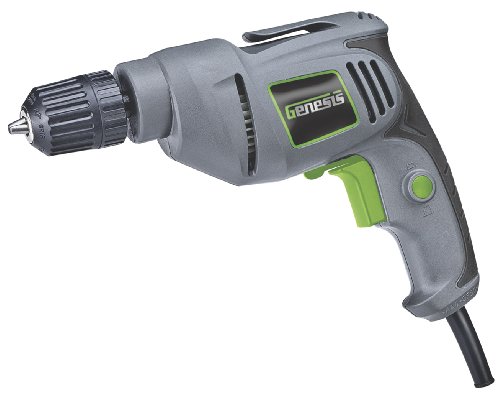
Genesis GD38B Corded Drill
What We Like
- Compact and lightweight at 2.1 pounds
- Lock-on button prevents trigger finger fatigue
- Variable speed and reversible motor for control
- Belt clip adds convenient portability
Trade-offs
- 4.2-amp motor is less powerful than 8-amp models like the DEWALT DWD115K
- 3/8-inch chuck limits bit shank size versus 1/2-inch models
At 2.1 pounds with a rubberized grip, the Genesis GD38B is a drill you can use overhead all afternoon without your arm giving out. Its light weight combines with a 3/8-inch keyless chuck and variable speed up to 3000 RPM. This makes it a straightforward choice for someone assembling furniture, hanging shelves, or tackling a long list of basic drilling and driving tasks. It’s a tool built for comfort and convenience on common DIY jobs, not for breaking new ground.
This corded drill’s 4.2-amp motor provides power for all-purpose drilling and driving, as described in its features. In comparison, the DEWALT DWD115K lists an 8.0-amp motor. The Genesis GD38B includes a variable speed trigger and reversible motor for versatility, which allows the user to choose the right speed for different tasks.
Product photos
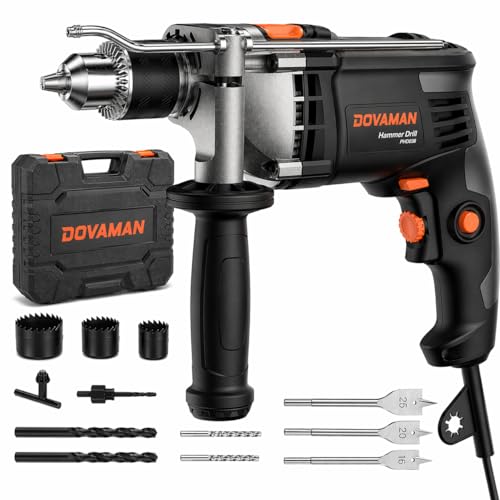
DOVAMAN Corded Hammer Drill
What We Like
- Powerful 7.5A motor for demanding materials
- Comprehensive 15-piece accessory kit included
- Lightweight 4.6 lb design with anti-vibration
- 360° adjustable handle for control at any angle
Trade-offs
- Keyed chuck is slower than keyless designs
- Requires 110V outlet, limiting jobsite mobility
- Heavier than the 1.0 lb BLACK+DECKER BEHD201
A 7.5-amp motor paired with a full accessory kit makes this a ready-to-work package right out of the carrying case. The DOVAMAN delivers the core power needed for concrete and masonry, yet its 4.6-pound weight and ergonomic grip keep it manageable for weekend projects. It’s a logical fit for the DIYer who needs a capable hammer drill for occasional heavy-duty tasks but doesn’t want to invest in a bare-tool professional model and separate bits.
The trade-off is the keyed metal chuck, which requires the included key for bit changes. It provides a strong grip for optimal torque transfer, but it’s not as quick to operate as the keyless chucks on some competitors like the DEWALT DWD115K. You’re getting proven, simple mechanics here. For the budget-conscious user tackling a deck, shelf, or light masonry work, this drill bundles substantial capability with the accessories to get started immediately.
Product photos
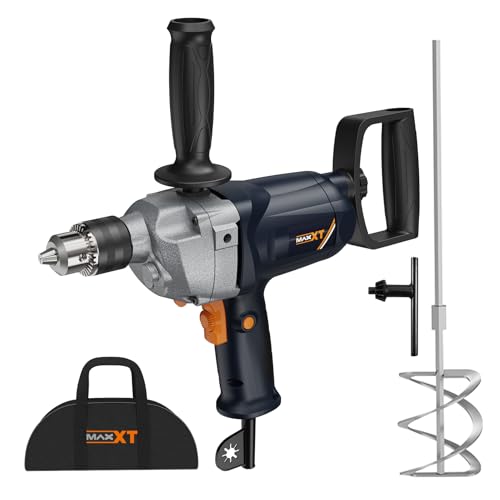
MAXXT Spade Handle Mixing Drill
What We Like
- 9A motor provides high torque for thick mixes
- 360-degree rotation and side handle for control
- Includes two mixing paddles and a carrying bag
Trade-offs
- At 6.6 lb, it's heavier than the DEWALT DW130V spade drill
- Keyed chuck requires a tool for bit changes
- Designed for mixing, not for drilling holes
The 9-amp motor is the heart of this tool, delivering the sustained torque needed to churn through thick batches of mortar or epoxy without bogging down. That, combined with its dedicated spade handle and 360-degree rotation, makes this a purpose-built machine for anyone regularly tackling heavy mixing tasks. It’s a specialist, through and through. The included 1/2-inch key chuck and long paddles confirm its job site role, but that focus comes with a trade-off. At 6.6 pounds, it carries more heft than a typical drill, like the DEWALT DW130V, and the keyed chuck is slower than a keyless system. You buy this for its mixing muscle, not for drilling holes or overhead work.
Compared to the more compact and lighter DEWALT DWD115K, the MAXXT is clearly in a different class for raw mixing power. For a contractor who needs to reliably blend mud or concrete day in and day out, this tool’s design makes sense. For the occasional user or someone who needs a versatile drill-driver, its single-minded design would be more of a burden than a benefit.
Product photos
Enventor Hammer Drill with Bits

What We Like
- Comes with a full 9-piece drill bit set
- Variable speed trigger with 12-position adjustment knob
- 360-degree rotatable auxiliary handle for stability
- Hammer and drill 2-in-1 function switch
Trade-offs
- Not rated for reinforced concrete or heavy stonework
- Motor may emit smoke and require a cool-down if overworked
This 900W hammer drill arrives ready to tackle a weekend project right out of the box. The inclusion of nine bits for concrete, wood, and steel means you can start drilling immediately without a separate trip to the hardware store. It’s a solid fit for the homeowner or DIYer who needs a capable, corded drill for general repairs, light masonry, and woodworking. The two-mode function and adjustable auxiliary handle provide the versatility and control needed for a variety of common tasks around the house.
Designed for light-duty masonry, this hammer drill’s manufacturer specifies it cannot handle reinforced concrete. It is intended for brickwork and lightweight block, so buyers needing to drill into structural concrete should consider a dedicated rotary hammer instead. With a maximum capacity of 1/2 inch in concrete and 1 inch in wood, it suits common household fastening and light construction tasks.
Product photos
How We Evaluated Corded Drills
The selection of drills is based on manufacturer specifications and expert assessments of performance and features. Key considerations include motor amperage for power, chuck size for bit compatibility, handle design for control, and included accessories for convenience. These specifications determine a drill’s suitability for working with materials such as masonry, wood, or thick mortar mixes.
What To Look For In Corded Drills
Selecting a suitable corded drill involves matching its core specifications to typical tasks. A high-power motor must be balanced with the tool’s size for the intended workspace, and a compact design should be evaluated for its torque output with dense materials.
Prioritize motor amperage for power, chuck size for bit compatibility, and handle design for control. Consider if you need a dedicated hammer function for masonry or a spade handle for high-torque mixing.
Motor Power (Amps)
Motor amperage is the primary indicator of a corded drill’s torque and ability to handle tough materials. Drills for light assembly may have motors around 4 amps, while heavy-duty mixing or masonry drills often exceed 8 amps. Higher amperage translates to more forceful rotation, essential for drilling into dense wood, metal, or drills for heavy-duty tasks.
Chuck Size & Type
The chuck holds the drill bit. Size determines the maximum bit shank diameter, with 3/8-inch common for light duty and 1/2-inch or larger for heavy work. Chuck type affects convenience: a keyless chuck allows quick bit changes, while a keyed chuck offers a more secure grip, which is a notable benefit of corded power tools for high-torque applications.
Handle Design & Ergonomics
Handle design dictates control and application. A pistol grip offers familiar handling for general drilling. A mid-handle design, common on compact models, improves balance in tight spaces. A spade or D-handle provides maximum leverage for high-torque tasks like mixing, making it a feature of dedicated corded hammer drills. An adjustable side handle is crucial for stability when drilling hard materials.
- Check the tool’s weight if you’ll use it overhead or for extended periods.
- Ensure the grip is comfortable and reduces vibration.
- Verify the power cord length for your workspace layout.
Your project’s material and required bit size should guide your choice of chuck and motor power.
Corded Drills Compared
Use the table below to quickly compare the key features of our top picks side-by-side.
| Product | Motor | Chuck Size | Max Speed |
|---|---|---|---|
| DEWALT DWD115K Corded Drill | 8.0 Amp | 3/8-inch | 0-2,500 RPM |
| DEWALT DW130V Spade Handle Drill | 9 Amp | 1/2-Inch | 0 – 550 RPM |
| BLACK+DECKER BEHD201 Hammer Drill | 6.5 Amp | 1/2 inch | N/A |
| RYOBI Compact Corded Drill/Driver | 5.5 Amp | 3/8 inch | N/A |
| Genesis GD38B Corded Drill | 4.2 Amp | 3/8-inch | 0-3000 RPM |
| DOVAMAN Corded Hammer Drill | 7.5 Amp | 1/2" | 0-3000 RPM |
| MAXXT Spade Handle Mixing Drill | 9A copper | 1/2-inch | 0 to 600 RPM |
| Enventor Hammer Drill with Bits | N/A | 1/2-inch | 3,000 RPM |
Frequently Asked Questions
What is the best corded drill on the market?
Our research points to the DEWALT DWD115K as the best overall corded drill for most users. It combines a powerful 8-amp motor, a high RPM for fast drilling, and a balanced mid-handle design, making it a versatile and durable choice for demanding DIY and professional tasks near an outlet.
Who makes the best corded power tools?
Several brands are renowned for reliable corded tools. DEWALT, BLACK+DECKER, and RYOBI consistently produce well-regarded models across different price points and specializations, from heavy-duty drilling to compact drivers, as seen in many power drill reviews.
What is the best brand for electric drills?
There isn’t a single “best” brand, as it depends on your needs. For premium power, DEWALT is a top contender. For value and reliability in homeowner-grade tools, brands like BLACK+DECKER and RYOBI excel. It’s more productive to compare specific models based on their drill power source comparison.
Is a corded drill more powerful?
Generally, yes. Corded drills typically offer higher sustained power (measured in amps) than most cordless models because they draw directly from an outlet without battery limitations. This makes them ideal for extended, high-torque applications like mixing or drilling into masonry, which are common drills for various projects.
Should I choose a corded or cordless drill?
The choice hinges on mobility versus runtime. Cordless drills offer complete portability but have limited battery life. Corded drills provide unlimited runtime and often more power but tether you to an outlet.
The Bottom Line
For most users needing dependable, high-power performance, the DEWALT DWD115K Corded Drill is the best overall choice. If your budget is tight, the Genesis GD38B offers capable performance for light tasks, while the DEWALT DW130V is the tool for serious mixing. Ultimately, matching the drill’s amperage and chuck size to your specific projects is the most critical step in choosing the right corded tool.
