
10 Best Corded Hammer Drills in 2026
This post contains affiliate links. As an Amazon Associate, we earn from qualifying purchases.
Our best overall corded hammer drill is the DEWALT D25263K SDS Rotary Hammer Drill for its high-impact energy and integral safety clutch. For those prioritizing comfort during long projects, the BOSCH 11255VSR Bulldog Xtreme excels, while the DEWALT DW511 is the best lightweight drill for versatility.
Corded models offer consistent, high power without battery limits, making them ideal for demanding tasks like drilling concrete or all-day demolition. Selecting the wrong type, however, can lead to user fatigue or insufficient power for the job.
Top 10 Corded Hammer Drills in the Market
Certain content that appears on this site comes from Amazon. This content is provided "as is" and is subject to change or removal at any time.
The Best Corded Hammer Drills, Reviewed
DEWALT D25263K SDS Rotary Hammer Drill

What We Like
- Strong 3.0-joule impact for fast drilling
- Active Vibration Control reduces user fatigue
- Integral clutch for safer operation during jams
- Compatible with dust extraction system
Trade-offs
- At 19.2 inches long, it is less compact for tight spaces
- Tool only; dust extraction is a separate purchase
- Heavier and bulkier than standard 1/2-inch hammer drills
The DeWalt D25263K delivers 3.0 joules of impact energy from an 8.5-amp motor, which means it powers through concrete and masonry quickly. Research mentions describe this pistol-grip hammer drill as a terrific all-around choice for most projects. It’s considered a go-to tool for higher performance on tough drilling tasks without the usual bulk and weight.
Its length of 19.2 inches means it requires more storage space than a more compact hammer drill like the DEWALT DW511. The Active Vibration Control system is a Perform and Protect feature designed to reduce the vibration felt by the user at the handles.
BOSCH 11255VSR Bulldog Xtreme Rotary Hammer

What We Like
- D-handle design for overhead control
- Vibration control for all-day use
- Tool-free SDS-Plus bit changes
Trade-offs
- At 10.4 lb, it's heavier than compact hammer drills.
- Its 22.5-inch length can be cumbersome in tight spaces.
- Carrying case adds bulk versus a simple bag.
With 2.0 ft/lbs of impact energy, this rotary hammer delivers maximum performance for demanding concrete work. The 7.5 amp motor drives 0-5,800 blows per minute, providing sustained power for tough applications. A D-handle design offers optimal control for overhead or downward drilling, while integrated vibration control aids comfort during all-day use.
That capability comes with a substantial 10.4-pound build and a 22.5-inch length, which requires ample space to maneuver. Among other Bosch models, the HD18-2 hammer drill is notably lighter at 8.0 pounds and more compact. For the heaviest, prolonged jobs, the Bulldog Xtreme’s power and ergonomic features are its primary advantages.
DEWALT DW511 1/2-Inch Hammer Drill

What We Like
- Lightweight 4.3 lb design reduces user fatigue
- 7.8 Amp motor delivers high performance
- Variable speed control for precise hole placement
- Dual-mode function for wood, steel, or masonry
Trade-offs
- Lacks the dedicated hammer mechanism of an SDS rotary drill
- Corded operation limits mobility compared to battery models
Weighing 5.3 pounds, the DEWALT DW511 is noticeably lighter than many rotary hammer drills, so it’s easier to handle for overhead work or extended use. Its 7.8 Amp motor delivers enough power for masonry and other tough materials, while the dual hammerdrill and drill modes add versatility. Research mentions indicate it’s a suitable choice for users who need higher performance without the bulk of more specialized tools.
The trade-off is that it’s a traditional hammer drill, not a rotary hammer. For drilling into thick, reinforced concrete all day, a dedicated SDS model like the Bosch Bulldog Xtreme will be faster and transmit less vibration to your hands. For the majority of mixed-material drilling and anchoring tasks around a home or jobsite, however, the DW511’s dual-mode versatility and lightweight build hit a very practical sweet spot.
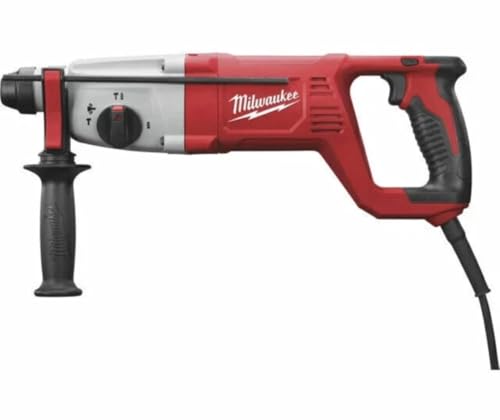
Milwaukee 5262-21 SDS Plus Rotary Hammer
What We Like
- Excellent 2.4 ft-lb impact energy for its 5.8 lb weight.
- Three-mode operation provides maximum versatility for different tasks.
- Mechanical clutch protects the tool and user during a bind.
- Variable chisel stop allows for work in any orientation.
Trade-offs
- Lower 7.0 Amp motor than some competitors like the 12.5A DEKOPRO.
- 1-inch SDS-Plus capacity may be limiting for larger anchor holes.
Weighing only 5.8 pounds, this hammer delivers a solid 2.4 foot-pounds of impact energy, so it’s easy to control during overhead work or in confined spaces. Its three-mode operation, including a hammer-only setting for chiseling, adds professional versatility. A mechanical clutch protects the tool if the bit jams, which helps prevent damage on the job.
The trade-off for that lean profile is raw power. While perfectly capable for its class, its motor amperage and impact energy are bested by bulkier tools designed for heavier, continuous demolition. For example, the BOSCH Bulldog Xtreme is over four pounds heavier but is built for more aggressive daily abuse. This Milwaukee excels as a balanced, highly portable rotary hammer for installers and serious DIYers who prioritize tool control and reduced fatigue over brute force.
Makita HR2641 AVT Rotary Hammer

What We Like
- Anti-Vibration Technology (AVT) reduces user fatigue
- Torque limiting clutch prevents gear damage from binding
- Recessed mode selector improves switch durability
- Retractable hook for convenient storage
Trade-offs
- Weighs 11.5 pounds, which is substantial for overhead work
- D-handle design is bulkier than a compact pistol grip
- Lacks an integrated dust extraction system
With 2.1 ft.Lbs. of impact energy from its 8 amp motor, the Makita HR2641 has the power to drive through concrete without bogging down. Its Anti-Vibration Technology combines an internal counterbalance system and an integrated damper spring to reduce the harsh pulses transferred to the user’s hands and arms. This design is beneficial for longer tasks, like installing a series of concrete anchors. A three-mode operation with a recessed selector allows reliable switching between drilling, hammer drilling, and chipping.
You feel the trade-off for that smooth operation in its size and heft. At 11.5 pounds with a full D-handle, it’s a tool built for power and control on the ground, not for delicate work in tight spaces. Compared to a more compact model like the BOSCH 11255VSR Bulldog, the Makita is a bit longer and over a pound heavier, which is the price you pay for its advanced vibration damping. For serious concrete work where comfort is a priority, this Makita’s smooth-running performance is a major advantage.
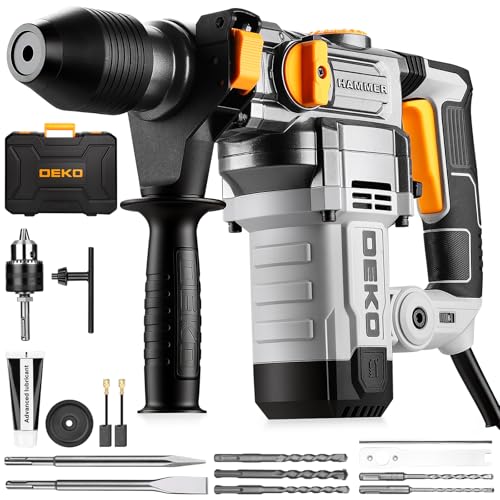
DEKOPRO 1-1/4 Inch SDS-Plus Rotary Hammer
What We Like
- High-impact 5.5J energy for tough concrete
- Safety clutch protects motor from overload
- Comprehensive kit with bits, chisels, and grease
- 360-degree adjustable handle for better control
Trade-offs
- At 12.5A, it requires a heavy-duty circuit
- No vibration control specification beyond the clutch
- Bulkier footprint than compact hammer drills
The 5.5J impact energy allows this rotary hammer to meet its maximum drilling capacity of 1-1/4 inches in concrete, which covers common tasks like installing large anchors. A 12.5Amp motor drives the tool, and the included kit comes with multiple SDS-Plus drill bits and chisels, so it’s equipped for various masonry jobs right away. The four-function selector provides modes for drilling, hammer drilling, chiseling, and chisel adjustment, making it a versatile choice for projects that involve concrete, brick, or wood.
Its dimensions of 16.0 inches in height and 11.2 inches in length result in a larger footprint than some corded hammer drills like the DEWALT DW511. The design includes a 360-degree adjustable auxiliary handle to improve balance during use. A safety clutch is intended to prevent motor overload during high-force applications, which may contribute to the tool’s durability for demanding work.
Product photos
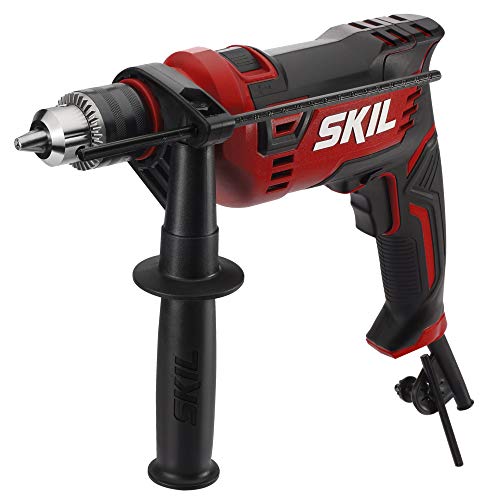
SKIL HD182001 1/2-Inch Hammer Drill
What We Like
- 7.5-amp motor for demanding material
- Two-function switch for versatility
- Keyed chuck secures large bits firmly
- Side handle improves control and safety
Trade-offs
- Keyed chuck requires a separate tool for bit changes
- Hammer drill mechanism is less specialized for concrete than an SDS rotary hammer
A 7.5-amp motor is described as ideal for demanding projects, providing power for a range of drilling and hammer drilling applications. The tool’s multi-function design allows an easy switch between standard drilling and hammer drilling modes. A side assist handle aims to improve safety and accuracy, while a soft-grip handle and a lock-on button are included for operator comfort and extended use.
The trade-off is in specialization. For drilling into concrete, the SKIL’s standard hammer drill action can’t match the speed and impact energy of a dedicated rotary hammer like the BOSCH Bulldog. The keyed chuck, while secure, slows down bit changes compared to a keyless system. It’s a classic workhorse design, built for broad utility rather than excelling at any single task. You get a lot of fundamental capability here, which makes it an excellent primary drill for a workshop that doesn’t demand daily concrete demolition.
Product photos
BOSCH HD18-2 Two-Speed Hammer Drill

What We Like
- Powerful 8.5 Amp motor for high torque
- Secure 1/2-inch chuck for rugged applications
- Slip clutch disengages shaft during binds
- Auxiliary handle with built-in depth gauge
Trade-offs
- At 8.0 lb, it is heavier than compact hammer drills like the 5.3 lb DEWALT DW511
- Lacks SDS chuck for dedicated rotary hammer performance
The 8.5 Amp motor provides the high torque needed for drilling into masonry and concrete demolition, moving beyond what a standard drill can handle. This tool suits regular heavy anchoring, foundation work, or demolition tasks. Its dual-mode selector and variable-speed trigger allow for clean hole starting and control, while the integral slip clutch disengages the output shaft if the bit binds, adding a layer of user security.
That power comes with an 8.0-pound weight, which can be noticeable during overhead use or extended sessions. Unlike SDS-format rotary hammers like the BOSCH Bulldog Xtreme, it uses a standard 1/2-inch three-jaw chuck, which is versatile for standard bits but is designed for hammer-drilling applications, not dedicated chiseling. It functions as a heavy-duty option between a regular drill and a dedicated rotary hammer.
Product photos
DongCheng SDS-Plus Rotary Hammer

What We Like
- Mechanical safety clutch prevents wrist injury
- Complete kit with bits, chisels, and storage case
- Anti-vibration handle for all-day comfort
- Dual-mode operation for drilling and demolition
Trade-offs
- At 11.0 lb, it's heavier than many 1/2-inch hammer drills
- Corded design limits range versus battery-powered models
A 3.6J impact energy and a 9.2-amp motor mean this rotary hammer won’t hesitate when you’re sinking anchors into a foundation wall or chiseling up an old tile floor. It’s built for the serious DIYer or contractor who needs one tool to handle a weekend’s worth of mixed demolition and drilling tasks. The inclusion of a flat chisel, point chisel, and three SDS-plus bits right in the box means you can start working the moment it arrives, which is a significant practical advantage.
This corded rotary hammer arrives as a complete pro-grade kit, so you can start drilling concrete or removing tiles immediately without buying separate accessories. Its 11-pound weight provides stability during heavy masonry work, though that heft demands more arm strength than lighter tools like the 5.2-pound SKIL hammer drill, especially for overhead tasks. A built-in mechanical safety clutch disengages the drive if the bit jams, protecting your wrists from sudden twists during demanding demolition.
Product photos
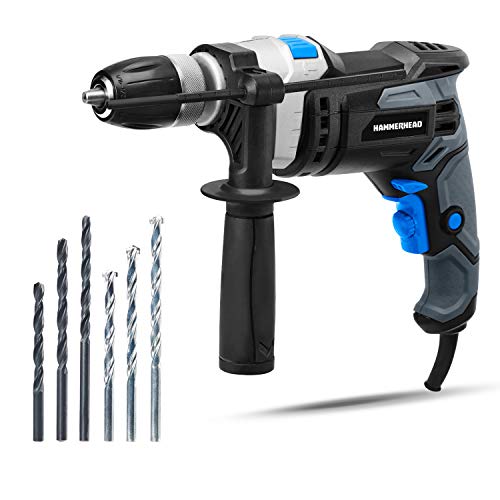
Hammerhead HAHD075 Hammer Drill
What We Like
- Soft grip handle for comfort during long use.
- Keyless metal chuck allows quick bit changes.
- Variable speed provides control for different materials.
Trade-offs
- Cannot be used in reinforced concrete walls.
A 7.5-amp motor and a keyless half-inch chuck give this drill enough muscle to drive large bits through masonry and wood for typical home repairs. The variable speed trigger and soft grip make it manageable for weekend projects like installing shelves or anchoring deck posts. It’s a straightforward, no-frills tool that arrives with a set of bits, ready to pull from the box and start working without fuss. For a homeowner tackling occasional concrete block or brick, it covers the fundamentals well.
This corded hammer drill has a clear limitation in its intended use: the manufacturer specifies it cannot be used in reinforced concrete walls. That means it is designed for lighter-duty masonry, like drilling a few holes for anchors in a block or brick wall, not for heavy structural work. Compared to specialized SDS-plus rotary hammers like the Bosch 11255VSR, which are physically larger and heavier, the Hammerhead is a more compact and general-purpose tool. It handles its defined tasks reliably but operates within a specific range of applications.
Product photos
How We Evaluated Corded Hammer Drills
Our evaluation relied on manufacturer specifications, expert round-up analyses, and patterns in owner feedback. We did not physically test these tools; our goal was to synthesize reliable data to highlight key performance differences and user experiences across the market.
We focused on three core criteria: impact energy for effective concrete drilling, ergonomic features like vibration control for user comfort during extended use, and the tool’s operational versatility between drilling, hammering, and chiseling modes. Power, measured in amps or joules, was a primary filter, but we balanced raw output with practical factors like weight and chuck type to match tools to real-world tasks.
A key limit of our research-led approach is that we cannot verify long-term durability claims firsthand. We highlight where owner reports consistently mention reliability or where a lack of advanced features, like active vibration reduction, might affect user comfort over hours of work. Our aim is to provide a clear, evidence-based comparison so you can shop with confidence.
What To Look For In Corded Hammer Drills
Choosing the right corded hammer drill means matching its capabilities to your most common tasks. A tool perfect for occasional light masonry will be overwhelmed by daily concrete work, while a heavy-duty rotary hammer is overkill for simple shelf installation.
Key considerations include the chuck type (SDS-plus for dedicated concrete work vs. Keyed/keyless for versatility), impact energy (measured in joules), and ergonomic features like vibration control and handle design for managing user fatigue.
Chuck Type and Drill Mechanism
The chuck determines what bits you can use and defines the tool’s core function. A standard 1/2-inch keyed or keyless chuck accepts a wide range of bits for drilling into wood, metal, and light masonry, making it ideal for mixed-material work like the best corded drills for general use.
An SDS-plus chuck uses a specialized, tool-free system for dedicated rotary hammer drills. It provides a more secure grip and allows for a true hammering piston action, which makes it far more effective for frequent concrete drilling and light chiseling. Understanding the difference between a hammer drill and a regular drill is crucial before you buy.
Power and Impact Energy
For standard hammer drills, power is typically listed in amps (A), with higher numbers indicating a stronger motor capable of tougher jobs. For rotary hammer drills, performance is better measured by impact energy in joules (J), which indicates the force of each blow. A higher joule rating translates to faster, more effective drilling in hard concrete. Consider your electrical circuit, too; a 12.5-amp tool like our Best High-Impact Power pick requires a heavy-duty outlet, while a 7-amp model is suitable for most household circuits.
Ergonomics and Control
Weight, balance, and vibration management significantly affect comfort and precision, especially for overhead work or projects lasting more than a few minutes. Features like an adjustable side handle, a D-grip for two-handed control, and active vibration control (AVT) systems can drastically reduce user fatigue. A variable speed trigger offers better control for starting holes or working with different materials. When researching best hammer drills, pay close attention to these features if you plan on using the tool for extended periods.
- Check the tool’s weight and length to ensure it fits in your workspace.
- Look for a side handle or auxiliary grip to improve control and safety.
- Prefer models with a variable speed trigger for precise hole starting.
- Consider if a carrying case or included bits add value for your needs.
- Verify the power cord length for your project’s reach requirements.
Prioritize vibration reduction and a comfortable grip if you’ll be using the drill for more than short bursts.
Corded Hammer Drills Compared
The following table compares our top picks across key specifications to help you see the differences at a glance.
| Product | Motor | Weight | Modes/Functions |
|---|---|---|---|
| DEWALT D25263K SDS Rotary Hammer Drill | 8.5 amp | N/A | N/A |
| BOSCH 11255VSR Bulldog Xtreme Rotary Hammer | 7.5 amp | 10.4 Pounds | 3 modes |
| DEWALT DW511 1/2-Inch Hammer Drill | 7.8 Amp | 5.3 pounds | Hammerdrill & Drill |
| Milwaukee 5262-21 SDS Plus Rotary Hammer | 7.0 Amp | 5.8 lbs | 3-Mode Operation |
| Makita HR2641 AVT Rotary Hammer | 8 amp | 11.5 Pounds | 3-mode |
| DEKOPRO 1-1/4 Inch SDS-Plus Rotary Hammer | 12.5 Amp | N/A | 4 modes |
| SKIL HD182001 1/2-Inch Hammer Drill | 7.5 Amp | 5.2 pounds | Drill & hammer drill |
| BOSCH HD18-2 Two-Speed Hammer Drill | 8.5 Amp | 8.0 pounds | Rotation-only & hammer-drill |
| DongCheng SDS-Plus Rotary Hammer | 9.2A (1100W) | 11.0 pounds | Dual-Mode |
| Hammerhead HAHD075 Hammer Drill | 7.5 Amp | 5.2 Pounds | 2-in-1 Multi-Function |
Frequently Asked Questions
Who makes the best corded hammer drill?
Brands like DEWALT, Bosch, and Milwaukee are consistently highly regarded for their performance and durability in the corded hammer drill category. The “best” brand for you depends on your specific needs; for instance, Bosch is often praised for its vibration control in rotary hammers, while DEWALT offers strong options across both standard and SDS-plus models. Our research into best corded drill models shows that focusing on the tool’s specifications and intended use is more important than the brand name alone.
What is the best corded SDS hammer drill?
The best corded SDS hammer drill balances high impact energy with user-friendly features. Our top overall pick, the DEWALT D25263K, is an excellent SDS-plus option with strong 3.0-joule impact and an integral clutch for safety. For users who need maximum power, the DEKOPRO model offers 5.5 joules, making it one of the most powerful in its class. When choosing, also consider the Milwaukee 5262-21 for a superb power-to-weight ratio or the Makita HR2641 for its advanced anti-vibration technology.
What is the best electric hammer drill for DIY use?
For most DIYers, the best electric hammer drill is a versatile, easy-to-handle model that can drill into wood, metal, and light masonry. Our Best Lightweight Drill, the DEWALT DW511, is a prime example with its 4.3-pound weight and dual-mode function. The SKIL HD182001 is a great budget-friendly choice that handles demanding materials, while the Hammerhead HAHD075 offers a complete basic kit for simple projects. These electric drills provide ample power for home tasks without the complexity or cost of a professional-grade rotary hammer.
Which brand is best for hammer drills?
Several brands are known for different strengths in hammer drill design. DEWALT is recognized for durable, high-performance tools in both standard and rotary hammer types. Bosch is a leader in ergonomic design, especially with vibration control systems in their Bulldog series. Milwaukee often provides a strong balance of power and light weight, and Makita is noted for its engineering and durability. The most suitable brand depends on your primary need, be it power, comfort, or overall value.
Should I choose a corded or cordless hammer drill?
Choose a corded hammer drill for consistent, high-power output without runtime limits, ideal for prolonged concrete drilling or demolition where you have access to an outlet. Opt for a cordless model for maximum portability and convenience in spaces without easy power access. The corded vs cordless decision often comes down to your project location and duration; corded tools typically offer more sustained power for the money, while cordless models provide greater freedom of movement.
The Bottom Line
The DEWALT D25263K SDS Rotary Hammer Drill is our best overall pick for its powerful 3.0-joule impact, safety clutch, and effective vibration control, making it the top choice for users regularly tackling tough concrete drilling.
If your budget is tight, the SKIL HD182001 offers impressive versatility at an affordable price. For specialized needs, consider the BOSCH 11255VSR for all-day comfort or the DEKOPRO for maximum impact power in a dedicated rotary hammer.
Ultimately, the single most important factor is matching the drill’s mechanism, standard hammer drill versus SDS-plus rotary hammer, to the materials you drill most often. Getting this fundamental choice right ensures you have enough power without paying for capability you’ll never use.
