
10 Best Cordless Trim Nailers in 2026
This post contains affiliate links. As an Amazon Associate, we earn from qualifying purchases.
Our best overall cordless trim nailer is the Metabo HPT 18V Brushless Cordless Brad Nailer for its compact, lightweight design and versatile firing modes. For hardwood trim, the Metabo HPT 15-Gauge Finish Nailer excels, while the DeWalt 20V MAX Cordless Brad Nailer Kit is best for jam clearing.
Choosing the right cordless nailer means balancing nail gauge for holding power against tool weight and size for maneuverability. We researched specifications, expert round-ups, and owner feedback to rank these ten tools, helping you find a reliable, hose-free solution for your next project.
Top 10 Cordless Trim Nailers in the Market
Certain content that appears on this site comes from Amazon. This content is provided "as is" and is subject to change or removal at any time.
The Best Cordless Trim Nailers, Reviewed
Metabo HPT 18V Brushless Cordless Brad Nailer

What We Like
- Compact and lightweight for tight spaces
- Tool-less depth adjustment for precision
- Switchable sequential and bump-fire modes
- Long-lasting brushless motor and air spring drive
Trade-offs
- Drives only 18-gauge brads, not heavier fasteners
A single charge can drive up to 1,300 brad nails, so you can often leave the air compressor behind for a full day of trim installation. This cordless nailer balances that stamina with a frame that is 30% smaller and 31% lighter than the brand’s previous model, making it easy to maneuver in tight spaces. Its selective actuation switch allows quick changes from sequential to bump fire mode, offering flexibility for both precise finish work and faster production nailing.
The tool drives 5/8-inch to 2-inch 18-gauge brad nails, which is a standard size for finish carpentry. For tasks requiring a thicker fastener, a 15 or 16-gauge tool would be needed. Within its intended range, the cordless design eliminates hoses and the air-spring drive system aims for consistent performance, providing freedom of movement on the job site.
Metabo HPT 18V Brushless 15-Gauge Finish Nailer

What We Like
- Flush drives nails in hardwood reliably
- Tool-less depth and firing mode switches
- Compact, narrow tip for tight corners
Trade-offs
- Heavier than 18-gauge brad nailer cousins
- 15-gauge leaves a larger hole than pin nails
Weighing just 5.9 pounds, this nailer is easy to maneuver overhead or in cramped spaces, a real advantage when you’re trimming out a room. That light weight doesn’t come at the expense of power, either. Its brushless motor and air spring system deliver the consistent force needed to sink 15-gauge nails flush into stubborn hardwood and fiber cement trim, something battery-powered nailers have historically struggled with. For a pro or serious DIYer installing crown or baseboard, this combination of heft and compact design means less arm fatigue and more precision where it counts.
A 15-gauge nailer like the Metabo HPT provides strong holding power for trim, though the nail heads are larger than those from an 18-gauge brad. Compared to the Milwaukee M18 Fuel 16-gauge finish nailer, this model is significantly lighter and more compact, a difference that reduces fatigue during extended use. Its angled magazine and narrow tip design also help when working in tight corners where a bulkier tool might not fit.
DeWalt 20V MAX Cordless Brad Nailer Kit

What We Like
- Tool-free jam release for quick clearing
- Brushless motor for runtime and durability
- Micro nose improves sightline and accuracy
- Multi-functional LED for light and diagnostics
Trade-offs
- Flywheel system has a slight firing delay
A tool-free jam release lever means you can clear a misfire in seconds without fumbling for a screwdriver, keeping you on task when the pressure’s on. That reliability, combined with its consistent sink rate in hardwoods like oak and maple, makes this DeWalt a solid pick for finish carpenters and serious DIYers who need a nailer that won’t stall a project. Its selectable trigger and depth adjustment give you the control needed for fine trim work.
The trade-off is the flywheel drive system, which requires a brief spin-up and contributes to a head that’s a bit bulkier than some. This can make it slightly less nimble in extremely tight corners compared to a pneumatic-style nailer with instantaneous fire. You’re paying a premium for the DeWalt ecosystem and its field-proven durability, so it’s a worthwhile investment if you’re already on their battery platform and value quick recovery from the occasional jam.
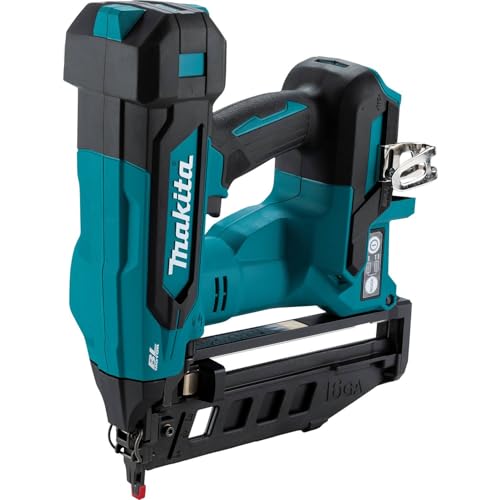
Makita 18V LXT Brushless 16-Gauge Finish Nailer
What We Like
- Slim nose design for access in confined spaces
- Class-leading cordless nailing speed
- Tool-less depth adjustment and jam clearing
- Drives nails sub-flush in hard and softwood
Trade-offs
- Tool only: requires separate Makita 18V LXT battery and charger
- At 6.6 lbs, it's heavier than some 18-gauge competitors
- Length of 11.4 inches is longer than compact pin nailers
A slim nose design and overall compact ergonomics let this nailer get into corners and between cabinetry where bulkier tools simply can’t fit. It powerfully drives 16-gauge nails up to two-and-a-half inches long and sub-flush, making it a serious cordless option for finish carpenters and advanced DIYers who regularly work in tight quarters. The tool-less adjustments for depth and jam clearing mean you spend less time fiddling and more time nailing.
You pay for that capability in heft and platform commitment. At 6.6 pounds with a battery, it carries more weight than a dedicated brad nailer, trading some finesse for the holding power of a 16-gauge finish nail. It’s also a bare tool, so you’re buying into the Makita 18V LXT battery ecosystem. For general trim work in open areas, a lighter 18-gauge tool might be easier to manage all day, but for driving substantial finish nails in cramped spaces, this Makita’s design is purpose-built.
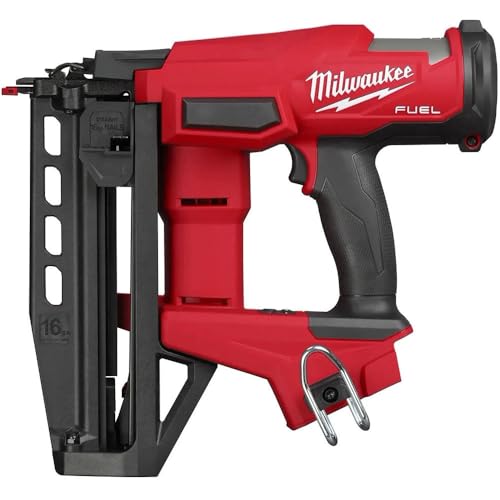
Milwaukee M18 Fuel 16-Gauge Finish Nailer
What We Like
- Tool-free depth adjustment and jam clearing
- Fires up to 700 nails per charge with CP2.0 battery
- Integrated LED work light and tip storage
- Part of the extensive 200+ tool M18 system
Trade-offs
- Tool-only: requires separate purchase of M18 battery and charger
- Weighs 8.1 pounds, heavier than many 18-gauge models
- Larger footprint at 15.2 inches long
Compatible with all 1 to 2 ½-inch 16-gauge straight finish nails, this tool provides the power to nail hardwoods and softwoods for trim and casing. Its 110-nail magazine capacity means fewer reloads during large installations like crown molding. As part of the M18 system, it shares batteries with over 200 other solutions, making it a logical choice for professionals already using that platform.
The tool weighs 8.1 pounds, which gives it a substantial feel in hand compared to lighter-duty fasteners. This heft is a trade-off for the driving force needed in a 16-gauge finish nailer. For a contractor using multiple M18 tools on site, the shared battery system and consistent power justify its place in the kit.
DeWalt 20V MAX 23-Gauge Pin Nailer

What We Like
- Drives up to 2,000 nails per charge
- Tool-free jam release and depth adjustment
- Low nail lockout with LED reload indicator
- Compact, cordless design with brushless motor
Trade-offs
- Uses a flywheel system with a slight firing delay
- Battery and charger are not included
This cordless pin nailer drives 23-gauge fasteners from 5/8 inch to 1-1/2 inches, which are useful for delicate trim and finish work. Its compressor-free design offers mobility around a jobsite, and it drives an average of 2,000 nails per charge. For installers and serious DIYers working with fragile moldings, it provides a reliable, cordless option.
The tool uses a flywheel system that begins spinning when the nose safety contacts the wood, and pulling the trigger then activates the driver. Research mentions this design can result in a slight firing delay compared to tools that use a pressurized air system and fire instantaneously. However, the same research notes the DeWalt routinely sank fasteners without issue in woods like pine, Douglas fir, red oak, and maple.
Product photos
Ryobi ONE+ 18V 16-Gauge Finish Nailer

What We Like
- AirStrike tech eliminates compressor and hoses
- Compact nose for access in tight spots
- Adjustable drive for hardwoods and softwoods
- Integrates with Ryobi ONE+ 18V tool system
Trade-offs
- Tool only: requires separate battery and charger purchase
- Length of 14.4 inches may feel bulky in confined spaces
By eliminating the need for a noisy compressor and bulky hose, Ryobi’s AirStrike technology offers a portable and simpler setup for finish nailing. This makes the tool a solid entry point for cordless nailers, especially for DIYers already invested in the ONE+ battery platform. Research indicates that Ryobi nailers, along with similar models from Makita and Ridgid, have a drive adjustment that worked well when switching between hardwoods and softwoods, allowing you to tailor the force for different materials.
The trade-off for that value is a noticeable firing delay, as the tool draws in outside air before each shot. It’s not the instant punch of a true pneumatic or a pressurised tool like the Metabo HPT. That makes it less suited for rapid-fire production work, but for methodical trim installation, it’s perfectly capable. You’re getting competent, system-locked performance that saves you the upfront cost of a premium brand’s battery ecosystem.
Product photos
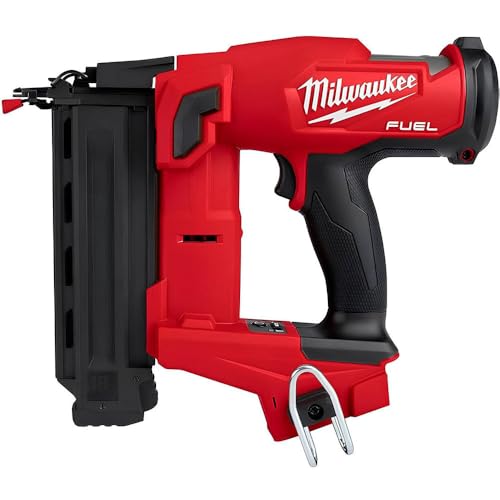
Milwaukee M18 Fuel 18-Gauge Brad Nailer
What We Like
- Zero ramp-up time for immediate firing
- Consistent depth in hard and soft woods
- Nitrogen air spring mechanism, no gas cartridge
- Clean nail holes matching nail head
Trade-offs
- At 6.5 lb, it's heavier than the 4.4 lb Metabo HPT
- Tool-only model: requires separate M18 battery and charger
Its nitrogen air spring mechanism consistently sinks nails to the proper depth in hard and soft woods, leaving clean holes that match the nail head. The tool-free drive depth adjustment helps maintain that consistency across different materials. A brushless motor and zero ramp-up time provide a fast fire rate without delay, which can help maintain a steady work pace.
You pay for that performance with some heft and bulk, making it less nimble for overhead work compared to a compact model like the DeWalt 20V MAX pin nailer. It’s a dedicated tool for the M18 ecosystem, so if you’re already invested in those batteries, this nailer integrates smoothly. If you need a lighter tool for quick, small trim jobs, the trade-off in power and consistency might not be worth it.
Product photos
Ryobi 18V ONE+ AirStrike Brad Nailer Kit

What We Like
- Includes a 1.5Ah battery right in the kit
- Adjustment dial regulates air pressure speed
- Non-marring pads protect the work surface
- Tool-free access for clearing nail jams
Trade-offs
- Weighs 7.8 pounds, heavier than many cordless rivals
This kit includes a 1.5Ah battery, making it a true ready-to-shoot package for anyone already invested in, or just starting with, the Ryobi ONE+ platform. The 18-gauge brad nailer handles trim and light carpentry, and the tool-free depth adjustment lets you dial in the fastener flush without marring your workpiece. It’s a solid choice for the DIYer or occasional pro who wants a capable cordless nailer without hunting down a separate battery and charger.
At 7.8 pounds, it’s on the heavier side for a brad nailer. This weight can lead to fatigue on overhead work or during long sessions. The air-compression firing mechanism also introduces a brief delay between the trigger pull and the drive. It’s a noticeable difference if you’re accustomed to the instant hit of a pneumatic or gas-charged tool. For fast, repetitive work, that split-second lag might slow you down, but for most weekend projects, it’s a minor trade-off for the cordless convenience.
Product photos
CRAFTSMAN V20 Cordless Brad Nailer

What We Like
- Fires reliably in various climate conditions
- Cordless design eliminates hoses and compressors
- Tool-free jam clearing for quick fixes
- Includes a belt hook for easy access
Trade-offs
- Bare tool only: requires separate V20 battery purchase
- Length of 13.9 inches may feel bulky in tight spaces
A firing mechanism designed for various climate conditions means you can take this brad nailer from a humid garage to a cold jobsite without worrying about pressure changes. It’s a solid choice for the contractor or serious DIYer who needs a cordless tool that works year-round, not just on perfect workshop days. The tool-free jam and stall settings simplify clearing jams quickly, and the balanced, lightweight build with an optimal center of gravity reduces fatigue over a long day of installing casing or baseboard.
The trade-off is in the firing action. Research groups the Craftsman with other nailers that use a flywheel system rather than a pressurized air system. Nailers using pressurized air, like the Metabo HPT, are noted to fire instantaneously most like a pneumatic nailer. For general carpentry where consistency matters more than pure speed, the Craftsman is positioned as a reliable performer.
Product photos
How We Evaluated Cordless Trim Nailers
Our evaluation is based on thorough research of manufacturer specifications and technical data from expert tool round-ups. We also analyzed patterns in professional and DIY owner feedback. We prioritized three key criteria for this category: driving power and consistency in various woods, tool size and weight for working in confined spaces, and the practical features that affect daily use, like jam clearing and firing mode options. A research-led evaluation like this cannot replicate years of jobsite wear and tear, but it reliably identifies the tools that experts and experienced users consistently recommend for their performance and design.
What To Look For In Cordless Trim Nailers
Selecting a cordless trim nailer involves more than just picking a battery platform. You need a tool that delivers reliable power, fits where you need to work, and operates smoothly day after day.
Focus on nail gauge for your material, tool weight and balance for overhead work, and features like tool-free depth adjustment and jam clearing for fewer interruptions.
Nail Gauge and Holding Power
The fastener size determines the tool’s primary use. An 18-gauge brad nailer is ideal for delicate trim, cabinet face frames, and small moldings, leaving a very small hole. For baseboards, crown molding, and thicker hardwood trim, a 15 or 16-gauge finish nailer provides significantly more holding power.
For the most delicate work like attaching thin veneers or decorative trim, a 23-gauge pin nailer is the specialist’s choice, and we have a dedicated guide to cordless pin nailers. Your project materials dictate the necessary gauge; using too light a fastener can lead to failed joints.
Tool Size, Weight, and Balance
Cordless nailers are inherently heavier than their pneumatic cousins due to the motor and battery. Weight directly impacts fatigue, especially during overhead work like installing crown molding. Size matters, too: a compact nose profile and shorter overall length improve access in tight corners and confined spaces. When researching best cordless nailers, consider both the tool’s weight and its physical footprint to ensure it won’t be cumbersome in your typical workspace.
Performance and Usability Features
Key operational features separate capable tools from frustrating ones. Tool-free depth adjustment is essential for dialing in the perfect countersink in different wood densities. A simple, tool-free jam-clearing mechanism saves immense time and frustration on the job. Also, consider the firing action: some models use a flywheel system which can have a slight delay, while others with a pre-pressurized air spring fire instantly. For a deeper comparison of these core technologies, see our analysis of cordless vs pneumatic nail guns.
- Check if the tool offers both sequential (precision) and bump-fire (speed) modes for versatility.
- Look for an integrated LED light to illuminate the work surface in dim areas.
- Ensure the tool is compatible with your existing battery ecosystem to avoid extra cost.
The right nailer feels like an extension of your arm, not a weight you have to manage.
Cordless Trim Nailers Compared
To see how these top picks stack up side-by-side on key specs, refer to the comparison table below.
| Product | Nail Gauge | Weight | Drive System / Actuation |
|---|---|---|---|
| Metabo HPT 18V Brushless Cordless Brad Nailer | 18 gauge | 4.4 pounds | Sequential to bump |
| Metabo HPT 18V Brushless 15-Gauge Finish Nailer | 15-gauge angled | 5.9 lbs | Air spring drive |
| DeWalt 20V MAX Cordless Brad Nailer Kit | 18GA | 5.0 pounds | Sequential or contact |
| Makita 18V LXT Brushless 16-Gauge Finish Nailer | 16 Ga. | 6.6 lbs | N/A |
| Milwaukee M18 Fuel 16-Gauge Finish Nailer | 16-Gauge | 8.1 pounds | Sequential and contact |
| DeWalt 20V MAX 23-Gauge Pin Nailer | 23-gauge | 4.5 pounds | N/A |
| Ryobi ONE+ 18V 16-Gauge Finish Nailer | 16-gauge | N/A | AirStrike |
| Milwaukee M18 Fuel 18-Gauge Brad Nailer | 18-Gauge | 6.5 pounds | Sequential and contact |
| Ryobi 18V ONE+ AirStrike Brad Nailer Kit | 18 gauge | 7.8 pounds | N/A |
| CRAFTSMAN V20 Cordless Brad Nailer | 18GA | N/A | Flywheel |
Frequently Asked Questions
Who makes the best cordless trim nailer?
The most suitable tool depends entirely on your specific needs. For a versatile, lightweight 18-gauge option, the Metabo HPT Brushless Brad Nailer is a leading choice. For professionals needing significant power in a 16-gauge size, the Milwaukee M18 Fuel model is a top performer, while budget-conscious DIYers should consider the Ryobi ONE+ system. A full comparison of ten models across different use cases is available.
What are some good cordless nail guns for baseboards?
Good cordless nailers for baseboards typically use 15 or 16-gauge finish nails for strong holding power. Our picks include the Metabo HPT 15-Gauge Finish Nailer for hardwood and the Makita 18V LXT 16-Gauge Finish Nailer for its speed and access in tight spaces. For a comprehensive look at tools designed for this specific task, explore our resource on best nailers for trim.
What is the best nail gun for trim work?
For general trim work involving crown, baseboards, and casing, a 16-gauge finish nailer offers a great balance of holding power and a manageable hole size. The Makita 18V LXT 16-Gauge model is excellent for its precision and speed. For finer work like shoe molding or cabinet details, an 18-gauge brad nailer is often the better choice. Our top overall Metabo HPT fits that role, a distinction we cover in our guide on the differences between brad nailers and finish nailers.
Should I use a 16 or 18 gauge nailer for baseboards?
For standard baseboard installation, a 16-gauge finish nailer is generally recommended. It provides stronger holding power for the heavier trim piece against the wall. An 18-gauge brad nailer can be used for lighter, thinner baseboards or for adding a second, securing nail, but it may not provide sufficient long-term holding strength on its own for all applications.
What is the difference between a brad nailer and a finish nailer?
The primary difference is the nail gauge and resulting holding power. An 18-gauge brad nailer uses thin, small-headed nails ideal for delicate trim, small moldings, and cabinet work where a nearly invisible hole is desired. A 15 or 16-gauge finish nailer uses thicker nails with a larger head, designed for securing baseboards, crown molding, and door/window casings where stronger holding power is critical. Our detailed comparison of cordless finish nailers and cordless brad nailers can help you decide.
The Bottom Line
For a single, do-it-all cordless nailer that excels at daily trim and detail work, the lightweight and precise Metabo HPT 18V Brushless Brad Nailer is our best overall choice. If your budget is tight or you’re already invested in the Ryobi ecosystem, the Ryobi ONE+ 16-Gauge Finish Nailer offers tremendous value, while the Ryobi AirStrike Brad Nailer Kit is the complete starter package. Ultimately, matching the nail gauge to your most common project material is the most critical step in choosing a tool you’ll rely on for years.
