
10 Best Nailers For Trim in 2026
This post contains affiliate links. As an Amazon Associate, we earn from qualifying purchases.
The best overall nailer for trim is the DeWalt 20V MAX XR 15-Gauge Angled Finish Nailer for its powerful cordless design that eliminates an air compressor. For a lightweight professional option, the Metabo HPT NT65M2S excels, while the Ryobi ONE+ 16-Gauge nailer is best for tight spots.
Each offers a specific solution for installing baseboards, crown molding, and door casings. Choosing the wrong tool can lead to split wood, frustrating jams, or arm fatigue on big jobs. The right nailer drives nails flush, holds securely, and fits the spaces you’re working in.
We built this guide by comparing specifications, manufacturer features, and patterns in owner feedback to give you ten clear choices.
Top 10 Nailers For Trim in the Market
Certain content that appears on this site comes from Amazon. This content is provided "as is" and is subject to change or removal at any time.
The Best Nailers For Trim, Reviewed
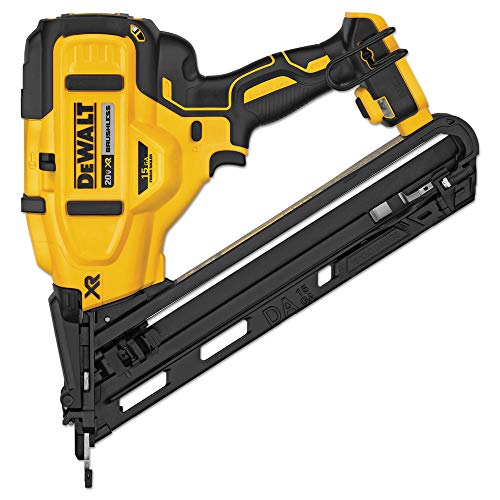
DeWalt 20V MAX XR 15-Gauge Angled Finish Nailer
What We Like
- Cordless design eliminates compressor and hose
- Brushless motor maximizes runtime and durability
- Micro nose improves line of sight and accuracy
- Multi-functional LED lights for illumination and diagnostics
Trade-offs
- Tool-only listing: battery and charger sold separately
A 20V cordless system frees you from the compressor and hose, making it a go-anywhere tool for trim work. The brushless motor delivers reliable power for a full day’s work, while the tool-free depth adjustment and selectable trigger let you switch between delicate finish work and rapid-fire production. This combination of power and user-focused features makes it a versatile foundation for any serious trim carpenter’s kit.
You pay for that versatility with some heft and bulk compared to lighter pneumatic or compact cordless options. The tool-only nature means an additional investment if you aren’t already on the DeWalt 20V platform. For jobs where ultimate precision in confined spaces is paramount, the slimmer, lighter Senco FinishPro 25XP pneumatic brad nailer remains a specialist’s favorite, but it tethers you to an air hose.
Metabo HPT NT65M2S 16-Gauge Finish Nailer

What We Like
- Exceptionally lightweight at 3.7 pounds for reduced fatigue
- Tool-free depth adjustment for a professional finish
- Selectable firing modes for versatility on the job
- Adjustable exhaust port keeps air away from the user
Trade-offs
- Pneumatic design requires a separate air compressor to operate
- Nail length capacity maxes out at 2-1/2 inches
- Not a cordless tool, limiting mobility on remote job sites
Weighing 3.7 pounds, the Metabo HPT NT65M2S finish nailer is lightweight and well-balanced for minimal fatigue during extended use. Its selective actuation switch allows selection between bump fire for speed and sequential fire for precision. A tool-free depth of drive adjustment helps provide a professional finish when fastening into varying materials like trim and cabinetry.
You gain low weight by using a pneumatic hose. This setup requires a capable air compressor, which adds to your gear and limits how far you can work from a power source. Its 16-gauge nails and capacity for lengths up to two and a half inches are perfect for pure trim work. However, you might find its limits if you regularly need to sink nails into heavier framing lumber. Compared to a strong cordless model like the Milwaukee M18 Fuel, you get significant weight savings and a proven track record. You do sacrifice the cord-free convenience that changes how you move around a job site.
Ryobi ONE+ 18V 16-Gauge Cordless Finish Nailer

What We Like
- 78% smaller nose for tight spot access
- AirStrike tech eliminates compressor and hoses
- Adjustable air pressure dial for optimal performance
- Cordless design increases jobsite mobility
Trade-offs
- Battery and charger sold separately
AirStrike Technology eliminates the need for noisy compressors and bulky hoses, offering a simpler cordless setup. Its nose is 78% smaller than the previous Ryobi P325 model, which improves access in tight spots like corners. This design change supports better drive quality for detailed interior trim and crown molding where space is limited.
The tool ships without a battery or charger, requiring a separate purchase for those new to the Ryobi ONE+ platform. As a cordless system, it trades a pneumatic hose for the task of monitoring battery power. Its length of 14.4 inches and width of 13.0 inches define its overall footprint on the job site.
DeWalt ATOMIC 20V 23-Gauge Pin Nailer

What We Like
- High-capacity 2,000-nail runtime per charge.
- Tool-free jam release and depth adjustment.
- Low nail lockout with LED reload indicator.
- Compact, cordless design with brushless motor.
Trade-offs
- Tool only: requires separate battery and charger purchase.
- Limited to 23-gauge pins, not for heavier trim.
- At 4.5 lb, heavier than some pneumatic pin nailers.
Averaging 2,000 shots per charge, this nailer allows for extended work sessions without frequent battery swaps, a key advantage for cordless use. Its 23-gauge pins, ranging from 5/8 to 1-1/2 inches, are designed for finish and trim work where minimal surface damage is desired. The depth can be adjusted without a tool, and a jam release is meant to reduce downtime during operation.
The trade-off is its weight and gauge. At 4.5 pounds, it’s not the lightest pin nailer you’ll lift, a point clear when compared to the 2.2-pound Metabo HPT NT50AE2 pneumatic brad nailer. And while its 23-gauge pins leave nearly invisible holes, they lack holding power for any structural work. For heavier baseboards or casings, you’d step up to a tool like the DeWalt 15-Gauge Angled Finish Nailer. This one is built for finesse, not force.
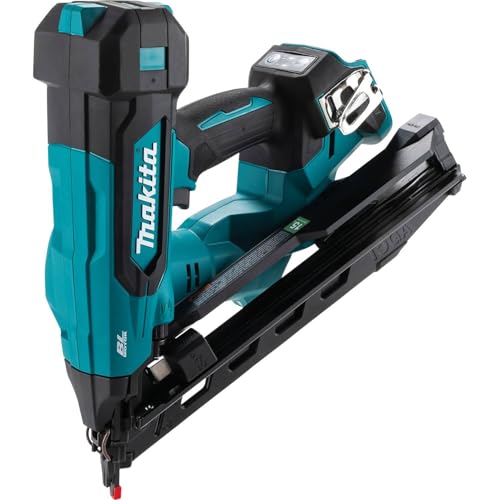
Makita XNB08Z 18V 15-Gauge Angled Finish Nailer
What We Like
- Drives 2-1/2" nails for strong holding in hardwoods.
- Slim nose allows precise placement in tight corners.
- Tool-less depth adjustment and jam clearing for efficient workflow.
- Compact, ergonomic design improves maneuverability.
Trade-offs
- Tool only: requires separate Makita 18V LXT battery and charger.
- Its 15.2-inch length is less compact than smaller-gauge options.
The ability to drive 2-1/2-inch, 15-gauge angled nails makes this nailer a brute for heavy casings and door jambs. That extra length and thicker gauge provide serious holding power where a brad nailer would be insufficient. It’s built for the contractor or advanced DIYer who regularly tackles substantial trim projects and needs a cordless tool that won’t shy away from dense material. The slim nose design is a thoughtful touch, letting you get into corners even with its capable frame.
That capability comes with some heft. At 7.3 pounds, it’s noticeably weightier than a 16-gauge model like the Milwaukee M18 Fuel. This can be a factor during overhead work or long days. You’re also buying into the Makita 18V LXT battery system, so this is a tool-only proposition. For lighter interior trim or cabinet work, a smaller-gauge nailer would be easier to handle. For the heavy stuff, the Makita’s power and runtime of up to 2,000 nails with a 5.0Ah battery are compelling reasons to pack the extra pounds.
Product photos
Metabo HPT NT50AE2 18-Gauge Brad Nailer

What We Like
- Extremely lightweight at 2.2 pounds
- Selective bump or sequential firing
- Tool-less depth adjustment dial
- No-mar tip and jam-clearing nose
Trade-offs
- Pneumatic operation requires an air compressor
At just 2.2 pounds, this brad nailer is built for overhead work and long days of trim without arm fatigue. The selective actuation switch lets you zip through repetitive work with bump fire or switch to precise sequential mode for delicate placements. It’s a straightforward pneumatic tool designed for the installer who values a featherweight tool with professional touches like a 360-degree exhaust and a reload indicator.
Its light weight means it’s strictly an 18-gauge brad nailer, so it won’t handle the heavier holding power of a 15 or 16-gauge nail needed for some baseboard or crown. For those bigger trim jobs, you’d look at a tool like the Metabo HPT NT65M2S 16-Gauge Finish Nailer. But for detailed casework and face-fixing trim where a nearly invisible fastener is the goal, this nailer’s design hits the mark.
Senco FinishPro 25XP Pneumatic Brad Nailer

What We Like
- Oil-free design eliminates routine maintenance
- Includes on-tool ruler for quick measurements
- Lightweight at 2.7 pounds for easy handling
- No-mar pad and belt hook included for convenience
Trade-offs
- Sequential-only trigger slows rapid-fire nailing
- Requires a separate air compressor to operate
- Limited to 18-gauge brad nails for light-duty tasks
An oil-free design sets this pneumatic nailer apart, eliminating the regular maintenance chore of post-session oiling to prevent internal corrosion. This also removes any risk of oil leaking onto your finished work surface. The tool drives 18-gauge brad nails from 5/8 to 2-1/8 inches in length, a range suited for the trim work and molding described in its uses. At 2.7 pounds, its light weight helps reduce fatigue during extended projects.
The tool operates with a sequential trigger, requiring the nose to be reset for each nail. This mode is suitable for precise placement but limits speed compared to models offering alternative firing options. Reviewers noted the nailer performed very well with only one easily cleared jam and no misfires. For those prioritizing a reliable, maintenance-light pneumatic gun for finish work, the Senco 25XP meets that need.
Product photos
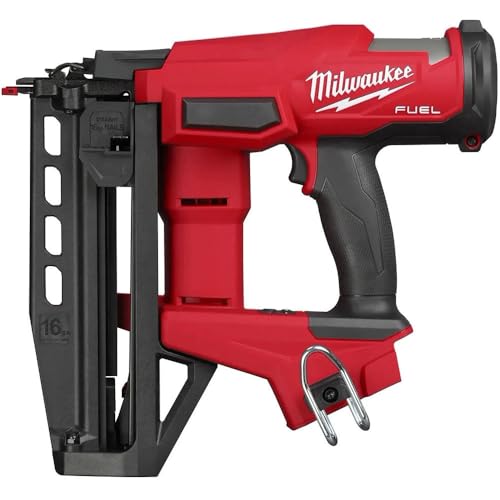
Milwaukee M18 Fuel 16-Gauge Finish Nailer
What We Like
- Tool-free depth adjustment and jam clearing
- Fires 700 nails per charge on CP2.0 battery
- Sequential and contact actuation firing modes
- Reversible belt hook and onboard tip storage
Trade-offs
- Tool only: requires separate purchase of M18 battery and charger
- At 8.1 lb, it's heavier than many pneumatic and some cordless rivals
- 15.2-inch length can be cumbersome in tight spaces
Firing three nails per second, this cordless nailer matches the pace of a busy trim job without a compressor hose. It drives up to 700 fasteners on a single charge, which lets you run baseboard or crown molding across multiple rooms without stopping to swap batteries. The tool is compatible with 1 to 2 ½-inch 16-gauge nails and has power for hardwoods and softwoods, operating without gas cartridges.
This cordless power brings some heft; at over eight pounds, it demands more forearm stamina than lighter pneumatic models like the Senco FinishPro 25XP. Its 15-inch length also makes it less nimble in corners compared to compact options. However, if you’re already invested in the Milwaukee ecosystem and need a finish nailer that can keep up with production work, this tool’s speed and gas-free operation justify its place on the truck.
Product photos
Ryobi 18V ONE+ 18-Gauge Cordless Brad Nailer

What We Like
- Fully cordless for easy maneuverability.
- Compact 10.9-inch length fits in tight spaces.
- Part of the extensive ONE+ battery system.
Trade-offs
- Battery and charger are sold separately.
- At 6.0 pounds, it's heavier than some pneumatic rivals.
The Ryobi P321 is a cordless 18-gauge brad nailer, which means you can work anywhere without dragging a hose or hunting for an outlet. That freedom is a big deal for a DIYer moving between projects in the garage and the house. Its compact size lets you get into corners and tight spots where a bulkier nailer would struggle. For anyone already invested in the Ryobi ONE+ ecosystem, this tool slides right into your existing collection without needing a new battery platform.
Cordless convenience here comes with weight and power considerations. At six pounds, it’s noticeably heftier than a pneumatic nailer like the Metabo HPT NT50AE2, which can make overhead work more tiring. The 18-gauge brads are perfect for thin casing and delicate moldings. For securing larger baseboards or stair treads, you’d want the stronger fasteners from a tool like the DeWalt 15-gauge angled finish nailer. This Ryobi is about picking up a project quickly, not driving nails all day long.
Product photos
3PLUS HDA1564SP Angled Finish Nailer

What We Like
- Tool-free depth adjustment for flush fastening.
- 360° adjustable exhaust directs air away from user.
- Work Contact Element prevents accidental firing.
- Quick clear jam release for easy maintenance.
Trade-offs
- Uses specific 'DA' style angled nails, limiting fastener compatibility.
A fully adjustable 360-degree exhaust portal is the standout feature, letting you point air away from your face or the workpiece. This makes a tangible difference in comfort and visibility during long trim sessions. Combined with a no-mar tip and a depth dial that needs no tools, the HDA1564SP is built for controlled, professional-looking results on finish work where surface protection is key.
Weighing 5.5 pounds, this pneumatic nailer has a noticeable heft that can be felt during extended overhead work. Its power comes from an air compressor, tethering you to a hose and making it best for shop or stationary jobsite use. You gain consistent power and a 360-degree adjustable exhaust, but lose the cordless freedom of tools like the DeWalt 20V MAX XR.
Product photos
How We Evaluated Nailers For Trim
Our evaluation is research-based, comparing tool specifications, manufacturer data, and expert insights to identify the models that reliably handle trim work. We looked for patterns in owner feedback regarding durability, ease of use, and common frustrations to separate marketing claims from real-world performance. The core criteria were power source (cordless freedom versus pneumatic reliability), nail gauge and capacity for appropriate holding strength, and ergonomic design for precision and user comfort.
We also considered special features like tool-free adjustments and jam-clearing mechanisms that keep you working. Because this is a research-led guide, we cannot provide hands-on data on long-term durability or compare the exact feel of the trigger pull between models.
What To Look For In Nailers For Trim
Selecting a nailer for trim involves balancing power, precision, and practicality. The right tool will drive nails flush without splitting the wood, feel comfortable in your hand during long installations, and suit your typical work environment.
Key considerations are power source (cordless for mobility, pneumatic for lighter weight), nail gauge (15- or 16-gauge for strength, 18-gauge for delicacy), and ergonomics (weight, nose size, and adjustability). Always match the nail length to your material thickness.
Power Source: Cordless vs. Pneumatic
Cordless nailers, powered by lithium-ion batteries, offer complete jobsite mobility without the hassle of a compressor and hose. This makes them ideal for remote work or quick projects around the house. However, they are typically heavier and represent a more significant initial investment if you need to buy the battery platform.
Pneumatic nailers require an air compressor but are often lighter, less expensive for the tool itself, and have a long history of reliable performance in professional shops. For a deeper dive into the trade-offs between these tool types, our brad nailer vs. Finish nailer comparison is essential reading.
Nail Gauge & Application
Nail gauge refers to the thickness of the nail, with a lower number indicating a thicker, stronger fastener. A 15-gauge angled finish nailer is the standard for heavy trim like thick crown molding and door casings, offering strong holding power. A 16-gauge finish nailer is a versatile choice for most baseboard and window trim, providing a good balance of strength and a smaller hole.
For delicate work on thin moldings or attaching decorative pieces where minimizing visibility is key, an 18-gauge brad nailer is the best choice. For the finest work, like holding trim in place before glue sets or working with veneers, a 23-gauge pin nailer leaves nearly invisible holes. Our guide on the best 18-gauge nailers can help you choose within that category.
Ergonomics & Special Features
A nailer’s physical design directly impacts your efficiency and finish quality. Weight is critical; a tool over 6 pounds can cause fatigue during overhead crown molding installation, while models under 4 pounds are much easier to manage all day. A narrow, micro-nose design improves your line of sight and allows you to fasten nails in tight inside corners.
Look for tool-free depth adjustment to easily set nails flush or slightly countersunk without marring the wood. Features like a no-mar tip, quick jam-release mechanism, and an adjustable exhaust port (to direct air away from your face) add significant convenience and professional results. For projects focused on baseboards, understanding the proper nail size for baseboard trim is as important as the tool itself.
, then a blank line, then a 3-5 item bullet list of practical checks (one “- ” item per line)
. Check the tool’s maximum nail length capacity against the thickness of your common trim materials.
. Consider the magazine capacity to gauge how often you’ll need to reload during a long run of trim.
. If choosing cordless, ensure compatibility with your existing battery system to avoid extra cost.
. For pneumatic models, verify your air compressor’s PSI and CFM output meets the tool’s requirements.
A good rule of thumb: for general trim installation, a 16-gauge finish nailer strikes the best balance of strength and finesse.
Nailers For Trim Compared
The following table compares the key specifications of our top picks to help you see the differences at a glance.
| Product | Gauge | Power Source | Weight |
|---|---|---|---|
| DeWalt 20V MAX XR 15-Gauge Angled Finish Nailer | 15-gauge angled | 20V MAX XR cordless | 6.6 pounds |
| Metabo HPT NT65M2S 16-Gauge Finish Nailer | 16-gauge | N/A | 3.7 pounds |
| Ryobi ONE+ 18V 16-Gauge Cordless Finish Nailer | 16-gauge | 18V ONE+ Battery | N/A |
| DeWalt ATOMIC 20V 23-Gauge Pin Nailer | 23-gauge | 20V MAX | 4.5 pounds |
| Makita XNB08Z 18V 15-Gauge Angled Finish Nailer | 15-gauge angled | 18V LXT | 7.3 lbs |
| Metabo HPT NT50AE2 18-Gauge Brad Nailer | 18-gauge | Pneumatic | 2.2 pounds |
| Senco FinishPro 25XP Pneumatic Brad Nailer | 18 Gauge | Pneumatic | 2.7 Pounds |
| Milwaukee M18 Fuel 16-Gauge Finish Nailer | 16-gauge | M18 system | 8.1 pounds |
| Ryobi 18V ONE+ 18-Gauge Cordless Brad Nailer | 18-gauge | 18V cordless | 6.0 pounds |
| 3PLUS HDA1564SP Angled Finish Nailer | 15-gauge | N/A | 5.5 Pounds |
Frequently Asked Questions
What type of nailer is best for trim?
For most trim work like baseboards and door casings, a 15-gauge or 16-gauge finish nailer is best. It provides strong holding power without splitting the wood. For lighter, more delicate moldings, an 18-gauge brad nailer is preferable, while a 23-gauge pin nailer is used for fine detail work where the fastener should be nearly invisible.
What is the best trim nailer?
The DeWalt 20V MAX XR 15-Gauge Angled Finish Nailer is a leading cordless trim nailer. It provides cordless convenience and sufficient power for many trim tasks without requiring an air compressor. Features include a brushless motor and a micro-nose design for improved line of sight. More choices are available in dedicated reviews of finish nailers.
Should I use a 16 or 18 gauge nailer for trim?
Choose a 16-gauge nailer for standard trim like baseboard and window casings; it offers stronger holding power. Choose an 18-gauge brad nailer for thinner, more delicate trim, cabinet face frames, or small crafts where a smaller hole and less splitting risk are priorities. The difference between brad and finish nailers hinges on this gauge distinction.
What nail gun for trims?
For installing trim, you typically want a finish nailer (15 or 16 gauge) or a brad nailer (18 gauge). The specific model depends on your needs: cordless for mobility, pneumatic for a lighter tool, or a specialized model for tight spaces or heavy-duty work. A quality miter saw for trim is the perfect partner for making precise cuts before nailing.
Can a pin nailer be used for baseboards?
A 23-gauge pin nailer is not recommended as the primary fastener for baseboards. Pin nails lack the holding strength to secure baseboard molding to the wall over time. They are best used for temporary holds during glue-ups or for attaching ultra-thin decorative trim. For baseboard installation, use a 15- or 16-gauge finish nailer. Our guide on the best nailers for baseboard covers the best tools for that job.
The Bottom Line
For a single, powerful tool that handles most finish work without an air hose, the DeWalt 20V MAX XR 15-Gauge Angled Finish Nailer is our best overall choice. It’s ideal for trim carpenters and serious DIYers who want cordless freedom and strong performance.
If your priority is a budget-friendly cordless option or a lightweight professional tool for high-volume work, look to the Ryobi 18V ONE+ 18-Gauge Cordless Brad Nailer or the Metabo HPT NT65M2S 16-Gauge Finish Nailer, respectively. For detailed work in confined spaces, the Ryobi ONE+ 16-Gauge nailer’s compact nose is a standout feature.
Ultimately, matching the nail gauge to your trim material is the most critical decision. A 16-gauge finish nailer will reliably handle the majority of trim jobs, providing the perfect blend of holding strength and a clean, professional finish.
