
9 Best Horizontal Band Saws in 2026
This post contains affiliate links. As an Amazon Associate, we earn from qualifying purchases.
Our best overall pick is the Jet 10×16 Horizontal Metal Cutting Band Saw, which combines a powerful three-jaw vise and variable-speed drive for high-volume shops. For versatile dual-use, the Jet 7×12 Deluxe is our best hybrid pick, while the Forestwest 5-Inch Bench Band Saw offers a compact, budget-friendly option.
Choosing the right horizontal band saw balances cutting capacity with the permanent shop space it demands. These saws excel at turning long metal stock into manageable pieces, but their size, weight, and power requirements are significant commitments. We built this guide by analyzing specifications, manufacturer data, and patterns in owner feedback to highlight the key trade-offs. You’ll find picks for industrial shops, home garages, and everything in between.
Top 9 Horizontal Band Saws in the Market
Certain content that appears on this site comes from Amazon. This content is provided "as is" and is subject to change or removal at any time.
The Best Horizontal Band Saws, Reviewed
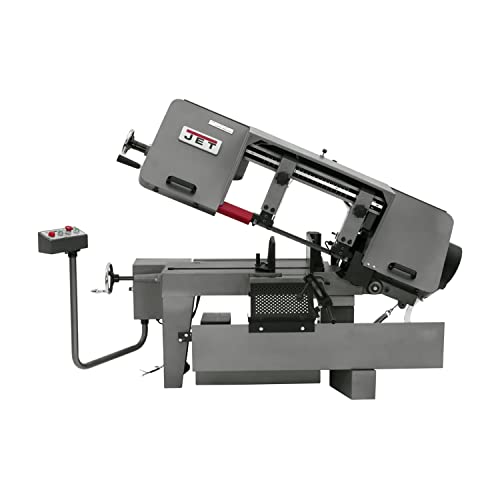
Jet 10×16 Horizontal Metal Cutting Band Saw
What We Like
- Patented three-jaw vise enables faster setup.
- Variable-speed drive allows fine-tuning of blade speed.
- Heavy-duty oil bath transmission for durability.
- Integrated blade coolant system extends blade life.
Trade-offs
- Three-phase power limits installation to well-equipped workshops.
- Its 79-inch length demands significant dedicated floor space.
A 10×16 inch cutting capacity and a 2 HP motor mean this saw can handle large, solid bar stock and structural tubing that would stall smaller machines. It’s built for the serious metal shop where volume and precision matter. The swivel control panel and rapid-action vise put adjustments right at your hands, streamlining repetitive cuts. This is the saw you buy when downtime costs more than the tool itself, designed for operators who need reliable, heavy-duty performance day in and day out.
The trade-off is its sheer size and three-phase power requirement, which make it a poor fit for a home garage or a mobile service truck. Compared to something like the more compact Baileigh 7×12 Metal Cutting Bandsaw, the Jet 10×16 is a stationary strong performer that demands a committed installation. You’re investing in a foundational piece of shop equipment, not a portable tool. For the right user, its sturdy construction and thoughtful features like the coolant system justify the floor space and electrical setup it commands.
Jet 7×12 Deluxe Horizontal/Vertical Band Saw

What We Like
- Quick-lock vise with preset 15, 30, and 45-degree stops
- Sturdy stand with built-in storage cabinet and chip tray
- Toolless quick-lock vise with preset mitering positions
Trade-offs
- Weighs 374 pounds, requiring a dedicated shop floor space
- Large 48-inch length demands significant workshop real estate
A 7×12 cutting capacity and an infeed table that works in both horizontal and vertical positions provide significant versatility. The large 9×12 infeed table extends the support area for long stock. Blade wheels are made from flanged cast iron for increased durability, and the base contains a coolant system that helps to increase cutting efficiency and blade life.
The trade-off for that dual functionality is a substantial 374-pound footprint. It’s a permanent shop fixture, not something you’ll roll into a corner. But if your projects demand both functions, this Jet delivers a sturdy, well-thought-out hybrid solution that eliminates the need for two separate machines.
Baileigh 7×12 Metal Cutting Bandsaw

What We Like
- Adjustable blade guides with eight sealed bearings
- Integrated flood coolant and chip brush system
- Sturdy electro-welded steel plate framework
Trade-offs
- At 343 lbs, it requires a permanent, solid-floor workshop space
- 1 HP motor is less powerful than some 2-3 HP industrial models
A cutting capacity of 7 inches round and the rigidity of a cast iron head and bow mean this saw is built to deliver accuracy that lighter machines can’t match. The vibration-damping mass and sealed bearing guides translate directly to straighter cuts and longer blade life, which is exactly what you need for repeatable metal fabrication. It’s a machine for the serious home shop or light professional setting where precision outweighs portability. The included flood coolant system isn’t just a bonus; it’s essential for keeping cuts cool and the saw running smoothly through tough materials over the long haul.
Its 343-pound weight anchors the saw firmly during operation, requiring a permanent location on a sturdy floor. While the Baileigh stands taller and wider, the Jet 7×12 Deluxe model is actually longer. This build prioritizes a vibration-resistant foundation for clean cuts over easy shop mobility.
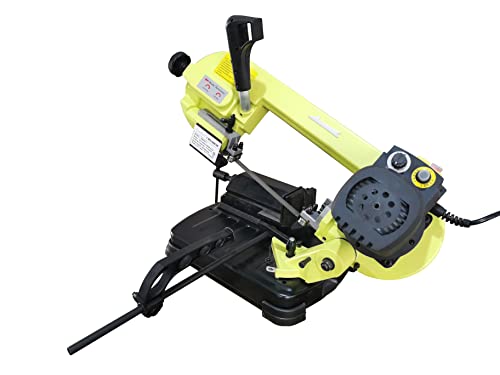
Forestwest 5-Inch Bench Band Saw
What We Like
- Compact bench-top design at 51 pounds.
- Variable speed motor from 2,000 to 4,200 RPM.
- Stable cast iron and steel construction.
- Good mitering capacity for a small saw.
Trade-offs
- 5-inch depth limits stock size versus floor models.
- 3.6-amp motor is modest for heavy-duty cutting.
A 5-inch cutting capacity and 51-pound bench-top form factor make this bandsaw a space-saver for a home shop. It’s built from cast iron and steel for stability, and the variable speed motor gives you control for different metals. This is the saw you buy when you need to make clean cuts on bar stock, pipes, or small structural pieces without committing to a several-hundred-pound machine. It suits the occasional fabricator or serious DIYer who values a dedicated metal cutter but has limited floor space.
The trade-off is in scale. Compared to a machine like the Jet 10×16, you’re giving up the ability to slice through large stock in a single pass. Its 3.6-amp motor will handle the work it’s sized for, but it’s not built for all-day production cutting. Think of it as a precision scalpel rather than a cleaver, it excels at smaller, controlled tasks where its compact size and 60-degree table pivot are genuine assets.
Product photos
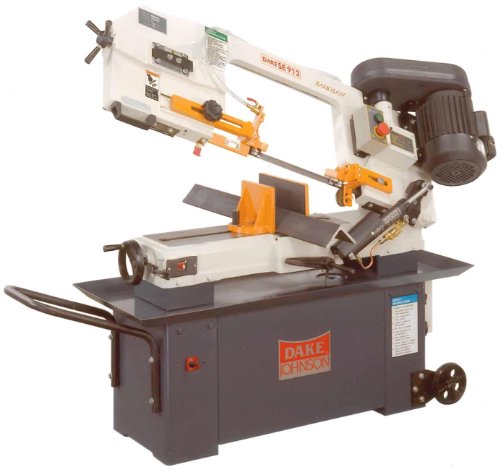
Dake Standard Duty Horizontal Band Saw
What We Like
- Four blade speeds for diverse materials
- Hydraulic feed for variable cutting rates
- Built-in coolant pump system
- Comprehensive safety and overload protection
Trade-offs
- At 550 lb, it requires a permanent, sturdy floor space
- Its 72.5-inch length demands a larger workshop footprint
Four precise blade speeds let you tackle everything from stainless steel to aluminum without swapping setups, making it a versatile workhorse for a mixed-material shop. The hydraulic feed control adds a layer of finesse, allowing you to match the cutting pressure to the job at hand. This saw is built for the fabricator or serious hobbyist who needs one reliable machine to process a wide variety of stock, not just the occasional cut.
At 550 pounds and over six feet long, this horizontal band saw is a permanent floor-standing station, not a portable bench-top unit. Its substantial footprint anchors it in one location, which suits planned production work in a dedicated shop space. For example, the Jet 7×12 Deluxe model is lighter at 374 pounds and more compact, making the Dake’s size a trade-off for its medium-duty capacity and hydraulic feed system.
Baileigh 8.66-Inch Mitering Bandsaw

What We Like
- Excellent 60-degree miter range for complex angles
- Cast iron construction reduces vibration for accuracy
- Patented blade tension gauge for easy setup
- Gearbox drive eliminates belts and pulleys
Trade-offs
- At 539 lb, it requires a permanent, sturdy shop floor
- Large 67.7-inch length demands significant floor space
A 60-degree mitering capacity lets you tackle compound cuts and complex fabrication projects that most horizontal band saws simply can’t handle. This machine is built for the shop that needs precision on angled stock without constantly repositioning the workpiece. The cast iron head and gearbox-driven 2 HP motor provide a solid, vibration-free cut, while the variable blade speed and integrated coolant system are designed to extend blade life during long production runs.
This saw’s capability and durability come with a substantial footprint and weight. You need the floor space for a machine that’s over five and a half feet long and weighs more than a quarter ton. For shops that need serious mitering but have tighter space constraints, the Jet 7×12 Deluxe offers a horizontal/vertical configuration in a much more compact package, though with less cutting capacity.
Product photos
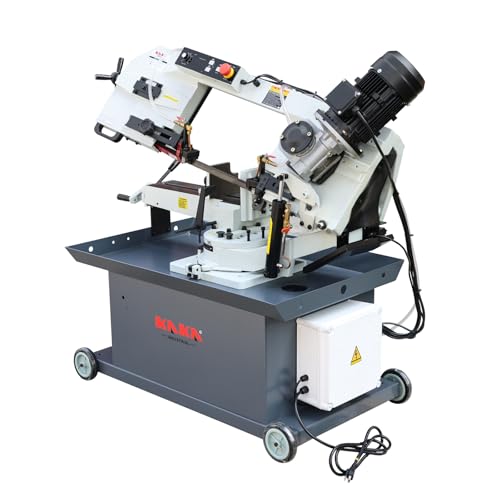
KAKA INDUSTRIAL BS-912GR Band Saw
What We Like
- Gear drive with stepless speed regulation
- Hydraulic downfeed for controlled cutting
- Standard coolant system and auto shut-off
- Single-phase power on a 2 HP gear drive saw
Trade-offs
- Weighs 640 lbs, requiring liftgate delivery and permanent placement
- Miter capacity reduces to 6" round at 45 degrees
A gear drive system with stepless blade speed adjustment is the standout feature here, letting you dial in the perfect feed rate for different metals without stopping to change belts. That makes the BS-912GR a serious contender for shops that process a mix of materials and value precise control. The 9-inch round and 7×12-inch rectangular capacity handles most common bar and structural stock, and getting this performance on a standard 110V single-phase circuit is a major practical advantage for smaller operations.
Weighing 640 pounds, the machine requires a permanent location and careful delivery planning. Freight carriers schedule an appointment for drop-off and require someone present to sign; a liftgate service is recommended for residential addresses. Compared to other single-phase models like the Baileigh BS-250M, the KAKA BS-912GR offers a larger rectangular cutting capacity.
Product photos
VEVOR 7×8.25 Horizontal/Vertical Band Saw

What We Like
- Dual-voltage motor for 110V or 220V shop wiring
- Converts between horizontal and vertical cutting modes
- Four blade speeds for metal, wood, and plastic
- Automatic shut-off and hydraulic downfeed system
Trade-offs
- Heavy at 407.9 lb, requiring a permanent shop space
- Pre-wired for 110V; 220V setup requires rewiring
The dual-voltage 1.1 kW motor is the key feature here, letting you plug into standard 110V outlets now and upgrade to a 220V circuit later without buying a new saw. That makes it a standout choice for a growing home shop or a professional space with mixed wiring. Combine that with its ability to switch between horizontal and vertical operation, and you get a machine ready for straight cuts, miters, and intricate shapes in metal, wood, or plastic. It’s built like a tank with a cast-iron frame, suited for someone who needs one saw to handle a wide variety of materials and cuts.
Its versatility requires a substantial footprint and heft, so this is not a saw you’ll move around often. Its 7×8.25 inch rectangular capacity is also slightly less deep than a model like the Jet 7×12 Deluxe, which could matter for some stock. For the user who values electrical flexibility and dual-mode operation over maximum cut capacity or portability, this VEVOR model carves out a very practical niche as a capable, all-in-one foundation.
Product photos
WEN BA4664 Horizontal/Vertical Band Saw
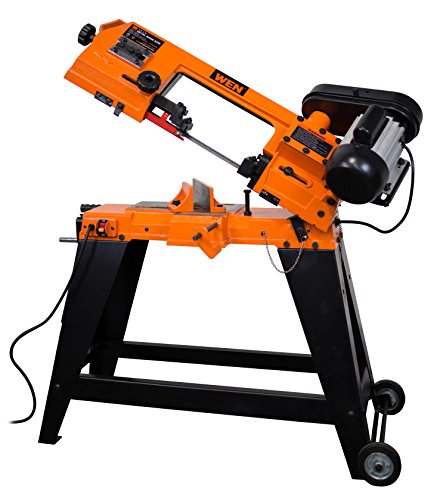
What We Like
- Automatic shutoff after each cut
- Converts between horizontal and vertical operation
- Three-speed motor for different metals
- Includes a mobile stand with wheels
Trade-offs
- Maximum blade speed is 200 feet per minute.
- Weighs 118 pounds with its stand.
Weighing just 118 pounds and rolling on a stand, the WEN BA4664 is built for mobility in a crowded shop. Its ability to switch between horizontal and vertical modes gives a home fabricator or serious DIYer remarkable versatility from a single machine. The three-speed motor and automatic shut-off are thoughtful touches for someone cutting varied metals who values safety and convenience. This is a saw for the user who needs to move it around frequently and tackle a wide range of angled and straight cuts without dedicating a permanent footprint to a heavy, single-purpose tool.
That portability does mean less capacity and rigidity. Compared to a beast like the 973-pound Jet J-7040, this saw’s lighter frame and smaller motor are better suited to intermittent use on smaller stock. It’s a capable all-rounder for a garage workshop, not a production floor workhorse. For someone who values a flexible, space-efficient tool over brute-force cutting, it delivers a compelling set of features in a manageable package.
Product photos
How We Evaluated Horizontal Band Saws
Our assessment is based on specifications from manufacturers and major distributors. These outline the core capabilities and physical requirements of each machine. We also studied expert round-ups to understand common applications and cross-referenced these with patterns in owner feedback about real-world performance and durability. The most critical criteria were cutting capacity (the maximum size of stock the saw can handle), construction and drive system (which affect vibration and longevity), and the saw’s footprint and power needs (as these tools are rarely moved).
A research-led evaluation like this cannot replicate years of shop-floor wear, so we prioritize designs with proven, heavy-duty components and clear documentation for long-term service.
What To Look For In Horizontal Band Saws
The right horizontal band saw is a permanent shop asset, so matching its physical and electrical demands to your workspace is as important as its cutting specs. Consider your largest common stock size, available floor space, and electrical service before comparing features.
Focus on the maximum round and rectangular cut capacity first. Then, evaluate the drive system (belt, gear, or direct) for smooth operation, and always measure your floor space against the saw’s length and weight. Power requirements, especially for single-phase versus three-phase motors, are a critical final check.
Cutting Capacity and Mitering
Cutting capacity, listed as a measurement like “7×12 inches,” defines the largest piece of stock the saw can accept. The first number is the maximum height (or round diameter) it can cut; the second is the maximum width. For angled cuts, check the miter range, some vises swivel 45 degrees, while dedicated mitering heads can reach 60 degrees.
A saw like our best wide miter pick, the Baileigh 8.66-Inch Mitering Bandsaw, is built for complex angles. Remember that capacity often decreases at a miter angle, so verify the specs for 45-degree cuts if that’s a common need for you.
Construction and Drive System
The saw’s frame and drive mechanism affect its cutting accuracy and lifespan under load. Cast iron construction, as found on the Baileigh 7×12, minimizes vibration for straighter cuts. Drive systems vary: belt drives are common and serviceable, while gear drives, like on the KAKA INDUSTRIAL BS-912GR, offer durable power transmission and often feature stepless speed control. An integrated coolant system is a key feature for extending band saw blade life, especially during long or heavy cuts.
Footprint, Power, and Placement
Horizontal band saws require significant space. Beyond the machine’s length, you need room to load long stock. Weight is equally critical; heavy models require a solid, permanent floor. Electrically, you must match the saw’s motor to your shop’s power. Many industrial models require 220V or even three-phase power, which limits them to well-equipped workshops. For shops with standard 110V outlets, look for a dual-voltage horizontal band saw or a dedicated 220V circuit. Before purchasing, perform these practical checks:
- Measure the exact floor space, including clearance for the feed arm and material infeed.
- Confirm your shop’s electrical service (110V, 220V, single-phase, three-phase).
- Check delivery requirements; heavy saws often need a liftgate truck or loading dock.
- Plan for chip management, some stands have trays, others require a separate system.
Always buy for your largest common project, not a one-off giant piece, to avoid overspending on unused capacity.
Horizontal Band Saws Compared
The table below compares all nine picks across their core specifications to help you visualize the key differences at a glance.
| Product | Cutting Capacity | Motor Power | Weight |
|---|---|---|---|
| Jet 10×16 Horizontal Metal Cutting Band Saw | 10" x 16" | 2 HP | 973.0 Pounds |
| Jet 7×12 Deluxe Horizontal/Vertical Band Saw | 7" x 12" | N/A | 374 pounds |
| Baileigh 7×12 Metal Cutting Bandsaw | 7" round, 7" x 10.25" rectangle | 1 HP | 343 lbs |
| Forestwest 5-Inch Bench Band Saw | 5 inches deep | 3.6 Amp, 1/2 HP | 51.0 Pounds |
| Dake Standard Duty Horizontal Band Saw | N/A | 1 hp | 550.0 Pounds |
| Baileigh 8.66-Inch Mitering Bandsaw | 8.66-inch round at 90° | 2 HP | 539 pounds |
| KAKA INDUSTRIAL BS-912GR Band Saw | 9" round, 7" x 12" rectangular | 2 HP | 640 lbs |
| VEVOR 7×8.25 Horizontal/Vertical Band Saw | 7 x 8.25 in rectangular | 1.1 kW | 407.9 lb |
| WEN BA4664 Horizontal/Vertical Band Saw | N/A | 4.6 amp | 118.0 Pounds |
Frequently Asked Questions
Which horizontal band saw is the best?
The “best” saw depends entirely on your shop’s space, power, and typical workload. For a high-volume metal shop with three-phase power, the Jet 10×16 Horizontal Metal Cutting Band Saw is our top recommendation due to its durable construction and efficient vise. A home workshop with limited space might find the Forestwest 5-Inch Bench Band Saw or the convertible WEN BA4664 to be the best fit for their needs and budget.
What kind of saw cuts horizontally?
A horizontal band saw is a stationary machine where a continuous band of blade, driven by wheels, moves in a horizontal plane to cut down through material. It’s primarily used for cutting metal stock, like bar, tube, and pipe, to length. This differs from a vertical band saw, where the blade runs vertically and is used for contour cutting and intricate shapes.
Who makes the best bandsaws?
Several manufacturers are renowned for building durable, accurate band saws. Brands like Jet, Baileigh, and Dake consistently produce well-regarded industrial and shop-grade models found in professional settings. For smaller shops and home use, brands like WEN and VEVOR offer capable machines at more accessible price points. The best brand for you aligns with your required capacity, intended use, and workshop infrastructure.
What are the different types of horizontal band saws?
The main types are manual (operated with a manual feed arm), hydraulic feed (using a cylinder for controlled down pressure), and fully automatic (which feed, cut, and shut off autonomously). They also vary by construction, such as single-column or heavier dual-column designs for larger capacity. Furthermore, some models are dedicated horizontal saws, while others, called horizontal/vertical band saws, can be repositioned for both cutoff and contour cutting work.
Can a horizontal band saw cut curves?
No, a standard horizontal band saw is designed almost exclusively for straight cutoff cuts and mitered angles. Its blade path and workpiece orientation do not allow for curved or contoured cuts. For cutting curves in metal, you would need a vertical band saw or a portable band saw mounted in a stand for vertical use.
The Bottom Line
For shops that process large metal stock daily and have the necessary three-phase power, the Jet 10×16 Horizontal Metal Cutting Band Saw is the definitive choice. It offers industrial durability and fast setup. If you’re setting up a home garage or have a strict budget, start with the Forestwest 5-Inch Bench Band Saw for its space-saving design. Ultimately, the single most important factor is matching the saw’s physical and electrical demands to your permanent workshop space. Its massive footprint and weight make it a commitment you’ll live with for years.
