
10 Best Vertical Band Saws For Metal Cutting in 2026
This post contains affiliate links. As an Amazon Associate, we earn from qualifying purchases.
The Baileigh BS-712M Horizontal/Vertical Metal Bandsaw is our best overall vertical band saw for metal cutting because it uniquely switches between stock cutting and detailed vertical work. For those who need to make their own blades, the Grizzly Industrial G0806 is our Best With Blade Workshop pick. The WEN BA4664 offers great value for a budget starter saw.
Choosing the right saw means balancing power, workspace, and the specific cuts you need to make. Our research compared specifications, expert insights, and owner feedback to identify ten models suited for different shop needs and skill levels.
Top 10 Vertical Band Saws For Metal Cutting in the Market
Certain content that appears on this site comes from Amazon. This content is provided "as is" and is subject to change or removal at any time.
The Best Vertical Band Saws For Metal Cutting, Reviewed
Baileigh BS-712M Horizontal/Vertical Metal Bandsaw

What We Like
- Operates in both horizontal and vertical positions
- Cast iron construction minimizes vibration for clean cuts
- Flood coolant system for long-term smooth operation
- Sturdy electro-welded steel plate framework
Trade-offs
- Weighs 343 pounds, requiring a permanent shop footprint
- At 64.1 inches tall, it needs significant vertical clearance
- Large 49.2-inch width demands substantial floor space
A 7 by 10.25-inch rectangular cutting capacity handles most common bar stock and tubing in a single pass, which means it can process large workpieces without requiring multiple setups. This bandsaw’s cast iron head and electro-welded steel frame are designed to minimize vibrations, so it provides clean, accurate cuts even at its maximum capacity. The ability to switch between horizontal and vertical operation allows one machine to handle both long stock cutoff and detailed vertical work like notches. An adjustable blade guide system with eight sealed ball bearings helps align the blade and is intended to increase its lifetime of use.
That capability comes with a substantial physical presence, measuring over four feet in both width and height and weighing 343 pounds. Its integrated flood coolant system and chip removal brush are features intended to keep the saw running smoothly for many years, but they also contribute to its stationary nature. The saw’s dimensions are larger than those of some dedicated vertical models, such as the Grizzly G0806 which is 36 inches long.
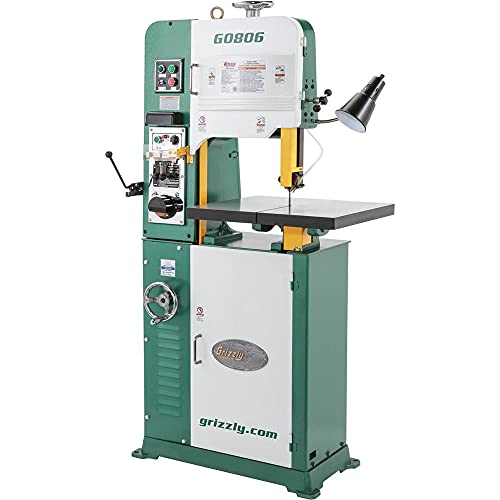
Grizzly Industrial G0806 Vertical Band Saw
What We Like
- Versatile variable speed for different metals
- Extremely stable cast-iron and heavy-duty stand
- Complete on-board blade maintenance station
- Adjustable work light and chip blower
Trade-offs
- Requires 67.5 inches of vertical clearance
- No cutting capacity dimensions provided for comparison
With a variable blade speed from 88 to 384 FPM, the Grizzly G0806 can handle different metals without needing separate machines. Its on-board blade cutter, grinder, annealer, and welding station allow for blade creation and maintenance right at the saw. Cast-iron components and a heavy-duty stand provide stability for long-term use.
This is not a saw you tuck into a corner. Its substantial footprint demands a dedicated spot on the shop floor. For general metal cutting where blade welding isn’t a daily task, a simpler model like the Baileigh BSV-12VS-V2 offers similar cutting capacity in a vertical format. The Grizzly’s value is in its all-in-one capability; it saves you from buying a separate blade welder and grinder, paying off over years for a busy shop. For everyone else, that integrated complexity might be overkill.
Product photos
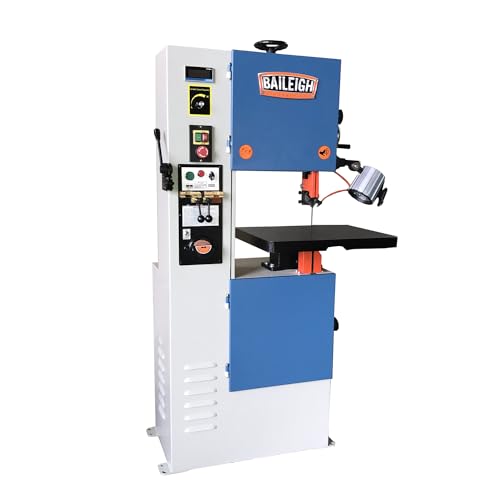
Baileigh BSV-12VS-V2 Vertical Metal Bandsaw
What We Like
- Wide 100-1000 fpm variable speed range
- Substantial 720 lb steel frame minimizes vibration
- Integrated LED work lamp for visibility
- Accepts common 1/8" to 1/2" blades
Trade-offs
- 720 lb weight demands a permanent, sturdy floor location
- 6.875" max cut thickness limits very large stock
A variable speed range from 100 to 1000 feet per minute means you can dial in the perfect blade speed for materials from hard alloys to plastics without swapping motors or pulleys. This makes the BSV-12VS-V2 a true single-shop saw for mixed-medium projects. Its 12.2-inch throat depth handles sizable sheet and plate work, while the heavy steel plate construction provides the solid foundation needed for precise, vibration-free cuts in metal.
That rock-solid build comes with a real footprint, both in its shop footprint and its 720-pound heft. This is a stationary tool, not something you’ll roll into a corner. For shops needing serious vertical capacity but more flexibility, the horizontal/vertical capability of the Baileigh BS-712M is a compelling alternative, though it offers less throat depth. The BSV-12VS-V2 is built for dedicated, repeatable performance in one spot.
Product photos
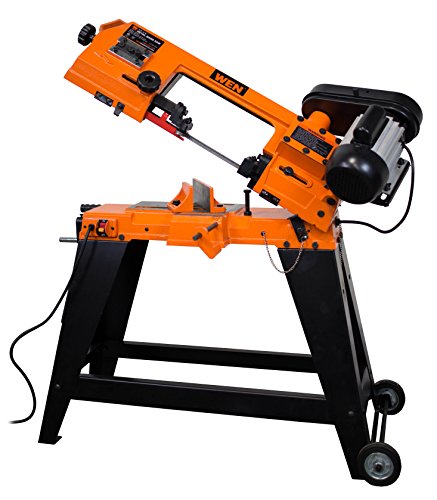
WEN BA4664 Metal Band Saw with Stand
What We Like
- Automatic shutoff adds safety after cuts
- Three-speed motor handles various metals
- Includes a stand with wheels for mobility
- Offers both vertical and horizontal operation
Trade-offs
- At 118 lb, it's a substantial benchtop unit
- Lacks the variable speed range of premium saws
With a 4.6 amp motor and three fixed blade speeds, this WEN saw is a straightforward tool for basic stock cutting and fabrication. It’s a solid entry point for a home shop on a tight budget, delivering core functionality like a mitering vise and automatic shut-off without frills. The included stand with wheels is a genuine perk, letting you roll it out of the way when the job is done. For hobbyists or occasional users who need to cut bar stock, angle iron, or pipe, this model covers the essentials.
The trade-off is in capacity and refinement. You’re getting a capable but basic machine, not a heavy-duty workhorse. Its 118-pound weight is significantly lighter than many floor models, which affects its mass and stability during heavy cuts. For cutting larger stock or running production batches, you’ll quickly feel the constraint. Think of it as a reliable first band saw that teaches you the process before you might upgrade to a more capable, and costly, floor model.
Jet HVBS-712D Vertical Band Saw

What We Like
- Large 9" x 12" infeed table for support
- Quick-lock vise with preset mitering positions
- Flanged cast iron blade wheels for durability
Trade-offs
- Weighs 374 pounds, requiring dedicated floor space
- Large 48-inch length demands a spacious workshop
A built-in coolant system is the standout feature here, a serious asset for anyone cutting metal regularly. It keeps the blade cool and lubricated, which translates directly to cleaner cuts and a much longer blade lifespan before you need to replace it. The quick-lock vise and large infeed table are thoughtful touches that speed up repetitive work in both horizontal and vertical positions.
The trade-off for that heavy-duty capability is its substantial footprint and weight. At 374 pounds, you’re committing to a permanent spot on the shop floor. For comparison, the more compact Grizzly Industrial G0806 vertical band saw takes up less floor space, making it a better fit for tighter workshops where the full horizontal/vertical versatility isn’t a daily requirement.
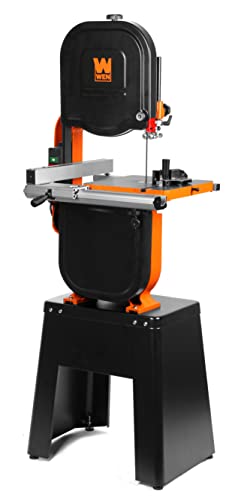
WEN BA1411 14-Inch Industrial Band Saw
What We Like
- Dual-voltage operation for shop flexibility
- Two-speed motor handles various materials
- Quick-release blade tension for easy changes
- Cast iron frame reduces vibration
Trade-offs
- At 66.5 inches tall, it requires substantial floor space.
- The single included blade limits immediate material variety.
- Bevel range is 15 degrees left versus 45 degrees right.
The ability to run on either 120V or 240V power makes this saw a uniquely flexible choice for a shop that might upgrade its electrical service or move locations. That dual-voltage 1 HP motor drives the blade at two speeds, giving you the versatility to tackle different metals and even some wood. Combined with its solid 6 by 13.5-inch cutting capacity, it’s a strong fit for a serious hobbyist or a small fabrication shop that needs one reliable saw for a mix of tasks.
That two-speed operation is fixed, so it lacks the variable speed control found on a model like the Grizzly Industrial G0806. The saw stands 66.5 inches tall on its included steel stand, which requires consideration for placement in a workshop. Its 14-by-14-inch cast iron work table bevels for angled cuts, contributing to the machine’s overall versatility within its design.
Product photos
Hoteche 12-Inch Benchtop Band Saw

What We Like
- Stand included for immediate stability
- Tilting table for bevel cuts up to 45°
- Ample 12-inch cutting width capacity
Trade-offs
- At 130 pounds, it's a substantial benchtop unit requiring a sturdy surface
- Two-speed operation lacks variable speed control
Including a dedicated stand with a 12-inch band saw is a major practical advantage, transforming it from a bench-hogging tool into a ready-to-use workstation. This Hoteche model suits the home shop user who needs a single, versatile saw for mixed materials and wants to avoid the hassle and extra cost of sourcing a stable base. It’s a complete, space-efficient package for someone setting up their first serious workshop or adding a capable secondary saw.
The trade-off for this convenience is in specialization. At 130 pounds with the stand, it’s solid but not nearly as massive as dedicated industrial vertical saws, which translates to more vibration during heavy cuts on dense metal stock. You’re getting a very capable all-rounder that simplifies setup, not a niche-optimized machine for daily production metalwork.
Product photos
KFMK Tabletop Metal Band Saw

What We Like
- 5-inch cutting capacity for substantial stock
- Wide 137-472 FPM variable speed range
- Dual workbenches for large and small pieces
- Compact 23-inch tall tabletop footprint
Trade-offs
- Tabletop design lacks the mass of floor models
- 5-inch capacity is less than larger vertical saws
At just 23 inches tall, the KFMK MBS125V-B fits on a benchtop, saving critical floor space in a garage or small shop. Its 10 Amp motor and 5-inch cutting capacity are intended for metal projects, from heavy-duty tasks to DIY jobs. The dual workbench design provides a stable platform for larger pieces and a smaller area for more precise cuts on metal stock.
The tabletop design is inherently lighter than a full-size floor model, so it lacks the mass of a machine like the 720-pound Baileigh BSV-12VS-V2. This can affect stability for the heaviest metal workpieces. It serves as a capable primary saw for limited spaces or a secondary station, not an industrial vertical bandsaw.
Product photos
Jet HVBS-56 Metal Bandsaw

What We Like
- Automatic shut-off for safety after cuts
- Heavy-duty 14-gauge steel stand with shelf
- Large wheels and handle for easy mobility
- Adjustable leveling pads on front legs
Trade-offs
- 5×6-inch capacity is smaller than many vertical models
- 115 lb weight offers less mass for vibration damping
- 1/2 HP motor is less powerful than 1+ HP saws
The automatic shut-off after cuts adds safety by preventing the machine from running unattended once a cut is complete. This Jet model suits someone who values a compact, dual-purpose saw that can pivot between horizontal cutoff work and vertical contouring without taking up a huge footprint. Its manageable 115-pound weight and large wheels mean you can reposition it in a crowded shop with one hand.
You trade some raw cutting muscle and capacity for that safety-centric design and mobility. The 1/2 HP motor and 5×6-inch capacity are sufficient for tubing and small stock. However, they are outmatched by dedicated vertical saws like the Baileigh BSV-12VS-V2 when it comes to slicing through thick plate or large bar stock. It brings reliable, safe operation to the forefront in a package that’s easy to live with day-to-day.
VEVOR 7×8.25in Metal Bandsaw

What We Like
- Dual horizontal and vertical cutting modes
- Four adjustable blade speeds for material versatility
- 0-45° angle adjustment with locking scale
- Automatic shut-off hydraulic downfeed system
Trade-offs
- At 407.9 lb, moving it requires significant effort
- Pre-wired for 110V; 220V operation requires rewiring
Switching between horizontal and vertical operation is the key feature, allowing a single machine to handle everything from straight cuts on bar stock to intricate shapes. Its 1.1 kW motor provides consistent power for materials like steel, aluminum, and wood, while four adjustable speeds let you match the blade feed to different material types and thicknesses. A quick-lock clamp holds workpieces firmly, and the saw bow tilts up to 45 degrees for precise angled cuts. The machine is crafted from wear-resistant cast iron, contributing to its overall stability and durability.
You pay for that versatility with a substantial footprint and heft, this isn’t a tool you’ll be rolling around the garage every day. The VEVOR’s automatic shut-off is a thoughtful safety and convenience feature, especially for repetitive horizontal cuts where you can walk away.
Product photos
How We Evaluated Vertical Band Saws
Our evaluation is based on a review of manufacturer specifications, technical documentation, and expert round-ups from industry sources. We looked for patterns in owner feedback to confirm real-world performance on key criteria important for metal cutting: stability and vibration control, cutting capacity and versatility, and practical features for the workshop.
The most critical factors were a saw’s rigidity, often from cast iron or heavy steel frames, to ensure clean cuts. We also looked for a suitable speed range for different metals and a design that fits the user’s available space and workflow. Useful additions like coolant systems, blade maintenance stations, and safety features were considered. A research-based approach has limits; it cannot account for long-term durability or nuances only apparent during daily use in a production environment.
What To Look For In Vertical Band Saws
Selecting a vertical band saw involves more than just horsepower. You need a tool matched to your shop’s space, the materials you cut, and how often you use it.
Key considerations include the saw’s weight and footprint for stability, a variable speed motor to handle different metals, and practical features like coolant systems or integrated blade maintenance. Your choice will hinge on whether you need a permanent shop centerpiece or a mobile, space-saving solution.
Stability and Vibration Control
A saw’s mass and construction directly influence cut quality. Heavy cast iron frames and substantial steel frameworks, like the 720-pound build on the Baileigh BSV-12VS-V2, dramatically reduce vibration for smoother, more accurate cuts. This rigidity is essential when cutting hard metals or executing precise contours. Lighter benchtop or tabletop models trade some of this inherent stability for a smaller footprint, which is a worthwhile compromise for occasional use or limited space.
Cutting Capacity and Speed Versatility
Check the maximum cutting thickness and table size to ensure the saw can handle your typical workpiece. Capacity varies widely, from the KFMK Tabletop model’s 5-inch limit to larger floor models that handle plate stock. Equally important is blade speed control; a wide variable speed range (measured in feet per minute) allows you to optimize cutting for soft aluminum, tough steel, or even wood. This versatility is a hallmark of dedicated metal-cutting saws versus wood-focused models.
Practical Features and Shop Fit
Consider how the saw integrates into your workflow. A flood coolant system, like on the Jet HVBS-712D, extends blade life and improves cut quality during long sessions. An on-board blade welder and grinder, as on the Grizzly G0806, is invaluable for fabricators making custom blades. For space-constrained shops, look for models with stands and wheels for mobility or compact tabletop designs. Also, consider voltage requirements; a dual-voltage option like the WEN BA1411 provides flexibility if your shop power changes.
- Assess your floor space against the saw’s listed dimensions and weight.
- Determine if you need horizontal cutting capability or a dedicated vertical machine.
- Prioritize variable speed if you cut multiple metal types.
- Consider future needs: will a benchtop model suffice, or is a floor model a better long-term investment?
The right saw feels like a permanent part of your shop, not an obstacle you have to work around.
Vertical Band Saws For Metal Cutting Compared
The comparison table below highlights the key specifications and trade-offs of our top picks at a glance.
| Product | Motor | Cutting Capacity | Blade Speed Range |
|---|---|---|---|
| Baileigh BS-712M Horizontal/Vertical Metal Bandsaw | 1 HP, 120V | 7" round, 7" x 10.25" rectangle | N/A |
| Grizzly Industrial G0806 Vertical Band Saw | 1-1/2 HP | N/A | 88 to 384 FPM |
| Baileigh BSV-12VS-V2 Vertical Metal Bandsaw | 1 HP, 120V | 6.875 inches thick | 100-1000 fpm |
| WEN BA4664 Metal Band Saw with Stand | 4.6 amp | N/A | 80, 120, or 200 FPM |
| Jet HVBS-712D Vertical Band Saw | N/A | 7" x 12" | N/A |
| WEN BA1411 14-Inch Industrial Band Saw | 1 HP, 11-amp | 6" deep, 13.5" wide | 1700 or 3000 FPM |
| Hoteche 12-Inch Benchtop Band Saw | 7-amp, 1 HP | 5-inch depth, 12-inch width | 7.6 to 15.8 m/s |
| KFMK Tabletop Metal Band Saw | 10 Amp | 5 inches | 137 to 472 FPM |
| Jet HVBS-56 Metal Bandsaw | 1/2 HP, 3-speed | 5" x 6" | N/A |
| VEVOR 7×8.25in Metal Bandsaw | 1.1 kW | 7 x 8.25 in | 86 – 260 FPM |
Frequently Asked Questions
What is the best vertical band saw for metal cutting?
Our research points to the Baileigh BS-712M as the best overall for most users due to its dual horizontal/vertical operation, which provides exceptional versatility in a single, rigid machine. It’s ideal for the serious home fabricator or small pro shop that needs to handle both stock cutting and detailed vertical work without sacrificing accuracy.
Can a vertical bandsaw cut metal?
Yes, but only a bandsaw designed for metal cutting. These saws have slower, variable blade speeds, more powerful motors, and use specific blades like bi-metal or carbide-tipped to handle metal. Using a wood-cutting bandsaw on metal can damage the blade, motor, and the saw itself. For guidance on selecting the right tool, our article on metal cutting band saws covers the essentials.
What is the best saw for cutting through metal?
The “best” saw depends on the job. For straight cuts on bar stock, a horizontal bandsaw or cold saw is often faster. For intricate shapes, curves, or notching in sheet metal, a vertical bandsaw is superior. For on-site or demolition work, a portable band saw is the practical choice. Our guide on other metal cutting tools explores these different options.
What is the best bandsaw blade for cutting metal?
For general-purpose cutting of steel and alloys, a bi-metal blade with a variable-tooth pitch offers a good balance of durability and cut quality. Carbon steel blades work for softer metals and intricate cuts, while carbide-tipped blades provide the longest life for abrasive or hardened materials. Choosing the correct blade is as important as the saw itself, and you can learn more in our resource on band saw blades for metal.
How do I choose between a vertical and horizontal band saw?
A vertical band saw excels at freehand cutting of curves, contours, and irregular shapes in sheet or plate. A horizontal band saw is typically dedicated to straight cuts, often with an automatic feed, making it ideal for cutting bar stock to length. Some models, like the Baileigh BS-712M or VEVOR 7×8.25in, offer both modes. For a deeper comparison, our look at horizontal vs vertical band saws can help you decide.
The Bottom Line
The Baileigh BS-712M Horizontal/Vertical Metal Bandsaw is our best overall pick, delivering professional-grade versatility and stability for the serious home fabricator or small shop. If your budget is tight, start with the capable WEN BA4664, and if your work demands making custom blades on-site, the Grizzly Industrial G0806 with its integrated workshop is the clear choice.
Ultimately, the most important factor is matching the saw’s physical footprint and cutting capacity to your available space and typical projects. A massive, coolant-equipped saw is overkill for a garage hobbyist, while a lightweight benchtop model will frustrate anyone doing production work. Choose the most substantial, stable saw your space and budget can accommodate for the best long-term results.
