
9 Best Industrial Horizontal Band Saws For Metal Cutting
This post contains affiliate links. As an Amazon Associate, we earn from qualifying purchases.
Our best overall pick for an industrial horizontal band saw is the Jet J-7040 10×16, thanks to its oil-bath transmission for durability and an integrated blade coolant system. The Jet HBS-916 offers the best high-power option for single-phase workshops, while the Grizzly G0561 is a top budget choice.
Selecting the wrong band saw means wrestling with undersized capacity, insufficient power, or a footprint that swallows your shop floor. You need a saw that matches your shop’s electrical supply, handles your typical stock, and fits your available space. Our guide compiles research from manufacturer specs and owner feedback to compare nine top models across critical criteria, helping you make a confident choice.
Top 9 Industrial Horizontal Band Saws For Metal Cutting in the Market

Certain content that appears on this site comes from Amazon. This content is provided "as is" and is subject to change or removal at any time.
The Best Industrial Horizontal Band Saws For Metal Cutting, Reviewed
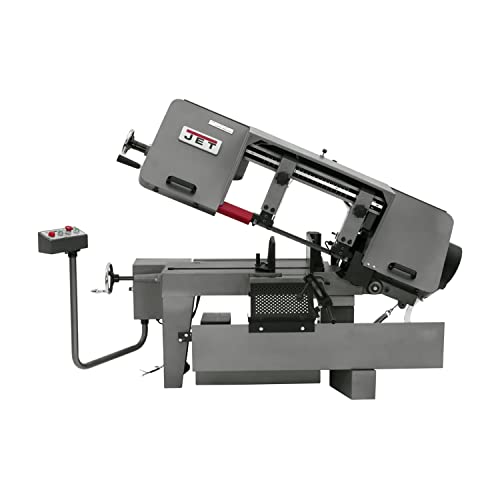
Jet J-7040 10×16 Horizontal Metal Band Saw
What We Like
- Heavy-duty oil-bath transmission for durability
- Integrated blade coolant system extends blade life
- Swivel control panel puts all functions at hand
Trade-offs
- Requires 3-phase power, limiting shop compatibility
- At 973 lb, it demands a permanent, sturdy foundation
- Its 79-inch length needs significant floor space
With a 10×16 inch cutting capacity, this saw handles solid stock and large tubing, making it suitable for shops that regularly work with sizable material. Its 2 HP three-phase motor provides power for demanding cuts, and the variable-speed drive allows operators to adjust blade speed for different metals. The six-point blade guide system supports the blade during operation.
The trade-off is its substantial footprint and three-phase power requirement, which rules out most home workshops. The J-7040’s heft isn’t a drawback, it’s the source of its vibration-dampening stability, but you need the floor and the electrical service to match.
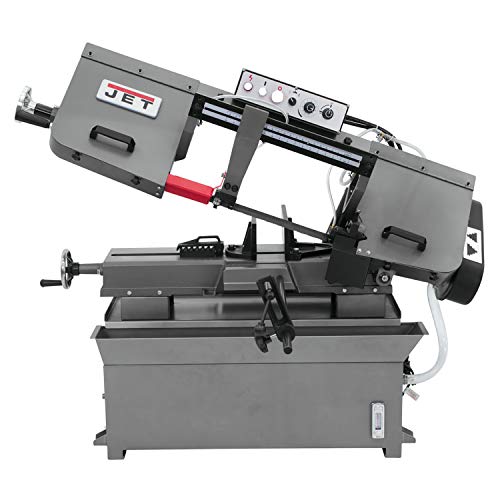
Jet HBS-916 9×16 Horizontal Metal Band Saw
What We Like
- Powerful single-phase motor for tough materials
- Hydraulic downfeed ensures steady, uniform cutting
- Built-in coolant system extends blade life
- Quick-positioning vise swivels to 45 degrees
Trade-offs
- Weighs 625 pounds, requiring a permanent, sturdy floor space
- Lacks the 10×16 capacity of the larger Jet J-7040 model
A 1.5 HP motor running on standard 115 or 230-volt single-phase power means you can tackle serious metal stock without needing a three-phase electrical hookup. This saw is built for the serious home shop or small fabrication business that needs reliable, high-power cutting on common workshop power. The hydraulic downfeed and carbide blade guides deliver the stable, clean cuts that reduce waste and rework on expensive materials.
The trade-off for that solid, industrial-grade construction is a substantial 625-pound footprint. You’ll need to plan its placement carefully, as it’s not a tool you’ll move around the shop. Compared to the more compact Grizzly G0561, the Jet HBS-916 offers greater power and a larger cutting capacity. This makes it a step up for users who have outgrown lighter-duty machines but aren’t ready for a full three-phase industrial model.
Grizzly Industrial G0561 Industrial Horizontal Band Saw
What We Like
- Automatic shut-off enhances safety during operation
- Four blade speeds for different metals and thicknesses
- Hydraulic feed control for consistent cutting pressure
- Prewired for standard 110V workshop outlets
Trade-offs
- 343-pound weight requires a sturdy, permanent shop location
- 7×12 capacity is smaller than many industrial models
Prewired for standard 110V power, the Grizzly G0561 runs on common shop electricity, so you don’t need a special three-phase hookup. Its hydraulic feed control manages the blade’s descent for you, and the automatic shut-off stops the machine when a cut is finished. These features allow it to complete repetitive cuts without requiring constant operator attention.
The saw’s 7×12 inch capacity defines the maximum size of material you can fit into it. Its 1 HP motor provides the cutting power, which is less than the 2 HP found on the larger Jet J-7040. Weighing 343 pounds, this machine requires a sturdy bench or stand to remain stable during operation.
Baileigh BS-250M Mitering Horizontal Band Saw

What We Like
- Cast iron construction minimizes vibration for accuracy.
- Patented liquid-filled gauge simplifies blade tensioning.
- Inverter and gearbox drive eliminates belts and pulleys.
- Integrated coolant pump extends blade life.
Trade-offs
- Weighs 539 pounds, requiring a permanent, sturdy foundation.
- Large footprint demands significant floor space.
A swiveling head that cuts up to 60 degrees makes this saw a specialist for complex angled work on sizable stock. It’s built for the shop that regularly needs precise miter cuts on rounds or tubes up to 8.66 inches, and the cast iron frame ensures those angles stay true cut after cut. The variable speed control and efficient coolant system are designed for the long haul, turning a high-volume cutting task into a predictable, low-maintenance operation.
The trade-off for that wide miter range and solid construction is a substantial machine. At 539 pounds, this isn’t a saw you’ll roll around the garage; it’s a permanent station. For shops that need maximum straight-cut capacity above all else, the heavier Jet J-7040 offers a larger 10-inch capacity. But if your work involves frequent angled cuts on heavy materials, the BS-250M’s dedicated design is hard to match.
Baileigh BS-712M Horizontal/Vertical Band Saw

What We Like
- Operates in both horizontal and vertical positions
- Cast iron saw head and bow minimize vibration
- Adjustable blade guides with eight sealed bearings
- Includes chip brush and flood coolant system
Trade-offs
- At 343 pounds, it requires a dedicated, stable shop floor space
- Large footprint of 53.2" L x 49.2" W demands significant workshop area
A 7-inch round and 7 by 10.25-inch rectangular cutting capacity handles most bar stock and tubing found in a home shop. Its ability to switch between horizontal and vertical operation is the defining feature, enabling mitering up to 45 degrees in one mode and freehand contour work in the other. This flexibility makes it a core machine for a versatile workshop where space for multiple dedicated saws is limited. The cast iron saw head and electro-welded steel framework provide the solid base needed for clean, accurate cuts across both modes.
You pay for that versatility with a substantial footprint and a 1 HP motor rated for its capacity. For cutting large volumes of solid bar, a dedicated horizontal saw like the heavier Jet J-7040 is listed with a 2 HP motor. The Baileigh BS-712M excels as a shop’s primary metal-cutting saw when you need one machine to perform multiple roles reliably.
Product photos
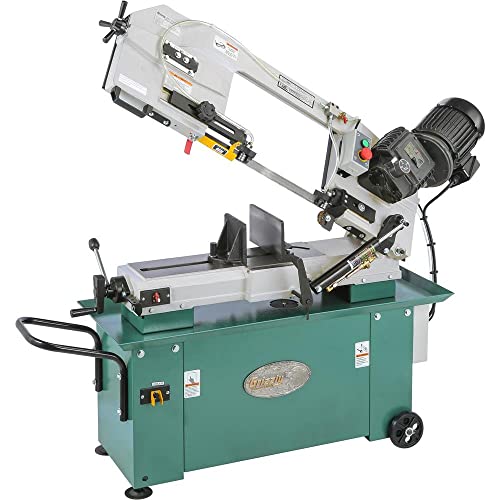
Grizzly Industrial G9743 Horizontal Band Saw
What We Like
- Three gear-driven blade speeds
- Hydraulic down-feed for consistent cuts
- Standard 110V single-phase power
- Full 45-degree mitering capacity
Trade-offs
- 464 lb weight demands a permanent shop location
- 1 HP motor is less powerful than some 2 HP models
- 7" x 12" capacity is smaller than 10" x 16" saws
Its gear-driven system provides three blade speeds, 125, 255, and 380 feet per minute, so you can select the appropriate rate for different metals. This control is combined with an adjustable hydraulic down-feed, which manages cutting pressure on standard 110-volt power. The design focuses on offering selectable speeds through a gear step mechanism rather than a variable drive.
You trade some muscle and capacity for that gear-drive precision. At 464 pounds, it’s a serious floor-model machine, but its 1 HP motor and 7 by 12-inch cut won’t keep pace with a larger industrial unit like the Jet J-7040 on heavy stock. It fits perfectly in the gap between basic hydraulic saws and full-production machines, delivering reliable, controlled cutting for a serious hobbyist or a small professional shop.
Product photos
VEVOR Horizontal/Vertical Band Saw

What We Like
- Four adjustable blade speeds for varied materials
- Converts between horizontal and vertical cutting modes
- 0-45° angle adjustment with locking scale
- Automatic hydraulic shut-off after cut completion
Trade-offs
- At 407.9 lb, it is substantially heavier than similar-capacity saws like the Grizzly G0561.
- Requires manual V-belt adjustment to change blade speed.
Switching between horizontal and vertical modes lets you tackle straight cuts, curves, and complex shapes with one machine. This versatility is ideal for a shop that works with multiple materials. Its 1.1 kW motor provides enough power for common metal stock. The four blade speeds, from 86 to 260 feet per minute, allow you to match the rate to materials like steel, aluminum, or wood. The saw’s cast iron construction gives it a stable feel during operation. An automatic shut-off feature also helps prevent motor wear by stopping the blade after a cut is finished.
That versatility does come with a footprint and heft you need to plan for. The speed changes aren’t dial-operated; you’re moving a V-belt on the pulley. For a shop focused purely on high-volume metal cutting where speed is critical, a single-purpose industrial saw might be a smoother fit. But if your workbench sees a variety of materials and shapes, this VEVOR model brings a compelling range of functions to the table in one package.
Product photos
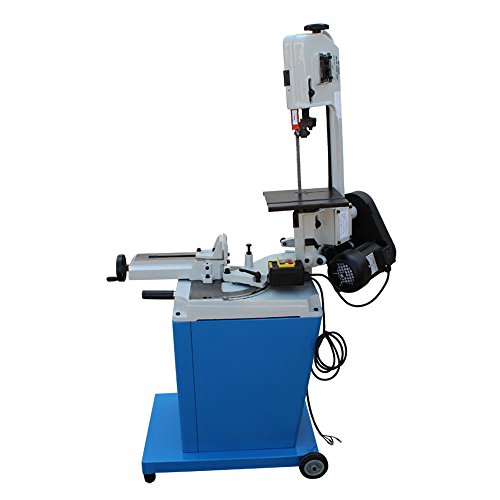
Proline Amazon Industrial Horizontal Band Saw
What We Like
- Extremely compact 20-inch length
- Dual vertical and horizontal operation
- Includes both 4-inch wheels
- 3-phase motor for industrial duty cycles
Trade-offs
- 1/2 HP motor is less powerful than many 1-2 HP saws
- Requires 220V 3-phase power, not common in home shops
A 20-inch long footprint is the standout feature here. This compact size lets the saw fit into a corner of a crowded shop where a larger machine simply wouldn’t. Combined with its dual vertical and horizontal functionality, it becomes a versatile solution for a small fabrication cell or a serious hobbyist. They can make precise cuts in bar stock and small shapes without dedicating a huge amount of floor space.
This machine prioritizes a compact footprint over high horsepower. With a 1/2 HP motor, it’s designed for industrial 3-phase power, which differs from more powerful single-phase models like the 2 HP Baileigh BS-250M. It suits a user with limited space who needs a dedicated saw for smaller-scale industrial work, though the specific maximum material size it can handle is not defined in the available facts.
Product photos
MH Amazon Industrial Horizontal Band Saw

What We Like
- 110V motor suits standard workshop outlets
- Four blade speeds for different materials
- Converts between horizontal and vertical operation
Trade-offs
- 45-degree miter capacity reduces to 4.75" x 4.88"
- Vertical mode stands 65" tall, requiring significant headroom
- No miter vise or specific angle stops mentioned in specs
This MH Amazon saw is built for the shop that needs to process a steady stream of 7×12 inch bars and tubes. Its 1.5HP 110V motor means you can plug it in anywhere, and the ability to switch to a vertical configuration adds versatility for cutting curves or notches. It’s a solid choice when your work demands repeatable, hands-off feeding on common section sizes.
Angled cutting capacity is reduced, with a 45-degree miter limiting rectangular work to about 4.75 by 4.88 inches. That means larger pieces of stock cannot be cut on a diagonal. For shops regularly needing big miter cuts, this could be a limiting factor.
How We Evaluated Industrial Horizontal Band Saws For Metal Cutting
Our evaluation began with deep research into machine specifications, manufacturer documentation, and expert round-ups from industry sources. We prioritized criteria essential for industrial cutting: power supply compatibility, cutting capacity, and integrated features like coolant systems and mitering capabilities. For example, we compared motor HP and voltage requirements, measured throat and height dimensions, and assessed the real-world impact of features like hydraulic downfeed.
We also scrutinized patterns in owner feedback regarding long-term reliability, accuracy, and any common operational hurdles. This research helps distinguish a horizontal band saw built for all-day shop use from one better suited to intermittent tasks. The primary limitation is that this is a research-led guide; we cannot provide firsthand performance data from cutting different metal alloys or long-term durability testing. Our aim is to give you a comprehensive, fact-based framework for your own final decision.
What To Look For In Industrial Horizontal Band Saws For Metal Cutting
Choosing an industrial horizontal band saw requires balancing your shop’s power, the materials you cut, and the space you have. Key differences lie in motor type, cutting capacity, and the foundational features that ensure clean, repeatable cuts.
Your saw must match your shop’s electrical supply, which is either single- or three-phase. It also needs enough capacity for your typical stock, measured in height by width. Look for features like a coolant system to extend blade life and ensure good cut quality.
Power Supply and Motor
The saw’s power source is the first major hurdle. Single-phase motors, like the 110V unit on the Grizzly G0561, run on standard workshop outlets and are a practical choice for many shops. Three-phase motors, found on the Jet J-7040 and Proline saw, deliver smooth, industrial-duty power but require compatible shop wiring, which can be a costly upgrade. Consider the available power in your workspace and whether you need the high-torque, continuous-duty cycle a three-phase motor provides for production cutting.
Cutting Capacity and Saw Type
Capacity, expressed as maximum height and width (e.g., 10×16 inches), determines the size of bar, tube, or solid stock you can cut. A larger capacity, like the Jet J-7040’s 10×16 inches, handles bigger projects but requires more floor space. Also consider the saw’s configuration: a dedicated horizontal band saw excels at straight cuts, while a dual-position model like the Baileigh BS-712M adds vertical cutting versatility for contours or notches.
A mitering saw head, as on the Baileigh BS-250M, is crucial for precise angled cuts on large stock, though it often reduces the maximum straight-cut capacity.
Foundational Features
Core mechanical features directly impact cut quality and blade longevity. A hydraulic downfeed system, common on models like the Jet HBS-916, applies consistent pressure for a uniform cut rate, preventing blade binding or premature wear. An integrated coolant pump, found on both Jet models and the Baileigh BS-250M, is essential for dissipating heat when cutting metal, which extends blade life and improves finish. For stability, look for construction that minimizes vibration, such as the cast-iron frames used by Baileigh, which contribute to accuracy over long work sessions.
- Check the vise design: a quick-positioning swivel vise speeds up angled cuts.
- Verify the blade speed adjustment method: gear-driven speeds offer durability, while manual belt changes add a step.
- Assess the overall footprint against your shop’s open floor space, remembering you need room to load long stock.
The most important factor is matching the saw’s core capabilities, power, capacity, and key features, to your most frequent cutting tasks, not hypothetical maximums.
Industrial Horizontal Band Saws For Metal Cutting Compared
| Product | Cutting Capacity | Motor | Weight |
|---|---|---|---|
| Jet J-7040 10×16 Horizontal Metal Band Saw | 10" x 16" | 2 HP, 230/460V 3-Phase | 973 pounds |
| Jet HBS-916 9×16 Horizontal Metal Band Saw | 9" x 16" | 1.5 HP, 115V/230V | 625 pounds |
| Grizzly Industrial G0561 Industrial Horizontal Band Saw | 7" x 12" | 1 HP, 110V/220V single-phase | 343.0 pounds |
| Baileigh BS-250M Mitering Horizontal Band Saw | 8.66 inches at 90° | 2 HP, 110V single-phase | 539 pounds |
| Baileigh BS-712M Horizontal/Vertical Band Saw | 7" OD round, 7" x 10.25" rectangle | 1 HP, 120V 1Ph | 343.0 pounds |
| Grizzly Industrial G9743 Horizontal Band Saw | 7" x 12" | 1 HP, 110V single phase | 464.0 Pounds |
| VEVOR Horizontal/Vertical Band Saw | 7 x 8.25 in rectangular | 1.1 kW (1680 RPM) | 407.9 lb |
| Proline Amazon Industrial Horizontal Band Saw | N/A | 1/2 HP, 220V 3-phase | 185 lbs |
| MH Amazon Industrial Horizontal Band Saw | 7" x 12" rectangular | 1.5HP / 1.1KW / 110V | N/A |
Frequently Asked Questions
What is the best horizontal bandsaw for metal cutting?
For most shops seeking a capable, full-featured machine, the best overall is the Jet J-7040 10×16 Horizontal Metal Band Saw. It combines a heavy-duty oil-bath transmission for durability with an integrated coolant system. However, the best saw depends entirely on your shop’s power supply, required cutting capacity, and available floor space.
What is the best saw for cutting through metal?
For dedicated, high-volume metal cutting, an industrial horizontal band saw like our top picks is ideal. They offer large capacities, stable cutting platforms, and features like coolant systems. For smaller tasks or portability, a portable band saw might be a better tool, though it lacks the capacity and precision of a stationary machine.
Who makes the best bandsaws?
Several manufacturers are renowned for quality industrial band saws. Brands like Jet, Baileigh, and Grizzly Industrial consistently produce reliable models across different price points and specializations, from heavy-duty mitering saws to versatile dual-position units. The best brand for you depends on your specific need for capacity, power, or special features.
What type of bandsaw blade is best for cutting hard metal?
For cutting hard metals like tool steel or stainless steel, a bi-metal blade with a fine tooth pitch is typically recommended. These blades run at slower speeds to manage heat and prevent tooth stripping. Selecting the right band saw blades for metal is as critical as choosing the saw itself for achieving clean, efficient cuts.
Should I choose a horizontal or vertical band saw for metal?
Choose a horizontal band saw for straight cuts and efficient processing of long stock into segments. A vertical band saw is better for intricate curves, notching, or contour cutting. If you need both capabilities but have space for only one machine, a convertible model like the Baileigh BS-712M or VEVOR saw offers a compromise.
The Bottom Line
The Jet J-7040 10×16 is the best overall industrial horizontal band saw for shops with three-phase power and the space to support its large, heavy-duty design. Its durable transmission and integrated coolant make it a reliable centerpiece for demanding metal cutting.
If you operate on standard single-phase power but still need serious cutting muscle, look to the Jet HBS-916. For those on a tighter budget or needing a simpler 110V machine, the Grizzly Industrial G0561 is a solid budget pick. Before you commit, verify your shop’s electrical supply; it’s the most common and costly mismatch when choosing an industrial saw.
