
10 Best Reciprocating Saw Blades For Concrete in 2026
This post contains affiliate links. As an Amazon Associate, we earn from qualifying purchases.
For the best balance of cutting speed, longevity, and value for dense materials, we chose the Diablo Diamond Grit Reciprocating Saw Blade as the best overall. Budget-conscious buyers will appreciate the PAYA TOOLS Masonry pack, while the Bosch RCB9DG excels at fast cutting. Choosing the wrong blade for concrete leads to immediate dulling, frustrating slowdowns, and wasted money.
A blade built for masonry or demolition must withstand intense abrasion, minimize dangerous kickback, and efficiently clear dust. Our selection is based on manufacturer specifications, expert analyses, and patterns in real owner feedback to help you cut with confidence.
Top 10 Reciprocating Saw Blades For Concrete in the Market
Certain content that appears on this site comes from Amazon. This content is provided "as is" and is subject to change or removal at any time.
The Best Reciprocating Saw Blades For Concrete, Reviewed
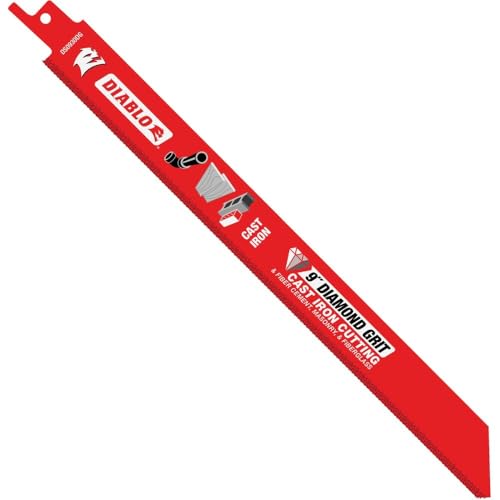
Diablo Diamond Grit Reciprocating Saw Blade
What We Like
- Diamond grit edge for up to 6X longer life
- Thin kerf design speeds up cutting
- Perma-Shield coating resists heat and corrosion
- Reinforced backing minimizes deflection
Trade-offs
- At 9 inches, shorter than some 12-inch masonry blades
- Single blade, not a multi-pack
A diamond grit edge that lasts up to six times longer than a standard blade is the kind of durability that pays off when you’re buried in a job. This Diablo blade is built for the tough stuff, cast iron, masonry, fiber cement, where you need a blade that won’t quit halfway through. The thin kerf design isn’t just a spec; it lets the saw work faster with less strain, while the Perma-Shield coating keeps the teeth clean and cutting when others would gum up. It’s the reliable choice for pros and serious DIYers who value a blade that finishes the cut.
With a diamond grit edge that can last up to six times longer than standard blades, this Diablo blade reduces replacements during demanding jobs in cast iron, masonry, or fiber cement. Its nine-inch length handles embedded pipes and boards, though blades like the 12-inch FACHLICH offer greater reach for deep, uninterrupted material. A reinforced backing promotes straighter cuts through dense substances by minimizing deflection, which helps control vibration on long passes. The specialized Perma-Shield coating also protects against heat and corrosion to maintain performance in harsh conditions.
Product photos
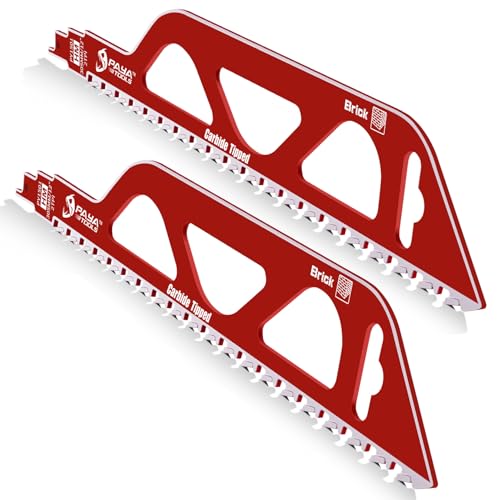
PAYA TOOLS Masonry Reciprocating Saw Blade
What We Like
- Carbide teeth for durable masonry cutting
- Two blades in the pack for extended use
- Optimized weight reduces vibration and dust
- Fits all major reciprocating saw brands
Trade-offs
- Not suitable for reinforced concrete or hard stone
- Material limitations exclude many common masonry substrates
Its carbide tooth strip targets masonry that defeats standard bi-metal blades, so it lasts through brick and porous concrete. A two-pack means you can keep working if one blade wears down during a project. Designed for straight cuts in materials like aerated concrete and cement board, the thicker blade and large teeth help it track directly without wandering.
Application is clearly limited to specific materials, as it is not suitable for stone, hard rock, reinforced concrete, or cement blocks. For those harder substances, a diamond-grit blade like the Diablo model would be required. Within its intended use for brick and cement composite panels, the blade’s weight-optimized design aims to lower vibration and reduce dust generation during cuts.
Product photos
Bosch RCB9DG Diamond-Grit Reciprocating Saw Blade

What We Like
- Diamond grit edge for abrasive materials.
- Vacuum brazed for heavy-duty use.
- Claimed 3x faster than carbide grit blades.
- Claimed 3x longer life than carbide grit.
Trade-offs
- 9-inch length limits reach in thick materials.
- Single blade, no multi-pack for extended projects.
- Specific to abrasive materials, not for wood or metal.
Bosch builds this blade with a vacuum-brazed diamond grit edge for cutting abrasive materials like cinder block, brick, and cast iron. According to Bosch, this construction can cut up to three times faster and last up to three times longer than a standard carbide grit blade. That means potentially less downtime for blade changes on a demanding job.
The trade-off for that speed is a 9-inch blade length. For deep cuts in thick foundation walls, you’ll hit the shank before you’re through. In those situations, a longer blade like the 12-inch PAYA TOOLS option would provide greater reach. Also, consider that Bosch makes a carbide-grit version, the RCB9G. If your project is smaller or your budget is tighter, that model handles the same materials, just not with the same reported speed and longevity as this diamond-grit workhorse.
Product photos
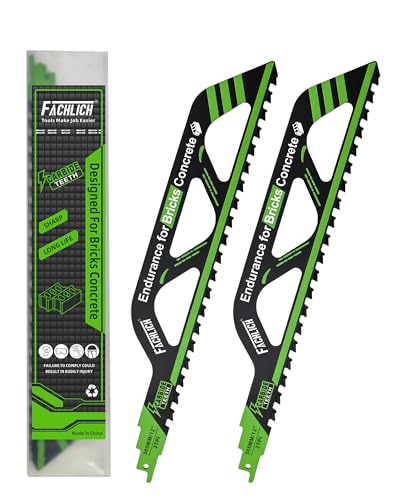
FACHLICH Demolition Masonry Reciprocating Saw Blades
What We Like
- Wide, thick body for stable cutting.
- 2TPI carbide teeth enable fast chip removal.
- Designed to minimize dust generation.
- Long-lasting carbide teeth for durability.
Trade-offs
- 2TPI design is too aggressive for fine work.
- Wide body may limit maneuverability in tight spaces.
A 2TPI tooth pitch with large-grain carbide teeth is built for aggressive material removal, making this blade exceptionally fast at chewing through soft masonry. The wide, thick body provides the rigidity needed to prevent deflection in aerated concrete and hollow brick, so your cuts stay straight even under pressure. If your primary demolition task involves light block, cellular concrete, or similar materials, this blade’s design focuses on speed and stability over finesse.
These blades are built for speed, with large 2TPI carbide teeth that clear material quickly so you can power through aerated concrete and hollow brick without bogging down. That fast-cutting design prioritizes material removal over a smooth finish, making it suitable for demolition work rather than precise notching. According to the manufacturer, the wide body and thick specifications contribute to stable cutting and improved heat dissipation during use.
Product photos
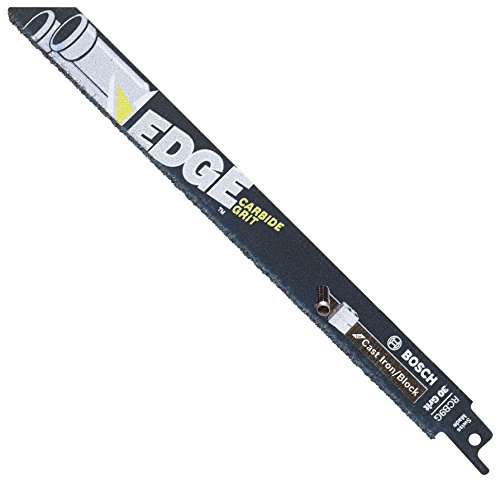
Bosch RCB9G Carbide-Grit Reciprocating Saw Blade
What We Like
- Turbo-Teeth tech promises up to 3X longer life
- Precision ground for a sharp, lasting edge
- Engineered for extreme, high-performance cuts
- Premium Swiss construction for reliability
Trade-offs
- Single blade, not a multi-pack
- Weighs 1.0 pound
The Bosch RCB9G’s Turbo-Teeth technology is its killer feature, engineered to last up to three times longer than standard blades. That means fewer blade changes in the middle of a tough job, which is exactly why it stands out for sustained demolition in cast iron and block. It’s built for the pro or serious DIYer who needs a blade that can handle extreme applications without quickly dulling, backed by the precision grind and Swiss-made quality that Bosch is known for.
Bosch’s RCB9G blade is engineered for extreme cuts in cast iron and block, which means it’s built to handle tough, high-performance applications. Its Turbo-Teeth technology is reported to last up to three times longer than standard blades, offering significant durability for repetitive work. The 9-inch length provides a practical size for many through-cut tasks on these hard materials.
Product photos
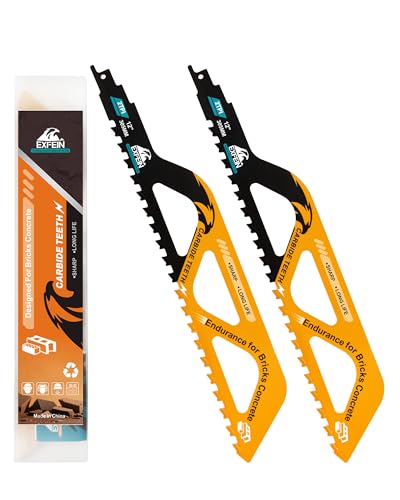
EXFEIN Reciprocating Saw Blades
What We Like
- Large tooth pitch and slotted design for dust-reduced cutting
- Carbide tooth strip for durability in masonry
- 12-inch length provides deep cutting capacity
- Universal shank fits most reciprocating saws
Trade-offs
- Not for cutting stones, hard rocks, or cement blocks
- Specific material suitability excludes many hard masonry types
The 12-inch length and 2 TPI carbide design are built for clearing out softer masonry materials quickly and with less airborne dust. That large tooth pitch and slotted blade body are the key here; they move material out of the kerf efficiently. This minimizes heat buildup and keeps your work area cleaner. This blade pack is a solid choice for a contractor or DIYer regularly tackling aerated concrete, hollow brick, or fiber cement board on a renovation site, where controlling dust is a priority for visibility and cleanup.
EXFEIN designed these blades for specific masonry demolition, which means they trade versatility for a focused purpose. The manufacturer states they are not recommended for cutting stones, hard rocks, or cement blocks, so they are specialists for porous materials. For applications involving harder blocks, a diamond-grit blade such as the Bosch RCB9DG listed for cast iron and block could be a more suitable alternative. Reserve this two-pack for the aerated concrete and hollow brick it’s meant to cut, and you should get a cleaner, more efficient result from the dust-reduced design.
Product photos
LYIYEYAN Alloy Steel Reciprocating Saw Blade
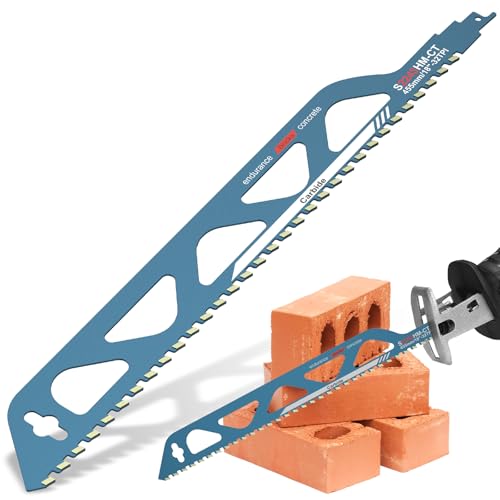
What We Like
- Long 18-inch blade for deep demolition cuts
- Hard tungsten carbide teeth for enduring performance
- Sturdy steel backing for harsh demolition conditions
- Weight-optimized design reduces vibration
Trade-offs
- Cannot cut concrete with stones or aggregate
- 18-inch length requires a powerful, stable saw
- Rough, fast cut is not for precision finish work
An 18-inch blade length provides extended reach for demolition, allowing cuts through thick masonry walls or cement panels in fewer passes. Built for high-intensity work, the blade uses a sturdy steel backing and teeth made from premium carbide steel and tungsten carbide, materials chosen for their hardness and endurance in harsh conditions. This construction is intended for fast, rough cutting of materials like porous concrete and brick, making it a logical choice for aggressive tear-out where precision is secondary.
The product description specifies the blade is suitable for cutting cement bricks, but not concrete with stones. This means it is designed for specific masonry applications like aerated concrete and lime sand bricks, where its extra-large tooth spacing promotes fast cutting. For materials containing hard aggregate, a different blade, such as the Bosch RCB9DG diamond-grit blade listed, would be required.
Product photos
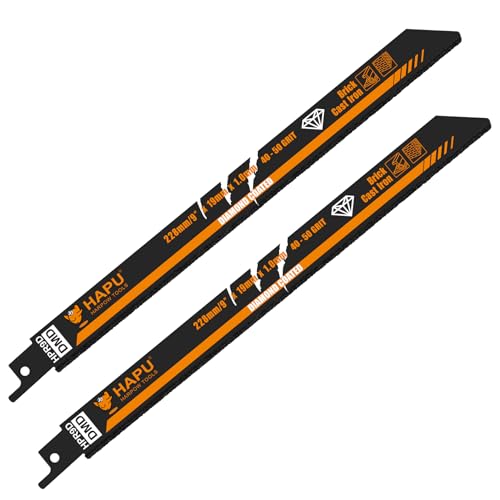
HAPU HARPOW TOOLS Diamond Grit Reciprocating Saw Blade
What We Like
- Diamond grit edge for up to 6X longer blade life
- 9-inch length aids work in confined spaces
- Thin kerf design enhances cutting speed and efficiency
- Universal 1/2-inch shank fits all major saw brands
Trade-offs
- 9-inch length offers less reach than 12-inch blades for deep cuts
- Designed for dense materials, not general-purpose demolition
The 9-inch length is the key here. It gives you enough reach to get into tight spots where a standard 12-inch blade would bind or simply not fit, making it a logical choice for plumbing notches, electrical box cuts, or any concrete work near existing framing. Its diamond-grit edge is built to last through abrasive masonry and cast iron, and the reinforced body helps it stand up to the vibration of heavy-duty cutting. This blade suits the contractor or serious DIYer who regularly faces tough, cramped demolition tasks and needs a reliable blade for the entire job.
The diamond grit edge delivers up to six times longer life than standard blades, which means you can tackle tough materials like cast iron and masonry without frequent blade changes. Its 9-inch length supports extended reach for confined-space operations, letting you work in tight spots where longer blades won’t fit. This reinforced-body construction is built for heavy-duty cutting tasks with dense, thick materials, so it holds up under demanding use.
Product photos
DeWalt DW4843 Carbide-coated Reciprocating Saw Blade
What We Like
- Carbide coating for long life in abrasive materials
- Flexible backing helps prevent binding
- 5-pack offers good value for frequent users
Trade-offs
- At 10.5 inches, shorter than many 12-inch masonry blades
- Pack of five may be excessive for occasional users
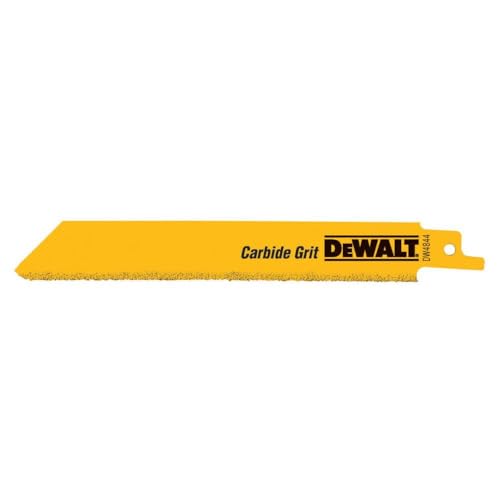
The DeWalt DW4843’s carbide-coated teeth are the key feature here, they’re specifically designed to withstand the punishing grit of materials like fiber cement and brick without dulling prematurely. This makes it a solid choice for contractors or serious DIYers who regularly face abrasive cutting tasks and need a blade that won’t quit halfway through a project. The flexible backing is a thoughtful touch, helping the blade navigate hard materials smoothly and reducing the chance of it getting pinched in the cut.
At 10.5 inches long, this DeWalt blade handles most wall and slab jobs, though it won’t reach as deep as 12-inch competitors like the FACHLICH Demolition blades for thicker blockwork. Its carbide coating is designed for long life in abrasive materials, so it excels when cutting fiber cement, brick, tile, and fiberglass. This focus makes it a specialist tool for those specific tasks rather than a general-purpose demolition blade.
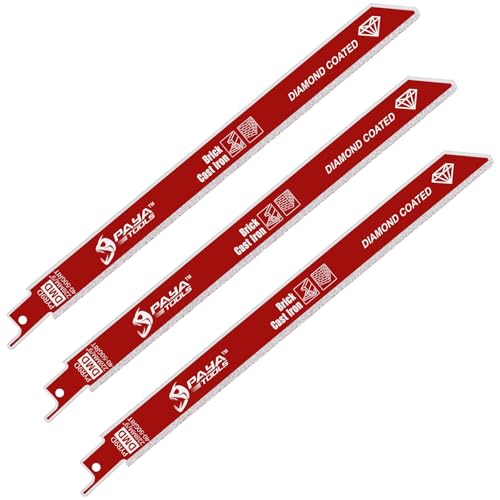
PAYA TOOLS Diamond-Grit Edge Reciprocating Saw Blade
What We Like
- Three blades in a pack for extended project life.
- Diamond-coated edge for six times longer cutting life.
- Thin kerf design for faster, more precise cuts.
- Nine-inch length improves reach in confined spaces.
Trade-offs
- Nine-inch length is shorter than common 12-inch demolition blades.
- 40-50 grit is coarser than some, which can produce a rougher finish.
A three-pack of diamond-grit blades offers serious value for anyone facing a series of tough cuts. The diamond coating is the key, promising up to six times the life of a standard blade when chewing through abrasive masonry and fiber cement. That longevity makes this set a smart choice for the DIYer renovating a basement or a pro tackling repetitive cuts where blade changes kill momentum. The 9-inch length and thin kerf help you maneuver in tight spots and cut faster, though the finish won’t be glass-smooth.
Compared to a 12-inch blade like the one from FACHLICH, the 9-inch length offers less reach, which is a factor for certain materials. These diamond-grit blades are designed for hard, abrasive materials like masonry, fiber cement, and fiberglass, making them suitable for plunge cuts, notching, and board cutting. The reinforced-body construction supports heavy-duty use on dense, thick materials, as noted in the product features.
Product photos
How We Evaluated Reciprocating Saw Blades For Concrete
We researched these blades by comparing their stated specifications, construction materials from manufacturer data, and their intended applications in expert round-ups. We also looked for common praises and complaints in user feedback to gauge real-world performance and durability. The key criteria were cutting life in abrasive materials, suitability for specific concrete types like reinforced or aerated, and practical features like blade length and vibration control.
This evaluation prioritizes blades with clear and consistent performance descriptions that are supported by their stated design features.
What To Look For In Reciprocating Saw Blades For Concrete
Choosing the right blade prevents frustration and unsafe conditions. The material you’re cutting dictates everything from the blade’s teeth to its length.
Look for carbide teeth or diamond grit for durability, match the tooth design to your concrete type, and consider blade length for both reach and control.
Cutting Edge Material
Standard steel blades dull instantly on concrete. For longevity, you need a blade with an abrasive-resistant edge. Carbide-tipped teeth are the most common choice, offering a good balance of durability and cost for cutting brick, block, and aerated concrete.
For maximum life in the most abrasive materials, including cast iron and hard masonry, diamond grit blades are superior. They use a coating of industrial diamond particles that can last six times longer than standard options, making them a premium choice for repetitive or professional work.
When selecting blades for metal like rebar that may be embedded in concrete, a different, dedicated blade is often required.
Blade Design & Teeth Per Inch (TPI)
Aggressive, widely-spaced teeth are best for demolition. Blades with 2 or 3 Teeth Per Inch (TPI) are designed for fast, rough cutting in materials like hollow brick and aerated concrete, where quickly removing chunks is the goal. They generate more dust and vibration.
A higher TPI or specialized tooth geometry, like the slotted design on some blades, can help reduce dust and provide a slightly cleaner cut, which is valuable for indoor renovation work. Always match the blade to your primary material; a demolition blade is too aggressive for fine trimming. Our guide to reciprocating saw blade types covers this in more detail.
Blade Length & Shank Compatibility
Length determines reach and maneuverability. A 9-inch blade offers better control in tight spaces and is sufficient for many wall-cutting tasks. For deep demolition cuts through thick masonry walls or foundations, a 12-inch or even 18-inch blade provides the necessary reach.
Remember that a longer blade requires a more powerful saw to drive it effectively and can be more challenging to control. Ensure the blade has a universal 1/2-inch shank, which fits all major brands of reciprocating saws. Pairing your blade with a capable saw is just as important as the blade itself.
- Confirm your saw’s maximum recommended blade length before buying an extra-long option.
- For confined spaces like cutting openings for pipes or outlets, a shorter blade is more maneuverable.
- A thin kerf design reduces friction for faster cutting, which is especially helpful in dense materials.
A longer blade offers deeper reach but demands more saw power and control.
Reciprocating Saw Blades For Concrete Compared
You can compare the key specs and strengths of all ten featured blades side-by-side in the table below.
| Product | Blade Length | Cutting Edge Type | Pack Quantity |
|---|---|---|---|
| Diablo Diamond Grit Reciprocating Saw Blade | 9 inches | Diamond grit | N/A |
| PAYA TOOLS Masonry Reciprocating Saw Blade | 12 inches | Carbide tooth strip | 2-pack |
| Bosch RCB9DG Diamond-Grit Reciprocating Saw Blade | 9 inches | Diamond grit, 50 grit | 1-Piece |
| FACHLICH Demolition Masonry Reciprocating Saw Blades | 12.2 inches | 2TPI carbide teeth | 2-pack |
| Bosch RCB9G Carbide-Grit Reciprocating Saw Blade | 9 inches | 30 grit Carbide-Grit | 1-Piece |
| EXFEIN Reciprocating Saw Blades | 12 inch / 305mm | 2 TPI | 2-pack |
| LYIYEYAN Alloy Steel Reciprocating Saw Blade | 18 inches | Extra-large spacing | N/A |
| HAPU HARPOW TOOLS Diamond Grit Reciprocating Saw Blade | 9-inch | Diamond grit | N/A |
| DeWalt DW4843 Carbide-coated Reciprocating Saw Blade | 10.5 inches | Carbide-coated | 5-Pack |
| PAYA TOOLS Diamond-Grit Edge Reciprocating Saw Blade | 9 inches | Diamond-grit edge, 40-50 grit | 3-piece |
Frequently Asked Questions
What is the best Sawzall blade for cutting concrete?
The best blade depends on your specific project. For a versatile, long-lasting option suitable for a mix of masonry and cast iron, a diamond grit blade like our best overall Diablo is an excellent choice. For heavy demolition focused purely on brick and block, a long carbide-tipped demolition blade is often the most effective tool.
Do they make reciprocating saw blades for concrete?
Yes, manufacturers produce blades specifically designed for cutting concrete, brick, and masonry. These are not standard wood or metal blades; they feature carbide teeth or diamond grit edges to withstand the extreme abrasiveness of concrete. Using the correct concrete saw blades for a reciprocating saw is essential for both performance and safety.
What blade is best for cutting concrete?
For cutting solid or reinforced concrete, a diamond grit blade is typically required due to the material’s extreme hardness. For softer masonry like bricks, cinder blocks, or aerated concrete, a carbide-tipped demolition blade is usually sufficient and more cost-effective. Always check the blade’s specifications to ensure it’s rated for your specific material.
Can I cut concrete with a reciprocating saw?
Yes, a reciprocating saw can cut concrete when equipped with the proper masonry blade. It’s highly effective for demolition, cutting openings for pipes or windows, and trimming. However, for long, straight cuts or thick slabs, dedicated concrete cutters like a circular saw with a diamond blade or a quick-cut saw are often more efficient tools for the job.
How do I prevent excessive dust when cutting masonry?
Select a blade designed for reduced dust generation, which often features a specific tooth geometry or slots to help clear material. Using a vacuum attachment on your saw, if available, and wearing proper respiratory protection are also critical steps. Proper reciprocating saw technique, including allowing the blade to do the work without excessive force, can also minimize dust kickback.
The Bottom Line
For contractors and advanced DIYers tackling a variety of dense materials, the Diablo Diamond Grit Reciprocating Saw Blade is our top recommendation due to its exceptional durability and efficient cutting design. If you’re on a tight budget and working with basic masonry, the PAYA TOOLS Masonry pack offers solid value, while those needing to power through abrasive materials quickly should look at the Bosch RCB9DG. No matter your pick, the single most important factor is matching the blade’s cutting edge and design to the specific type of concrete or masonry you need to cut.
