
10 Best Sandblasters in 2026
This post contains affiliate links. As an Amazon Associate, we earn from qualifying purchases.
Our best overall sandblaster for most DIYers is the VEVOR 5 Gallon Portable Sandblaster Tank for its upgraded metal gun, effective oil-water separator, and portable tank design. We also highlight the LE LEMATEC Dual Feed Gun for flexibility and the TCP Global Gravity Feed kit for budget-friendly portability.
Choosing the wrong tool for your specific jobs can waste time and money, and your air compressor’s power is a non-negotiable starting point. We compiled this guide through a review of product specifications, manufacturer documentation, expert round-ups, and patterns in owner feedback, giving you a practical shortlist for your next project.
Top 10 Sandblasters in the Market
Certain content that appears on this site comes from Amazon. This content is provided "as is" and is subject to change or removal at any time.
The Best Sandblasters, Reviewed
VEVOR 5 Gallon Portable Sandblaster Tank

What We Like
- Upgraded die-cast aluminum alloy gun for easier control
- Includes oil-water separator to prevent media clogging
- Rubber wheels and 8 ft hose for portable, flexible use
Trade-offs
- Requires a separate 5.5kW air compressor, a significant upfront need
- Dry media is mandatory to avoid valve clogs, limiting material use
- At 24.7 lb, it's less portable than handheld gun kits like the LE LEMATEC
With a recommended media fill of 2.8 gallons, this tank holds enough abrasive to handle large surfaces like car panels or iron fences before needing a pause to refill. It’s built for the serious DIYer or small shop focused on stripping rust or paint efficiently. The die-cast aluminum blaster gun is lighter than traditional brass designs, which can reduce hand fatigue over a long session, and the built-in oil-water separator helps prevent clogs by removing moisture from the air supply.
The trade-off is that you need a serious air compressor, at least 5.5kW, to feed its 6-25 CFM appetite, which can double your investment. For truly massive projects, you might eye the VEVOR 10 Gallon tank, but that one is over 15 pounds heavier and less nimble. For quick spot jobs, a simple siphon gun like the Campbell Hausfeld is far more convenient, but it won’t touch this unit’s productivity on a full-sized workpiece.
Product photos
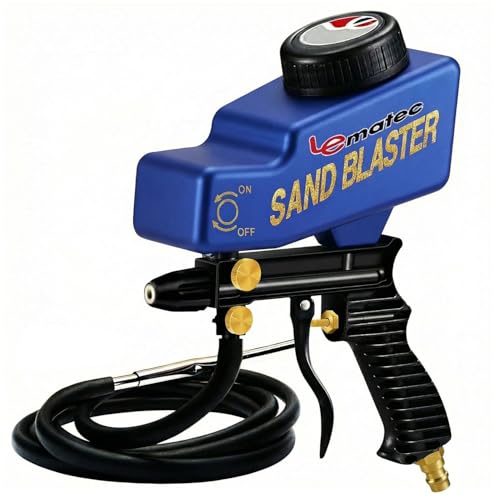
LE LEMATEC Dual Feed Sandblaster Gun Kit
What We Like
- Two feed modes for detail work and large surfaces
- Hardened ceramic nozzle resists wear better than plastic
- Fully serviceable design for long-term use
- Includes a 7-foot siphon hose for flexibility
Trade-offs
- Needs a separate inline air filter to prevent clogging
- Siphon mode demands full 4 CFM for effective vacuum
The dual feed system is what makes this sandblaster stand out. You get a gravity feed mode for quick, controlled spot work like etching glass or cleaning up a weld, and a siphon feed for tackling larger, flatter surfaces like a car door panel. That flexibility makes it a smart single-tool solution for the DIYer who doesn’t want to be locked into one type of project. It’s built for the workshop, too, with a serviceable design and a ceramic nozzle that won’t erode like a cheap plastic one. This is the pick when you need to switch between short bursts and longer cleaning sessions without buying two separate guns.
This sandblaster’s flexibility comes from its dual-feed design, letting you switch between gravity feed for quick detail jobs and siphon feed for larger surfaces. That versatility does demand a capable air compressor, specifically one that can deliver a minimum of 4 CFM at 90 PSI. The product guide notes it is not for pancake compressors under 6 gallons, as smaller units often lack the sustained air volume, which leads to sputtering and poor performance during continuous use.
Product photos
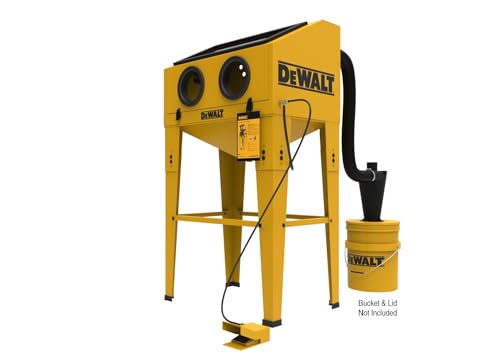
DEWALT Abrasive Blast Cabinet
What We Like
- Large plexiglass window maximizes workpiece visibility.
- Foot pedal operation minimizes hand fatigue.
- Cyclone and vibrator system manages dust and media flow.
- Adjustable legs for benchtop or standalone use.
Trade-offs
- Requires an external bucket and lid for media reclamation.
- Cabinet footprint needs significant shop floor or bench space.
- No included air compressor or media.
Its large 21-inch wide viewing window provides maximum visibility of the workpiece inside. The cabinet’s working area measures 30 inches long, accommodating many medium-sized parts. A foot-operated pedal minimizes hand fatigue during operation, and a dial vent system allows for easy calibration of cabinet pressure.
The cabinet’s size and integrated dust management cyclone require a fixed location in a workshop. For blasting in confined areas or on smaller items, a more compact tool like the LE LEMATEC Dual Feed Sandblaster Gun Kit is an alternative. This DEWALT model focuses on containing the process within a large, visible workspace.
Product photos
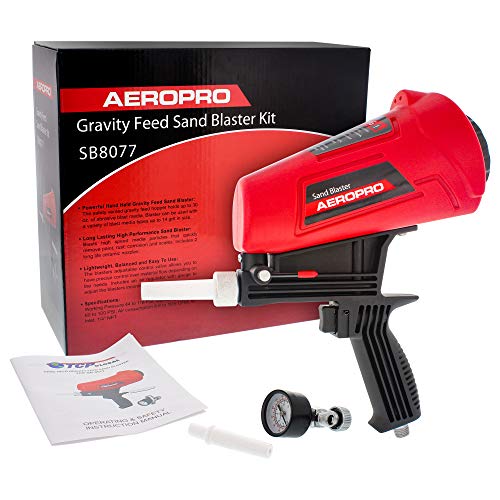
TCP Global Gravity Feed Sandblaster Gun Kit
What We Like
- Lightweight and ergonomic gun design for comfort
- Adjustable material flow and included pressure gauge
- Works with a wide variety of abrasive media
- Portable and simple gravity-feed setup
Trade-offs
- 30-ounce hopper requires frequent refills on larger jobs
- Smaller nozzle and hopper limit its speed and scale
With a 30-ounce hopper and a gravity-feed design, this sandblaster connects directly to an air compressor for simple, portable operation. Its features list metal and wood blasting for restoration and paint stripping, handling media like sand, soda, and walnut shells. The lightweight gun includes an adjustable material flow and pressure gauge for precise control on smaller surfaces.
The 30-ounce capacity means frequent refills for larger jobs, and the 5mm nozzle operates at a smaller scale than pressurized tank systems. A VEVOR 10 Gallon Heavy-Duty Sandblaster Tank, for example, holds significantly more media. Research mentions categorize the TCP Global kit as a portable alternative, suited for focused tasks.
Product photos
VEVOR 10 Gallon Heavy-Duty Sandblaster Tank

What We Like
- Large 4.2-gallon abrasive capacity for big jobs
- Heavy-duty gun with adjustable pressure and flow
- Durable ceramic nozzles resist wear and sparking
- Rubber wheels and long hose for maneuverability
Trade-offs
- Requires a separate, substantial 5.5KW air compressor
- Abrasive media must be perfectly dry to avoid clogs
- At 39.8 lb, it's a substantial piece of shop equipment
With its 4.2-gallon abrasive capacity, this sandblaster lets you work on large surfaces like car paint or iron frames for extended periods before needing a refill. The 10-gallon tank is paired with an upgraded aluminum gun and ceramic nozzles, components noted for durability and wear resistance. Two rubber wheels make the 39.8-pound unit maneuverable around a workshop floor.
This sandblaster requires a powerful 5.5kW air compressor to operate, which is a significant investment and takes up considerable space on its own. You must also keep the abrasive media completely dry to avoid frustrating clogs. For smaller, more frequent jobs where portability matters, a siphon-feed gun like the Campbell Hausfeld model places far less demand on your compressor and setup time.
Product photos
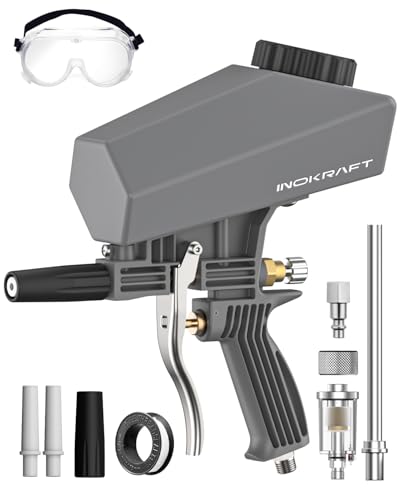
InoKraft Leak-Proof Sandblaster Kit
What We Like
- Leak-proof trigger reduces media waste
- Includes oil-water separator to reduce clogging
- Extension nozzle for hard-to-reach areas
- Complete kit with safety gear and guide
Trade-offs
- 900cc hopper requires frequent refills on large jobs
- Requires a 20+ gallon compressor tank for continuous use
- Best with fine, dry media (46 grit or finer)
A trigger that only flows abrasive when pulled is the core of this sandblaster. That on-demand control makes spot blasting easier and helps reduce media waste. Focused blasting removes rust and paint from small auto parts and detailed metalwork, and an extension nozzle reaches grooves and corners. The kit includes an oil-water separator to help reduce moisture for a steadier flow and ceramic nozzles for use.
The 900cc hopper holds about a quart of abrasive, so it suits smaller, intermittent jobs. For longer, consistent blasting, the tool requires a compressor with enough air reserve; a 20-gallon tank is recommended. A whole car chassis would need a larger tank-style unit like the VEVOR 10 Gallon.
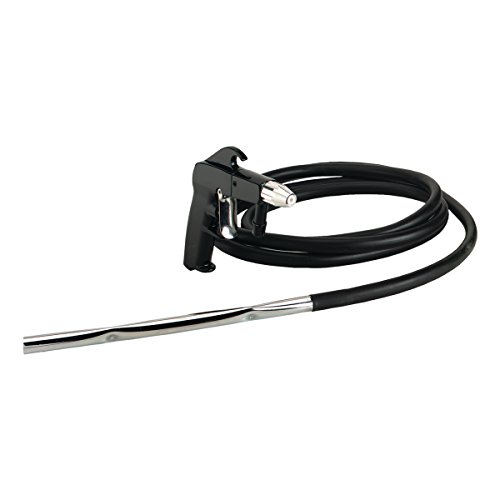
Campbell Hausfeld Siphon Feed Sandblaster
What We Like
- Lightweight gun at just 2 pounds for easy handling
- 10-foot hose provides good reach for small projects
- Works with a wide range of abrasive media types
- Complete kit includes pickup tube and wrench
Trade-offs
- Media must be sourced and contained in a separate bucket
- Open siphon design creates more dust than enclosed systems
Drawing compatible media from any separate bucket via its 10-foot hose, this siphon-feed sandblaster offers a flexible and affordable entry point for blasting. It serves as a straightforward choice for DIYers tackling small-scale rust removal, paint prep, or craft applications like glass etching and wood weathering. The lightweight design and included ceramic nozzle allow for detailed work without fatigue, while compatibility with various media, from walnut shells to aluminum oxide, lets you match the abrasive to the surface and desired finish.
The trade-off involves the inherent mess and lower efficiency of any siphon system, which operates in an open environment. It works perfectly for occasional use on parts you can take outside, but stripping large items or frequent work means dealing with an open dust cloud. Keep this one on the bench for targeted, controlled cleanup rather than for blasting an entire lawnmower deck.
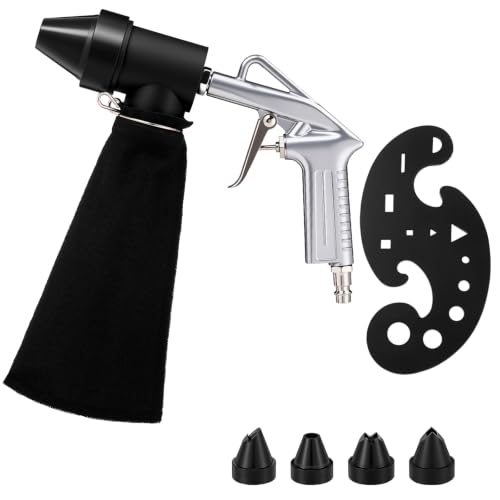
ElaraBerry Spot Sandblaster Gun Kit
What We Like
- Sealed nozzles and recovery system minimize dust
- Gravity feed design eliminates bulky siphon hoses
- Four specialized rubber nozzles for varied surface shapes
- Lightweight at 1.4 pounds for easy handling
Trade-offs
- Requires a consistent 90 PSI air supply to function properly
- Gravity feed hopper limits abrasive capacity for large projects
- Close-contact design is for spot work, not broad surface stripping
This tool concentrates its blasting energy on narrow areas, making it a specialist for corners, weld seams, and edges where you need to remove rust or paint without damaging the surrounding surface. Its sealed rubber nozzles and abrasive recovery system are key for clean operation in a garage or workshop, recycling media and keeping dust down. The lightweight, gravity-fed design gives you better control and mobility than a siphon-fed gun, but it’s squarely aimed at small to medium detail repair, not stripping an entire car frame.
That focus on precision is its defining trade-off. For blasting a broad area, you’d be constantly refilling the small hopper and wishing for a larger unit like the VEVOR 10 Gallon tank. But if your project involves intricate metalwork, restoring tools, or pre-weld treatment on specific joints, this gun’s ability to adapt with four different nozzle shapes makes it a pragmatic solution. It turns a messy, indiscriminate process into a targeted one.
Product photos
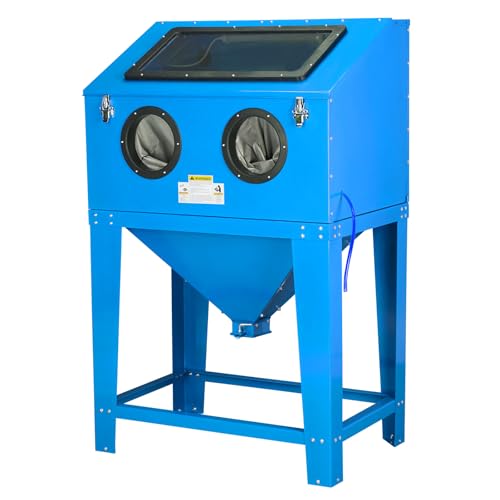
Parts-Diyer 90 Gallon Sandblasting Cabinet
What We Like
- Extremely low 5 CFM air compressor requirement
- Large 90-gallon capacity for bigger parts
- Pre-installed seals and included sealant prevent dust leaks
- Bright LED lighting and large acrylic window for visibility
Trade-offs
- Large 37.2" L x 25.6" W footprint requires significant shop space
- Assembled weight and size make it a permanent station
- Lower 40-80 PSI operating range may limit media aggression
Operating at just 5 CFM, the Parts-Diyer cabinet’s defining feature is its compatibility with smaller workshop air compressors, the type often used for brad nailers or inflators. Its 90-gallon capacity and large 18.7 by 28.7-inch access door are designed for high-density surface treatment on sizable workpieces. An acrylic window and integrated LED lighting provide expansive visibility during tasks like paint and rust removal.
Its large size is a major consideration, as this cabinet stands over three feet tall and needs a dedicated spot in your workspace. The operating pressure range is also on the lower end, making it excellent for cleaning and stripping but not as aggressive as a high-PSI pressure pot system. A compact option like the VEVOR 5 Gallon Portable Sandblaster Tank would be far less space-intensive for smaller handheld jobs. However, this cabinet effectively bridges the gap for users with a smaller compressor who need to work on larger parts.
Product photos
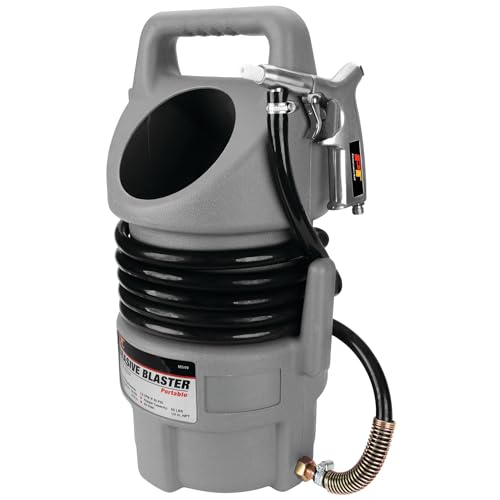
Performance Tool M549 Portable Blaster Kit
What We Like
- Works with any abrasive media
- Very low 3.5 cfm air requirement
- Lightweight and portable at 3.2 lbs
- Gravity feed provides constant material flow
Trade-offs
- 50 lb capacity requires frequent refills for large jobs
- Open blasting creates significant cleanup
A minimum air requirement of just 3.5 cfm means this blaster will run on the smallest home garage compressor. That makes it a genuine starting point for a DIYer who wants to tackle rust and paint removal on car parts or small equipment without a major compressor investment. The gravity-feed system is straightforward, and compatibility with everything from glass beads to pecan shells offers flexibility for different surfaces. It’s a logical first step into abrasive blasting.
Its low air requirement of 3.5cfm at 50psi means it can run on smaller compressors many hobbyists already own. However, the gravity-fed design uses a 50-pound capacity hopper, which will need refilling during extensive work like stripping a full truck frame. For such large, continuous jobs, a dedicated tank system like the VEVOR 5 Gallon model holds more media. This kit is a practical entry point for learning blasting techniques and tackling focused spot repairs.
How We Evaluated Sandblasters
Our evaluation started with manufacturer specifications to confirm air compressor requirements, operating pressures, and material capacities. We then reviewed expert round-ups to identify performance trade-offs and durability patterns across different feed types and price points. Finally, we analyzed owner feedback on common pain points like clogging, portability, and the real-world match between tool and project scale.
The most critical factors were the feed system (gravity, siphon, dual-feed, or tank), its compatibility with the user’s available air compressor, and the intended job size. A tool’s media flexibility and ease of control also weighed heavily, as these dictate real-world usability in a workshop. Because this is a research-led evaluation, we cannot confirm long-term durability claims or quantify performance metrics like media consumption rates beyond what the documentation and user reports indicate.
What To Look For In Sandblasters
Your air compressor’s capabilities and your most common project size are the two most important starting points for any sandblaster buying guide. Getting this match wrong leads to poor results and frustration.
Focus first on your compressor’s CFM output and the tool’s feed type. A tank-style blaster needs higher power, while a compact gravity-feed gun can start with a smaller unit.
Air Compressor Compatibility
Every sandblaster requires a specific minimum air volume, measured in cubic feet per minute (CFM), and operating pressure (PSI). High-capacity tank blasters, like the VEVOR 10 Gallon model, demand a substantial 5.5kW compressor, while portable kits like the Performance Tool M549 run on as little as 3.5 CFM. Before selecting a blaster, verify your compressor can meet the tool’s sustained CFM requirement at the needed PSI; an undersized compressor will cause weak blasting and frequent clogs. For more on this crucial pairing, see our guide on choosing a sandblasting compressor.
Feed System and Capacity
The feed system determines how abrasive is delivered and dictates your workflow. Gravity-feed guns (e.g., TCP Global) are simple and portable but have small hoppers requiring frequent refills. Siphon-feed models (e.g., Campbell Hausfeld) draw from an external bucket for longer runs but need strong CFM. Dual-feed options like the LE LEMATEC offer valuable flexibility. For large, continuous jobs, a pressurized tank system like the VEVOR 5 Gallon provides the highest capacity and most consistent flow. Understanding the different types of sandblasters is key to matching the tool to your project length.
Media Flexibility and Control
Not all abrasive media works in every system. Dry, fine media is mandatory for most tank blasters to prevent valve clogs, while open gun systems can handle a wider grit range. Look for features that enhance control and reduce waste, such as an adjustable material flow valve, a leak-proof trigger like on the InoKraft kit, or an included oil-water separator to keep media dry. A quality ceramic nozzle also resists wear better than plastic. For detailed application advice, including how to use the tool effectively, consult dedicated setup guides.
- Check your compressor’s CFM rating at the PSI the sandblaster requires.
- Consider where you’ll source and contain your abrasive media for the job.
- Wear appropriate safety gear, including eye protection, a respirator, and gloves.
A good rule of thumb: if most of your projects are small parts, start with a gravity-feed gun; for stripping large items like auto frames, plan for a tank system and a powerful compressor.
Sandblasters Compared
The following table compares key specifications across our top picks to help you quickly identify the best fit for your workshop needs.
| Product | Working Pressure (PSI) | Nozzle Material | Weight |
|---|---|---|---|
| VEVOR 5 Gallon Portable Sandblaster Tank | 60-110 PSI | ceramic | 24.7 pounds |
| LE LEMATEC Dual Feed Sandblaster Gun Kit | Max 150 PSI | Hardened ceramic | 2.2 pounds |
| DEWALT Abrasive Blast Cabinet | N/A | N/A | N/A |
| TCP Global Gravity Feed Sandblaster Gun Kit | 60-100 PSI | N/A | 1.8 pounds |
| VEVOR 10 Gallon Heavy-Duty Sandblaster Tank | 60-110 PSI | Ceramic | 39.8 pounds |
| InoKraft Leak-Proof Sandblaster Kit | 60-120 PSI | ceramic | N/A |
| Campbell Hausfeld Siphon Feed Sandblaster | N/A | Ceramic | 2.0 pounds |
| ElaraBerry Spot Sandblaster Gun Kit | 90 PSI | rubber | 1.4 Pounds |
| Parts-Diyer 90 Gallon Sandblasting Cabinet | N/A | ceramic | N/A |
| Performance Tool M549 Portable Blaster Kit | 90 psi | N/A | 3.2 pounds |
Frequently Asked Questions
What is the best sandblaster on the market?
The “best” sandblaster depends entirely on your specific projects and air compressor. For a versatile, powerful option suitable for many DIY and small-shop tasks, our top overall pick is the VEVOR 5 Gallon Portable Sandblaster Tank. It balances capacity, control features, and portability effectively for users who have the required compressor power.
Are Harbor Freight sandblasters any good?
Harbor Freight offers budget-friendly sandblasters that can be suitable for light, occasional use. However, owner feedback frequently mentions that these units may require additional sealing or modifications to prevent leaks and that their performance is best matched with smaller, less demanding jobs. For frequent or heavier use, investing in a more durable model from our list is often worthwhile.
How much psi is needed to sand blast?
Most sandblasting guns operate effectively between 60 and 125 PSI, with many models, like the ElaraBerry spot blaster, requiring a consistent 90 PSI. Adequate CFM (airflow) is equally critical; a compressor that meets the PSI but not the CFM requirement will result in poor performance. Always check the specific PSI and CFM requirements for the tool you choose.
Are portable sandblasters any good?
Yes, portable sandblasters are excellent for specific applications. Compact gravity-feed guns and smaller tank units are ideal for mobile repairs, spot work, and DIYers with limited space. They excel at quick rust removal on tools or small auto parts but lack the capacity for large, continuous stripping jobs. Our list includes several top-rated portable sandblasters for these uses.
Can I use a sandblaster on wood?
Yes, but you must select the correct abrasive media and control the pressure carefully to avoid damaging the soft wood grain. Softer media like walnut shells or plastic abrasives are recommended over hard mineral grits. A cabinet blaster or a gun with precise pressure control, used at a lower PSI setting, is best for wood surface preparation or restoration projects.
The Bottom Line
For DIYers and small shops tackling significant rust and paint removal on metal, the VEVOR 5 Gallon Portable Sandblaster Tank is a strong overall choice due to its durable construction and effective features. If you are on a tight budget or need a tool for small-scale spot work, consider the TCP Global Gravity Feed Sandblaster Gun Kit. For those needing to switch between detail and larger surface work with one tool, the LE LEMATEC Dual Feed Sandblaster Gun Kit offers useful flexibility.
Ultimately, the most critical factor is ensuring your air compressor can power your chosen sandblaster, both in PSI and, especially, in sustained CFM output. Matching the tool’s capacity and feed type to your most common project size will lead to the best results and a much more satisfying experience in your workshop.
