
10 Best Sanders For Car Bodywork in 2026
This post contains affiliate links. As an Amazon Associate, we earn from qualifying purchases.
For a precise, vibration-free tool perfect for final paint preparation, we chose the LithiCraft 5-Inch Pneumatic Random Orbital Sander as the best overall. The AIRCAT 6310 is our top pick for low-vibration performance, while the Astro Pneumatic Tool 3008 is Best For Large Flat Surfaces. Car bodywork demands a sander that can handle everything from aggressive material removal to delicate finishing without leaving swirl marks or causing hand fatigue.
The wrong tool can add hours to a job or ruin a paint-ready surface. This guide compiles a list of ten essential sanders based on specifications and manufacturer data. It helps you match the right tool to your specific task, such as roughing body filler or polishing a final coat.
Top 10 Sanders For Car Bodywork in the Market
Certain content that appears on this site comes from Amazon. This content is provided "as is" and is subject to change or removal at any time.
The Best Sanders For Car Bodywork, Reviewed
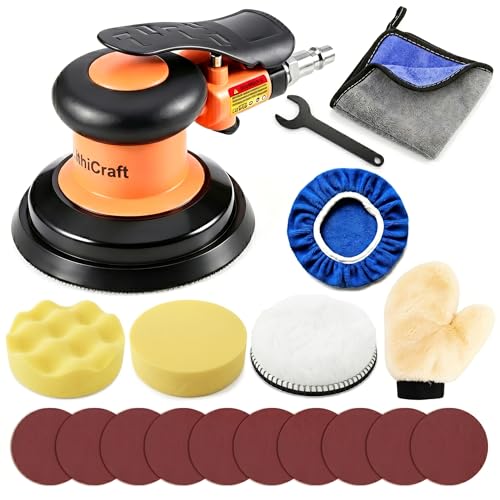
LithiCraft 5-Inch Pneumatic Random Orbital Sander
What We Like
- Minimal vibration due to dual bearing design
- Compact, ergonomic shape for one-handed control
- Comes with a full array of pads and sandpaper
- Low-noise operation reduces workshop fatigue
Trade-offs
- Pneumatic design requires a capable air compressor
- Small 5-inch pad covers less area per pass than 6 or 8-inch models
With a no-load speed of up to 12,000 RPM, this sander has the power to handle tasks from coarse grinding to fine polishing. Its high-strength bearing steel eccentric shaft and dual bearing structure are calibrated for minimal vibration, which helps maintain control for a smooth, swirl-free finish on auto bodies, wood, or metal. The lightweight, palm-sized design also helps reduce fatigue during extended use.
The 5-inch pad covers less area per pass than larger sanders like the 6-inch AIRCAT 6310, so finishing a big, flat panel takes more time. This compact size, however, contributes to the stable, one-handed control mentioned for auto body and detailing work. The included kit comes with multiple polishing wheels, sandpaper, and accessories for immediate use on various surfaces.
Product photos
AIRCAT 6310 6-Inch Composite Dual Action Sander

What We Like
- Patented muffler for reduced noise operation.
- Vibration-dampening technology in ergonomic design.
- Double-sealed, lubrication-free air motor.
- Low 3-3/4 inch profile for tight areas.
Trade-offs
- Requires a dedicated air compressor supply.
- 3/16 inch orbit may be aggressive for final finishing.
A 10,000 RPM free speed paired with serious vibration-dampening technology makes this sander a standout for long sessions on sheet metal. The isolated motor design and rubberized grip directly target user fatigue, which is why it wins the nod for low-vibration performance. It’s built for the professional or serious restorer who spends hours block-sanding panels and needs a tool that won’t leave their hands numb. The 6-inch pad and low profile offer a good balance of coverage and access to contours.
This tool is powered by compressed air, so it requires a hose and compressor connection. For a workshop already equipped with an air supply, this setup is straightforward. Its 3/16-inch orbit provides efficient material removal for tasks like stripping paint and leveling body filler.
Astro Pneumatic Tool 3008 Sander

What We Like
- Gear driven for heavy material removal
- 8-inch pad covers large areas quickly
- Dual action leaves a swirl-free finish
- Balanced construction reduces vibration
Trade-offs
- At 4.8 lb, it's heavier than compact 5-inch models
- Its 8-inch size is awkward for tight curves
An 8-inch gear-driven pad gives this sander the muscle to level body filler and old paint on broad panels with serious speed. That large surface area, combined with a dual-action motion that finishes without swirls, makes it a natural fit for tackling hoods, doors, and quarter panels. The balanced ball bearing design isn’t just for longevity; it tames the vibration, so your hands aren’t numb after a long session on a flat section.
With an eight-inch pad, the Astro 3008 covers large, flat surfaces quickly, making it efficient for leveling body filler on panels. That size and its gear-driven design contribute to a weight of 4.8 pounds, which requires more arm stamina during extended use than a lighter sander like the 2.4-pound AIRCAT 6310. The product description specifies its application on large, flat surfaces, indicating a focus on material removal rather than detailed contour work.
Product photos
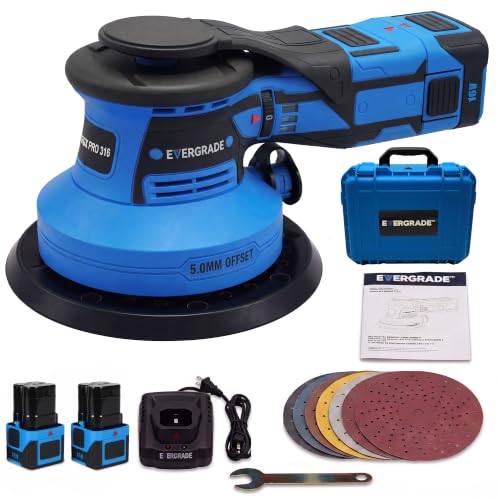
EVERGRADE Cordless Professional DA Sander
What We Like
- Cordless design eliminates compressor and hoses.
- 5.0mm offset orbit for aggressive, fast material removal.
- Low vibration design reduces hand fatigue during long sessions.
- Compact, 2.65 lb form factor for control in tight spaces.
Trade-offs
- Requires investment in the proprietary 16V battery platform.
- 5.0mm orbit may be too aggressive for final paint finishing.
- Larger and heavier than dedicated pneumatic sanders like the Chicago Pneumatic CP7200S.
Delivering pneumatic-level performance without an air hose is the core achievement here. This sander’s 5.0mm orbit and 10,000 rpm brushless motor are built for the aggressive sanding and leveling tasks common in bodywork, like working down filler or primer. It suits the technician who needs the cutting power of a tool like the AIRCAT 6310 but demands the untethered freedom to move around a vehicle or shop without dragging a compressor line. The balanced, low-vibration design means you can use it for extended periods without the tool fighting you, which is critical for achieving flat panels.
The trade-off for this cordless convenience is committing to EVERGRADE’s 16V battery ecosystem. For a shop already deep in 18V or 20V platforms, that’s a new charger on the bench. While its 2.65-pound weight is light for a cordless, it’s still heftier than a pure pneumatic like the ZFE mini sander. For final sanding or delicate work, the aggressive orbit might be overkill, making it less versatile than a dual-orbit tool. But if your primary need is cordless power for the bulk of material removal, this design bridges a significant gap.
Product photos
Rupes Skorpio III Orbital Sander

What We Like
- Extremely lightweight at just 1.8 pounds
- Engineered motor maximizes torque with low airflow
- 6mm orbit balances control and material removal
- Ergonomic and quiet operation for user comfort
Trade-offs
- Requires a dedicated air compressor setup
- Pneumatic only, lacks cordless portability
Weighing only 1.8 pounds, the Rupes Skorpio III is built for fatigue-free sessions on vertical panels and overhead work where arm strain is a real concern. Its 6mm orbital stroke is the sweet spot for bodywork, providing enough bite to level filler efficiently while remaining gentle enough for final sanding on clear coat. This sander suits the detail-oriented technician who values precision and comfort during long prep sessions, and its motor is designed to maintain consistent torque even when shop air pressure fluctuates.
Because it’s a pneumatic tool, you need an air hose and compressor to run it. That setup is standard in a professional shop, so the tether isn’t a problem there. The design is lightweight, however, which makes it easy to handle for extended periods. For mobile work away from an air source, a cordless model like the EVERGRADE provides a palm-sized alternative.
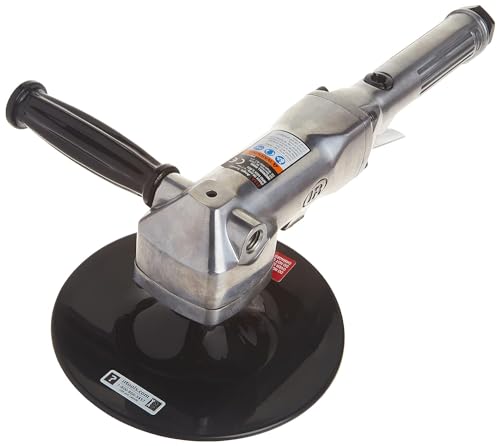
Ingersoll Rand 313A Orbital Angle Sander
What We Like
- Heavy duty motor for tough jobs
- Lightweight 4.2 lb design
- Variable speed up to 5,000 rpm
- 7-inch pad covers area quickly
Trade-offs
- Pneumatic tool requires an air compressor
A 7-inch pad spinning at 5,000 rpm moves a lot of material fast, which is exactly what you need when you’re knocking down body filler or stripping old paint. This Ingersoll Rand sander is built for that kind of aggressive, preliminary work. Its heavy-duty motor won’t bog down, and the adjustable speed lets you dial it back for finer passes. At 4.2 pounds, it’s light enough to handle for extended sessions without wearing out your arm, making it a solid choice for anyone regularly prepping large panels.
As a pneumatic tool, the Ingersoll Rand 313A requires a connected air compressor, which suits a fixed workshop better than mobile jobs. Its 7-inch pad and motor built for heavy-duty work make it a first-step tool for roughing body filler or removing rust. Compared to the smaller AIRCAT 6310, this sander has a larger footprint and weighs more, so it occupies more space on your bench.
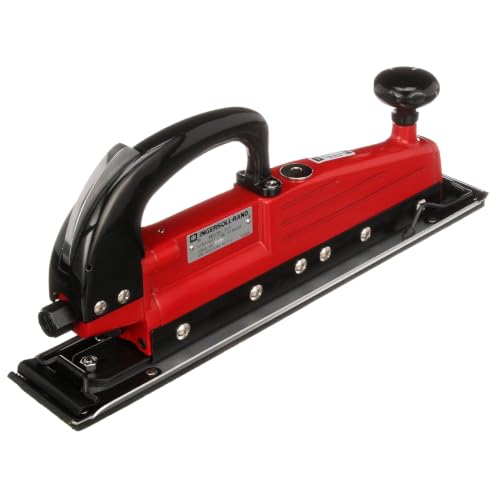
Ingersoll Rand 315 Straight-Line Air Sander
What We Like
- Twin-piston design prevents stalling.
- Low vibration and two-handle design for control.
- Quick-action clamps for fast paper swaps.
- Ergonomic lever throttle for prolonged use.
Trade-offs
- Requires a capable air compressor (tool only).
- Large 15-inch pad is less nimble for tight curves.
A 2.75 by 15-inch sanding pad and 3,000 strokes per minute make this sander a specialist for leveling large, flat panels. Its twin-piston pneumatic motor delivers consistent power that won’t bog down, which is crucial when you’re working out dents or shaping replacement body panels. The tool-free paper clamps and low-vibration design mean you can swap abrasives quickly and stay on task for hours without excessive fatigue. This is the right choice for a shop tackling serious metalwork or extensive panel preparation where straight-line finish quality is the goal.
The trade-off is bulk and a dedicated air supply. You need a sturdy compressor to run it, and its size and 6.6-pound weight make it overkill for detail work or final finish sanding. For those tasks, a lighter dual-action sander like the AIRCAT 6310, at roughly a third of the weight, would be far more versatile. The Ingersoll Rand 315 excels at its specific job, turning uneven surfaces into flat, workable foundations, but it’s not the only sander you’ll want on your cart.
ZFE 1/2/3 Inch Random Orbital Air Sander
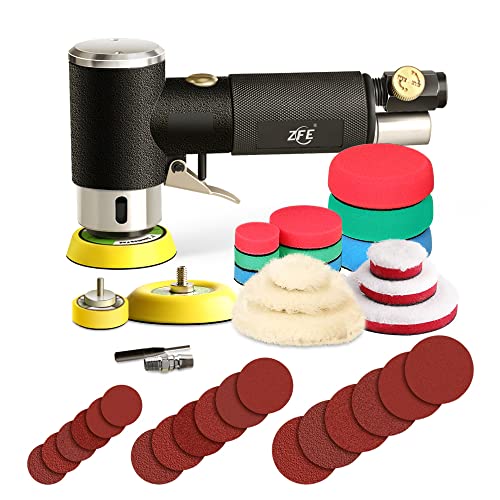
What We Like
- Exceptionally light at 2.3 pounds for easy handling.
- High 15000 RPM speed for fast material removal.
- Comprehensive kit with pads and sandpaper.
Trade-offs
- Requires a capable air compressor, not a standalone tool.
- High-speed operation demands careful technique to avoid burning through.
With a speed of 15000 RPM, this sander is built for aggressive spot work like removing rust or weld seams. Its 2.3-pound weight and compact size make it easy to handle in tight spaces and on detailed contours without causing wrist fatigue. The tool is designed for focused areas where a larger sander would be cumbersome, suiting finishers who need to blend repairs into existing surfaces.
This tool’s pinpoint control comes with a smaller coverage area, so you wouldn’t want to block sand an entire door panel with it. For that broader work, a model like the 5-inch LithiCraft would be far more efficient. As a high-speed mini sander, it excels in its niche by offering serious cutting power in a package you can maneuver with one finger, provided you have a capable air supply to feed it.
Product photos
KUIMIT 5-Inch Air Sander Kit

What We Like
- On-the-fly speed control from 2,500 to 12,000 RPM
- Lightweight, palm-sized design for easy handling
- Minimal vibration from the precision-balanced motor
- Comes as a complete workshop-ready kit
Trade-offs
- Air-powered, requiring a compressor and hose setup
A real-time adjustable speed range from 2,500 to 12,000 RPM means you can dial in the perfect aggression for feathering edges or applying final polish without ever stopping the tool. Weighing less than a six-pack of soda at 3.1 pounds, this sander is built for the detailer or restorer who needs finesse and control during long sessions. Its balanced motor and cushioned grip tackle the hand fatigue that ruins a finish on big projects. For anyone moving between coarse shaping and fine finishing on a car panel, this adjustability is the core of its utility.
A 5-inch pad and a 12,000 RPM ceiling mean you’ll cover large, flat areas slower than with a sander using a larger pad. For controlled work on curves, contours, and final sanding stages, however, the adjustable speed and light weight keep you in command.
Product photos
Chicago Pneumatic CP7200S 3-Inch Sander

What We Like
- Compact, 4-inch-long body for tight spaces
- Lightweight 1.5-pound design reduces fatigue
- Rubber molded palm grip for comfort
- Silenced handle exhaust directs debris away
Trade-offs
- Small 3-inch pad covers less area per pass
- Lacks the surface speed of a larger orbital sander
- Requires an air compressor, not cordless
A maximum speed of 15,000 RPM in a body just four inches long makes the Chicago Pneumatic CP7200S a specialist for confined spaces. Its compact size and feather-light 1.5-pound weight let you maneuver around door handles, mirror bases, and complex body contours where bulkier tools simply can’t fit. The adjustable speed regulator and progressive throttle offer fine control for delicate work, while the silenced exhaust keeps the work area cleaner. This is the sander you reach for when the job demands precision over raw coverage.
The nimble size shows its limits on larger, flat panels. A three-inch pad simply won’t remove material as quickly as the five-inch pad on a sander like the LithiCraft, so you’ll spend more time sanding broad hoods and doors. This makes it a poor choice as your only bodywork sander. Think of it as a crucial supporting player in your shop, utterly indispensable for the finish work but not the tool for the initial heavy lifting.
Product photos
How We Evaluated Sanders For Car Bodywork
Our research was based on manufacturer specifications, technical documentation, and expert round-ups from the automotive tool community. We analyzed patterns in owner feedback to identify consistent strengths and weaknesses for real-world body shop and restoration work. The key criteria we focused on were vibration control, which directly impacts user fatigue during long sessions. We also considered pad size and orbit pattern for matching the tool to the panel contour and material removal rate. Finally, we looked at the power source requirement, as pneumatic tools demand a capable air compressor while cordless models offer mobility.
We also weighed ergonomics, weight, and included accessories. A limitation of this research-led approach is that we cannot verify claims about long-term durability or compare the exact feel and balance of each tool in hand, which are important factors for professional users.
What To Look For In Sanders For Car Bodywork
Choosing the right sander means matching its capabilities to the specific stages of bodywork, from stripping paint to final wet sanding. The wrong tool can slow you down or damage the workpiece.
Key factors are power source (pneumatic vs. Cordless), pad size and orbit for the job, and vibration control for comfort. A complete kit with pads and sandpaper adds immediate value.
Power Source: Pneumatic vs. Cordless
Pneumatic sanders, which run on compressed air, are the traditional choice for auto body shops. They are typically lighter, offer smoother operation with less vibration, and have fewer moving parts that can wear out. However, they require a significant investment in a capable air compressor and tethered hoses. Cordless models, like our best cordless pick, eliminate the compressor but add battery weight and cost. For a shop with a permanent air supply, pneumatic is often the preferred route for its consistent power and lower tool weight.
Pad Size & Orbit Pattern
Pad diameter dictates how much surface area you cover per pass. A large 8-inch pad, like on our pick for large flat surfaces, speeds up leveling big panels but is clumsy on curves. A compact 3-inch pad is essential for intricate areas but inefficient for broad work.
The orbit, measured in millimeters, determines the aggressiveness of the cut. A larger orbit (like 5mm or 8mm) removes material faster but can leave a slightly coarser finish, while a smaller orbit (like 3/16 inch) is better for fine finishing. A dual-action (DA) sander combines a spinning and orbiting motion to prevent swirl marks, making it the standard for paint preparation. Understanding the different types of dual-action sanders is crucial for selecting the right one.
Vibration Control & Ergonomics
Extended sanding sessions are hard on the hands and arms. Tools with built-in vibration-dampening technology, rubber over-molded grips, and balanced motors significantly reduce user fatigue. Lightweight design is a major comfort factor, especially for overhead or vertical panel work. Our research into top auto body sanders consistently highlighted low vibration as a top priority for professionals. Noise level is another ergonomic consideration; a quieter workshop is less fatiguing over time.
- Check the tool’s weight, palm sanders under 2 pounds are ideal for detail work.
- Look for a tool with a low profile to reach into tight spaces around door handles or wheel wells.
- Ensure the exhaust is directed away from your work surface to keep it clean.
A balanced, low-vibration sander is worth paying more for if you spend hours sanding; it prevents fatigue that leads to mistakes.
Sanders For Car Bodywork Compared
The comparison table below outlines the key specifications to help you differentiate between our top picks at a glance.
| Product | No-Load Speed/RPM | Weight | Power Source |
|---|---|---|---|
| LithiCraft 5-Inch Pneumatic Random Orbital Sander | 12,000 RPM | N/A | Pneumatic |
| AIRCAT 6310 6-Inch Composite Dual Action Sander | 10,000 RPM | 2.4 pounds | Pneumatic |
| Astro Pneumatic Tool 3008 Sander | N/A | 4.8 pounds | Pneumatic |
| EVERGRADE Cordless Professional DA Sander | Up to 10,000 RPM | 2.65 lb | 16V Brushless Cordless |
| Rupes Skorpio III Orbital Sander | N/A | 1.8 Pounds | Pneumatic |
| Ingersoll Rand 313A Orbital Angle Sander | 5,000 rpm | 4.2 lbs | Pneumatic |
| Ingersoll Rand 315 Straight-Line Air Sander | 3,000 SPM | 6.6 pounds | Pneumatic |
| ZFE 1/2/3 Inch Random Orbital Air Sander | 15000 RPM | 2.3 pounds | Pneumatic |
| KUIMIT 5-Inch Air Sander Kit | 12,000 RPM | 2.9 Pounds | Pneumatic |
| Chicago Pneumatic CP7200S 3-Inch Sander | 15,000 RPM | 1.5 pounds | Pneumatic |
Frequently Asked Questions
What type of sander is best for sanding car bodywork?
For most auto body tasks, a dual-action random orbital sander is the best all-around choice. Its combined spinning and orbiting motion efficiently removes material while preventing the swirl marks that a pure rotary sander can leave. They are ideal for sanding primer, leveling body filler, and final paint preparation. For a deep dive into technique, our guide on using a dual-action sander is a great resource.
What is the best air sander for auto body work?
The best pneumatic sander depends on your primary task. For a balance of precision and comfort in finish work, our best overall pick, the LithiCraft 5-Inch model, is an excellent choice. For professionals focused on minimizing fatigue during marathon sessions, the AIRCAT 6310 with its patented vibration-dampening design is a top contender.
Can I use an electric sander for car bodywork?
Yes, electric sanders can be used for car bodywork, especially if you lack a compressed air supply. However, they are often heavier and can produce more vibration than their pneumatic counterparts. For tasks requiring finesse and a swirl-free finish, a high-quality electric sander designed for automotive use is the better choice over a standard woodworking orbital sander. See our guide to electric DA sanders.
What grit sandpaper should I start with to remove car paint?
Start with a relatively coarse grit to break through the clear coat and paint layers efficiently. A coarse grit is common for initial paint stripping, but you must progress through progressively finer grits to create a smooth substrate for primer. The specific starting point depends on the paint hardness and your tool; for a detailed breakdown, see our article on sandpaper grit for paint removal.
Do I need more than one sander for car restoration?
Most professional shops and serious restorers use multiple sanders. A large straight-line or orbital sander is efficient for leveling big panels, a standard DA sander handles most general prep, and a compact detail sander is indispensable for tight curves and edges. Having the right sanders for body work for each stage saves time and produces a better final result.
The Bottom Line
For most auto body finishers and detailers tackling paint preparation and polishing, the LithiCraft 5-Inch Pneumatic Random Orbital Sander is the best overall choice due to its exceptional vibration control and precise handling. If your budget is tight or you primarily work on large, flat panels, consider the Astro Pneumatic Tool 3008 for its speed, or the Chicago Pneumatic CP7200S for intricate detail work.
Before you choose, honestly assess your air compressor’s capability, as most top-performing sanders are pneumatic. Matching the tool’s pad size and orbit to your specific task, not seeking a single do-everything sander, is the surest path to professional results.
