
10 Best Sanders For Walls in 2026
This post contains affiliate links. As an Amazon Associate, we earn from qualifying purchases.
For a powerful and adjustable tool that tackles full-room projects, the DEKOPRO Drywall Sander with Vacuum Dust Collection is our best overall pick. The DEWALT 20V MAX Cordless Drywall Sander excels in confined spaces, while the BOSCH GTR55-85 Drywall Sander Kit is designed to reduce user fatigue.
Sanding walls and ceilings is physically demanding and creates a tremendous amount of fine, pervasive dust. The right sander transforms this chore from a messy marathon into a controlled, efficient process. Our research focused on specs, manufacturer data, expert insights, and owner feedback to identify the ten best sanders for walls, helping you match a tool to your specific project needs.
Top 10 Sanders For Walls in the Market
Certain content that appears on this site comes from Amazon. This content is provided "as is" and is subject to change or removal at any time.
The Best Sanders For Walls, Reviewed
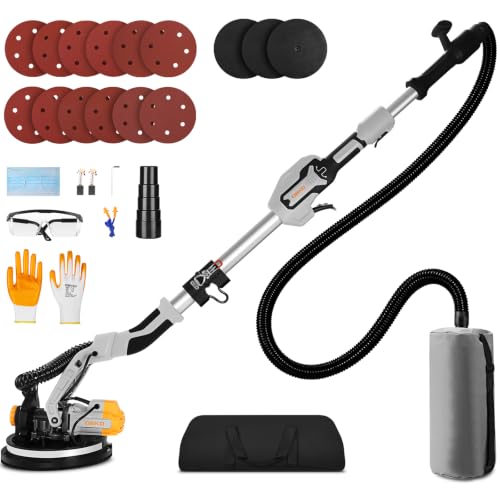
DEKOPRO Drywall Sander with Vacuum Dust Collection
What We Like
- Built-in vacuum dust collection system
- Telescopic pole extends to 6.2 ft
- 7 variable speeds for different tasks
- Includes detachable edge for corners
Trade-offs
- Requires a 14 ft cord, limiting cordless mobility
A 7.5 Amp motor paired with seven speed settings gives you the muscle and finesse to tackle everything from delicate drywall feathering to more aggressive paint removal. The built-in dust collection system, when hooked to a vacuum, keeps the cloud down and the cleanup short. This is the sander for the serious DIYer or contractor who needs a versatile, hardworking tool for walls and ceilings without stepping up to a pro-grade system. It balances power and user-friendly features in a way that makes it a reliable first choice.
A built-in vacuum dust collection system and a six-hole sanding disc design help reduce airborne debris when the sander is kept flush against a surface. This feature keeps the work area cleaner and cuts down on cleanup time, which is a major priority for indoor renovation. The trade-off for that dust control is a cord. You are tethered to an outlet, unlike the DEWALT 20V MAX cordless option, making it less ideal for quick touch-ups or sites without power. For most jobs where dust management is critical, its comprehensive feature set and included accessory kit justify its spot.
Product photos
DEWALT 20V MAX Cordless Drywall Sander

What We Like
- Telescoping shaft for confined spaces
- Brushless motor for runtime and durability
- Wireless ON/OFF with compatible dust extractor
- Tool-free AirLock dust extractor connection
Trade-offs
- Tool-only configuration requires separate battery purchase
- At 8.6 lb, it's heavier than many pole sanders
Its telescoping shaft provides access to confined spaces and hard-to-reach areas, so you can work in corners or against ceilings without a full-length pole. The cordless, brushless motor improves runtime and durability while eliminating cord management, which suits finishing work in closets or stairwells. Wireless Tool Control allows for remote operation when paired with a compatible dust extractor, letting you turn the sander on and off from the vacuum’s location.
The tool’s length is 47.9 inches, so you will need a ladder for high walls, and its weight is 8.6 pounds. It requires a DEWALT 20V MAX battery and charger, sold separately, to operate. A variable-speed dial helps match the sanding speed to the application.
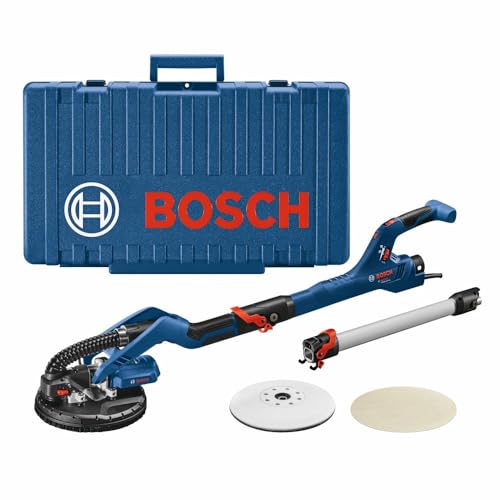
BOSCH GTR55-85 Drywall Sander Kit
What We Like
- Ceiling-suction mode reduces overhead weight
- T-handle grip minimizes arm strain
- Easy-to-reach controls for on-the-fly adjustments
- Constant speed under load for smooth sanding
Trade-offs
- At 66.9 inches long, storage requires significant space
- 9.0-pound weight is substantial for a pole sander
A ceiling-suction mode that actively reduces the tool’s weight overhead is the Bosch GTR55-85’s standout feature. This directly combats the fatigue and shoulder burn that plagues drywall finishing. Combined with the T-handle grip and easy-to-reach controls, the sander’s design is clearly focused on letting you work longer and more comfortably on ceilings and high walls. It’s a smart choice for anyone tackling large-scale projects where extended overhead work is unavoidable.
At 9.0 pounds and over five and a half feet long, the Bosch GTR55-85 is built for stability over portability, which suits extended wall and ceiling sessions but limits its use in confined areas. Its weight and length are greater than lighter pole sanders like the 3.9-pound HYDE model, making it less ideal for quick touch-ups. The design prioritizes ergonomic features for fatigue reduction, positioning it as a dedicated tool for larger sanding projects.
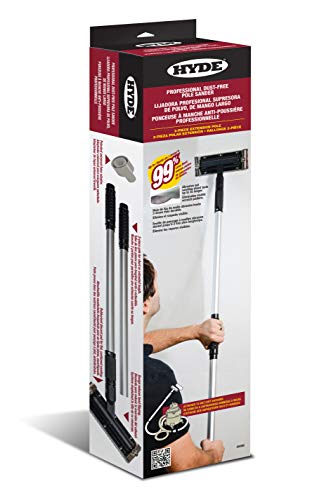
HYDE Dust-Free Vacuum Pole Sander
What We Like
- Lightweight aluminum and steel construction for easy handling
- Universal adapter fits most wet/dry vacuum hoses
- Includes a six-foot hose for dust-free sanding
- EasyClamp system allows for simple sheet loading
Trade-offs
- Manual operation requires physical effort for large jobs
- Tool only: requires a separate vacuum for dust collection
Connecting directly to a shop vac with a universal adapter, the HYDE Dust-Free Vacuum Pole Sander tackles the main drawback of manual sanders: the pervasive drywall dust cloud. Research mentions that this hose attachment strikes an excellent balance between affordable and user-friendly. Its two-piece aluminum pole extends to 56 inches, letting you reach walls and ceilings without a ladder, and the construction is lightweight for easier handling.
As a manual tool, it requires more physical effort than an electric sander. Sanding a large area like a ceiling remains a workout. However, since it includes a hose and adapter fitting most wet/dry vacs, it provides a cleaner alternative to standard pole sanders.
Makita 18V LXT Cordless Drywall Sander

What We Like
- Flexible head swivels for varied wall orientations
- Direct-drive brushless motor for efficient sanding
- Round brush design minimizes dust leakage
- Adjustable pipe collapses for tight spaces
Trade-offs
- Tool only: requires separate Makita 18V battery and charger
A highly flexible head swivel is the key feature here, letting you maintain full pad contact on ceilings, corners, and angled walls without straining your wrist. That makes this cordless sander a natural fit for pros and serious DIYers tackling whole-room finishing, where maneuverability directly impacts speed and finish quality. The Makita-built brushless motor is positioned at the sanding head for increased efficiency, and the round brush design delivers high-efficiency dust extraction with minimal leakage. The collapsible extension pipe is a smart touch for moving from a tall ceiling down to a baseboard.
The major trade-off is the platform commitment. You’re buying into the Makita 18V LXT ecosystem, so factor in the cost of batteries if you aren’t already invested. For a corded option, the DEKOPRO model offers variable speed control and includes a vacuum dust collection system. But if you value cordless freedom and need a head that truly follows the contours of your work, this Makita’s design is purpose-built for the task.
Product photos
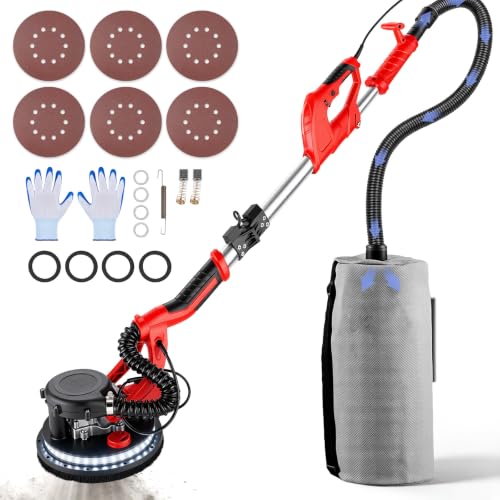
VEVOR Drywall Sander with Telescope Handle
What We Like
- Extendable, foldable handle for ceilings and storage
- LED strip light for 360° illumination in dark spaces
- Detachable brush segment for sanding right up to edges
- Variable speed control for different wall materials
Trade-offs
- Corded design limits mobility compared to cordless models like the DEWALT
An 850-watt motor and a speed range from 800 to 1750 rpm give this sander enough muscle to handle lime and putty walls without bogging down. The telescoping handle stretches out to 1.9 meters, letting you tackle ceilings without a ladder, and it folds back down for easier storage. This combination of power and a practical, adjustable frame makes it a solid choice for DIYers and contractors who need a capable, all-in-one tool for finishing drywall without a huge investment.
You do trade some convenience for that capability. It’s a corded tool, so you’re always hunting for an outlet and managing a power cord, unlike the cordless freedom of the DEWALT. The overall length and weight also mean it’s less nimble for quick touch-ups compared to a simple pole sander. For the price, however, you get a well-equipped package with useful features like the LED light and decent dust collection, positioning it as a functional workhorse for general wall preparation.
Protmex Drywall Sander with Vacuum Collection
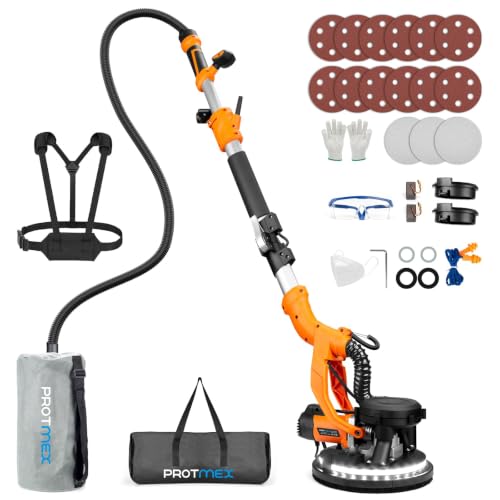
What We Like
- High-power 1000W motor for demanding sanding tasks
- Excellent 98.5% dust collection keeps the workspace clean
- Extendable pole and pivoting head reach ceilings and corners
- LED light illuminates work area in dark environments
Trade-offs
- Corded design limits mobility compared to battery models like the DEWALT
A 1000W pure copper motor drives this sander, providing the high power mentioned for tasks like sanding drywall and popcorn ceilings. Its six adjustable speeds, ranging from 800 to 2200 RPM, allow users to match the tool’s action to different polishing needs, from a slower finish to a faster removal pace. A built-in vacuum system with a six-hole sanding disc design is noted to achieve a dust suction effect of up to 98.5%, aiming to keep the work area cleaner.
A corded sander does require an outlet, which can be inconvenient on large jobsites or in rooms without nearby power. For intensive work in one location, this is a minor issue. However, if you need to move frequently between rooms or work far from an outlet, a cordless model like the DEWALT 20V MAX might save more time than the extra power provides. The DEKOPRO is designed for projects where the sander runs for hours at a time.
GRENTOOL Pole Sander for Drywall
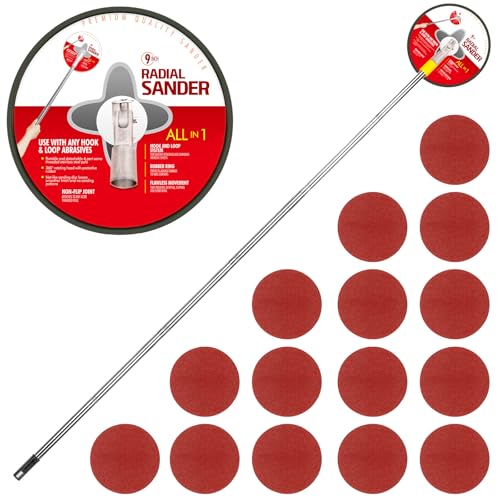
What We Like
- Extremely lightweight at 2.0 pounds
- 81-inch pole for ceilings and high walls
- 360° head adapts to corners and angles
- Complete kit with multiple grit discs
Trade-offs
- Manual operation requires physical effort
- No integrated dust collection system
- Limited to sanding head and pole design
At two pounds, the GRENTOOL pole sander is easy to hold overhead for extended periods, which is key for ceiling work. Its 81-inch extension pole allows access to high walls and ceilings without a ladder. The included set of 15 sanding discs in five grits handles most stages of drywall finishing.
This is a manual tool, requiring the user to supply all the motion. It does not include a dust collection system, so a separate vacuum may be needed to manage debris. The lightweight, balanced design aims to reduce arm and shoulder fatigue during use.
Product photos
SEESII Cordless Drywall Sander with Vacuum
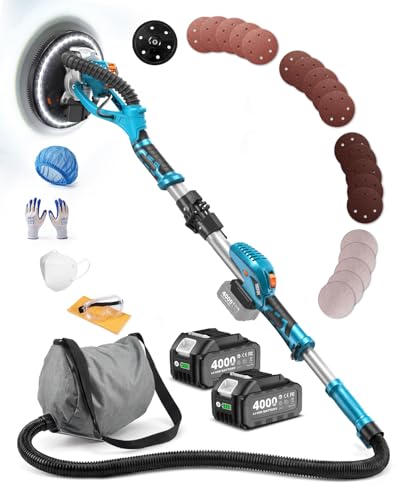
What We Like
- Built-in vacuum with 97% dust capture
- Remarkably quiet 60dB operation
- Lightweight design reduces arm fatigue
Trade-offs
- Not for concrete, metal, or stone surfaces
- Battery swap required for jobs over an hour
With two batteries delivering about 60 minutes of sanding time, this sander is built for finishing a series of rooms without hunting for an outlet. The 900W brushless motor has the guts to handle drywall and joint compound, while the 60dB noise level means you won’t disturb the whole house. It’s a clear choice for remodelers or serious DIYers tackling multi-room projects where cord management is a hassle and downtime is a killer. The foldable, telescoping pole and 9.4-pound weight make it manageable on a ladder, but the cordless freedom is the main event here.
Choosing a cordless model means committing to a battery system. Compared to a corded tool like the DEKOPRO, you exchange unlimited runtime for full mobility. Its built-in dust collection works well to keep the area clean, but note this is designed specifically for drywall and plaster. It is not meant for concrete or metal, so you’ll need a different sander for those tasks. For its intended purpose, smoothing walls and ceilings from patchwork to final finish in a home, it provides a clean and quiet solution.
Product photos
HOOMESUN Drywall Pole Sander Kit
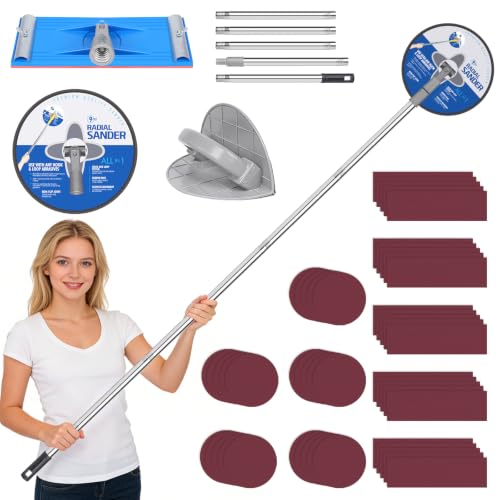
What We Like
- Complete manual kit for walls, corners, and ceilings
- Long adjustable pole for high walls and ceilings
- Includes 50 multi-grit self-adhesive sandpaper sheets
- Locking screw reduces wobble for smoother sanding
Trade-offs
- Assembly requires specific twisting steps, not just pushing
This kit bundles three specialized sanding heads and a pole that extends to nearly five feet, letting you tackle an entire drywall job from floor to ceiling without switching tools. That makes it a logical choice for the budget-conscious DIYer or a pro looking for a reliable, no-fuss manual sander. The included assortment of sandpaper grits and the locking screw on the square head show a design that anticipates the need for stability and a proper finish sequence.
The trade-off is the sheer arm work. Sanding a large wall manually with this kit is a physical task, and it lacks any dust management, so you’ll be working in a cloud. This HOOMESUN kit excels where simplicity and upfront cost matter more than raw efficiency.
Product photos
How We Evaluated Sanders For Walls
Our evaluation was research-based, analyzing product specifications, manufacturer documentation, professional tool round-ups, and patterns in owner reviews. We prioritized effective dust collection, ergonomics and reach, power source and mobility, and overall versatility for different wall-sanding tasks. These criteria determine how clean your workspace stays, how long you can work comfortably, and whether the tool fits your job site’s constraints. A limitation of this approach is that we cannot provide hands-on data on long-term durability or the exact “feel” of each sander’s balance during extended use.
What To Look For In Sanders For Walls
Choosing the right tool depends on your project’s scale, your workspace, and your tolerance for dust. The core decision is between manual pole sanders for occasional use and powered models for serious work.
Prioritize dust collection to keep your workspace clean and your lungs safe. Consider reach and weight for ceilings, and choose corded power for long jobs or cordless for tight spaces.
Dust Collection
Effective dust control is important for indoor drywall work. Powered sanders often have a built-in vacuum or a port to connect a shop vac, with some models claiming high collection rates. A good drywall sanding technique includes using these systems to minimize cleanup and health risks. Manual pole sanders rarely offer integrated dust collection, making them better suited for small, quick repairs where you can manage the mess with other methods.
Reach and Ergonomics
Sanding ceilings and high walls requires a long, stable pole. Look for telescoping or adjustable poles that extend to at least six feet. Weight and balance are critical for reducing arm and shoulder fatigue, especially overhead; some models feature special grips or suction-assist modes. For corners and edges, a detachable or swiveling head is essential. Our guide on the best sanders for sheetrock details how these ergonomic features impact real-world use.
Power Source and Mobility
Corded electric sanders provide consistent, unlimited power for large jobs but limit your range to the length of the cord. Cordless electric drywall sander models offer complete freedom of movement, ideal for rooms with obstacles or no convenient outlets, but require investment in a compatible battery platform. Your choice here hinges on whether you value uninterrupted runtime or total cordless mobility. For a broader look at options, see our sander reviews.
Versatility and Accessories
Consider what the tool includes and what it can do. Some kits come with multiple sanding discs, a light for dark corners, or attachments for edges. A flexible head that conforms to wall angles improves finish quality. Determine if you need a dedicated drywall finisher or a more general-purpose palm sander for light wall prep. Understanding the different types of sanders helps clarify where a wall sander fits in your toolkit.
- Check if the sander includes a vacuum hose or requires a separate purchase.
- Verify the pole’s maximum extended length and minimum collapsed size for storage.
- Look for variable speed control to handle different compounds and textures.
- Ensure sandpaper or screens are readily available in the required size and grit.
For whole-room sanding, a powered sander with dust collection is worth the investment over a manual tool.
Sanders For Walls Compared
The comparison table below summarizes key specifications to help you quickly differentiate our top picks.
| Product | Speed Range (RPM) | Extension Pole Length | Dust Collection |
|---|---|---|---|
| DEKOPRO Drywall Sander with Vacuum Dust Collection | 600-1,800 RPM | 6.2 ft | Built-in vacuum dust collection |
| DEWALT 20V MAX Cordless Drywall Sander | Variable-speed dial | Telescoping Shaft: Yes | Airlock connection |
| BOSCH GTR55-85 Drywall Sander Kit | Variable speed selector | Quick-release pole | Ceiling-suction mode |
| HYDE Dust-Free Vacuum Pole Sander | N/A | 28" to 56" | Dust-Free Vacuum Sander |
| Makita 18V LXT Cordless Drywall Sander | 1,000-1,800 RPM | 16-1/2" | High efficiency dust extraction |
| VEVOR Drywall Sander with Telescope Handle | 800-1750 rpm | 1.4m to 1.9m | Vacuum bag included |
| Protmex Drywall Sander with Vacuum Collection | 800-2200RPM | 4.9 to 6.2 feet | 98.5% effective |
| GRENTOOL Pole Sander for Drywall | N/A | 81 inches | N/A |
| SEESII Cordless Drywall Sander with Vacuum | 1900RPM | 57" to 71" | Built-in dust bag |
| HOOMESUN Drywall Pole Sander Kit | N/A | Adjustable up to 58 inches | N/A |
Frequently Asked Questions
What is the best type of sander for walls?
A dedicated drywall sander on a pole is the best type for sanding large surfaces. These tools are designed specifically for smoothing joint compound on walls and ceilings. They offer the necessary reach and a large sanding surface, and they often include integrated dust collection that general-purpose sanders lack.
What kind of sander should I use for walls?
Use a pole sander for walls. For small patches or repairs, a handheld finishing sander can work, but for any significant area, a pole-mounted sander saves time and effort. Choose a powered model with dust collection for full rooms or a manual pole sander for occasional touch-ups and smaller projects.
What type of sander is best for sanding walls?
The best sander for sanding walls is a drywall-specific pole sander. These are optimized for the broad, flat surfaces of walls and can connect to a vacuum for dust control. For getting into tight corners and along edges, look for a model with a dedicated sander for corners attachment or a flexible head design.
What do professional painters use to sand walls?
Many professional painters use powered drywall sanders with high-efficiency dust collection systems. These tools significantly reduce labor time and create a cleaner job site, which is crucial for client satisfaction. They often favor models with ergonomic features to combat fatigue during long days of sanding ceilings and walls.
Can I use a regular orbital sander on drywall?
You can use a regular orbital sander on drywall for very small repairs, but it is not ideal for larger areas. It lacks the long reach needed for ceilings and high walls, and it creates an enormous amount of uncontrolled dust. Its smaller pad can also leave an uneven finish on the soft drywall surface compared to a purpose-built tool.
The Bottom Line
The DEKOPRO Drywall Sander with Vacuum Dust Collection is a top choice for its powerful motor, adjustable speed, and highly effective built-in dust collection, making it ideal for renovators tackling entire rooms. For those on a budget, the VEVOR Drywall Sander offers capable power sanding with helpful features like an LED light. Users who need cordless freedom for tight spaces should consider the DEWALT 20V MAX model. No matter your choice, prioritizing a tool with good dust control will make the job cleaner, faster, and more professional.
