
9 Best Scroll Saw Blades in 2026
This post contains affiliate links. As an Amazon Associate, we earn from qualifying purchases.
Our best overall scroll saw blade is the Flying Dutchman Ultra Reverse Pinless Scroll Saw Blades for its aggressive cut that minimizes underside splintering on dense hardwoods. For a versatile premium pack, consider the Flying Dutchman Pinless Scroll Saw Blade Variety Pack, and for intricate 360-degree cuts, the FOXBC Spiral Scroll Saw Blades excel.
The right blade makes the difference between a frustrating, splintered cut and a smooth, precise one. It must match your material, your saw’s blade holder, and the type of finish you need.
Top 9 Scroll Saw Blades in the Market
Certain content that appears on this site comes from Amazon. This content is provided "as is" and is subject to change or removal at any time.
The Best Scroll Saw Blades, Reviewed
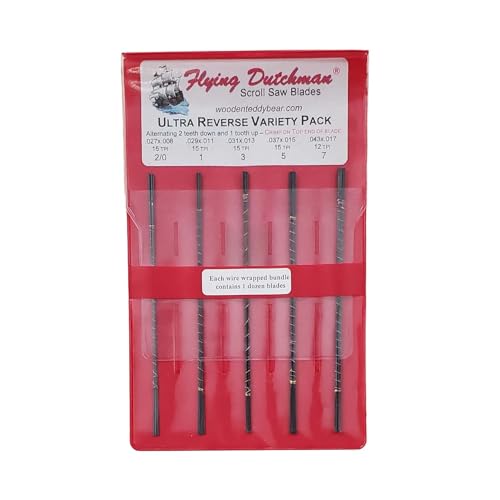
Flying Dutchman Ultra Reverse Pinless Scroll Saw Blades
What We Like
- Ultra Reverse tooth design prevents underside splintering
- Aggressively fast yet smooth cutting action
- German-made from top-grade hardened steel
- Milled construction for a sharper cutting edge
Trade-offs
- Aggressive cut is less suited for thin or soft woods
With every third tooth reversed, the Ultra Reverse pattern prevents splintering on a workpiece’s underside, so cuts are cleaner and require less sanding. These German-made blades are milled for sharpness and deliver an aggressively fast yet smooth cut. Research indicates premium blades like this are intended for thick, dense wood, making cutting such material less of a chore.
That aggressive speed comes with a trade-off. Research mentions premium blades would not be used for thin or soft wood, as they are designed for dense material. When facing a stack of hard maple or oak, however, these blades turn a chore into a smooth process.
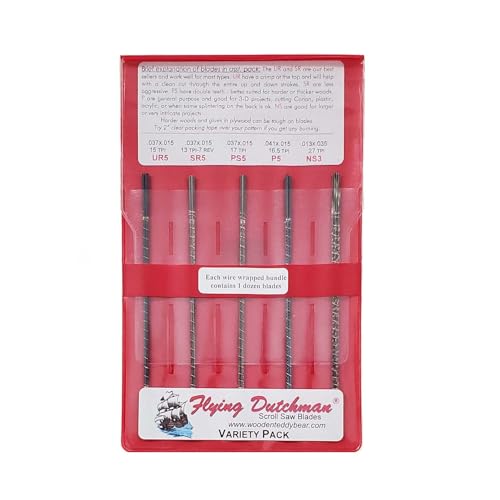
Flying Dutchman Pinless Scroll Saw Blade Variety Pack
What We Like
- Milled for a sharper cutting edge
- Five distinct blade styles to compare
- Comes in a handy reusable pouch
- Made from high-quality hardened steel
Trade-offs
- Aggressive cut can be too fast for thin or soft woods
- Requires a scroll saw compatible with pinless blades
The Flying Dutchman pack provides five distinct blade styles in one set, which offers a quick way to test different cuts without purchasing multiple separate packs. These blades are manufactured in Germany from hardened steel and are milled to create a sharp cutting edge. Premium blades like these are known for aggressive tooth shapes that power through dense woods quickly, according to expert round-ups, making thick hardwood projects less of a chore.
Expert round-ups note that premium blades cut quickly, so they are not typically recommended for thin or soft woods like balsa or veneer. The variety pack includes one dozen each of UR5, SR5, PS5, P5, and NS3 blades, giving users several styles to try. This assortment allows a scroll saw user to compare different blade types directly from a single, reusable pouch.
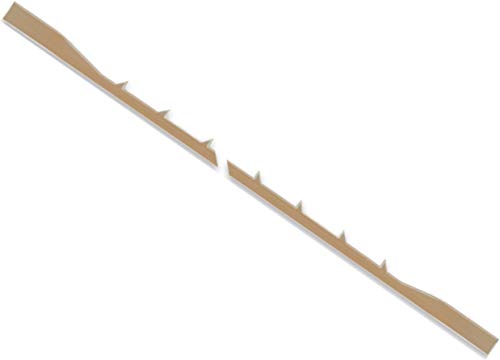
Pégas Modified Geometry Scroll Saw Blades
What We Like
- ['Modified geometry tooth minimizes burning']
- ['Aggressive feed rate and fast chip expulsion']
- ['Leaves a smooth, accurate finish']
- ['Cuts hardwoods, softwoods, plastic, and Corian']
Trade-offs
- ['Best for projects up to 3-inch thickness']
A 3-inch cutting capacity for hardwoods means you can tackle dense materials like maple or oak without the blade bogging down or burning. The modified tooth geometry is the key here, it expels chips so fast that it tolerates a more aggressive feed rate, which is exactly what you need when pushing through thick stock. This makes it a go-to for serious woodworkers who regularly work with challenging materials and want to get through the cut quickly with a clean result.
That aggressive cut is a double-edged sword. It’s overkill for delicate fretwork on thin, soft wood where a standard skip-tooth blade would provide more control. For the bulk of your thick hardwood projects, however, these Pégas blades will feel like a revelation compared to a standard Olson skip-tooth blade. They simply power through material that would make other blades struggle, saving you time and frustration on the densest pieces in your shop.
Product photos
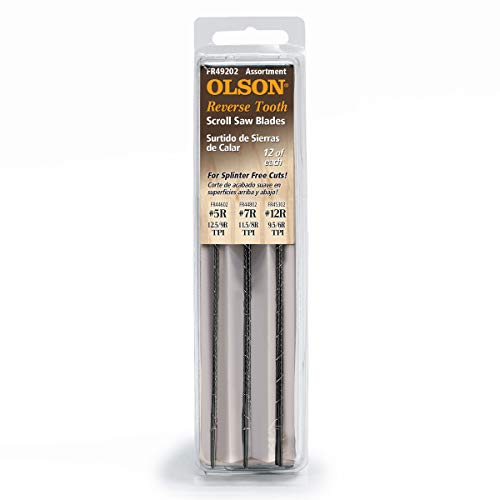
Olson Reverse Tooth Scroll Saw Blade Assortment
What We Like
- Reverse tooth design for cleaner bottom cuts
- Assortment pack offers variety
Trade-offs
- Aggressive cut is not ideal for thin or soft woods
The reverse tooth design is the key feature here, with teeth pointing downward on the bottom of the blade to score the underside of the workpiece as you cut. This results in a significantly cleaner bottom edge with far less tear-out, a major advantage for projects where both sides of the cut are visible. This makes them a solid choice for the scroller who frequently tackles challenging materials and demands a clean finish from both sides.
That aggressive cutting action, however, means they can be overkill for delicate work in thin plywood or softwoods, where a standard skip tooth blade would provide more control with less risk of damage. For users who need that clean two-sided finish but work with a wider range of material thicknesses, the Flying Dutchman Ultra Reverse blades offer a similar reverse-tooth geometry in a well-regarded variety pack. The Olson reverse teeth are specialists, built to muscle through the tough stuff cleanly.
Product photos
Olson Skip Tooth Scroll Saw Blade Assortment
What We Like
- ['Fast cutting speed for aggressive work']
- ['Good chip clearance reduces clogging']
- ['Available in many sizes for versatility']
- ['Cuts wood, plastic, and fibrous materials']
Trade-offs
- ['Aggressive cut can be too fast for thin or soft woods']
- Aggressive cut can be too fast for thin or soft woods
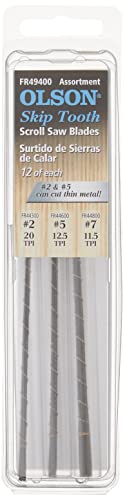
The Olson Skip Tooth assortment packs 36 blades in a design that cuts fast and clears chips well. That speed makes it a solid pick for anyone working through thicker, denser stock where standard blades would bog down. It’s a practical choice for the scroller who prioritizes getting through material over achieving a finish-ready cut straight off the saw.
Skip tooth blades are designed for speed and good chip clearance, making them well-suited for cutting thicker woods and dense materials. According to expert round-ups, premium blades like this have an aggressive cut that is not recommended for thin or soft woods, as it can cause tear-out. This Olson assortment prioritizes fast cutting power over a delicate finish.
FOXBC Spiral Scroll Saw Blades
What We Like
- Cuts in all directions without turning workpiece
- Works with many materials from wood to non-ferrous metals
- Made of hardened, tempered high carbon steel
- Brand's stated goal is affordable replacement blades
Trade-offs
- Cut quality depends heavily on material thickness and TPI
- Plain end limits compatibility to saws without pin adapters
- Only 12 blades per pack, fewer than many variety assortments
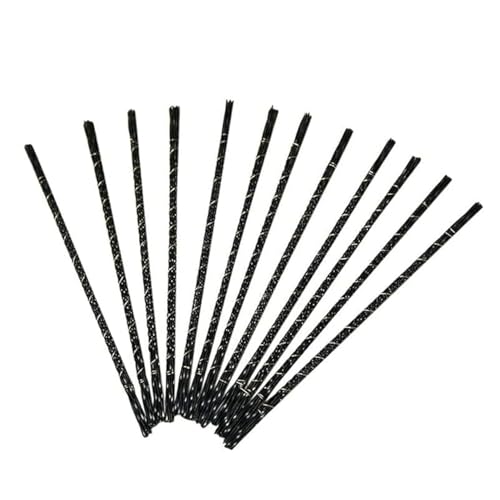
The 360-degree cutting capability of these spiral blades means you can tackle intricate curves and tight joints from any angle without ever rotating your stock. That makes them a natural fit for complex fretwork, compound cuts, or any project where constantly repositioning the workpiece would break your focus and rhythm. They’re made of hardened high-carbon steel to hold an edge, and FOXBC aims them at artisans seeking an affordable blade for a wide range of materials, from wood and plastic to softer metals and bone.
A spiral blade’s 360-degree cutting capability means you never have to turn the workpiece, which is ideal for intricate curves and internal cuts. The trade-off is that this all-direction cut can leave a rougher finish than a standard flat blade, and the final result depends significantly on your material thickness and technique. With a 12-pack of just one spiral type, this set lacks the variety found in multi-pattern assortments for different tasks.
Product photos
JTEX Pin End Assortment

What We Like
- Large 48-blade assortment covers four tooth densities
- Corrosion-resistant SK5 steel for increased blade longevity
- Broad compatibility with major 15-inch and 16-inch scroll saw brands
- Pin-end design fits all machines requiring that style
Trade-offs
- Pin-end design limits use to saws with pin-style blade holders
- All blades are regular tooth; lacks reverse or skip tooth geometries
The JTEX assortment provides 48 blades in four different tooth counts, which allows a user to switch between materials like hard wood or soft metals without buying separate packs. Its pin-end design fits machines requiring that style, including models from WEN, Dremel, and Ryobi. The blades are made from corrosion-resistant SK5 Japanese carbon steel, a material chosen by the manufacturer for increased strength and longevity during cutting operations.
The pin-end design limits this set to scroll saws that accept pinned blades, so it is not compatible with machines designed for plain-end blades. For users whose saws require plain-end blades for intricate cuts, alternatives like the Flying Dutchman Pinless Scroll Saw Blade Variety Pack exist. This JTEX pack serves as a wide-ranging starter set for compatible saws.
Product photos
Pégas Spiral Scroll Saw Blades

What We Like
- Helical shape cuts in any direction
- Eliminates need to turn workpiece for tight corners
- Cuts a wide range of materials
- Swiss manufacturing for consistent quality
Trade-offs
- Pack contains 12 blades.
Pégas Spiral Scroll Saw Blades have a helical shape that cuts around the entire periphery, which lets you feed work straight in without turning it to create sharp inside corners. They are manufactured in Switzerland and are listed as best for softwoods and plywood, while also being excellent for materials like wood, plastic, ferrous metals, nonferrous metals, bone, and wax. The included charts serve as a base for beginners who are unsure which blade to select, though experienced scrollers may develop their own preferences over time.
That speed comes with a trade-off: you give up some of the fine control you get with a standard flat blade, especially on delicate projects. For most general scrolling where you want a smoother, more manageable feed rate, a set like the Olson Reverse Tooth blades will feel more forgiving. But if your project demands cutting in any direction without stopping to pivot, these Pégas spirals are the specialized tool for the job.
Product photos
PRODIAMANT Fretsaw Blades
What We Like
- German industrial manufacturing for consistency
- Hardened steel construction for durability
- Size-5 teeth balance speed and control
- Suitable for fretsaws and bow saws
Trade-offs
- Only one tooth size (5) in the pack
- Designed for wood and plastic, not metals
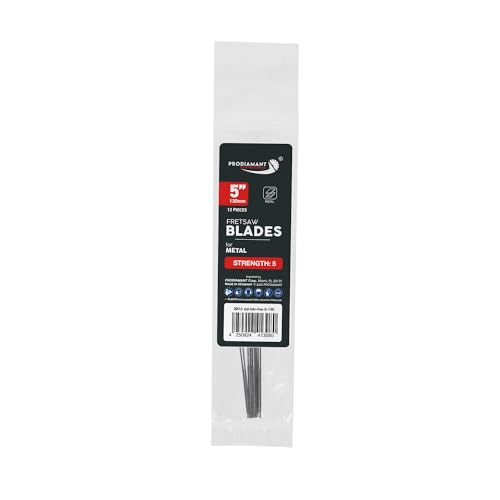
Made from hardened steel in standardized German industrial processes, these blades provide consistent geometry and steady performance. This reproducible blade quality helps maintain stable handling and precise shaping during intricate cuts on delicate wood components. For a woodworker, that means predictable results from the first blade to the last in a project.
The trade-off is specialization. You get 12 identical blades of a single, medium tooth configuration. For a complex project using various wood thicknesses, you might wish for a finer or coarser blade option. If your work demands that kind of on-the-fly adaptability, a variety pack like the Flying Dutchman Pinless Scroll Saw Blade Variety Pack would be a more flexible starting point. The PRODIAMANT blades excel when your task calls for steady repetition, not experimentation.
Product photos
How We Evaluated Scroll Saw Blades
We compared scroll saw blades by analyzing manufacturer specifications, material composition, and tooth geometry. Our research focused on expert round-ups and patterns in owner feedback to understand real-world performance across different woods and projects. The key criteria were cutting speed and finish quality, blade compatibility (pinless vs. Pin-end), and the value offered by assortment packs. Since this is a research-led evaluation, we cannot provide hands-on data on blade longevity or subjective feel, but we focused on consistent reports of performance for specific applications.
What To Look For In Scroll Saw Blades
Choosing a scroll saw blade is about balancing speed, finish, and control. The right blade turns a difficult cut into a smooth, enjoyable process.
Match the blade’s tooth geometry and size to your material. Use larger, more aggressive blades for thick hardwoods and smaller, finer blades for delicate fretwork. Always verify whether your saw uses pinless or pin-end blades before buying.
Tooth Geometry & Cutting Action
The tooth pattern determines how a blade cuts. Skip-tooth blades are common and cut fast with good chip clearance, ideal for thicker woods but leaving a slightly rougher edge. Reverse-tooth blades have teeth pointing upward at the tip to cut on the upstroke, which prevents splintering on the underside of your workpiece for a cleaner finish.
Spiral blades are twisted to cut in all directions, perfect for intricate interior cuts without turning the wood, though they typically leave a rougher surface that requires more sanding. For other cutting tasks, understanding the right tool is key, which is why we have guides on the best saw blades for general use and the best circular saw blades for straight-line ripping.
Blade Size (Number) & Material Thickness
Blade size, indicated by a number, directly correlates with the thickness and hardness of your material. Larger numbers like #7 or #9 are for thicker, denser hardwoods, providing the necessary strength and kerf to clear sawdust. Smaller blades like #3 or #2/0 offer more control and make tighter turns, making them the choice for thin wood and delicate, intricate patterns. The general rule is to use the largest blade that can still navigate your pattern’s tightest curves without breaking.
Pinless vs. Pin-End & Compatibility
Your scroll saw dictates which blade end style you need. Most modern saws use plain-end (pinless) blades, which are held by clamps and allow for very small blade-entry holes, essential for fine fretwork. Pin-end blades have a small metal pin at each end and are typically used with older or entry-level saws; they require a larger entry hole and don’t come in very small sizes.
Always check your saw’s manual. For projects requiring different tools, selecting the proper blade is equally important, such as when you need the best band saw blades for resawing or the best reciprocating saw blades for demolition.
–
- Check your saw’s manual for compatible blade end types.
- For intricate work with small entry holes, you need pinless blades.
- Pin-end blades are often less expensive but limit your project scope.
- Consider buying blades in bulk from a specialty supplier for better value.
- Keep a variety of sizes and tooth types on hand for different projects.
When in doubt, start with a #5 skip-tooth blade for general work on 3/4-inch wood.
Scroll Saw Blades Compared
The following table compares our top picks across key specifications to help you see the differences at a glance.
| Product | Blade Type | Blade Length | Pack Quantity |
|---|---|---|---|
| Flying Dutchman Ultra Reverse Pinless Scroll Saw Blades | Pinless | 5 inches | 60 blades |
| Flying Dutchman Pinless Scroll Saw Blade Variety Pack | Pinless | 5 inches | 60 blades |
| Pégas Modified Geometry Scroll Saw Blades | N/A | 5 inches | 12 blades |
| Olson Reverse Tooth Scroll Saw Blade Assortment | Reverse Tooth | 5 inches | Assortment Pack |
| Olson Skip Tooth Scroll Saw Blade Assortment | Skip tooth | 5.0 inches | 36 blades |
| FOXBC Spiral Scroll Saw Blades | Spiral | 5.0 inches | 12 Pack |
| JTEX Pin End Assortment | Pin end | 5 inches | 48 blades |
| Pégas Spiral Scroll Saw Blades | Spiral | 5.0 inches | 12 |
| PRODIAMANT Fretsaw Blades | N/A | 130 mm | 12 blades |
Frequently Asked Questions
What is the best blade to use on a scroll saw?
There is no single best blade; it depends on your project. For general cutting in 3/4-inch hardwood, a #5 or #7 skip-tooth blade is a reliable starting point. For a cleaner bottom cut on dense woods, choose a reverse-tooth blade, and for intricate interior cuts without turning the wood, a spiral blade is the tool for the job.
What is the best wood thickness for a scroll saw blade?
Scroll saws excel at cutting wood up to 2 inches thick, with many blades optimized for the common 3/4-inch to 1-inch range. For thicker hardwoods up to 3 inches, you need an aggressive, premium blade like a modified geometry or ultra reverse style to maintain speed and prevent burning.
Can I cut metal with a scroll saw?
Yes, you can cut thin, soft metals like aluminum or brass with a standard scroll saw blade, though a blade specifically designed for metal will last longer. For cutting glass or ceramic, you require special diamond-impregnated blades and a water-drip system to prevent shattering from heat.
What’s the difference between pinless and pin-end blades?
Pinless blades have plain ends that are clamped in place. This design allows for very small starter holes, which is ideal for more intricate work. Pin-end blades have a small metal pin at each end that drops into a holder on the saw. They are easier to change, but they require a larger entry hole and aren’t available in the smallest sizes.
Why do my scroll saw blades keep breaking?
Blades often break from forcing the wood, using a blade that’s too small for the material thickness, or a dull blade overheating. Ensure you’re using the correct blade size, let the blade do the work without excessive pressure, and replace blades when cutting becomes slow or produces burn marks.
The Bottom Line
For woodworkers cutting dense hardwoods who want a clean cut with minimal underside splintering, the Flying Dutchman Ultra Reverse Pinless Scroll Saw Blades are the best overall choice due to their German engineering. If you’re on a budget and need a large assortment for a pin-end saw, the JTEX Pin End Assortment offers tremendous value. Those tackling complex 3D fretwork should consider the maneuverability of the FOXBC Spiral Scroll Saw Blades. Ultimately, matching the blade’s tooth geometry and size to your specific material is the single most important factor for scroll saw success.
