
9 Best Horizontal Band Saws For Metal Cutting in 2026
This post contains affiliate links. As an Amazon Associate, we earn from qualifying purchases.
Our top choice for a horizontal band saw for metal is the JET 10×16 Metal Cutting Horizontal Band Saw, a capable tool for professional shops. For precise angled cuts, the Baileigh 8.66in Mitering Head model performs well, while the versatile JET 7×12 Deluxe offers both horizontal and vertical operation. Choosing the right saw involves matching your shop’s power, space, and cutting needs. A poor match can waste money and floor space on a machine that is either underpowered or too large.
We focused on the key factors that matter for metalworkers: cutting capacity, power requirements, and features like mitering capability or dual-position versatility. Our evaluation is based on specifications, manufacturer data, and patterns in expert and owner feedback. This guide gives you nine clear options, from premium industrial models to compact workshop tools.
Top 9 Horizontal Band Saws For Metal Cutting in the Market
Certain content that appears on this site comes from Amazon. This content is provided "as is" and is subject to change or removal at any time.
The Best Horizontal Band Saws For Metal Cutting, Reviewed
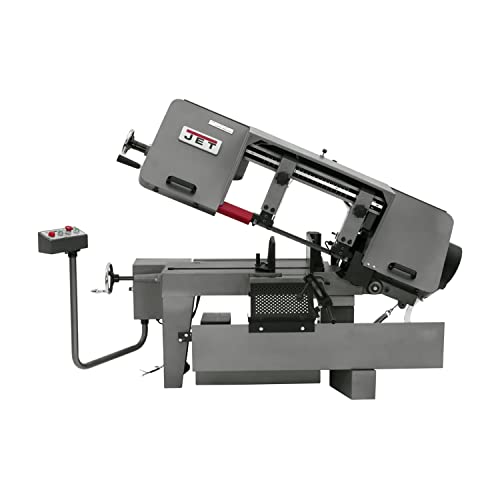
JET 10×16 Metal Cutting Horizontal Band Saw
What We Like
- Heavy 973 lb base ensures vibration-free operation
- Variable-speed drive for fine-tuning blade speed
- Integrated blade coolant system extends blade life
- Swivel control panel places functions at fingertips
Trade-offs
- Requires three-phase power, limiting home shop installation
- Massive 973 lb weight complicates delivery and placement
- Large 79-inch footprint demands significant floor space
With a 10 by 16 inch cutting capacity, this band saw can handle substantial stock like large round bar and wide rectangular tubing, positioning it for larger-scale metal projects. Its 2 HP three-phase motor and heavy-duty transmission with hardened gears operating in an oil bath are designed for demanding, extended use. The patented rapid-action three-jaw vise allows for faster setup times, while the adjustable six-point blade guide system provides blade support for consistent cutting. A swivel control panel places sawing functions conveniently at the operator’s fingertips during work.
The trade-off is in its substantial footprint and industrial power requirements. At nearly half a ton, you need a permanent, level home for it, and the three-phase motor rules out most residential garages. For a smaller shop needing similar precision but more flexibility, the JET 7×12 Deluxe Horizontal/Vertical Band Saw offers a vertical mode in a much more compact package. The JET 10×16 is the definitive choice when your work demands a dedicated, heavy-duty horizontal saw that won’t flinch at volume.
Baileigh 8.66in Mitering Horizontal Bandsaw

What We Like
- Swivel head miters up to 60 degrees
- Cast iron construction reduces vibration
- Inverter and gearbox drive eliminates belts and pulleys
Trade-offs
- At 539 pounds, it requires a permanent, sturdy shop floor
- Less portable than lighter models like the WEN BA4664 (118 lb)
- Smaller cut capacity than the JET J-7040 (10-inch round)
A swivel head that miters up to 60 degrees makes this the most capable saw here for precise angle cuts without repositioning the workpiece. That feature, combined with a cast iron frame and a patented blade tension system, is built for the metalworker who needs repeatable accuracy in every cut. The variable blade speed and powerful coolant pump are engineered to extend blade life during long production runs. This is a serious machine for a fabrication shop where complex mitered frames or structural components are a regular task.
The trade-off for that rigidity and mitering precision is a substantial footprint and heft. At 539 pounds, this isn’t a saw you’ll roll around the garage. It’s also worth noting that while its 8.66-inch capacity handles most bar stock, the JET 10×16 offers a larger throat for bigger rounds. For general-purpose straight cutting on a budget, the simpler Baileigh BS-712M is a compelling alternative, but for dedicated mitering work, this saw’s design is in a class of its own.
JET 7×12 Deluxe Horizontal/Vertical Band Saw

What We Like
- Converts between horizontal and vertical operation
- Large 9" x 12" infeed table for extended support
- Sturdy stand with built-in storage and chip tray
Trade-offs
- At 374 lb, it's a permanent shop fixture requiring floor space
The ability to switch between horizontal and vertical modes makes this a uniquely versatile machine for a serious home shop or small fabrication business. That 7×12 capacity handles a wide range of stock, and the built-in coolant system means you can tackle longer cuts in tougher metals without worrying about burning up blades. The quick-lock vise with its preset angles speeds up repetitive miter cuts, while the substantial stand provides a solid foundation and keeps your workspace organized. It’s built for the user who needs one saw to perform multiple material-handling and contour-cutting tasks without dedicating space to two separate machines.
This dual functionality comes with a significant footprint and heft, so it’s not a tool you’ll roll into a corner. For projects that mix long cuts with notching or intricate work, however, the JET 7×12 Deluxe consolidates those capabilities into a single, well-equipped package that justifies its premium positioning.
Baileigh 7×12 Metal Cutting Bandsaw

What We Like
- Cast iron construction minimizes vibration for clean cuts
- Dual-position design offers horizontal and vertical operation
- Flood coolant system extends blade and machine life
- Sturdy electro-welded steel frame handles maximum capacity cuts
Trade-offs
- At 343 pounds, it requires a dedicated, sturdy floor space
A 7 by 12-inch cutting capacity and the ability to operate in both horizontal and vertical positions make this bandsaw a versatile cornerstone for a serious home shop. The cast iron saw head and heavy steel frame provide the stability needed for accurate cuts in metal stock, while the included flood coolant system is a thoughtful touch for long-term durability. It’s built for the fabricator or advanced DIYer who needs a reliable, do-it-all saw for varied projects without dedicating floor space to two separate machines.
That dual-position versatility requires a permanent home for its substantial 343-pound frame. The Baileigh finds its sweet spot by blending two functions into one solidly built package.
VEVOR 7×8.25in Horizontal/Vertical Band Saw

What We Like
- Four-step variable speed control for different materials
- Hydraulic downfeed with automatic shut-off
- Converts between horizontal and vertical cutting modes
- Sturdy cast iron construction with rolling wheels
Trade-offs
- Smaller 7×8.25 in capacity than some dedicated horizontal saws
- Requires manual belt adjustment to change speed steps
A 1.1 kW motor and four speed settings from 86 to 260 FPM provide control for materials from steel to wood. This horizontal/vertical band saw handles both straight stock and intricate shapes. Its hydraulic downfeed reduces effort on repetitive cuts, and an automatic shut-off prevents motor overrun.
While the cast iron build promises longevity, the cutting capacity is more modest than a dedicated horizontal unit like the JET 10×16. For anyone whose work consistently involves larger bar stock, that larger capacity will be the smarter long-term investment. But if your projects demand switching between cutting a steel bar to length one minute and filing a plastic template the next, this VEVOR’s design makes that pivot straightforward.
Product photos
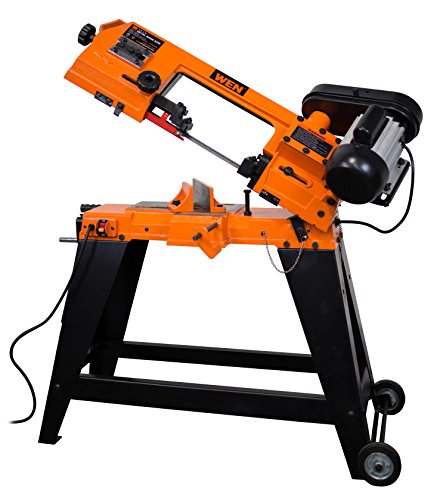
WEN Metal Band Saw with Stand
What We Like
- Includes a stand with wheels for mobility
- Automatic shut-off enhances safety after cuts
- Three-speed blade for various metals
- Dual-position design adds versatility
Trade-offs
- Weighs 118 pounds, lighter than many stationary models
- 4.6 amp motor, less powerful than 2 HP competitors
The inclusion of a wheeled stand is the defining feature here, transforming a capable benchtop-style saw into a self-contained, movable workstation. This setup is perfect for the home fabricator or small shop where floor space is at a premium and the saw needs to be rolled into position for a project then tucked away. The 4.6 amp motor and three blade speeds provide solid control for cutting common stock like steel tubing and bar, while the automatic shut-off is a thoughtful safety touch that prevents the blade from idling.
You are trading raw cutting capacity and heavy-duty construction for that portability and convenience. It won’t handle the constant, high-volume production of a dedicated industrial saw like the JET 10×16, and its lighter frame means it’s best suited for intermittent use on smaller stock. For someone who needs a serious metal-cutting bandsaw but doesn’t have a permanent station for a half-ton machine, this model’s integrated stand solves a major logistical headache without sacrificing core functionality.
Product photos
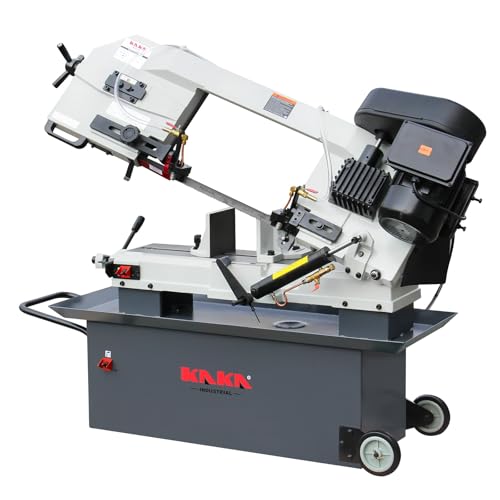
KAKA Industrial BS-912B Horizontal Band Saw
What We Like
- Hydraulic cylinder controls downfeed speed.
- Four blade speeds for different materials.
- Rotating vise handles angled cuts up to 45°.
- Includes coolant system and auto shut-off.
Trade-offs
- At 555 pounds, moving it requires freight delivery and a liftgate.
- 45-degree capacity is reduced to 6" round.
- Freight delivery requires scheduling an appointment.
Hydraulic downfeed control defines this saw by managing the blade’s lowering speed, letting you adjust feed pressure during a cut instead of relying on gravity alone. That precise control helps maintain a consistent rate in different materials, which can lead to cleaner cuts and longer blade life. Its four-speed pulley system and integrated coolant support varied, repeatable cutting tasks on stock up to 9 inches round.
Weighing 555 pounds, this machine requires freight delivery and a scheduled appointment where someone must be present to sign. The seller strongly recommends requesting a liftgate service for residential deliveries, as the truck will not have a loading dock. Once in place, its stand wheels allow for repositioning within a shop, but its size demands a dedicated floor space.
Product photos
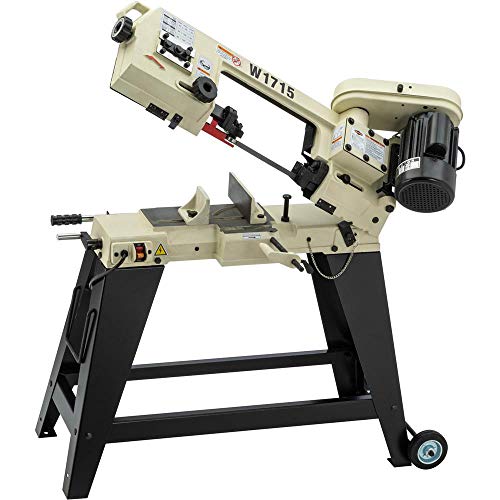
Shop Fox W1715 Metal Cutting Band Saw
What We Like
- Three selectable blade speeds for different metals
- Compact, mobile design with handles and wheels
- Runs on standard 110V household current
- Includes automatic shutoff for safety
Trade-offs
- 3/4 HP motor offers less power than 1+ HP models
- Blade speed tops out at 180 FPM, slower than industrial units
- Smaller frame limits cutting capacity versus full-size saws
A 3/4 HP motor on standard 110V power makes this saw a practical fit for a home shop where you’re not running it all day. Its three speed settings let you dial in the right feed for anything from aluminum to mild steel. The compact footprint and integrated wheels mean you can tuck it into a corner when the job’s done, so it’s ideal for the fabricator who needs clean, repeatable cuts on smaller stock without dedicating a permanent chunk of floor space.
You gain compact utility but give up some raw cutting power and capacity. Compared to a model like the 2 HP JET 10×16, this saw is built for lighter, intermittent duty. Its maximum blade speed of 180 feet per minute is sufficient for most hobbyist projects, though it will feel deliberate next to faster, heavier-duty saws. Think of it as a reliable workhorse for bench-top-scale jobs, not a production-floor beast.
Product photos
Klutch Horizontal/Vertical Metal Band Saw

What We Like
- Converts between horizontal and vertical operation
- Compact 36-inch-long footprint saves floor space
- Three blade speeds for different materials
- Quick-positioning vise aids setup
Trade-offs
- 4 1/2-inch round capacity is modest for larger stock
- 3/4 HP motor is less powerful than many dedicated horizontal saws
The ability to switch between horizontal and vertical configurations is the Klutch’s defining feature. This dual-purpose design means a single machine can handle long stock cuts and detailed contour work, a huge advantage for a crowded home shop. Its 36-inch length is notably compact, fitting where a dedicated horizontal saw might not. That 3/4 HP motor and 4 1/2-inch round capacity, however, clearly define its role. It’s built for the serious DIYer or small fab shop tackling common tubing, angle iron, and bar stock, not for high-volume production cutting.
You trade some raw cutting muscle for incredible versatility. The Klutch’s capacity and power are sufficient for most hobbyist and light professional tasks, but they sit below dedicated units like the JET 7×12. That JET model offers a larger 7-inch round capacity and a more substantial build, yet it lacks the Klutch’s vertical mode. Your choice hinges on whether you value a wider range of functions in one tool or need greater capacity for repetitive horizontal cuts. For the space-constrained workshop needing both cutting orientations, this saw is a logical, pragmatic solution.
Product photos
How We Evaluated Horizontal Band Saws
Our research process compared detailed specifications from manufacturer documentation and expert round-ups on horizontal band saws. We analyzed patterns in owner feedback to confirm real-world performance and durability claims. This method ensures our recommendations are grounded in concrete data rather than anecdotal impressions.
We prioritized three core criteria: cutting capacity and motor power for handling different metal stock, construction and stability for clean, vibration-free cuts, and operational features like mitering heads or variable speed control. Understanding the trade-offs between industrial horizontal band saws and more compact models was essential. The goal was to match each saw’s strengths to a specific user’s shop environment and workload.
A research-led evaluation has limits. We cannot verify long-term reliability over years of daily use or measure the exact cut quality on every material. We rely on consistent reports from experienced users and technical specifications to guide our rankings. For a hands-on perspective on operation, our guide on how to use a band saw covers essential safety and technique.
What To Look For In Horizontal Band Saws
Choosing a horizontal band saw involves more than just the biggest capacity. You must balance power, footprint, and the specific features that match your most common metal cutting tasks. A well-chosen saw becomes a shop workhorse for years.
Key considerations are cutting capacity (round and rectangular), motor horsepower and power requirements, and construction stability. Also decide if you need a mitering head for angled cuts, a dual-position design for versatility, or a portable stand for mobility.
Cutting Capacity and Power
Capacity, listed as maximum round and rectangular dimensions (like 7″ x 12″), dictates the largest solid bar or pipe you can cut. Larger capacities, like the 10-inch round on our best overall pick, suit professional shops. Motor power, from 3/4 HP for light duty to 3 HP for industrial use, determines the saw’s ability to power through dense materials without bogging down. Always check the power phase; some premium models require three-phase power, which is uncommon in home workshops.
Construction and Stability
A saw’s weight and frame material directly affect cut quality and vibration. Heavy cast iron bases, like those on the Baileigh and JET models, provide better dampening for smoother, more accurate cuts. Lighter steel frames can be more portable but may transmit more vibration. For consistent results, a permanent, sturdy installation on a level shop floor is important for any heavy saw.
Operational Features
Consider which features you’ll use daily. A mitering head or swivel vise, like on the Baileigh 8.66in, allows precise angled cuts without repositioning the workpiece. A dual-position saw, such as the JET 7×12 Deluxe, adds vertical band saw capability for contouring. Variable speed control or multiple blade speed settings let you optimize cutting for different metals, from aluminum to tool steel. Hydraulic downfeed, found on the KAKA Industrial model, provides controlled, repeatable cutting pressure.
- Verify the vise mechanism is strong and easy to clamp material securely.
- Check if a coolant system is included or available as an add-on to extend blade life.
- Consider the machine’s footprint and ensure you have adequate floor space and clearance for loading long stock.
- Look for user-friendly controls, like a swivel panel, that are accessible during operation.
Match the saw’s most demanding feature, be it three-phase power, a very heavy weight, or a large footprint, to your shop’s permanent capabilities.
Horizontal Band Saws For Metal Cutting Compared
The comparison table below highlights the key specifications for all nine saws, letting you quickly contrast capacities, weights, and primary features.
| Product | Cutting Capacity | Motor Power | Weight |
|---|---|---|---|
| JET 10×16 Metal Cutting Horizontal Band Saw | 10" x 16" | 2 HP | 973 pounds |
| Baileigh 8.66in Mitering Horizontal Bandsaw | 8.66 inches | 2 HP | 539 pounds |
| JET 7×12 Deluxe Horizontal/Vertical Band Saw | 7" x 12" | N/A | 374 pounds |
| Baileigh 7×12 Metal Cutting Bandsaw | 7" round, 7" x 10.25" | 1 HP | 343 pounds |
| VEVOR 7×8.25in Horizontal/Vertical Band Saw | 7 x 8.25 in | 1.1 kW | 407.9 lb |
| WEN Metal Band Saw with Stand | N/A | 4.6 amp motor | 118.0 Pounds |
| KAKA Industrial BS-912B Horizontal Band Saw | 9 in round, 7 x 12 in | N/A | 555 pounds |
| Shop Fox W1715 Metal Cutting Band Saw | N/A | 3/4 HP | N/A |
| Klutch Horizontal/Vertical Metal Band Saw | 4 1/2in round, 4 1/2in x 6in | 3/4 HP | 151 pounds |
Frequently Asked Questions
What is the best saw for cutting through metal?
For high-volume, professional metal cutting, a heavy-duty horizontal band saw like our best overall JET 10×16 is ideal. For versatility in a home shop, a dual-position model that converts to a vertical band saw offers more functionality. The right tool depends on your material size, required precision, and available shop space and power.
What type of bandsaw blade is best for cutting hard metal?
For cutting hard metals like tool steel or stainless steel, a bi-metal blade with a high tooth count (e.g., 18-24 TPI) is recommended. These blades combine a flexible back with hard, heat-resistant teeth that withstand the abrasiveness of hard metals. Using the correct band saw blades for metal and an appropriate, slower blade speed is critical for a clean cut and long blade life.
Can any bandsaw be used to cut metal?
No, a bandsaw designed for wood cutting typically operates at much higher blade speeds and lacks the necessary rigidity and power for metal. You need a bandsaw specifically built for metal, which has a slower, variable speed drive, a stronger frame, and often a coolant system. Our guide focuses on metal cutting band saws built for this purpose.
Is 18 or 24 tpi better for metal?
A 24 TPI (teeth per inch) blade is generally better for cutting thin-walled tubing or sheet metal, as it provides a smoother cut with less vibration. An 18 TPI blade is a good all-purpose choice for solid bars and thicker wall pipe. The material thickness guides the choice: you want at least two or three teeth engaged in the cut at all times to prevent snagging.
Should I get a portable or stationary band saw for metal?
Choose a stationary horizontal band saw for repeatable, precise cuts on larger stock in a fixed shop location. A portable band saw is a handheld tool ideal for on-site work, cutting pipe, or making quick cuts where bringing the material to the saw isn’t practical. Understanding the portable band saw pros and cons helps decide if a mobile tool or a stationary machine better fits your workflow.
The Bottom Line
For professional metal shops and serious fabricators who cut metal daily, the JET 10×16 Metal Cutting Horizontal Band Saw is the best overall choice, offering massive capacity, a vibration-free base, and integrated coolant. Its industrial three-phase power requirement and large footprint make it a permanent, high-output shop fixture.
If your budget or shop space is limited, look to the Shop Fox W1715 for a capable, compact home shop saw or the WEN BA4664 for a portable stand model you can move around. For those who need to make precise angled cuts, the Baileigh 8.66in with its 60-degree mitering head is the clear specialist pick. Ultimately, the most important factor is honestly assessing your shop’s permanent power and floor space before investing in a machine that will serve you for years.
