
Pancake vs Hotdog Air Compressors: Which Is Right for You?
This post contains affiliate links. As an Amazon Associate, we earn from qualifying purchases.
In the pancake vs hotdog air compressor debate, the pancake is a flat, wide tank that sits stably on the floor, while the hotdog is a tall, narrow cylinder that sometimes has wheels. For most DIYers doing trim work or inflation, a 6-gallon pancake like the CRAFTSMAN CMEC6150K is the default pick. For longer runs with framing nailers or in tight spaces, an 8-gallon hotdog like the California Air Tools 8010 is the step up.
That stability clause is where the real choice lives. A pancake won’t tip over on a sloped driveway. A hotdog on wheels might, but it’ll also roll through a 30-inch door. Your worksite terrain decides which feature you actually need more in the debate of pancake vs hotdog air compressors.
What follows: a breakdown of why tank shape changes everything, the real numbers on noise and air delivery, and the one question that tells you which type to buy. We’ll also untangle the confusing claims about portability and tank size you’ll find online.
Key Takeaways
- Pick a pancake compressor for stability on uneven ground; its wide, flat base sits solid where a tall hotdog might tip.
- Some sources recommend a hotdog compressor for tight spaces due to its vertical design, while others caution it can be less stable and tip over in rough spaces.
- Match your tool’s PSI and CFM requirements first; a nail gun needs 70-120 PSI, but a die grinder will drain a small tank in seconds.
- Expect a noise level between 68-90 dB; hotdog models with larger motors tend to be louder, while some pancakes run as quiet as a vacuum.
- Drain the tank after every use; moisture left inside from compressed air will rust the tank from the bottom up within a year.
The Core Difference: Shape Dictates Stability
The names tell you everything. A pancake compressor has a short, wide tank that hugs the ground. A hotdog compressor has a tall, narrow tank that stands upright. This isn’t just about looks, it changes where and how you can use the machine.
A pancake’s low center of gravity makes it incredibly stable. You can set it on a sloped garage floor or uneven patio blocks and it won’t rock. Sources disagree on portability: some call pancakes lightweight and portable, while others note difficulty carrying them due to a lack of wheels. The CRAFTSMAN 6-gallon Pancake Air Compressor (CMEC6150K) embodies this: a 150 PSI, 0.8 HP unit that sits put wherever you drop it.
The pancake compressor’s wide base provides superior stability on uneven surfaces, a critical advantage when working on outdoor projects or unfinished floors where a tip-over could kink hoses or damage the regulator.
A hotdog compressor is a taller, narrower cylinder. This shape is inherently less stable on rough ground, it can tip over. But, many models come with a wheel kit and a tow handle, turning it into a two-wheel dolly you can pull. This is where sources get confused. Yes, a wheeled hotdog is more movable across a flat surface. No, it is not more stable on a bumpy one. If your work involves moving the compressor across a flat shop floor and through standard doors, the hotdog’s vertical tank design wins.
Tank Size and Air Capacity: What the Gallons Actually Mean
Tank size, measured in gallons, is a reservoir, not a power source. A larger tank allows the compressor motor to rest longer between cycles, resulting in less noise and wear during a long job. But if your air tool consumes more air (CFM) than the pump can produce, the tank will empty and the tool will stop, regardless of its size.
The six-gallon size is the practical ceiling for this design before it becomes too large to carry conveniently. Sources disagree on hotdog compressor tank size ranges: some cite 4-8 gallons, while others cite ranges up to 10-20 gallons for industrial units. The eight-gallon capacity of a hotdog like the California Air Tools 8010 gives you a longer run time for a framing nailer before the motor kicks back on.
| Compressor Type | Typical Tank Range | Best For | Motor Run Time Between Cycles |
|---|---|---|---|
| Pancake | 1 – 6 gallons | Short-burst tools (brad nailers, staplers, inflation) | Shorter; motor cycles more frequently. |
| Hotdog | 4 – 8+ gallons | Longer sequences (framing nailers, repeated stapling) | Longer; motor runs less often for the same job. |
A bigger tank does not make a weak pump stronger. It just delays the inevitable. You must match the pump’s CFM output to your tool’s demand. For a full breakdown of how storage works, see our guide on air compressor tank size.
Pancake vs Hotdog Specs Head-to-Head
Beyond shape and size, the technical specs. PSI, CFM, horsepower, and noise, determine what you can actually do. We will examine real models.
The CRAFTSMAN CMEC6150K pancake delivers 150 PSI at 0.8 HP, with a sound level of 78.5 decibels. The Senco PC1010 hotdog runs at 90 PSI, 1 HP, but is significantly quieter at 68 decibels. The California Air Tools 8010 hotdog runs at 2 HP for more power.
Where this goes sideways: Choosing a compressor based on peak PSI alone. Your nail gun likely needs 70-120 PSI. A compressor that delivers 150 PSI is overkill if its CFM is too low to keep up with the tool’s air consumption.
| Spec | CRAFTSMAN CMEC6150K (Pancake) | Senco PC1010 (Hotdog) | California Air Tools 8010 (Hotdog) |
|---|---|---|---|
| Tank Size | 6 gallons | Not specified in sheet | 8.0 gallons |
| Max PSI | 150 PSI | 90 PSI | Not specified in sheet |
| Horsepower (HP) | 0.8 HP | 1 HP | 2 HP |
| Noise Level | 78.5 decibels | 68 decibels | Not specified in sheet |
| Pump Type | Oil-Free | Oil-Free, Direct Drive | Oil-Free |
| Key Trait | High pressure, portable | Very quiet, professional-grade | Higher power, larger tank |
Notice the trade-off. The CRAFTSMAN offers higher pressure, the Senco offers quiet operation, and the California Air Tools offers more power. Your priority list, power, quietness, or portability, cuts the choice down fast. For a broader look at top-rated models in both categories, check out our list of the best portable air compressors.
Matching the Compressor to Your Tools and Projects
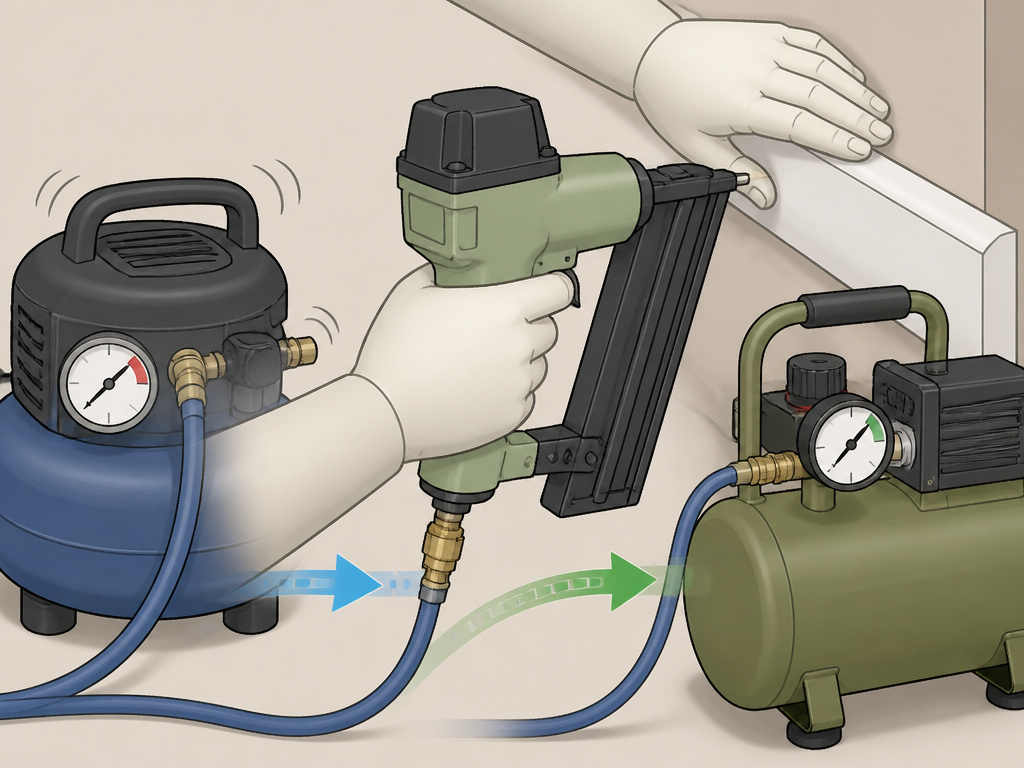
This is the only math that matters. Check your pneumatic tool’s manual for its required PSI and CFM (Cubic Feet per Minute). Then, verify your compressor’s CFM rating at that PSI. A compressor might advertise a high CFM, but that’s often at a low pressure (like 40 PSI). The CFM at 90 PSI is the number that counts for nail guns.
For example, a finish nailer might need 2.0 CFM at 90 PSI. A small pancake compressor might only deliver 1.5 CFM at 90 PSI. It will work, but the tank will drain quickly, and the motor will run constantly, shortening its life. A hotdog with a larger tank and pump can handle that demand more comfortably.
- For DIY/Homeowner Tasks (Trim, Inflation, Brad Nailing): A 6-gallon pancake compressor is sufficient. It runs trim nailers and inflates tires all day. Its limitations are stability and carry-weight, not air supply.
- For Prosumer/Contractor Tasks (Framing, Decking, Siding): An 8-gallon hotdog compressor is better. The larger tank supports longer nail-driving sequences without constant motor cycling, and the wheels are a must for moving it around a job site.
- For Continuous-Demand Tools (Die Grinders, Sanders): You likely need to step beyond both. These tools consume 4-8 CFM continuously, which will empty even an 8-gallon tank in under a minute. This is when you look at a portable vs stationary decision for a larger, wheeled stationary unit.
If your project list is mostly small repairs, the pros and cons of pancake compressors lean heavily in their favor.
Noise, Maintenance, and Real-World Longevity
A compressor’s sound level is a huge factor for garage use. Hotdog compressors with larger, 2 HP motors can hit 90 decibels. The Senco PC1010 hotdog is an outlier at a quiet 68 dB, but it’s a 1 HP unit.
All modern portable compressors are oil-free. This is convenient, no oil changes, but it means the pump pistons run without liquid lubrication. They wear faster and run hotter than oil-lubricated pumps. The trade-off for zero maintenance is a shorter overall service life.
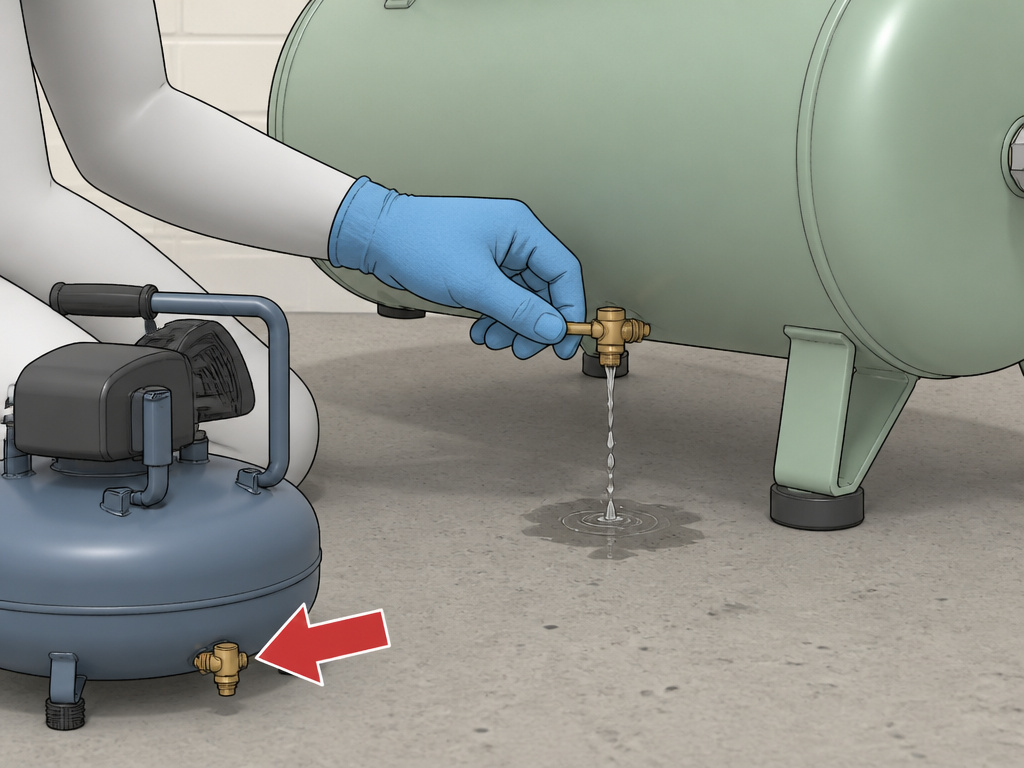
Common mistake: Not draining the tank after use. When you compress air, you squeeze moisture out of it. That water sits in the bottom of the tank. Leave it there, and the tank will rust from the inside out. A small rust hole means replacing the entire compressor.
Maintenance is simple but essential. After every use, turn off the compressor, release all air pressure, and open the tank drain valve at the bottom to let the water out. Once a year, check the air filter. A dirty filter makes the motor work harder and reduces airflow. If you hear hissing, spray soapy water on the hose connections to find leaks. For keeping your tools running, pairing the right compressor is as important as the tool itself; explore our picks for the best air compressors for pneumatic tools.
Are budget pancake and hotdog compressors all the same?
When shopping for a budget air compressor, you’ll notice many models look nearly identical. This is common. Manufacturers often produce a base model that gets sold under different brand names, a practice called rebadging. The core components like the pump, motor, and tank design are frequently the same across these budget options. The main differences might be the color, the accessory kit included, or the warranty offered by the selling brand. For a practical buyer, this means focusing less on the logo and more on the specifications and the included features for the price. Checking user reviews for multiple similar-looking models can reveal if they share common strengths or weaknesses.
Frequently Asked Questions
Is a hotdog compressor better than a pancake compressor?
Not inherently better, just different. A hotdog is better for rolling mobility through doorways and for longer tool runs thanks to its typically larger tank. A pancake is better for stable placement on uneven surfaces and for simple carry-and-set tasks. Choose based on your primary worksite terrain.
Are pancake air compressors any good?
Yes, they are excellent for their intended purpose. A quality 6-gallon pancake compressor is perfectly capable of running finish nailers, staplers, and inflators for DIY service. Their limitations only appear with high-CFM tools or in scenarios where wheeled portability is required.
What is the most reliable brand of air compressor?
Reliability is tied to proper maintenance more than brand. However, brands like California Air Tools are known for quiet, oil-free units, while Senco is a professional staple for durability. For general home use, CRAFTSMAN, DeWalt, and Makita offer reliable options in both pancake and hotdog forms. Your best bet is to choose a compressor with a CFM rating that exceeds your tool’s needs, reducing motor strain.
Is a pancake compressor good for air tools?
It depends on the air tool. A pancake compressor is good for intermittent-use air tools like nailers, staplers, and blow guns. It is not good for continuous-use air tools like sanders, grinders, or spray guns, which consume air faster than a small pump can replenish it, even with a tank buffer.
The Bottom Line
Your worksite layout is the deciding factor in the pancake vs hotdog air compressors choice. If you’re moving across flat floors and through doorways, the wheeled portability of a hotdog compressor is a real advantage. If you’re working on a bumpy driveway, a sloped yard, or in a cramped corner, the steadfast stability of a pancake is worth the lifting.
For most homeowners tackling trim work, assembling furniture, or seasonal inflation, a 6-gallon pancake compressor is the right tool for the job. It’s affordable, simple, and stays put. When your projects graduate to framing a shed or laying a deck, jobs where you’ll fire 50 nails in a row, that’s the signal to step up to an 8-gallon hotdog with wheels. And if you’re still weighing the two main portable shapes after considering pancake vs hotdog air compressors, our detailed pancake vs twin stack comparison covers another common alternative.
