
Soda Blasting vs Sandblasting: Which Should You Buy?
This post contains affiliate links. As an Amazon Associate, we earn from qualifying purchases.
Soda blasting runs at 20 PSI and uses soft sodium bicarbonate to gently clean delicate surfaces like thin metal, wood, or brick without leaving a profile. Sandblasting operates at 70–120 PSI with harder abrasives like silica sand to aggressively strip tough coatings and create a textured surface profile ideal for paint adhesion. For most DIYers cleaning car parts or restoring furniture, soda blasting is the safer, gentler choice.
The 20 PSI versus 70+ PSI gap represents the difference between a process that strips graffiti off century-old brick and one that strips paint off a steel I-beam. One preserves the surface; the other prepares it for a new bond.
What follows is the practical breakdown you won’t find in a product manual: the real pressure you need from your compressor, the single biggest mistake that jams your gun, when soda actually makes rust worse, and why a cheap setup costs you more in media and frustration than a proper soda-blasting system. We’ll start with what each method is built to do.
Key Takeaways
- Soda blasting operates at 20 PSI, making it ideal for delicate surfaces like wood, aluminum, and soft stone, while sandblasting needs 70–120 PSI to clean steel, concrete, and other hard materials.
- Silica dust from sandblasting is a known carcinogen linked to lung cancer and silicosis; soda blasting uses non-toxic, water-soluble sodium bicarbonate that is safer to handle and clean up.
- Sandblasting creates a rough surface profile that paint sticks to for years, whereas soda blasting leaves no profile, which can lead to adhesion failures if not properly primed.
- Soda media is a single-pass, non-recyclable material costing $1.50–$2.50 per pound, while many sandblasting medias can be reused, affecting long-term project costs.
- You cannot use grocery store baking soda in a blaster; blasting-grade sodium bicarbonate has a specific particle size and shape for consistent flow and impact.
How They Differ: Pressure, Media, and Surface Effect
We should clarify. These are different tools for different jobs, defined by three concrete specs: pressure, media hardness, and the final surface condition.
According to Angi, soda blasting typically runs at 20 PSI. According to Angi, sandblasting typically needs 70–120 PSI. That difference changes everything you can connect to the system. A small, low-capacity compressor might power a soda rig; a sandblaster typically requires a much larger, more powerful compressor. The lower pressure is why soda can clean a car’s thin-gauge door panel without warping it, the force simply isn’t there to bend the metal.
The media is the other half. Soda blasting uses sodium bicarbonate. On the Mohs hardness scale, it’s the least hard abrasive used for blasting. It’s softer than the contaminant you’re removing but softer than the substrate you’re protecting. When it hits, it shatters. Sandblasting uses silica sand, garnet, crushed glass, or steel shot, all significantly harder. They don’t shatter; they cut.
Soda blasting will not leave a surface profile and is far less likely to damage a substrate. Sandblasting creates a rough surface profile that supports optimum paint adhesion and long-lasting results. This is the single most important factor when choosing a method for a coating project.
That final surface condition decides your next step. Sandblasting etches and textures the material. This “anchor profile” is what paint, epoxy, or powder coating mechanically grips onto. It’s why steel bridges and ship hulls are sandblasted before painting. Soda blasting cleans down to the bare substrate but leaves it smooth. If you paint over that slick surface, the coating may peel off in sheets. You must follow soda blasting with a dedicated primer or mechanical scuffing.
The part nobody mentions: Soda’s gentleness is its limit. For thick, built-up rust or industrial epoxy, it simply lacks the cutting power. You’ll burn through bags of media and hours of time for a subpar result. Sandblasting, or a switch to a harder media like aluminum oxide, is the only answer.
Soda Blasting: Best Uses and Where It Falls Short
Soda blasting is the detail cleaner. Think of it like a soft-bristled brush for your most valuable pieces, not a wire wheel for a rusty tractor frame.
Its best fit is on surfaces you cannot afford to damage. That includes thin metal or aluminum surfaces (like automotive body panels), soft woods (furniture restoration), brick (historical facade cleaning), and soft stones. Because the media is water-soluble and non-toxic, it’s also the go-to for food and beverage industry equipment cleaning and fire damage cleanup where deodorizing is needed. The alkalinity of the baking soda neutralizes acidic soot smells.
The water solubility is a double-edged sword in the soda blasting vs sandblasting debate. It makes cleanup easy, a garden hose dissolves the residue, but it also means the media is single-pass and non-recyclable. According to Dustless Blasting, it cannot be reused. Once it shatters on impact, it’s powder. Angi notes that soda media can be stored for up to a year, which refers to unused media. Sources disagree on whether blasted media can be recycled. That adds up at $1.50 to $2.50 per pound.
Where this goes sideways: Using soda around gardens or on very smooth surfaces. Its alkalinity can kill plants by changing soil pH. And on surfaces like gloss paint, the soft media can “skate” without biting in, making it frustratingly ineffective. It’s also less useful for removing thick, built-up rust. The media lacks the hardness to break the scale, so you polish the surface rust rather than remove it.
Here’s a quick reference for when soda blasting is the right call:
| Project Type | Why Soda Works | Watch Out For |
|---|---|---|
| Automotive Restoration | Gentle on thin metal, won’t warp panels, safe for glass & rubber. | Leaves no profile; requires thorough cleaning and priming before paint. |
| Graffiti Removal from Brick/Stone | Cleans without etching the masonry surface. | Alkaline residue can damage adjacent plants if not rinsed. |
| Wood Furniture Stripping | Removes paint/finish without gouging soft wood grain. | May not remove all layers of stubborn, aged varnish in one pass. |
| Fire/Smoke Damage Cleanup | Deodorizes while cleaning soot from wood and masonry. | Water-soluble media can create a paste if over-wetted during cleanup. |
Sandblasting: Power, Profile, and Health Risks
Sandblasting is the industrial workhorse. You trade finesse for raw stripping power and a surface that’s ready to hold a new coating for a decade.
The high pressure (70–120 PSI) and hard media are why it’s the standard for preparing structural steel, concrete, and heavy machinery. It’s not just cleaning; it’s surface profiling. The rough, etched finish is measurable and is specified in coating datasheets (e.g., “Surface profile of 2-3 mils required”). For example, the EpiX EP abrasive from 10X Engineered Materials can remove powder coating in only 20 seconds. That’s the kind of speed you need for production work.
But that power comes with significant baggage. First is the health risk: silica dust. Inhaling crystalline silica particles can cause lung cancer, silicosis, kidney disease, and heart disease. This isn’t scare talk; it’s a well-documented occupational hazard. Proper dust collection, containment, and a supplied-air respirator are essential, not suggestions.
Second is the risk to the workpiece itself. On soft materials like wood, soft plastics, or even softer metals, sandblasting will pit and warp the surface. It’s too aggressive. This is where sources disagree: Angi says sandblasting is for durable materials like metals and hardwood, while Advanced Eco Blast states it will pit and warp metal.
| Media Type | Hardness (Mohs Scale) | Best For | Reusable? |
|---|---|---|---|
| Silica Sand | ~7 | Heavy rust removal, concrete, industrial steel. | No (creates hazardous silica dust). |
| Crushed Glass | ~6 | General cleaning, paint stripping, less dust than sand. | Limited (breaks down). |
| Aluminum Oxide | ~9 | Fast stripping of tough coatings, creating aggressive profile. | Yes (very durable). |
| Plastic Media | ~3-4 | Stripping paint from composite materials, delicate parts. | Yes (for multiple passes). |
| Steel Shot/Grit | ~8 | Peening and cleaning heavy castings, aggressive profiling. | Yes (long-lasting). |
The equipment is also more demanding. To maintain 70+ PSI at the nozzle, you need a compressor that can deliver high CFM (Cubic Feet per Minute). A small, underpowered compressor will cycle constantly, overheat, and never give you consistent blasting pressure, turning the job into a stop-start nightmare. This is why understanding the differences between siphon and pressure blaster systems is crucial for matching your tool to your air supply.
Head-to-Head: Cost, Safety, and Environmental Impact
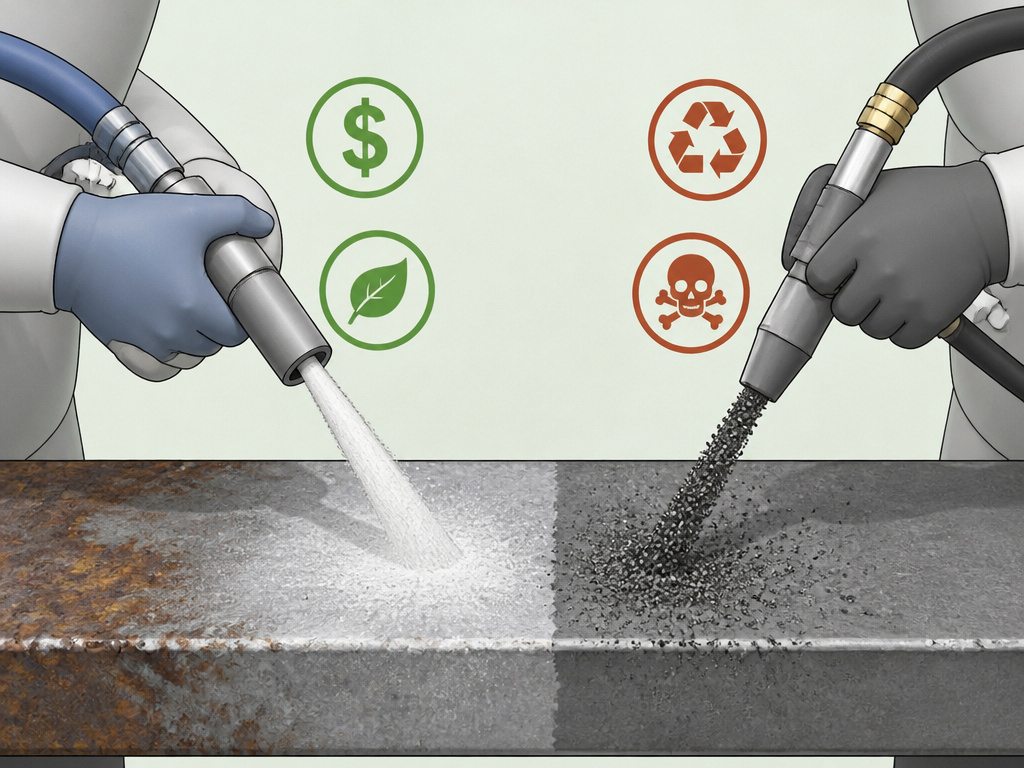
Cost comparisons in the soda blasting vs sandblasting discussion are tricky because they involve equipment, media, and labor. But we can break down the key differences that hit your wallet.
Equipment: Soda-blasting systems are slightly more expensive than basic sandblasting setups. A simple sandblasting pot can start at a low price, but a soda-blasting system needs specialized valves to prevent the fine powder from clumping. Renting soda blasting equipment costs around $200 on average.
Media: This is the ongoing cost. Soda media costs $1.50 to $2.50 per pound and is used at a rate of five to 10 pounds per square foot. It is non-recyclable. Many sandblasting medias like aluminum oxide or steel grit can be screened and reused dozens of times, dramatically lowering the media cost per job after the initial purchase.
Safety & Environment: This is where soda pulls far ahead. Sodium bicarbonate is non-toxic, non-flammable, and creates no noxious fumes. The residue is water-soluble, so cleanup is hosing, not hazardous waste disposal. Sandblasting with silica sand creates a known carcinogenic dust that requires rigorous containment and specialized disposal. Soda blasting also creates less heat, reducing fire and explosion risks around flammable residues.
Post-Process: Soda can act as a natural rust inhibitor, leaving a protective powder that prevents flash rusting for a period. This gives you a window to prime without immediate corrosion. Sandblasted steel, however, will begin to flash rust within hours in humid conditions unless treated or coated immediately.
TL;DR: For a one-off DIY restoration on a delicate piece, renting a soda setup is often the smarter, safer choice despite higher media cost. For a production shop blasting metal all day, the reusability and speed of hard abrasives in a sandblaster make it the only economical option.
Equipment and Setup: What You Actually Need
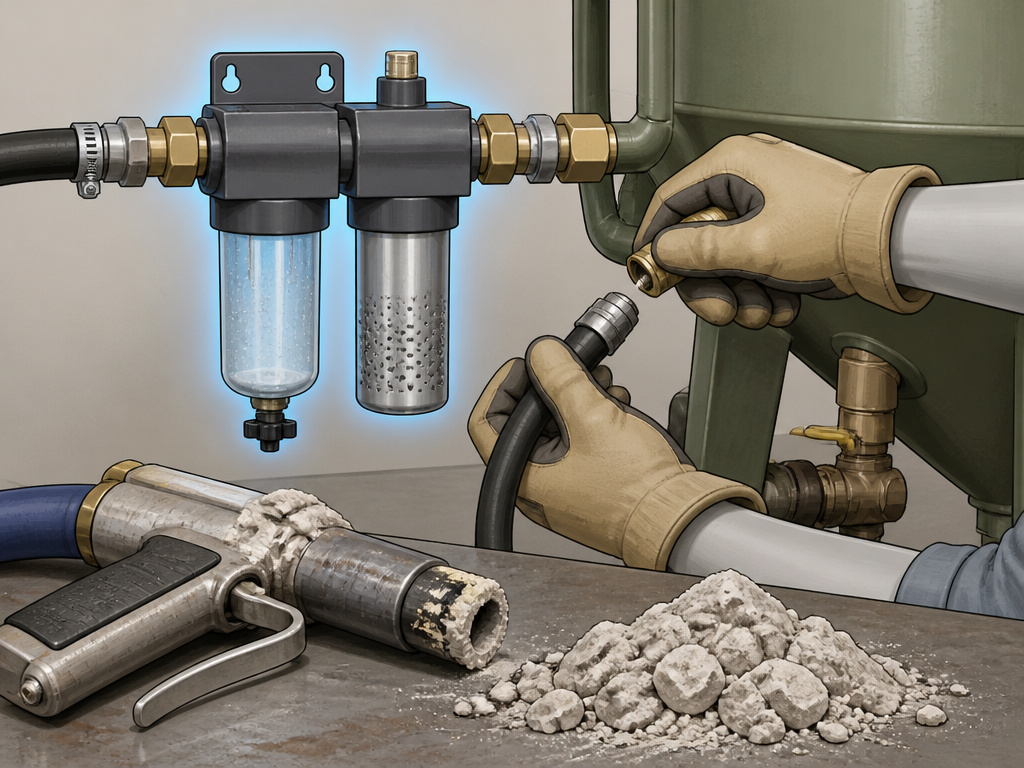
You can’t just hook a blaster to any compressor and go. The most common failure point is the air supply, not the gun.
For soda blasting at 20 PSI, you still need volume. A compressor capable of delivering sufficient volume (CFM) at the required pressure is needed for soda blasting. The soda pot needs a moisture trap and dryer. Sodium bicarbonate is hygroscopic; it loves water. Any humidity in your air line will cause the media to clump inside the pot and jam the gun solid. I learned this the hard way on a humid summer day, the gun sputtered, then went silent. Opening the pot revealed a solid, cement-like plug of damp soda.
For sandblasting at 70+ PSI, your compressor needs to be significantly larger. A large compressor capable of delivering high volume (CFM) at the required pressure is essential for sandblasting. The air line should be sufficiently large to prevent pressure drop. You’ll also need a serious dust collection solution, either a contained blast cabinet or a remote setup with a large dust separator and ventilator. Trying to do this open-air is a health violation and a mess.
Essential tools for blasting include a properly sized compressor, an in-line moisture separator, appropriate personal protective equipment, and a media management system. Skipping any one leads to downtime.
Before you start: Wear a NIOSH-approved respirator for particulates (N95 minimum for soda, P100 for silica), or better yet, a supplied-air system for sandblasting. Wear goggles, gloves, and coveralls. The media travels fast enough to cause eye injury and skin abrasion.
The choice between a siphon sandblaster and a pressure system also dictates your setup. Siphon systems are simpler but less efficient; pressure systems deliver more media and are better for large jobs but require more maintenance. Your choice of abrasive media type must match both the blaster type and the material you’re cleaning.
Making the Choice: A Practical Decision Guide
So, soda blasting vs sandblasting, which should you buy? Don’t overthink it. Answer these three questions about your project.
1. What is the substrate material?
- Delicate (wood, thin aluminum, fiberglass, brick, soft stone) → Soda Blasting.
- Hard (steel, concrete, cast iron, hard plastics) → Sandblasting.
2. What is the end goal?
- Cleaning or gentle paint removal with no surface damage → Soda Blasting.
- Stripping heavy coatings or creating a textured surface for new paint → Sandblasting.
3. What is your environment and safety tolerance?
- Open area, near plants, no heavy dust containment → Soda Blasting.
- Contained area (cabinet or sealed bay), professional PPE available → Sandblasting.
If your project is a mix, say, a car with a steel frame (hard) and aluminum body panels (soft), you might need both methods. Professionals often start with soda on the body to preserve the metal, then switch to a finer, less aggressive sandblasting media like plastic or walnut shells for the frame.
For a home shop tackling varied projects, a versatile media blaster unit that can handle different abrasives is a better long-term investment than a single-purpose unit. You can start with softer medias and work up as needed, following basic sandblasting techniques.
What other blasting media can I use?
Beyond soda and sand, a range of media fills the gap between them. Materials like crushed walnut shells or softer plastics offer gentle cleaning for wood or fiberglass without etching. Harder media like garnet or aluminum oxide cut faster and create a surface profile for paint adhesion on steel, but they risk damaging softer substrates. Spherical media like glass beads provide a smoother, polished finish on metal. The key is matching the media’s hardness and shape to your project’s goal: aggressive stripping, gentle cleaning, or surface preparation. Each media has distinct cleanup and disposal needs, and some can be recycled to lower long-term costs.
Frequently Asked Questions
Can you use a sandblaster for soda blasting?
Technically, yes, but not optimally. Standard sandblaster pots are designed for heavier, free-flowing media. The fine, powdery soda can bridge, clog, and flow inconsistently. Dedicated soda blasters have specialized valves and aerators to keep the media fluid. If you try it, use a brand-new, perfectly dry pot and expect some hiccups.
Is soda blasting cheaper than sandblasting?
The startup equipment cost is similar, but operating costs differ. Soda media is more expensive per pound and is single-use, making it costlier for large areas. Sandblasting media often has a higher upfront cost but can be reused many times, lowering the cost per square foot over many projects.
Does soda blasting remove rust?
Yes, but with a major caveat. It’s excellent for light, superficial rust and leaves a protective layer that inhibits flash rust. For thick, scaled rust, it’s less effective. It may polish the surface rather than dig out the deep pits, and the remaining protective layer must be completely removed before applying any coating, or adhesion will fail.
How do you clean up after soda blasting?
The residue is water-soluble. Use a pressure washer or garden hose to thoroughly rinse the surface and surrounding area. Collect the runoff if it contains lead or other hazardous contaminants from old paint. Avoid letting the alkaline runoff pool around plants, as it can harm them.
Before You Go
One rule most guides skip: if you’re cleaning a surface with any historical value, or one that’s irreplaceably thin, test first. Blast a small, inconspicuous spot with your chosen media and pressure. Check for warping, pitting, or surface texture change. Twenty minutes of testing beats ruining a project you’ve spent weeks on.
The flexibility argument is a trap. While versatile media blaster equipment exists, trying to make one method do everything guarantees compromise. Soda is for preservation; sand is for preparation. Pick the tool that matches your primary mission, and rent the other for the one-off job. Your results, and your lungs, will thank you.
