
10 Best Power Sanders in 2026
This post contains affiliate links. As an Amazon Associate, we earn from qualifying purchases.
Our best overall power sander is the Bosch GET75-6N Electric Orbital Sander for its aggressive Turbo mode and excellent dust collection. For a superior finish, the Bosch ROS20VSC wins, while the DeWalt DWE6423 stands out for low vibration. Choosing the wrong sander means wasted time and a poor finish. You need a tool that matches your project’s demands for material removal, comfort, and dust control. We built this guide by comparing specifications, analyzing expert round-ups, and identifying patterns in owner feedback to give you ten clear choices.
Top 10 Power Sanders in the Market
Certain content that appears on this site comes from Amazon. This content is provided "as is" and is subject to change or removal at any time.
The Best Power Sanders, Reviewed
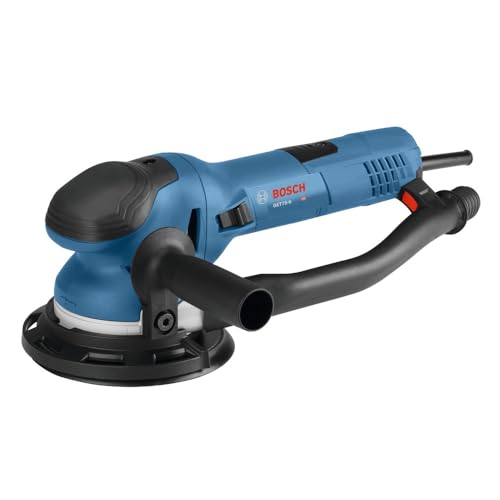
Bosch GET75-6N Electric Orbital Sander
What We Like
- Turbo mode for aggressive stock removal
- Excellent passive dust collection system
- Variable speed provides power and flexibility
- Multi-hole pad accepts wide abrasive variety
Trade-offs
- Requires a separate vacuum for dust collection
- At 5.7 lb, it's heavier than many 5-inch sanders
- Corded design limits portability
A powerful 7.5-amp motor with variable speed control provides the torque for delicate finishing and heavy material removal. The dual-mode design includes a turbo mode for aggressive stock removal, offering an alternative to a belt sander. The corded power supply allows for unlimited runtime, which is convenient for extended tasks. Research mentions that the effective dust collection system helps keep the abrasive pad cleaner and the workspace air clearer, making it suitable for long hours of indoor work.
You do pay for that capability with a bit more heft and the need to manage a power cord. At 5.7 pounds, it’s noticeably more substantial than a compact palm sander like the DeWalt DWE6423, which can be a factor during overhead work or all-day use. The dust collection is highly effective, but it’s not self-contained; you’ll need to connect your shop vac. For the tradesperson or serious DIYer who values raw power and versatility over ultimate lightness, however, these are easy trade-offs to accept for a sander that refuses to quit.
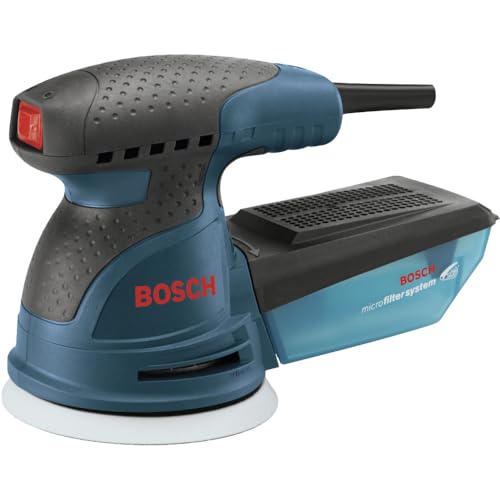
Bosch ROS20VSC Palm Sander
What We Like
- Excellent dust collection with hard canister
- Variable speed control for different tasks
- Pad dampening minimizes swirl marks
Trade-offs
- Corded design limits mobility compared to battery models
- Dust canister requires periodic emptying during long sessions
At 84 decibels, this is the quietest sander in its class by a significant margin. That low noise makes a long day in the shop far less fatiguing. It pairs with a remarkably smooth feel in the hand, a direct result of its pad dampening system designed to minimize swirl marks. For anyone tackling fine woodworking or furniture refinishing where a flawless finish is the goal, the Bosch ROS20VSC’s performance and its superb dust collection make it a standout choice. This system keeps both your workpiece and your lungs cleaner.
The corded design provides unlimited runtime for large projects, though it requires an outlet. Its dust collection uses a hard plastic canister with a microfilter, which reviewers found easier to clean than soft bags used by some other models. This system, with its rubber O-ring seal and airtight design, helps maintain pad life and cleaner indoor air during long tasks.
DeWalt DWE6423 Random Orbit Sander

What We Like
- Separate counterweight design reduces vibration.
- Rubber overmold improves grip in critical areas.
- Improved dust-sealed switch for longer life.
- One-handed locking dust bag for convenience.
Trade-offs
- Requires an adapter for most shop vacs.
- Corded design limits mobility on large jobs.
- At 3.4 lb, it is not the lightest 5-inch sander.
The separate counterweight design is the key here, cutting down on the buzz that fatigues your hands during long sanding sessions. This makes the DWE6423 a strong pick for anyone who needs to smooth large surfaces like tabletops or cabinet doors without the numbing vibration. Its 3-amp motor delivers a solid 8,000 to 12,000 OPM range for controlled material removal, and the shorter body lets you work closer to edges.
A 3-amp motor drives the pad from 8,000 to 12,000 orbits per minute, providing a variable speed range for different sanding tasks. Its separate counterweight design is engineered to reduce vibration, which can lessen user fatigue during extended use. The tool’s dust port is designed to fit directly to specific DeWalt dust collectors, and a universal connector is available for other vacuum systems with 1-1/4 inch hoses.
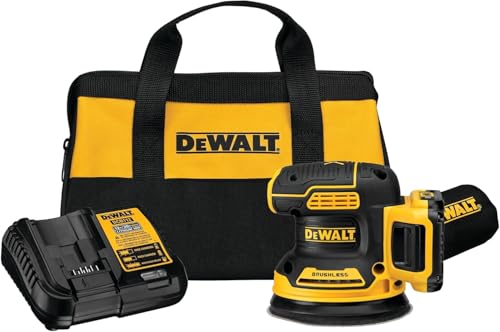
DeWalt DCW210D1 Cordless Orbital Sander
What We Like
- Brushless motor for runtime and efficiency.
- Variable speed dial matches speed to the task.
- Low-profile design allows sanding close to surfaces.
- Dust-sealed switch protects against dust ingestion.
Trade-offs
- Weighs 4.3 pounds for potential user fatigue.
The low-profile height of this sander is its defining feature, letting you work right up to edges and into corners without the housing getting in the way. For anyone tackling cabinetry, trim work, or furniture refinishing where precision is key, the combination of that slim design with a variable-speed brushless motor makes it a serious cordless contender. It delivers the control needed for fine finishing without being tethered to an outlet.
Operating without a cord provides clear jobsite versatility, but the DeWalt DCW210D1’s 4.3-pound weight adds noticeable mass compared to many standard orbital sanders. This bulk can lead to fatigue during extended use, particularly on vertical or overhead surfaces. Its low-profile height, however, allows for precise work close to edges and its variable speed dial offers control from 8,000 to 12,000 OPM for different materials.
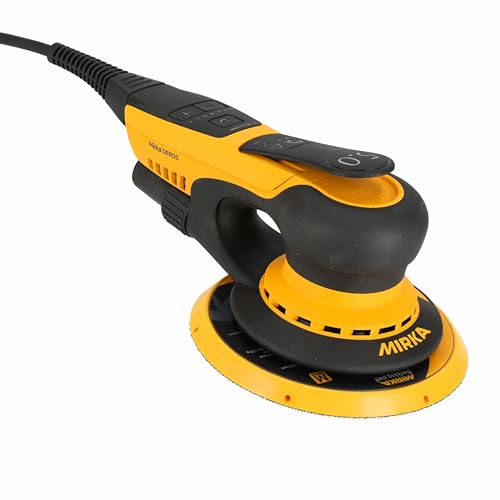
Mirka DEROS II 550X Sander
What We Like
- Exceptionally lightweight at 2.2 pounds
- Brushless motor for consistent power
- Integrated dust extraction system
- Bluetooth connectivity for custom settings
Trade-offs
- Tool only: requires separate battery and charger purchase
- Bluetooth features add complexity for basic users
At just 2.2 pounds, the Mirka DEROS II 550X is built to disappear in your hand during long sanding sessions. Its low-vibration operation and ergonomic build are clear indicators of a tool designed for professional comfort, not just occasional use. This sander suits a woodworker or finisher who values reducing fatigue over hours of surface prep. The brushless motor delivers smooth, consistent power, and the effective dust extraction keeps your workspace clean and your lines crisp.
The Mirka DEROS II 550X is sold as a tool only, without a battery or charger. Its Bluetooth connectivity and compatible app functions provide access to additional tool information and settings, which allow for a more customized sanding experience. This level of fine-tuning may be unnecessary for quick, simple tasks like scuffing a door. The Bosch ROS20VSC palm sander is a corded alternative with similar width dimensions, offering a different form factor. The Mirka’s ergonomic build and integrated dust extraction are features that support longer, cleaner project sessions.
Product photos
Makita BO5030K Random Orbit Sander

What We Like
- Rubberized grip for comfort and control
- Large 1/8" orbit for fast, smooth finish
- Includes protective hard case
Trade-offs
- No variable speed control for delicate work
- Dust bag is soft and difficult to clean
- Small dust port requires an adapter for a vacuum
The Makita BO5030K finished second out of six in research comparisons, indicating strong overall performance. Its 12,000 OPM motor and large 1/8″ orbit deliver fast, smooth sanding. At 86 dB, it runs quieter than most, which reviewers note makes longer sessions more pleasant. It comes ready to work with a dust bag and abrasive discs, and its included hard case is a unique perk for protecting the tool in transit or a busy workspace.
You trade away some finesse, as the lack of variable speed can make delicate work tougher. The dust collection system uses a soft bag that reviewers report can be hard to clean, and its small port requires an adapter to connect to a vacuum. However, if your priority is a reliable, smooth-running sander that arrives with its own sturdy case, the BO5030K delivers that.
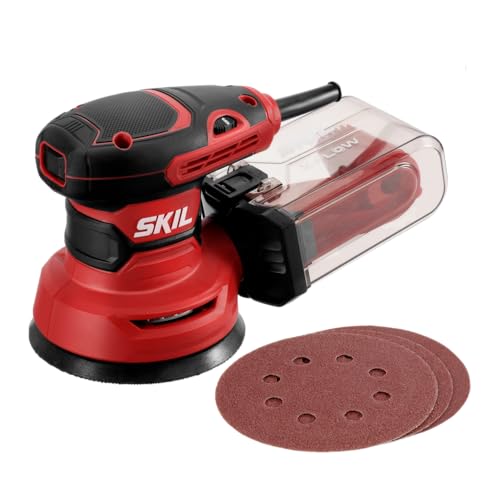
Skil SR211601 Random Orbital Sander
What We Like
- Cyclonic dust box for easy container emptying
- Variable speed control for material versatility
- Low vibration design reduces hand fatigue
- Compact size fits into tight spaces
Trade-offs
- 3.4 lb weight is heavier than the 2.2 lb Mirka DEROS
- 2.8 amp motor is less powerful than the 7.5 amp Bosch GET75-6N
- Corded design lacks portability of cordless models
A 2.8 amp motor and 13,000 orbits per minute deliver smooth performance across a variety of sanding applications. Its X-flow dust collector uses cyclone force to gather debris into a transparent, easy-to-empty container, which helps keep your workspace cleaner. An ergonomic soft rubber grip and counterweight balance are designed to reduce hand fatigue from vibration during longer sessions.
The tool weighs 3.4 pounds, and its compact size with an ergonomic design allows it to reach into tight spaces while maximizing user control. As a corded sander, it operates with consistent power and features a dust-sealed on/off switch for a hassle-free flip during application. Variable speed control provides the right amount of power and control across different materials.
Product photos
Makita XOB02Z Cordless Sheet Sander

What We Like
- Two-speed electronic control for material versatility
- Cordless operation provides full workspace mobility
- Large lever makes abrasive changes quick and simple
- Rubberized grip enhances control during long sessions
Trade-offs
- Tool only: requires separate Makita 18V LXT battery and charger
- Fixed two-speed lacks the fine-tuning of a variable dial
The two-speed operation, with 11,000 and 14,000 orbits per minute, gives you a genuine choice between a slower cut for finish work and a faster one for material removal. That makes this cordless sander a standout for the detail-oriented woodworker who needs flexibility without the cord. Its rubberized grip and large paper clamp are smart design choices that translate directly to less hand fatigue and less fuss when you’re changing sheets mid-project. This is a tool built for the user who values cordless convenience but refuses to compromise on having the right speed for the task.
The tool’s dimensions of 8.9 inches in length and 8.7 inches in width result in a larger footprint than some other sanders, such as the Bosch ROS20VSC. It is offered as a tool only, requiring a separate purchase of a compatible Makita 18V LXT battery and charger. The product description states it offers corded performance with cordless convenience.
Product photos
Black+Decker BDEQS300 Sheet Sander

What We Like
- Paddle switch with lock for one-handed use
- Flush sanding on three sides for tight spaces
- Simple paper clamps for quick changes
- Corded design for unlimited runtime
Trade-offs
- Fixed 16,000 OPM speed lacks variable control
- Dust collection relies on a bag, not a vacuum port
A 2.0-amp motor spinning at 16,000 orbits per minute delivers plenty of power for finish work and surface prep on wood, metal, and plastic. This sander is built for the budget-conscious DIYer who needs a reliable, corded workhorse for weekend projects. The soft-grip paddle switch locks on for one-handed operation, and the tri-layer dust bag does a decent job keeping your workspace clear. It’s a straightforward tool that gets the job done without fuss.
This sander operates at a single, fast speed of 16,000 orbits per minute for quick material removal, which can be too aggressive for delicate finishes. Its 1/4-sheet design uses simple paper clamps instead of the hook-and-loop discs common on many modern sanders. For a budget-friendly model with variable speed and a standard 5-inch pad, consider the Skil SR211601.
Product photos
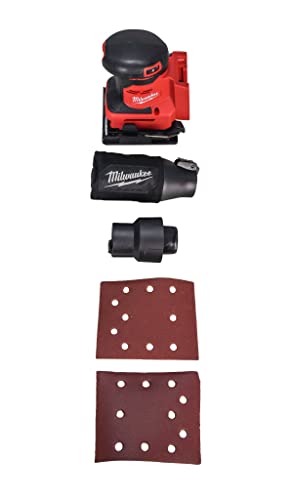
Milwaukee M18 1/4 Sheet Sander
What We Like
- Up to 95% dust collection for cleaner work
- Two-step clamp for quick paper changes
- Variable speed dial for material control
- Ergonomic shape with multiple grip options
Trade-offs
- Tool only: M18 battery and charger sold separately
Up to 95% dust collection is the headline here, meaning you can sand indoors without creating a cloud and spend far less time on cleanup. The M18 1/4 Sheet Sander uses a 1.6mm orbit to balance material removal with a surface finish that reviewers report can be stain-ready. Low vibration levels and an ergonomic shape that offers multiple grip options deliver enhanced comfort and user control to reduce fatigue during extended sessions.
You’re getting freedom from the outlet and excellent dust control, not blistering pace. For a pro or a serious DIYer already invested in the M18 platform who needs to move smoothly between sanding, drilling, and sawing on a job site or in the shop, this sander integrates perfectly. For someone who only sands at a bench with an outlet nearby and needs maximum power, a dedicated corded model might be the more pragmatic choice.
Product photos
How We Evaluated Power Sanders
Our research focused on manufacturer specifications and documented patterns in professional and owner reviews. We prioritized three key performance areas: power and speed for effective material removal, dust collection systems for a clean workspace, and ergonomic features like vibration control for user comfort during long sessions.
Cordless operation offers greater mobility, while pad compatibility affects the range of tasks a sander can handle. While a product guide cannot replicate the experience of long-term ownership, it can highlight tools with the features and performance characteristics commonly noted in user reports.
What To Look For In Power Sanders
The right sander balances power, control, and convenience for your specific projects. Understanding the core differences between the main types of sanders is the first step to narrowing your choice.
Key criteria include power source (corded for unlimited runtime, cordless for portability), sanding action (orbital for finishing, sheet sanders for detail), dust collection effectiveness, and ergonomic features like weight and vibration control.
Power Source and Runtime
Corded sanders provide consistent, unlimited power, making them ideal for extended shop work on large surfaces like tabletops or refinishing furniture. For mobility on a jobsite or when working away from outlets, a cordless sander offers clear advantages, but remember that sanding drains batteries quickly; having a spare is essential. Your workflow location is the deciding factor here.
Sanding Action and Pad Size
Random orbital sanders, which combine spinning and orbiting motions, are the most versatile choice for general woodworking, effectively removing material without leaving swirl marks. For getting into tight corners and detailed work, a dedicated detail sander with a triangular or other shaped pad is invaluable. Pad size also matters: common 5-inch discs are great for control, while 6-inch pads cover more area faster for large, flat surfaces.
Dust Collection and Ergonomics
Effective dust collection is not just about cleanliness; it keeps abrasive particles out of the air and off your workpiece for a better finish. Look for systems that connect easily to a shop vac. For comfort, consider weight and vibration dampening, especially if you sand for hours; features like rubberized grips and counterbalanced motors, as seen in many top handheld sanders, significantly reduce fatigue.
- Check the dust port size and whether adapters are included for your vacuum.
- Note the sander’s weight if you’ll be doing overhead work.
- Look for variable speed control to match the tool’s aggression to the task.
A good rule of thumb: if you work primarily in a shop, prioritize power and dust collection; if you move around constantly, prioritize cordless freedom.
Power Sanders Compared
The table below compares key specifications across our ten picks to help you see the differences at a glance.
| Product | Motor Power | Orbit Speed (OPM) | Weight | Dust Collection |
|---|---|---|---|---|
| Bosch GET75-6N Electric Orbital Sander | 7.5 Amp | 3300-7300 OPM | 5.7 pounds | Passive dust collection system |
| Bosch ROS20VSC Palm Sander | 2.5 AMP | 7,500-12,000 OPM | 3.5 Pounds | Dust filter |
| DeWalt DWE6423 Random Orbit Sander | 3-Amp | 8,000 – 12,000 OPM | 3.4 Pounds | Dust port |
| DeWalt DCW210D1 Cordless Orbital Sander | N/A | 8,000-12,000 OPM | 4.3 pounds | Dust-sealed switch |
| Mirka DEROS II 550X Sander | Brushless | N/A | 2.2 pounds | Integrated dust extraction system |
| Makita BO5030K Random Orbit Sander | 3.0 AMP | 12,000 OPM | 2.9 pounds | Through-the-pad system |
| Skil SR211601 Random Orbital Sander | 2.8 amp | 13,000 OPM | 3.4 pounds | Cyclonic box |
| Makita XOB02Z Cordless Sheet Sander | Cordless (18V LXT) | 11,000 & 14,000 OPM | N/A | N/A |
| Black+Decker BDEQS300 Sheet Sander | 2.0 Amp | 16,000 orbits per minute | 3.0 pounds | Dust collection bag |
| Milwaukee M18 1/4 Sheet Sander | N/A | 13K to 11K OPM | 3.8 pounds | Up to 95% dust collected |
Frequently Asked Questions
What is the best power sander?
The best overall power sander for most users is the Bosch GET75-6N Electric Orbital Sander. It offers a powerful Turbo mode for fast stock removal, excellent passive dust collection, and variable speed control, making it a highly versatile corded tool for a wide range of woodworking and remodeling tasks.
What is the best brand for sanders?
There is no single “best” brand, as different manufacturers excel in different areas. Bosch and DeWalt are consistently highly regarded for their ergonomic designs and effective dust collection in corded models. For cordless systems, your choice may depend on which battery platform you already own, such as Milwaukee or Makita.
What is the most powerful sander for wood?
For aggressive material removal on wood, look for a sander with a high-amp motor and a dedicated high-speed mode. Our top pick, the Bosch GET75-6N, features a 7.5-amp motor and a Turbo setting specifically for this purpose, making it one of the most powerful options in its class.
What’s the most aggressive sander?
The most aggressive sanders are typically belt sanders, which use a continuous loop of sandpaper for rapid stock removal. While not featured in this list, they are the tool of choice for leveling surfaces and heavy shaping. For orbital sanders, aggression comes from high orbital speed and pad pressure.
Should I choose a corded or cordless sander?
Choose a corded sander for unlimited runtime and consistent power in a workshop setting. Opt for a cordless model if you value portability for jobsite work, need to work on ladders, or simply want to avoid managing a cord. Remember that sanding is power-intensive, so cordless runtime is a key consideration.
The Bottom Line
The Bosch GET75-6N Electric Orbital Sander is our best overall pick, ideal for the woodworker or remodeler who needs a single, powerful corded tool capable of both aggressive stock removal and fine finishing. For budget-conscious buyers or those with specific needs, look to award winners like the Skil SR211601 for value or the Milwaukee M18 sander for exceptional cordless dust collection.
Ultimately, matching the sander’s core strengths, be it power, finish quality, or portability, to your most frequent tasks is the most important factor for a confident purchase.
