
10 Best Belt Sanders For Wood in 2026
This post contains affiliate links. As an Amazon Associate, we earn from qualifying purchases.
The Makita 9903 Belt Sander is the best overall choice for wood, offering versatile power and control. For fast material removal, consider the Metabo HPT SB8V2. The WEN HB321V is an excellent lightweight corded option. Selecting the right model lets you efficiently flatten panels, shape edges, or work in tight corners without fatigue. This guide is based on a review of specifications, expert analysis, and owner feedback to identify which sanders excel at specific tasks. It will help you find the ideal tool for your shop or job site.
Top 10 Belt Sanders for Wood in the Market
Certain content that appears on this site comes from Amazon. This content is provided "as is" and is subject to change or removal at any time.
The Best Belt Sanders for Wood, Reviewed
Makita 9903 Belt Sander

What We Like
- Variable speed dial for matching task
- Flush sanding design for edges and corners
- Auto-tracking belt requires no manual adjustment
- Comfortable front grip design
Trade-offs
- At 9.5 lb, it's not the lightest option available
- Material removal speed is matched by some competitors
An 8.8 AMP motor provides the power needed for flattening large surfaces and aggressive stock removal. Speed can be matched to the application with a variable dial, from 690 to 1,440 feet per minute, so you can slow down for delicate edges or run fast for efficiency. Its auto-tracking belt system runs without manual adjustment, and an innovative design allows sanding flush to a wall with the nose or side of the tool.
While not the fastest wood eater, research indicates the Makita 9903 is a benchmark for pace, with another sander noted to remove material nearly as quickly. For tasks where dust collection is the top priority, research on other models found they collected dust better with a vacuum attached. The Makita’s front grip is designed for comfortable operation, offering a straightforward approach for general sanding tasks.
Metabo HPT SB8V2 Belt Sander

What We Like
- Powerful 9-amp motor for aggressive stock removal.
- Clear front cover for visibility near edges.
- Left-side dust bag improves corner sanding access.
Trade-offs
- At 9.5 lb, it's heavier than the 6-lb Craftsman model.
- Standard 3×21 belt size limits reach in tight corners.
A 9-amp motor provides the forcible power needed to flatten a tabletop or strip paint from a door without bogging down. That’s why this sander is a solid pick for anyone whose projects demand serious material removal, from refinishing floors to shaping rough lumber. The variable speed dial at the base of the handle adds control for different woods and finishes, and the soft grip aids in handling.
That power comes with a 9.5-pound weight you’ll feel by the end of the day. This makes the sander less nimble for overhead work or fine detailing compared to a lighter model like the 4.6-pound Makita 9031. Research notes a comparable model performed as effectively as the Metabo HPT in aggressiveness and control. For major stock removal where speed is the priority, this model is a reliable workhorse.
WEN HB424V Combination Belt Sander

What We Like
- Variable speed suits many materials
- Lock-on switch for continuous operation
- Quick-release lever for fast belt changes
- Dual-use design adds shop flexibility
Trade-offs
- Benchtop mounting requires clamps and a work surface
A 10-amp motor provides strong power for material removal, and its speed adjusts from 660 to 1310 feet per minute to suit different grits and tasks. This tool converts from handheld to a benchtop sander using included clamps, which saves space in a compact workshop. The lock-on switch allows for continuous operation without holding a trigger.
Its 4-inch wide belt is narrower than common 3-inch models, limiting the sanding surface area per pass. The dual-purpose design offers a stationary sanding station without needing a dedicated, single-use machine. Quick belt changes are possible with the release lever, and a dust bag helps manage debris.
Product photos
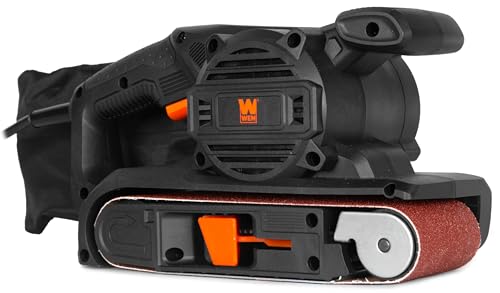
WEN HB321V Portable Belt Sander
What We Like
- Exceptionally light at 6.4 pounds for reduced fatigue
- Variable speed motor offers wide 620-1200 SFM range
- Quick-release lever simplifies belt changes
- Lock-on switch enables continuous operation
Trade-offs
- Dust bag is detachable, not a sealed system
- Includes only one 80-grit belt to start
- Two-year warranty is shorter than some competitors' offerings
At a mere 6.4 pounds, this sander is built for overhead work and long sessions where arm fatigue is a real concern. The lock-on power switch means you don’t have to maintain a death grip on the trigger. Variable speed control also gives you the flexibility to tackle everything from aggressive stock removal to finer finishing passes. It’s a straightforward, corded workhorse for the DIYer or hobbyist who values comfort and control over brute power.
Its lightweight design uses a standard dust collection setup with a bag, which can be messy on dense woods. For bigger, more demanding jobs like flattening tabletops, you might want the wider belt and heftier build of something like the WEN HB424V Combination Sander to keep the work surface perfectly level. But for sanding cabinets, doors, and general trim work, this model’s comfort is hard to beat.
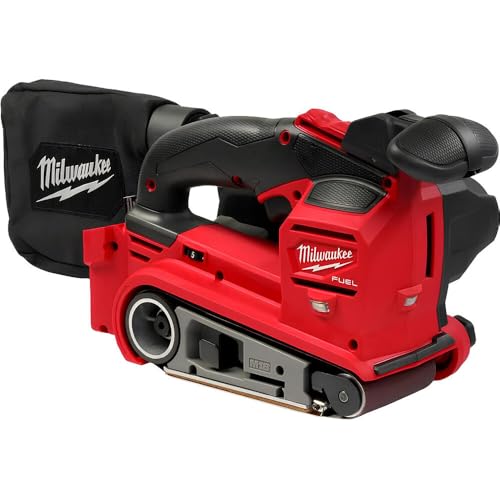
Milwaukee 2832-20 Belt Sander
What We Like
- Brushless motor matches corded 8A sander power.
- Variable speed dial for precise material removal.
- Quick, tool-free belt changes minimize downtime.
- REDLINK PLUS protects against overload and overheating.
Trade-offs
- Compatible only with 3 x 18 belts, not the common 3 x 21.
- Battery and charger sold separately.
The POWERSTATE brushless motor delivers the power of an 8-amp corded sander, which means you can tackle serious stock removal on a job site without hunting for an outlet. That cordless freedom, paired with a wide variable speed range from 750 to 1350 SFM, makes this a prime choice for tradespeople who need aggressive sanding capability anywhere. The tool-free belt lever is a thoughtful touch that keeps you working instead of fumbling with tools.
The main compromise is the 3 x 18-inch belt size, which is less common than the standard 3 x 21 found on models like the Makita 9903. You’ll need to plan your abrasive supply accordingly. While the 8.8-pound weight is reasonable for its power class, it’s a solid handful, so it’s better suited for sustained work on benchtops or floors than for delicate overhead tasks. For a dedicated shop user with constant power access, a lighter corded option might be simpler, but for mobile pros, this Milwaukee delivers corded performance without the cord.
DeWalt DCW220B Cordless Belt Sander

What We Like
- Excellent 95% dust collection with compatible vacuum
- Quick-release, tool-free belt change system
- Variable speed trigger with 25-position dial
- Comfortable overmolded handle for two-handed control
Trade-offs
- Tool-only model requires separate battery and charger purchase
- Dust collection requires separate DeWalt Airlock accessory
Up to 95% dust collection efficiency makes this sander a standout for anyone who prioritizes a clean shop. That feature, combined with its cordless freedom and a brushless motor that delivers plenty of power for most tasks, is why it’s a favorite for finish work and indoor projects. The variable speed dial gives you precise control for everything from aggressive stock removal to delicate contour sanding, and owners report it delivers an exceptionally smooth finish. This is the tool you grab when you need to sand a staircase, a deck board, or a furniture piece without dragging a cord or choking on dust.
You gain cordless convenience and clean operation, but it requires a commitment to the DeWalt 20V system. The battery, charger, and compatible vacuum for wireless control are sold separately. It offers 16.7% more sanding surface area than the Milwaukee M18 Fuel cordless belt sander, allowing it to tackle large jobs faster. The narrow belt design operates at speeds up to 5,600 FPM. Reviewers report it proved effective for working in tight spaces and on intricate contours when the variable speed was adjusted down.
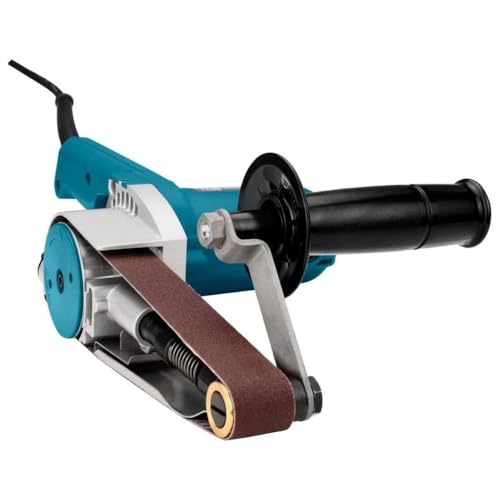
Makita 9031 Narrow Belt Sander
What We Like
- Narrow belt and exposed pulley for tight spaces.
- Variable speed dial for precise material matching.
- Lightweight and compact for detailed control.
- Lock-on button enables continuous operation.
Trade-offs
- Small belt size limits stock removal on large surfaces.
- At 1-1/8" wide, it's not for flattening table tops.
A 1-1/8-inch wide belt and compact 4.6-pound body make this sander a specialist for intricate work. That narrow profile and exposed front pulley let you get into corners, sand curved edges, and handle irregular shapes where a full-size sander simply can’t fit. It’s the go-to for finish carpenters, cabinet installers, or any woodworker who needs finesse over brute force. The variable speed is a genuine asset, allowing you to dial down for delicate veneers or crank it up for metal and fiberglass.
Designed for detail work, the Makita 9031 uses a narrow 1-1/8 inch belt and exposed front pulley to reach into corners and handle irregular shapes. Research notes that a sander of this small size can remove material nearly as quickly as larger models like the Makita 9903, making it versatile beyond just finishing. Its compact 4.6-pound build and variable speed control provide exceptional maneuverability for tasks like trimming, touch-ups, and working in confined spaces.
Product photos
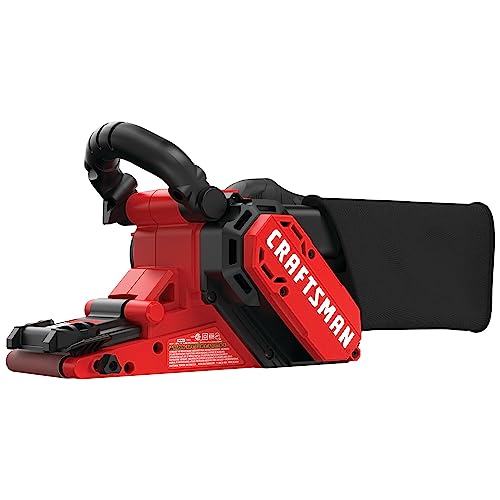
Craftsman CMEW213 Belt Sander
What We Like
- Tool-free belt release for quick changes
- Angled belt design sands closer to edges
- Three-position over-molded handle improves comfort
- Light weight reduces fatigue during long sessions
Trade-offs
- Fixed 800 FPM speed, no variable control
- Weighs 6.6 pounds, heavier than some narrow sanders
A 7-amp motor paired with a 3×21-inch belt running at 800 feet per minute gives you enough muscle to tackle most common sanding tasks without breaking a sweat. For the hobbyist or weekend warrior who only needs a belt sander a few times a year, this Craftsman model delivers straightforward, reliable performance. It gets the job done without the complexity or cost of more professional-grade machines.
For those tackling just a few projects a year, this Craftsman model offers a ton of value, as noted in expert round-ups. You trade advanced features like variable speed for that simplicity. The fixed 800 feet-per-minute belt pace works fine for general material removal, but it lacks the adjustability found on tools like the variable-speed RIDGID R2740.
Product photos
VEVOR Belt and Disc Sander Combo
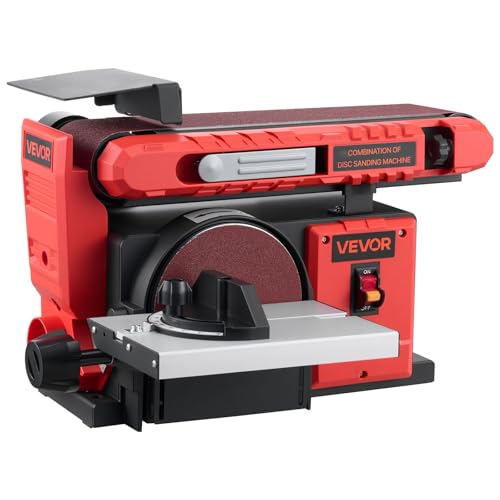
What We Like
- Belt adjusts from horizontal to vertical sanding
- Disc worktable tilts for angled sanding
- Includes dust collection port
- Stable, space-saving benchtop design
Trade-offs
- At 33.7 lb, it is a dedicated benchtop tool, not portable
- Belt speed is fixed at 600 RPM, not variable
A 4×36 inch belt that swings from horizontal to vertical gives you the flexibility to sand edges, faces, and complex contours without repositioning the workpiece. Combine that with a tilting disc table, and you have a benchtop station ready for precise shaping and finishing. This combo is built for the home workshop where space is at a premium but versatility is non-negotiable, letting you tackle everything from smoothing a tabletop to sharpening a tool.
Weighing 33.7 pounds, this benchtop sander is meant to be bolted down as a permanent shop tool, not carried to a job site. Its belt runs at a fixed 600 RPM, which is effective for many tasks but lacks the fine control of a variable-speed model for delicate materials. Consider it a dedicated finishing station rather than a portable sander.
Product photos
RIDGID R2740 Belt Sander

What We Like
- Heavy-duty, corded design for sustained power
- Variable speed control for material-specific sanding
- Relatively light at 8.2 pounds for a corded sander
Trade-offs
- 18-inch belt is shorter than common 21-inch models
- Corded design limits mobility on job sites without power
A 3×18-inch belt driven by a corded power source means you can lean into a project all day without worrying about battery fade, making it a go-to for shop-based work where outlet access isn’t an issue. Its 8.2-pound weight is manageable for a tool built for continuous material removal, suiting anyone who needs to flatten tabletops, level joints, or strip finishes without the motor bogging down. This is for the user whose projects demand relentless, consistent power over portability.
The trade-off is the cord itself, which can be a tether on a sprawling site or an inconvenience for quick outdoor fixes. Compared to a longer 21-inch belt like on the Makita 9903, the RIDGID’s 18-inch platen covers slightly less surface per pass, which might add a few strokes to larger panels. However, for the core tasks a belt sander is built for, aggressive stock removal and rough shaping, this tool delivers the dependable, corded performance that keeps a workshop humming.
Product photos
How We Evaluated Belt Sanders for Wood
Our evaluation relied on manufacturer data, expert round-ups from woodworking publications, and patterns in owner reviews. We prioritized criteria that directly impact real-world sanding: motor power and variable speed for material control, dust collection effectiveness for a cleaner workspace, and ergonomic design for comfortable handling during extended use.
Since this is a research-based assessment, we cannot provide hands-on performance data like exact sanding times on specific woods, but we focused on consistently reported strengths and trade-offs across trusted sources. For a deeper look at our selection process, explore our comprehensive belt sander guide.
What To Look For In Belt Sanders for Wood
Choosing the right belt sander means matching its core features to your most common tasks, whether that’s flattening a tabletop or sanding intricate trim.
Prioritize power (amps for corded, voltage for cordless) and variable speed for control. Consider weight and handle design for comfort, and check dust port compatibility with your shop vacuum.
Power and Speed
A powerful motor, measured in amps for corded models, determines how aggressively the sander can remove stock. Variable speed control, adjustable in surface feet per minute (SFM), is crucial for adapting to different materials; a high speed strips paint quickly, while a lower speed prevents burning delicate hardwoods. For cordless models, brushless motors and higher voltage platforms generally deliver more sustained power and longer runtime per charge.
Design and Ergonomics
The sander’s weight and balance directly affect user fatigue, especially on vertical surfaces or overhead work. A sander around 6 to 7 pounds is much easier to handle for long periods than a 10-pound model. Look for a comfortable, overmolded front handle with multiple grip positions and a reliable trigger lock for continuous operation. The belt size, most commonly 3 inches by 21 inches, dictates the work surface width, while a narrow belt or exposed front roller allows for work in tighter corners.
Dust Collection and Belt Changes
Effective dust collection keeps your workspace visible and your lungs clear. A well-sealed system that connects to a standard shop vacuum hose is far superior to a basic cloth bag. Also, examine the belt change mechanism; a quick-release, tool-free lever saves significant time and frustration compared to models requiring a hex key.
- Confirm the dust port shape matches your shop vacuum hose or available adapters.
- Test the belt tracking adjustment to ensure it holds the belt centered during use.
- Check if the front sanding platen extends close to the edge for flush sanding.
A good belt sander feels like an extension of your arm, not a burden you have to manage.
Belt Sanders for Wood Compared
The table below highlights key specifications to help you compare our top picks at a glance.
| Product | Motor | Belt Size | Belt Speed | Weight |
|---|---|---|---|---|
| Makita 9903 Belt Sander | 8.8 AMP | 3" x 21" | 690 – 1,440 ft./min | 9.5 pounds |
| Metabo HPT SB8V2 Belt Sander | 9.0 Amp | 3 x 21 Inch | Variable speed dial | 9.5 Pounds |
| WEN HB424V Combination Belt Sander | 10-amp | 4-by-24-inch | 660 to 1310 feet per minute | N/A |
| WEN HB321V Portable Belt Sander | 7.5-amp | 3-by-21-inch | 620 to 1200 feet per minute | 6.4 pounds |
| Milwaukee 2832-20 Belt Sander | POWERSTATE Brushless | 3" x 18" | 750-1350 SFM | 8.8 lbs |
| DeWalt DCW220B Cordless Belt Sander | 20V MAX* Brushless | N/A | N/A | 1.0 Pounds |
| Makita 9031 Narrow Belt Sander | N/A | 1-1/8" x 21" | 656-3,280 ft./min. | 4.6 pounds |
| Craftsman CMEW213 Belt Sander | 7 Amp | 3-in. x 21-in. | 800 fpm max | 6.6 Pounds |
| VEVOR Belt and Disc Sander Combo | 400W | 4" x 36" | 600RPM | 33.7 pounds |
| RIDGID R2740 Belt Sander | N/A | 3 in. x 18 in. | Variable Speed | 8.2 Pounds |
Frequently Asked Questions
What is the best belt sander for wood?
For most woodworking tasks, the best overall belt sander is the Makita 9903. It offers a great balance of power, variable speed control, and a flush-sanding design for versatility. Your best choice depends on your primary need, such as the Metabo HPT SB8V2 for rapid stock removal or the Makita 9031 for detailed finish work.
Which belt sander is best for removing a lot of material quickly?
The Metabo HPT SB8V2 is specifically recognized for fast material removal. Its powerful 9-amp motor aggressively sands large, flat surfaces. For heavy-duty, sustained power in a corded format, the RIDGID R2740 is another strong contender for shop use.
What is a high-quality belt sander?
A high-quality belt sander combines a powerful, reliable motor with precise variable speed control and comfortable, balanced ergonomics. It features a dependable belt-tracking system, effective dust collection that connects to a vacuum, and a tool-free belt change mechanism. Models like the Makita 9903 and the Milwaukee 2832-20 cordless exemplify these traits.
Is a corded or cordless belt sander better?
Corded belt sanders, like our top-rated corded belt sanders, typically offer more consistent, unlimited power for demanding shop work. Cordless models, such as the Milwaukee 2832-20, provide excellent job-site portability but require investment in a battery ecosystem. Your choice depends on whether continuous high power or mobility is more important for your projects.
What is the best sander to use on wood for finish work?
For detailed finish work on wood, tight corners, and irregular shapes, a narrow belt sander is ideal. The Makita 9031, with its 1-1/8 inch wide belt and exposed front pulley, offers precise control in confined spaces where a standard 3-inch sander cannot fit.
The Bottom Line
The Makita 9903 Belt Sander earns the best overall pick for its versatile variable speed, reliable auto-tracking, and effective flush-sanding design, making it an outstanding choice for woodworkers tackling a mix of projects. For budget-conscious DIYers, the Craftsman CMEW213 provides capable basic performance, while those needing a clean shop should consider the DeWalt DCW220B for its superior dust collection.
Ultimately, matching the sander’s power, weight, and belt size to your most frequent task is the single most important decision. Learning proper belt sander technique is just as crucial as selecting the right tool.
