
9 Best Circular Saw Blades For Metal Roofing in 2026
This post contains affiliate links. As an Amazon Associate, we earn from qualifying purchases.
Our best overall pick for cutting metal roofing is the Diablo Steel Demon Carbide Saw Blade, which excels at clean, cool cuts in corrugated sheet and steel studs. For standing seam panels, the Malco MCCB7 is the top choice, while the Norske Tools 10-Inch Blade is ideal for those with a larger saw who need deeper cuts.
Choosing the wrong blade can quickly lead to burnt paint, jagged edges, and a ruined workpiece. The right one makes the difference between a professional install and a frustrating mess. We built this guide by analyzing manufacturer specifications, expert recommendations, and patterns in owner feedback to help you match a blade to your project and your saw.
Top 9 Circular Saw Blades For Metal Roofing in the Market
Certain content that appears on this site comes from Amazon. This content is provided "as is" and is subject to change or removal at any time.
The Best Circular Saw Blades For Metal Roofing, Reviewed
Diablo Steel Demon Carbide Saw Blade

What We Like
- TCG design minimizes heat and sparks for clean cuts.
- Perma-SHIELD coating fights gumming and corrosion.
- Laser-cut stabilizer vents reduce vibration for accuracy.
- Thin kerf design works with cordless and corded saws.
Trade-offs
- Not designed for thicker materials like structural steel.
- Maximum material thickness is 12 gauge mild steel.
A 70-tooth Triple Chip Grind blade is the key to smooth, burr-free cuts in metal roofing. The design drastically cuts down on sparks and heat, which means cleaner edges on your panels and less contamination on the worksite. For a pro or a serious DIYer installing corrugated sheet or steel decking, this blade turns a standard circular saw into a precise metal cutter. The Perma-SHIELD coating adds real staying power, fighting off the sticky residue that shortens the life of cheaper blades. It’s the complete package for anyone who needs reliable, repeatable performance on thin gauge steel.
For heavier-duty tasks on a standing seam roof, you’d look at a blade like the Malco MCCB7, which is built for that specific application. However, for most metal roofing and siding jobs, the Diablo Steel Demon delivers a level of cut quality and blade longevity that sets it apart. Research and owner reports confirm this advantage over standard abrasive discs or lower-tooth blades.
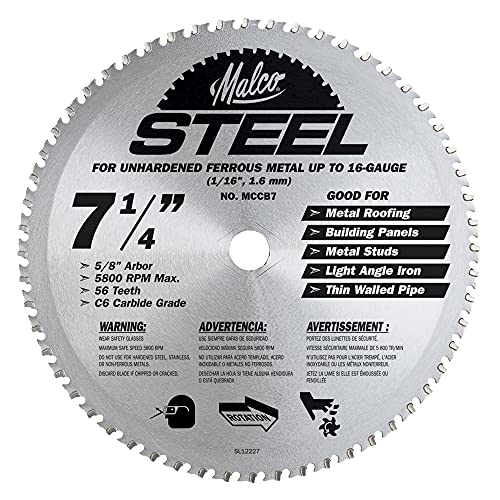
Malco MCCB7 Metal Cutting Saw Blade
What We Like
- Specially formulated C-6 carbide lasts far longer
- Makes true, flat cuts in standing seam panels
- Does not burn paint or protective coatings
- Also cuts metal studs and light angle iron
Trade-offs
- 7 1/4-inch size limits depth of cut on thicker material
- Only one size available, no larger diameter options
A blade that lasts up to 30 times longer than abrasive disks changes the math on a metal roofing job. You spend less time swapping out worn discs and more time making progress. This Malco blade is the one you want when your primary task is cutting standing seam panels and metal building sheets. Its 56-tooth, carbide-tipped design is engineered to slice through the material without warping the edges or scorching the finish, which is critical for a professional-looking installation and maintaining the panel’s corrosion protection.
Its specific focus is the main consideration. This blade is a specialist, and its 7 1/4-inch diameter is perfect for a standard circular saw but can’t handle the thicker structural materials that a larger blade like the Norske Tools 10-Inch model could. For a roofer or builder who deals primarily with sheet metal and thin-walled profiles, this blade’s longevity and clean-cutting performance make it a staple. If your work regularly involves heavier steel pipe or stacked cuts, you’ll need a different tool in your kit.
Norske Tools 10-Inch Metal Cutting Blade

What We Like
- Large 10-inch diameter for deep cuts.
- Zero-degree hook angle reduces kickback risk.
- Modified triple chip grind eases cutting effort.
Trade-offs
- Requires a 10-inch circular saw, not a compact model.
- Zero hook angle can slow feed rate for some users.
A 10-inch diameter gives this blade a significant reach advantage, allowing it to cut through thicker metal stock and wider panels in a single pass. That’s the core reason it stands out for large-scale metal roofing jobs where you’re dealing with heavy-gauge steel or stacked materials. The zero-degree hook angle is a smart safety and durability feature for metal, as it firmly controls the material feed, preventing the blade from grabbing and jerking. This design makes it a solid, predictable choice for contractors who need to make long, straight cuts in sheet metal or steel studs without fighting the tool.
Tool compatibility and maneuverability are key considerations here. For intricate cuts on a roof peak or detailed trim work, this larger blade can feel cumbersome. It’s built for power and capacity over finesse, making it the right pick when the job’s scale justifies the bigger gear. For most standing seam panel installations, a dedicated 7-1/4-inch blade will be easier to handle, but for the thickest materials or high-volume production, this Norske blade has the heft to power through.
Product photos
BRSCHNITT 6-1/2-Inch TCT Metal Blade

What We Like
- 48 carbide teeth for smoother cuts in ferrous metals
- Specifically lists color steel panels as an application
- Wear-resistant TCT construction for heat resistance
Trade-offs
- 6-1/2" diameter limits depth of cut versus 10-inch blades
- Requires a saw capable of high RPM for optimal performance
- Warning prohibits use on wood, limiting blade versatility
A 5000 max RPM rating makes this blade a standout for users with high-speed circular saws. It’s designed to blaze through metal roofing sheets and panels. The 48 tungsten carbide teeth handle the abrasiveness of color steel and iron while maintaining a smooth cut. This is exactly what you want when trimming roofing to avoid ragged edges that can compromise weather seals. The blade suits contractors who prioritize speed and finish on ferrous metals and have the tool that can safely spin it that fast.
The trade-off for that high-RPM capability is its 6-1/2-inch size, which can’t match the cutting depth of a larger blade like the Norske Tools 10-Inch model for thicker structural elements. It’s a specialist, fantastic for sheet goods on a fast saw but not the one you’d grab for a demo job or a mixed-material project, given the explicit warning against cutting wood. Keep it dedicated to metal, and it will deliver clean, fast cuts where it’s designed to work.
Product photos
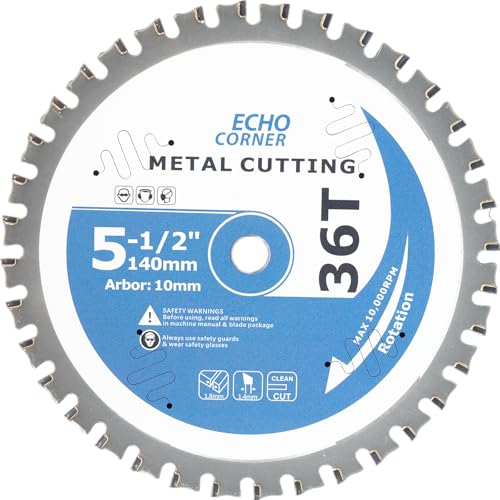
Echo Corner 5-1/2-Inch Metal Cutting Blade
What We Like
- Small 5.5-inch diameter fits compact saws.
- 36-tooth ATB design for a clean cut edge.
- Durable TCT construction for cutting hard steel.
- Cuts metal roofing, siding, and thin sheets.
Trade-offs
- Small diameter limits cutting depth on thicker material.
A 5-1/2 inch diameter makes this blade fit smaller, more maneuverable circular saws, which is a major advantage when working on a roof where control and weight matter. The 36-tooth ATB design and carbide tips are built to slice through metal roofing and siding cleanly, minimizing burrs on the cut edge. This is a focused tool for the installer who needs precision on sheet goods with a compact saw, not raw power for thick structural steel.
With a 5-1/2-inch diameter, this blade is designed for small to medium metal components, making it a nimble choice for cutting installed roofing or steel rods on a ladder. Its compact form is less suited for deep cuts into thick stock that a larger 7-1/4-inch blade could handle on the ground. The design prioritizes maneuverability for trim and detail work over maximum material capacity.
Product photos
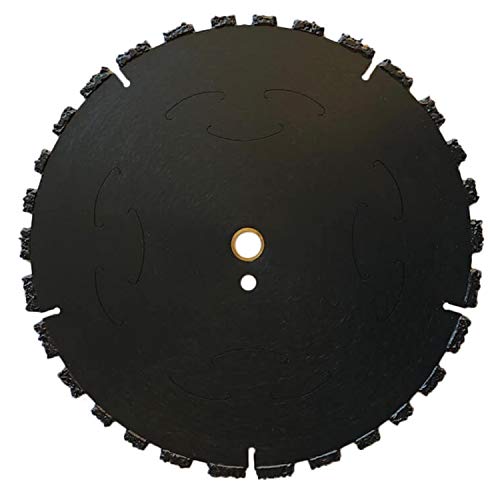
EDiamondTools 14-Inch Demolition Blade
What We Like
- Designed for a wide range of roofing materials
- Solid steel body for durability under stress
- Can be used with water for cooler cuts
- Large 14-inch diameter for deep cuts
Trade-offs
- At 14 inches and 4 pounds, it demands a powerful, large-format saw.
- The wide 1/4-inch segment removes more material per pass.
A 14-inch diameter and a 1/4-inch segment height give this blade the muscle to plow through layered roofing assemblies. It’s built for the contractor who tackles tear-offs and retrofits where the cut might start in tar paper, bite into wood decking, and exit through a metal cap. The solid steel core and welded carbide segments are made to handle the shock of hitting hidden nails or staples without shattering. This isn’t a finesse tool; it’s a demolition blade that treats a multi-material roof as a single job.
You need the right saw to run it, a 1-inch arbor with a pin hole means this blade is meant for a high-speed demo saw or large angle grinder, not your standard 7-1/4-inch circular saw. The aggressive cut and size make it overkill for a clean install of standing seam panels alone. For that focused metal roofing work, a dedicated blade like the Malco MCCB7 is a more precise and compatible choice for common cordless saws.
Product photos
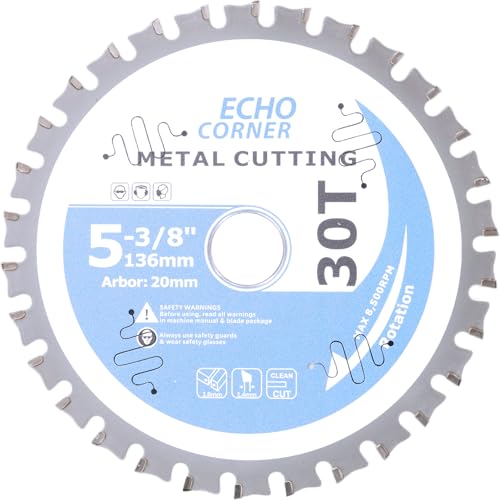
Echo Corner 5-3/8" Metal Blade
What We Like
- Compact 5-3/8-inch size fits smaller saws.
- TCG tooth geometry reduces sparks and heat.
- Stabilizer vents minimize vibration and blade warp.
- Includes reducer rings for multiple arbor sizes.
Trade-offs
- Small diameter limits cutting depth on thicker materials.
- 30-tooth count is aggressive for fine finishes on sheet metal.
Measuring 5-3/8 inches across, this blade is sized for smaller saws. That offers greater maneuverability for tasks like cutting metal roofing or angle iron. Its triple chip grind 30-tooth design reduces sparks and slows the rapid rise of cutting temperature during work, which helps manage heat when cutting mild steel or aluminum. Laser cut stabilizer vents trap noise and vibration, stabilizing the blade to keep it cool and reduce warp.
You trade cut capacity for that compact convenience, however. The smaller diameter simply won’t handle the same depth of cut as a standard 7-1/4-inch blade like the Diablo Steel Demon. It’s engineered for sheet goods, angle iron, and bar stock, not for thick structural members. For detailed work on a standing seam roof or cutting down panels to size with a lightweight saw, this blade fills a specific niche that larger blades can’t touch.
Product photos
Benchmark Abrasives 5-3/8" TCT Blade

What We Like
- Tungsten carbide tips for durable, clean cuts
- Cuts a wide range of ferrous and nonferrous metals
- Compatible with many major 7-1/4-inch saw brands
- Exceeds ANSI and EU manufacturing standards
Trade-offs
- 5-3/8-inch diameter limits depth of cut per pass
- 30-tooth count may produce a slower cut in thick material
At 5-3/8 inches across, this blade is built for smaller circular and miter saws. This makes it a natural fit for the tight spaces common in workshop fabrication. Its 30 tungsten carbide-tipped teeth are formulated for stable cuts across a wide range of metals, including stainless steel and titanium, which supports consistent performance when switching between materials. This multi-metal application range makes it a versatile choice for professionals and DIYers who need a single blade for diverse ferrous and nonferrous cutting tasks.
The smaller diameter limits its maximum cutting depth compared to full-size blades like the 7-1/4-inch Diablo Steel Demon, so it is best suited for work on thinner material stock. Its compatibility with many common 7-1/4-inch fitment tools, however, eases integration into existing setups for controlled, precision cutting. This design prioritizes stable, controlled cuts in fabrication environments over high-volume material removal.
Product photos
Benchmark Abrasives 10" TCT Blade

What We Like
- Engineered for clean, burr-free cuts in metal
- Fits virtually all major 10-inch miter saw brands
- Tungsten carbide tips for durable tooth edges
- Exceeds ANSI and EU European Standards
Trade-offs
- 52-tooth count is lower than some dedicated metal roofing blades
- 1-inch arbor limits use to tools with that specific bore size
With a 1-inch arbor and 10-inch diameter, this blade fits directly into most common stationary miter saws, chop saws, and table saws. Its compatibility extends to brands like Dewalt, Milwaukee, and Makita, offering a versatile shop solution. Engineered for cutting metal, stainless steel, cast iron, titanium, nickel, and wrought iron, it uses tungsten carbide tips to deliver clean, burr-free cuts across fabrication and construction tasks.
The Malco MCCB7 blade is designed specifically for standing seam roof panels, according to its listing. The Benchmark blade is engineered for a multi-metal application range including fabrication, welding, and industrial environments. It is manufactured with premium materials that meet ANSI and EU standards.
Product photos
How We Evaluated Circular Saw Blades For Metal Roofing
Our research focused on product specifications, manufacturer application notes, and professional roofer round-ups. We prioritized criteria that directly impact performance and safety on a metal roof: blade diameter for cutting depth, tooth geometry for clean cuts, and compatibility with common roofing saws. We also looked for features like special coatings that reduce heat and gumming, a common complaint with metal cutting.
Since this is a research-based evaluation, we cannot verify long-term durability claims or performance in every material thickness, but we can identify the blades consistently recommended for specific metal roofing tasks. For a broader look at all blade types, our circular saw blade guide covers wood, demolition, and more.
What To Look For In Circular Saw Blades For Metal Roofing
Selecting a blade is about matching its specifications to your material and your tool. The right combination delivers a clean cut, protects your saw, and makes the job safer and faster.
Look for a blade with the correct diameter for your saw and the material thickness. Carbide-tipped teeth with a triple-chip grind (TCG) cut cooler and cleaner. Always verify the blade’s maximum RPM rating matches your tool’s speed.
Blade Diameter and Arbor Size
The blade’s diameter determines your maximum cutting depth, which is critical for thicker corrugated profiles or stacked materials. Common sizes are 5-3/8 inches for compact saws, 7-1/4 inches for standard models, and 10 inches or larger for miter or larger circular saws. Equally important is the arbor size, the hole in the blade’s center; using a blade with the wrong bore size for your saw’s arbor requires a reducer ring, which not all blades include.
Tooth Geometry and Count
For metal, tooth geometry is more important than a high tooth count. A Triple Chip Grind (TCG) design is ideal, as it alternates teeth to shear and clean out the cut, minimizing heat, sparks, and burrs. A lower tooth count with an aggressive hook angle cuts faster but can grab; a zero- or negative-hook angle is safer and provides more control, especially on thin sheet metal. Our research on how to cut metal roofing details why this control is so important for clean panel edges.
Material and Coating
Carbide-tipped teeth are essential for longevity and clean cuts in metal, lasting far longer than abrasive discs. Look for blades with a non-stick coating, like Perma-SHIELD or similar, which reduces heat buildup, prevents metal chips from welding to the blade, and fights corrosion. A laser-cut steel body with stabilizer vents helps reduce vibration for straighter cuts and less wear on your saw’s bearings.
- Check your saw’s manual for its maximum RPM and arbor size before buying.
- Confirm the blade is rated for the type of metal you’re cutting (e.g., mild steel, aluminum).
- Ensure the blade’s kerf (cut width) is appropriate; a thin kerf cuts easier but may flex on thicker stock.
A quality metal-cutting blade is an investment that saves time and material by making clean cuts the first time.
Circular Saw Blades For Metal Roofing Compared
The following table compares key specifications to help you quickly see the differences between our top picks.
| Product | Diameter | Tooth Count | Tooth Material/Grind |
|---|---|---|---|
| Diablo Steel Demon Carbide Saw Blade | 7-1/4 inch | 70 teeth | Triple Chip Grind (TCG) |
| Malco MCCB7 Metal Cutting Saw Blade | 7 1/4 inches | 56 teeth | C-6 carbide tipped |
| Norske Tools 10-Inch Metal Cutting Blade | 10 inches | 72 teeth | Modified Triple Chip (MTCG) |
| BRSCHNITT 6-1/2-Inch TCT Metal Blade | 6-1/2 inches | 48 tungsten carbide teeth | N/A |
| Echo Corner 5-1/2-Inch Metal Cutting Blade | 5-1/2 inches (140mm) | 36 teeth | N/A |
| EDiamondTools 14-Inch Demolition Blade | 14 inches | N/A | tungsten carbide |
| Echo Corner 5-3/8" Metal Blade | 5-3/8 inches | 30 teeth | Triple Chip Grind (TCG) |
| Benchmark Abrasives 5-3/8" TCT Blade | 5-3/8 inches | 30 Teeth | Tungsten Carbide Tipped (TCT) |
| Benchmark Abrasives 10" TCT Blade | 10 inches | 52 | Tungsten Carbide Tipped (TCT) |
Frequently Asked Questions
What type of circular saw blade is best for cutting metal roofing?
A carbide-tipped blade with a triple-chip grind (TCG) tooth design is best. It runs cooler than an abrasive disc, produces cleaner edges with less burr, and lasts significantly longer. The blade must also be the correct diameter for your saw and rated for the gauge of steel you are cutting.
Can I cut metal roofing with a circular saw?
Yes, a circular saw is an excellent tool for cutting metal roofing panels, especially for long, straight cuts. You must use a blade specifically designed for cutting metal, never a wood-cutting blade. For the best results, pair it with one of the top-rated metal cutting circular saws built to handle the rigors of the job.
Is 18 or 24 tpi better for metal?
For a circular saw blade cutting sheet metal, a moderate tooth count is typical and effective. Extremely high tooth-per-inch counts are more relevant to hand saws or jigsaws. Focus instead on the tooth geometry; a Triple Chip Grind (TCG) design is far more important than a specific tooth count for a clean, controlled cut.
What circular saw blade to use for metal?
Use a blade explicitly labeled for cutting metal, with carbide-tipped teeth. The exact blade depends on your project. Choose a thin-kerf blade like the Diablo Steel Demon for general sheet metal, a specialized blade like the Malco for standing seam, or a large-diameter blade for deeper cuts. Always check the manufacturer’s specifications for compatible materials and thicknesses.
How do I choose between a 7-1/4-inch and a 10-inch metal cutting blade?
Choose based on your saw and your cut depth needs. A 7-1/4-inch blade fits the most common circular saws and handles most roofing sheet metal. A 10-inch blade, which requires a larger saw, offers greater cutting depth for thicker materials or stacked cuts. Our saw blade buying guide covers this and other fundamental selection factors in detail.
The Bottom Line
For most installers cutting corrugated metal roofing and steel studs, the Diablo Steel Demon Carbide Saw Blade is the best overall choice, offering a cool, clean cut with excellent compatibility. If your budget is tight or you specialize in standing seam panels, the award-winning Malco MCCB7 provides outstanding value and focused performance.
Roofers dealing with multi-material tear-offs should consider the EDiamondTools Demolition Blade for its brute-force versatility. Ultimately, matching the blade’s diameter, tooth design, and rated materials to your specific job is the single most important step to a professional result.
