
10 Best 10 Inch Miter Saw Blades in 2026
This post contains affiliate links. As an Amazon Associate, we earn from qualifying purchases.
Our top pick for the best 10-inch miter saw blade is the Makita A-93681 Micro Polished Miter Saw Blade for its hand-tensioned plate and micro-polished teeth that deliver exceptional accuracy. For a flawless finish, consider the CMT Orange Tools blade, while the WEN BL1080 offers excellent value for budget-conscious users.
Selecting the wrong blade can lead to tear-out on veneers, burned cuts on hardwoods, and a frustrating lack of precision. Our research focused on specifications, manufacturer data, and patterns in owner feedback to identify the blades that excel in specific applications, from delicate moldings to chip-free plywood.
Top 10 10-Inch Miter Saw Blades in the Market
Certain content that appears on this site comes from Amazon. This content is provided "as is" and is subject to change or removal at any time.
The Best 10-Inch Miter Saw Blades, Reviewed
Makita A-93681 Micro Polished Miter Saw Blade

What We Like
- ATAF tooth design enables ultra-precise cuts
- Ultra-thin kerf reduces motor drag for smoother operation
- Micro-grain carbide teeth honed to a mirror finish
- Hand-tensioned steel plate ensures true, accurate cuts
Trade-offs
- At 1.8 pounds, it's heavier than some thin-kerf competitors like the CMT blade
- Specialized 80-tooth fine finish is slower for rough crosscuts
Ultra-precise cutting comes from the ATAF tooth design and micro-grain carbide honed with up to 600 grit, which yields a mirror finish on wood. This 10-inch, 80-tooth blade suits a woodworker who wants smooth cuts directly from the saw. A fully hardened and hand-tensioned steel plate is designed for true cuts, helping miters stay accurate.
The Japanese ultra-thin kerf design is intended to provide smoother cuts with less drag on the motor. For a similar 80-tooth, 10-inch blade with a different design, the Freud LU79R010 is available.
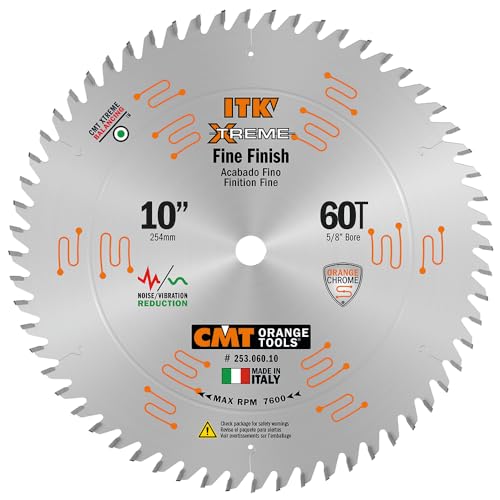
CMT Orange Tools Fine Finishing Saw Blade
What We Like
- Designed specifically for glass-smooth miter cuts.
- Features a 10-inch diameter for standard miter saws.
- ATB tooth geometry for clean finishing work.
- Relatively lightweight at 1.0 pounds.
Trade-offs
- A 0.102-inch kerf is wider than some thin-kerf alternatives.
- Specialized for fine finishing, not general-purpose cutting.
This blade is engineered for a single, specific purpose: delivering a glass-smooth finish on crosscuts. The manufacturer’s specifications make its mission clear, it’s a tool for the final pass, not the rough work. That makes it a perfect match for a woodworker whose projects demand flawless, ready-to-finish miters on trim, picture frames, or furniture. If your priority is eliminating tear-out and sanding time on visible cuts, this is the blade designed for your saw.
Designed specifically for fine finish crosscuts, this blade aims to deliver a glass-smooth surface on miter cuts. While other blades in its category, like the Makita A-93681 and Diablo D1080X, share the same 10-inch diameter and 80-tooth count for similar tasks, the CMT Orange Tools blade focuses exclusively on this polished result. It’s a specialist tool meant for final, presentation-quality work rather than general-purpose cutting.
Product photos
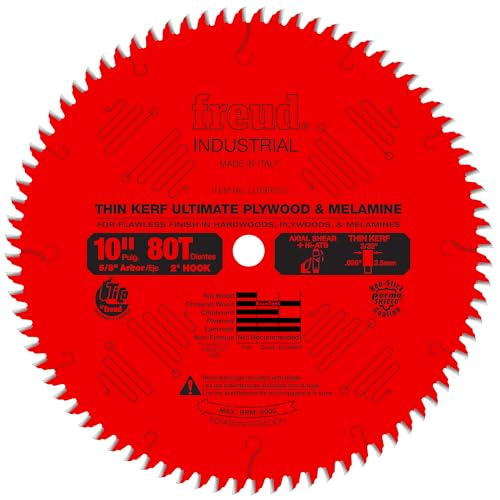
Freud Thin Kerf Ultimate Plywood Blade
What We Like
- Hi-ATB geometry for polished, chip-free edges
- Laser-cut slots reduce vibration for a crisp finish
- Perma-Shield coating reduces friction and heat
- Premium TiCo carbide blend for long edge life
Trade-offs
- Specialized for crosscutting; not a ripping or general-purpose blade
- The advanced features cater to finish work, not rough construction
Freud’s blade uses an 80-tooth Hi-ATB geometry and a premium TiCo carbide blend, a combination engineered for superior shearing action. This design delivers the chip-free, polished edges in veneered plywood and melamine that are essential for finish carpentry and cabinetmaking. Its laser-cut slots reduce vibration for a crisp finish, while the Perma-Shield coating minimizes friction and heat to protect the blade during extended use.
As a specialist blade for crosscutting and fine materials, it is not intended for heavy ripping or framing tasks. For a fine-finish blade with a similar 80-tooth ATB design and non-stick coating, the Diablo D1080X is another option. However, research mentions group Freud with Forrest and Tenryu as representing a best-in-class investment for serious craftsmen seeking lasting value from advanced features and exceptional performance.
Product photos
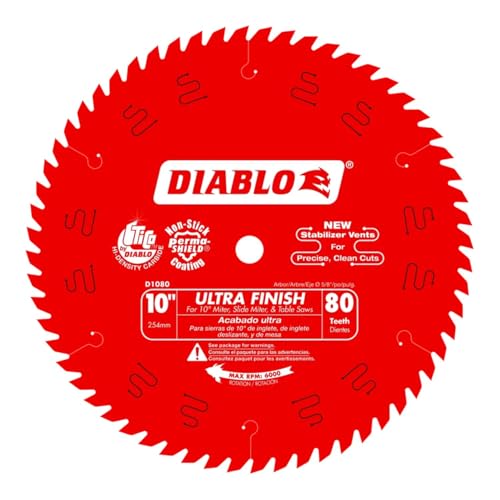
Diablo D1080X Fine Finish Saw Blade
What We Like
- Ultra-smooth cuts from 80-tooth ATB design.
- Premium carbide for long-lasting sharpness.
- Reduced vibration design for improved control.
- Compact and lightweight for easy handling.
Trade-offs
- Fine finish focus limits utility for heavy ripping tasks.
Its PermaShield coating and 80-tooth ATB grind deliver clean cuts on wood and composite materials, which is essential for fine woodworking and trim projects. The design also reduces vibration during operation, ensuring smoother cuts and improved control. Weighing 0.812 kg, the compact and lightweight style suits both jobsite and workshop use without adding bulk.
The blade is designed for universal compatibility, fitting most 10-inch miter saws, table saws, and chop saws. Its high-quality carbide construction provides long-lasting sharpness and durability, reducing the need for frequent blade changes. This combination of features makes it suitable for professionals and DIYers seeking reliable results for precise cutting tasks.
Product photos
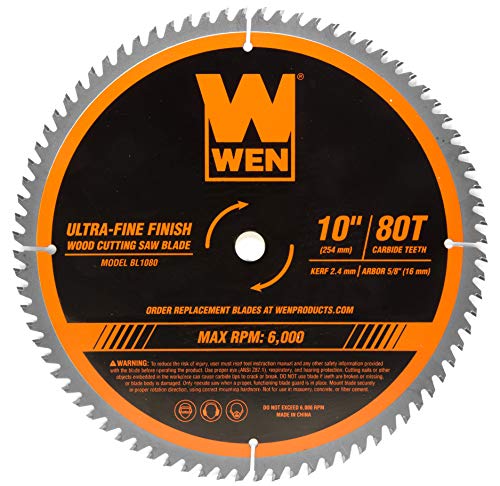
WEN BL1080 Ultra-Fine Finish Saw Blade
What We Like
- Ultra-thin kerf for efficient, clean cuts.
- 80 carbide teeth deliver an ultra-fine finish.
- Compatible with most 10-inch miter and table saws.
- Cuts both hardwoods and softwoods effectively.
Trade-offs
- The thin kerf may deflect on very dense material.
- Designed for finishing, not for fast, rough lumber breakdown.
An ultra-thin 1/10-inch kerf means this blade wastes less wood to sawdust and puts less strain on your saw’s motor, a real benefit for extended trim work. The 80 carbide-tipped teeth are configured for a polished finish, making it a solid choice for the detail-oriented woodworker who needs clean crosscuts in moldings and furniture pieces without breaking the bank. It handles the fundamentals of a finish blade without extra frills.
You trade some heft and vibration-damping mass found in blades like the Forrest Ply Veneer for that budget-friendly kerf. For a DIYer fitting baseboards or a pro on a tight jobsite budget, the WEN BL1080 gets the job done. Just know its lighter build is best suited to controlled, precise feed rates rather than aggressive, hurried cutting.
Product photos
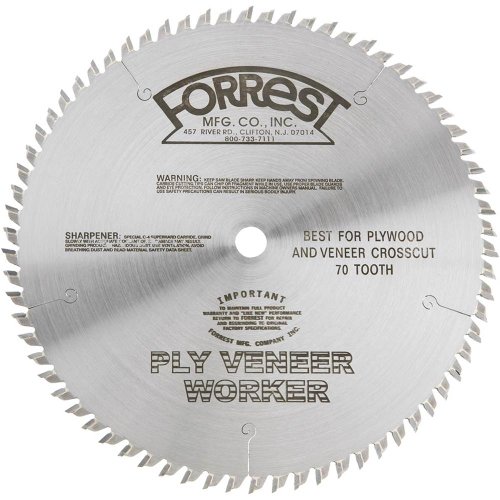
Forrest Ply Veneer Fine Finish Saw Blade
What We Like
- 70-tooth configuration for a fine finish.
- Heavy 2.3-pound plate for stability.
- Forrest brand.
Trade-offs
- At 2.3 lb, it's heavier than several competitors.
- 70-tooth count is lower than other fine-finish blades.
A blade engineered from the ground up for plywood and veneer means one thing: it’s built to prevent tear-out on fragile laminates. The 70-tooth geometry is calculated for a clean shear, and the substantial 2.3-pound plate dampens vibration for a smoother pass. This is the pick for the cabinetmaker or serious woodworker who needs a pristine, ready-to-finish cut on expensive sheet goods where any chip is a costly mistake.
That solid construction comes with a trade-off in heft, making it a bit more demanding on the saw’s motor compared to a thin-kerf option like the Freud LU79R010. It’s a specialist. For general crosscuts on solid wood, a blade like the Makita A-93681 with its higher tooth count might be the more versatile performer. This Forrest blade asks you to commit to its singular purpose, and in return, it delivers exactly what that task requires.
Product photos
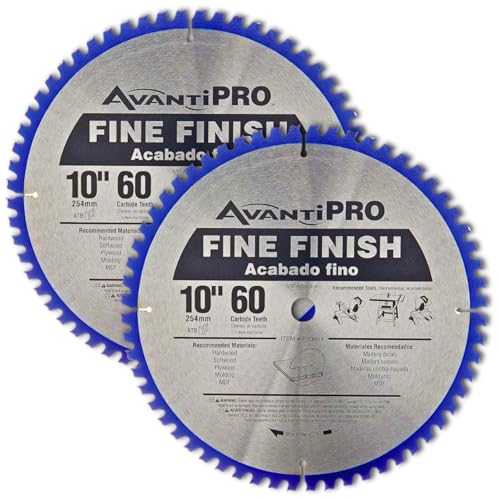
Freud P106060PP 10 Inch Miter Saw Blade
What We Like
- Two-blade pack offers excellent long-term value.
- Laser-cut stabilizer vents reduce vibration for clean cuts.
- Carbide-tipped teeth deliver smooth, splinter-free finishes.
- Works on both miter saws and table saws.
Trade-offs
- Not a thin-kerf blade, requires more power from saw.
- 60-tooth design is a generalist, not specialized for ultra-fine veneers.
- Pack of two is bulkier to store than a single blade.
The fact that this Freud blade comes in a two-pack is its biggest advantage, turning it from a simple accessory into a practical workshop strategy. You get a high-quality 60-tooth blade ready to go, with a fresh, identical spare waiting in the wings. This setup is perfect for the serious DIYer or professional who does a lot of crosscutting and wants to avoid downtime. The laser-cut stabilizer vents keep things smooth, so you get clean cuts in plywood and trim without the tear-out that ruins a project. It’s a reliable workhorse that makes sense for anyone who burns through blades on routine jobs.
This two-pack from Freud’s AvantiPro line means you’ll have a spare ready, so a dull blade never halts a weekend project. The 60-tooth carbide-tipped blade is designed for ultra-smooth, clean cuts in wood, plywood, and laminates, which reduces splintering and tear-out on a variety of materials. Laser-cut stabilizer vents minimize blade movement to reduce vibration and noise, leading to improved cutting accuracy. According to expert round-ups, Freud blades represent a lasting investment for serious craftsmen, and one owner reported getting near shooting board quality miters with a Freud industrial blade.
Product photos
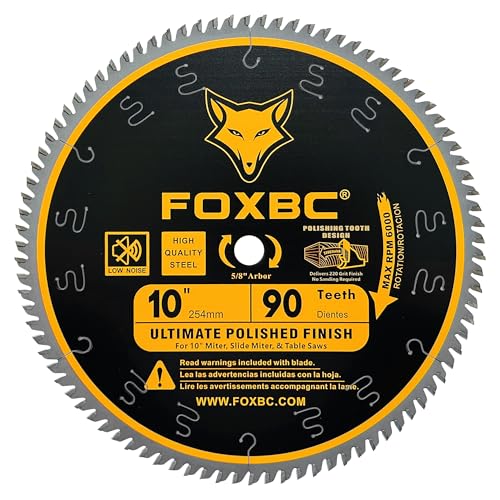
FOXBC Ultimate Polished Finish Saw Blade
What We Like
- 90-tooth count produces extremely smooth cuts
- Ultra-thin kerf reduces material waste and amp draw
- ASFG design shears cleanly for a superior finish
- Proprietary foxcarbide is durable and wear-resistant
Trade-offs
- Thin kerf may deflect more in dense hardwoods
- Specific to wood, melamine, and veneered plywood
A 90-tooth blade and a double side grind geometry deliver a polished finish equal to 220-grit sandpaper. That makes this the pick for woodworkers who need a ready-to-install surface right off the saw, especially when cutting fine moldings, veneered plywood, or melamine. The proprietary carbide and axial shear-face grind design are built to maintain that clean shearing action over a long service life. It’s a blade designed for final cuts, not rough framing.
The trade-off for that smooth finish is the blade’s focus. While it excels on the materials listed, its ultra-thin kerf is optimized for fine work. If you’re frequently crosscutting thick, abrasive stock, a blade like the Freud Thin Kerf Ultimate Plywood Blade with its different carbide blend might offer a better balance of durability and finish. The FOXBC blade is a specialist, not a generalist, and it performs its specific task exceptionally well.
Product photos
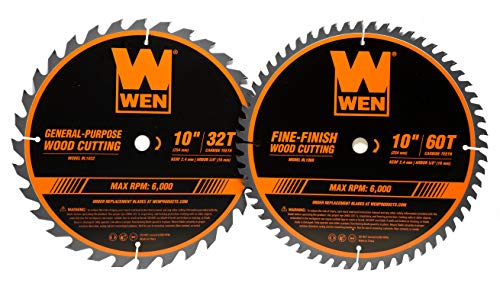
WEN Professional Woodworking Blade Set
What We Like
- Two blades cover rough cuts and fine-finish work
- Ultra-thin kerf for efficient, clean cuts
- 6000 RPM rating suits most 10-inch saws
- Compatible with miter, table, and jobsite saws
Trade-offs
- Set weight of 3.0 lb is heavier than single-blade options
- No blade case or storage mentioned in specifications
That 1/10-inch kerf on both means your saw motor isn’t working as hard, which is a smart design. For someone setting up their first shop or just tired of constantly swapping a single blade between tasks, this covers the fundamental needs without overcomplicating things. It’s a practical foundation.
The trade-off is in specialization. You’re getting versatility here, not the ultimate in polish. Think of it as a reliable workhorse pair that handles 90% of common projects, letting you invest in a specialty blade later only if you need it.
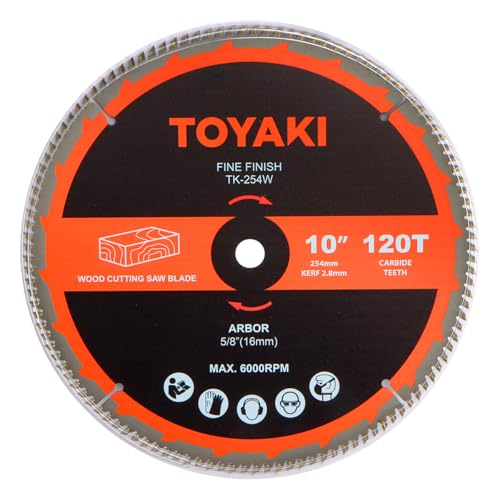
TOYAKI 120-Tooth Fine-Finish Saw Blade
What We Like
- 120-tooth design for fine finishing cuts
- Standard 16mm arbor for broad compatibility
- Engineered teeth pattern reduces vibration
- High-grade steel construction for durability
Trade-offs
- Specific to wood and soft materials only
- Higher tooth count may cut slower in dense stock
A 120-tooth configuration is built for one thing: leaving an exceptionally smooth surface on wood. That high tooth count slices through the material with minimal tear-out, so your trim and finish work needs little sanding before staining or painting. This blade is for the woodworker who prioritizes a flawless final surface over raw speed. It makes a dedicated tool for detailed cabinetry, fine furniture, and delicate moldings where the cut quality is the primary goal.
This 120-tooth blade is designed specifically for wood and soft materials, which means it focuses on achieving a fine finish rather than handling laminates or metals. With more teeth than many comparable blades, it cuts slowly to produce a polished surface. The specialized design makes it ideal for final trim or cabinetry work where the cut quality is the primary concern.
Product photos
How We Evaluated 10-Inch Miter Saw Blades
Our evaluation began with a deep dive into product specifications, manufacturer claims, and expert round-ups from trusted tool publications. We then cross-referenced these findings with patterns in owner feedback to see how the blades performed in real-world workshops. The key criteria were cut quality for specific materials, tooth geometry and count, kerf thickness, and overall build quality, as these factors directly determine a blade’s suitability for finish carpentry versus general construction.
A research-based evaluation like this cannot replicate the feel of a cut or long-term durability testing, but it effectively identifies the blades that consistently earn praise for their intended use. For a broader look at options, our guide to miter saw blade selection explores these criteria in depth.
What To Look For In 10-Inch Miter Saw Blades
Choosing the right blade transforms your miter saw from a rough cutter into a precision instrument. The goal is to match the blade’s design to your primary material and the quality of cut you need.
Match the tooth count and geometry to your project. High tooth counts (80+) and ATB designs yield smooth crosscuts for trim, while thin-kerf blades reduce motor strain but may deflect in dense hardwoods.
Tooth Count & Geometry
Tooth count is your first filter. For rough crosscuts in construction lumber, a 40-tooth blade is efficient. For fine finish work on moldings and hardwoods, you need 80 teeth or more.
Geometry matters just as much: Alternate Top Bevel (ATB) teeth shear wood fibers cleanly for crosscuts, while specialized Hi-ATB designs are engineered to prevent chipping in laminates and veneers. A general-purpose combination blade is a compromise that often excels at nothing, which is why many woodworkers own dedicated blades.
For projects focused on delicate profiles, our resource on blades for moulding is a useful reference.
Kerf & Plate Stability
The kerf is the width of the cut the blade makes. A full kerf provides maximum stability and resistance to deflection, which is ideal for deep cuts in dense hardwoods. A thin kerf removes less material, reduces strain on your saw’s motor, and is excellent for underpowered tools or when cutting expensive hardwoods where minimizing waste is important.
However, a thinner blade can wander, especially on bevel cuts or in thick, dense material. The plate’s weight and tensioning also affect stability; a heavier, hand-tensioned plate like that on the Makita helps ensure true, vibration-free cuts.
Material & Coating
The blade’s construction determines its lifespan and performance. Carbide teeth are standard; a higher-grade carbide like TiCo will stay sharper longer when cutting abrasive materials like MDF or pressure-treated lumber. Some blades feature a non-stick coating, such as Perma-Shield, which reduces friction, heat buildup, and pitch accumulation. This helps prevent burning and keeps the blade cutting cleanly longer. Laser-cut expansion slots in the plate help manage heat-induced warping and reduce vibration for a smoother cut. Understanding when to replace a blade is key to maintaining this performance.
- Check the arbor hole size (typically 5/8″ or 1″) matches your saw.
- Consider a multi-pack or starter set if you frequently switch between rough and finish tasks.
- Ensure the blade’s maximum RPM rating exceeds your saw’s no-load speed.
No single blade does everything perfectly. Invest in a dedicated fine-finish blade if smooth crosscuts are your priority.
10-Inch Miter Saw Blades Compared
The table below summarizes the key specifications for each of our picks to help you compare them at a glance.
| Product | Diameter | Tooth Count | Arbor Size |
|---|---|---|---|
| Makita A-93681 Micro Polished Miter Saw Blade | 10 inches | 80 teeth | N/A |
| CMT Orange Tools Fine Finishing Saw Blade | 10 inches | N/A | 5/8 inches |
| Freud Thin Kerf Ultimate Plywood Blade | 10 inches | 80 teeth | N/A |
| Diablo D1080X Fine Finish Saw Blade | 10 inches | 80 teeth | 5/8 inch |
| WEN BL1080 Ultra-Fine Finish Saw Blade | 10 inches | 80 carbide-tipped | 5/8 inch |
| Forrest Ply Veneer Fine Finish Saw Blade | N/A | 70 Teeth | N/A |
| Freud P106060PP 10 Inch Miter Saw Blade | 10 inches | 60 teeth | N/A |
| FOXBC Ultimate Polished Finish Saw Blade | N/A | 90 teeth | 5/8 inches |
| WEN Professional Woodworking Blade Set | 10-inch | 32-tooth and 60-tooth | 5/8-inch |
| TOYAKI 120-Tooth Fine-Finish Saw Blade | 10 inches | 120 teeth | 5/8-inch (16mm) |
Frequently Asked Questions
Who makes the best mitre saw blades?
Several brands consistently rank highly based on our research. Makita, Freud, Forrest, and CMT are often praised for their precision and build quality in finish applications, while Diablo is a popular professional-grade option known for value. The “best” brand ultimately depends on your specific need, whether it’s ultra-fine veneer cutting, chip-free plywood, or general-purpose durability.
What is the best type of blade for a miter saw?
For a miter saw dedicated to crosscuts and miter joints, a high-tooth-count crosscut blade is best. Look for an 80-tooth or higher Alternate Top Bevel (ATB) design for smooth cuts in solid wood and trim. If you frequently cut veneered plywood or melamine, a specialized blade with a Hi-ATB tooth geometry is essential to prevent chipping and tear-out on the delicate surface.
Which blade is better, CMT or Diablo?
Both are excellent, but they serve slightly different preferences. CMT blades, like our Fine Finish pick, are often celebrated for their polished, ready-to-finish cuts in fine woodworking. Diablo blades, like our Lightweight pick, offer superb performance at a compelling value and are widely available. The choice comes down to whether you prioritize an exceptional finish (CMT) or a great balance of performance and cost (Diablo).
How do I choose between a 10-inch and 12-inch blade?
Your saw dictates the blade size. A 10-inch blade is for a 10-inch miter saw. The primary difference is cutting capacity; a 12-inch blade can cut wider boards. Some woodworkers prefer 10-inch blades because they are often lighter, cost less, and spin faster, which can contribute to a smoother cut. For a detailed breakdown, see our comparison of 10 vs 12 inch miter saw capabilities.
Can I use a table saw blade on my miter saw?
Generally, yes, if the arbor size and diameter match. However, it’s not ideal. Table saw blades often have a lower tooth count designed for ripping or combination work, which will yield rougher crosscuts on a miter saw. For the cleanest miters and crosscuts, a blade specifically designed for the stop-and-start chopping action of a miter saw is the right tool for the job.
The Bottom Line
Woodworkers who need uncompromising precision in a 10-inch blade should consider the Makita A-93681 Micro Polished Miter Saw Blade. It’s our best overall choice. This blade combines a true-running plate with finely honed teeth for accurate cuts in hardwoods and moldings.
If you’re on a tight budget, the WEN BL1080 delivers a remarkably clean finish for the price. For chip-free cuts in plywood, the specialized Freud Thin Kerf Ultimate Plywood Blade is a direct choice.
Ultimately, the single most important factor is matching the blade’s specialty to your most common task, a dedicated finish blade is an investment that pays off in reduced sanding and flawless results.
