
10 Best Corded Orbital Sanders in 2026
This post contains affiliate links. As an Amazon Associate, we earn from qualifying purchases.
Our best overall corded orbital sander is the DEWALT DWE6423 for its durable, low-vibration design that stands up to frequent use. We also highlight the Bosch ROS10 for smooth finishing and the SKIL SR211601 for its superior dust collection. A corded orbital sander offers unlimited runtime, but choosing the wrong one means enduring excessive vibration or poor dust control. We researched specs, expert round-ups, and owner feedback to identify ten models that excel at specific tasks, from heavy stock removal to fine finishing.
Top 10 Corded Orbital Sanders in the Market
Certain content that appears on this site comes from Amazon. This content is provided "as is" and is subject to change or removal at any time.
The Best Corded Orbital Sanders, Reviewed
DEWALT DWE6423 Random Orbit Sander

What We Like
- Separate counterweight design reduces vibration.
- Rubber overmold improves grip in critical areas.
- Improved dust-sealed switch for longer life.
- Shorter height allows closer work to piece.
Trade-offs
- Dust port requires an adapter for standard 1-1/4" hoses.
- Corded design limits mobility in large workspaces.
With a 3-amp motor pushing 12,000 orbits per minute, this sander has the guts to power through material removal without bogging down. That shorter body and 3.4-pound weight make it easy to control for extended sessions, and the dedicated counterweight takes the edge off your hands. It’s the right mix of muscle and manageability for the serious DIYer or pro who needs a reliable, corded workhorse for everything from furniture refinishing to deck prep. The dust collection is effective, but it’s built for DeWalt’s own vacuum system. You’ll need their universal connector if your shop vac has a standard hose, which is a minor but real annoyance. While research notes that models like the Makita BO5041 run smoother, the DWE6423 trades a bit of that polish for readily available power, making it a dependable centerpiece for any workshop.
The variable speed control from 8,000 to 12,000 OPM offers flexibility for different tasks. An expert round-up notes that when comparing corded models, DeWalt typically offers more power while Makita models typically have lower vibration. The tool’s rubber overmold improves grip in critical areas, and the dust-sealed switch is designed for longer life by protecting against dust ingestion.
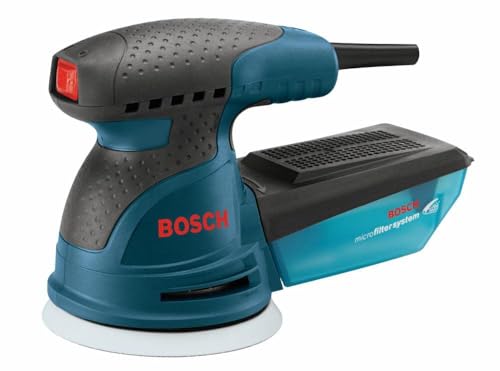
Bosch ROS10 Random Orbit Sander
What We Like
- Integral pad dampening braking system prevents swirl marks.
- Microcellular backing pad aids in smooth, fine finishes.
- Random orbit action blends material removal with finish quality.
Trade-offs
- Single-speed operation limits versatility for different materials.
- No dust collection system is specified in the features.
With a 12,000 OPM random orbit action and a microcellular backing pad, the Bosch ROS10 is designed to minimize swirl marks and blend finishes smoothly. This combination suits tasks where surface preparation is the final step before applying a stain or sealant. Its integral pad-dampening braking system also helps prevent marks when the tool is lifted.
The trade-off for that smooth finish is a lack of speed control, which you’ll find on models like the DEWALT DWE6423. If your projects vary between coarse shaping and fine sanding, that fixed speed is a limitation. But for dedicated finish work, the ROS10’s integrated braking and pad system delivers exactly what it promises straight from the box.
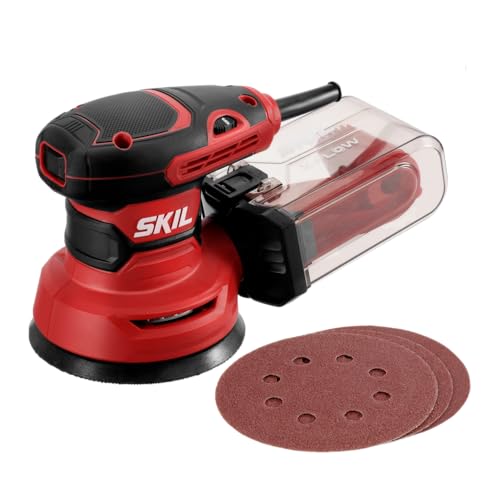
SKIL SR211601 Random Orbital Sander
What We Like
- Cyclonic dust box system for efficient collection
- Compact 7.9-inch body for working in tight spaces
- Variable speed control for different materials
- Ergonomic soft grip and low-vibration design
Trade-offs
- 2.8 amp motor is less powerful than some 3+ amp rivals
The standout feature here is the cyclonic X-flow dust collector, which does a remarkably thorough job of keeping fine particles contained in its transparent box. For anyone working indoors or sensitive to airborne dust, this system is a major step up from basic bags. Combine that with a compact, 3.4-pound body and a soft rubber grip, and you have a sander designed for comfort and clean operation over long sessions. It’s a natural fit for detailed finish work and smaller projects where dust management is a priority.
Its cyclonic dust box keeps the work area cleaner by trapping debris in a transparent container, so you see when to empty it. The 2.8 amp motor delivers 13,000 orbits per minute for smooth performance across various materials, though it provides less raw power than some 3-amp sanders for heavy stock removal. An ergonomic design with a soft rubber grip and counterweight balance helps reduce hand fatigue, letting you work longer in tight spaces where its compact size offers control.
Makita BO5041K Random Orbit Sander

What We Like
- Variable speed dial for precise control
- Low vibration operation per expert feedback
- Lightweight and ergonomic rubberized grip
- Smooth, fast sanding with 3.0 AMP motor
Trade-offs
- Slightly less power than some competing models
A variable speed range of 4,000 to 12,000 orbits per minute gives you the fine control needed to handle everything from aggressive material removal to delicate finish work. This Makita sander is built for the detail-oriented user who values comfort and precision over raw power. Expert research and owner feedback consistently highlight its exceptionally low vibration, which translates directly to less fatigue during long sanding sessions. That quality makes it a standout choice for furniture refinishing or any project where control and user comfort are paramount.
With lower vibration than some competitors, the Makita BO5041K trades a little power for significantly more operator comfort during long sessions. Research notes that most models, unlike a premium Festool, need longer sanding per grit or progression to 220 grit for a scratch-free finish. This common trade-off means the Makita prioritizes a steady, comfortable hand over maximum material removal speed.
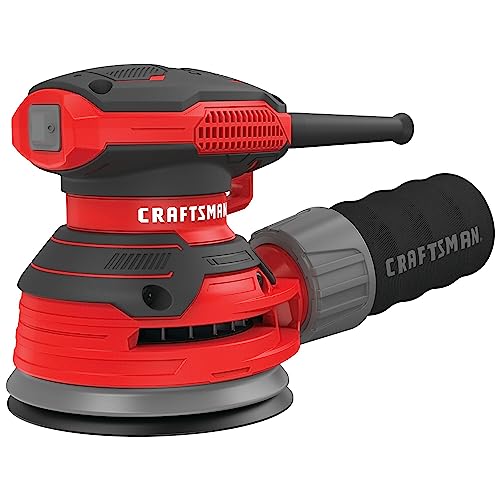
CRAFTSMAN CMEW231 Orbital Sander
What We Like
- Strong 3.0 Amp motor for steady power
- Includes dust bag and vacuum hookup
- Dust-sealed switch for added durability
- Respectable three-year warranty period
Trade-offs
- Lacks variable speed control
- Single-speed operation limits material versatility
A 3.0 Amp motor gives this sander the grunt to power through material removal without bogging down, making it a solid pick for extended sanding sessions on tougher woods. It suits the DIYer or pro who needs a dependable, corded workhorse for heavy stock removal and doesn’t mind a fixed pace. The dust collection system is practical, and the sealed switch adds longevity, backing up its straightforward, no-frills design.
This sander prioritizes straightforward power over a refined feel. The research mentions that the Ryobi RS290G felt a bit smoother in comparison, which could make a difference during extended sanding sessions. You’re getting core performance for aggressive material removal, not a feature-packed or ultra-polished tool. It’s a solid choice for basic, demanding sanding tasks where cost is a key factor, but consider other models if you need variable speed control for delicate finishing work.
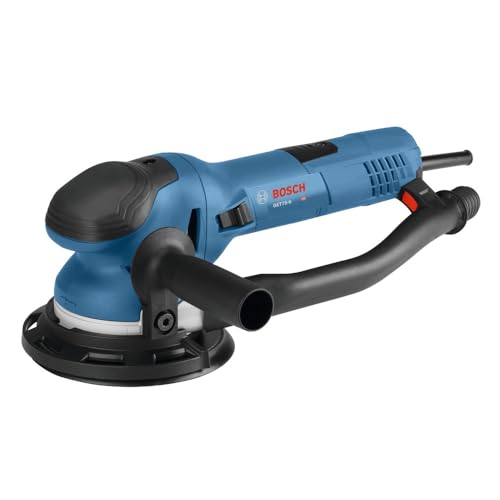
Bosch GET75-6N Orbital Sander
What We Like
- Turbo mode for aggressive, belt-sander-like stock removal
- Powerful 7.5-amp motor with wide variable speed range
- Multi-hole pad system accepts a wide variety of discs
- Includes vacuum hose adapter for dust collection
Trade-offs
- At 5.7 lb, it's notably heavier than 5-inch palm sanders
- Requires a separate shop vacuum for dust collection
A 7.5-amp motor and a dedicated turbo mode that triples stock removal make this sander a brute for leveling surfaces. That raw power, combined with a six-inch pad, is why it’s the tool you grab when you need to strip paint fast or flatten a tabletop, not for delicate finish work. It’s built for the workshop warrior who values muscle over finesse and needs to move material quickly without switching to a belt sander.
That capability comes with some trade-offs. At nearly six pounds, it’s substantially heftier than a standard five-inch sander, which can lead to fatigue during extended overhead work. While its passive dust collection hooks up to a shop vac, you’ll need to provide that yourself. For general finish sanding where weight and smooth operation are priorities, a model like the DEWALT DWE6423 is often a better fit, but for pure aggression, this Bosch is in a class of its own.
Product photos
DEWALT DWE6421K Orbital Sander Kit
What We Like
- Shorter height for working closer to the workpiece
- Separate counterweight design reduces vibration
- Rubber over-mold in critical areas improves grip
- Improved dust-sealed switch for longer life
Trade-offs
- At 4.0 lb, it's heavier than several key competitors
- Requires an adapter for 1-1/4 in. vacuum hoses
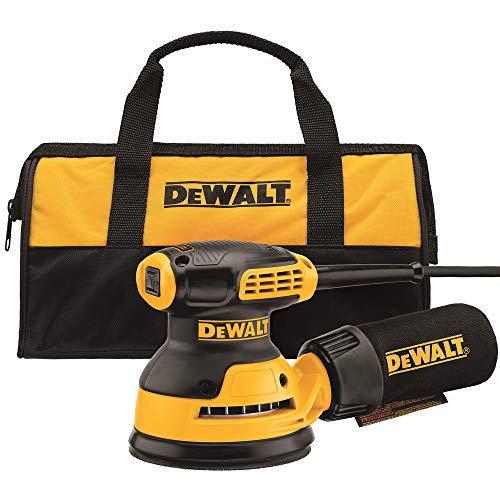
A 3.0 amp motor spinning at 12,000 OPM gives this sander solid, consistent power for tackling a variety of surfaces. Its most notable feature is the shorter, 6.2-inch height, which lets you get into tighter spots and apply pressure more directly. Combined with the rubber over-mold and a counterweight designed to dampen shakes, it’s built for comfort during extended sessions. This kit is a strong contender for anyone needing a dependable, corded workhorse that won’t fight you in corners.
This sander’s 3.0 amp motor spins at 12,000 orbits per minute, providing enough power for efficient stock removal. Its shorter height is designed to let you get closer to the work surface, which helps when sanding near edges or flush against a wall. For comfort during long sessions, it uses a separate counterweight design to reduce vibration and has rubber over-mold in critical grip areas.
Product photos
BLACK+DECKER BDERO100 Orbital Sander
What We Like
- Exceptionally lightweight and compact design.
- Comfort grip handle reduces user fatigue.
- Hook and loop system for fast paper changes.
- Dust-sealed switch protects internal components.
Trade-offs
- Single-speed 12000 OPM operation limits versatility.
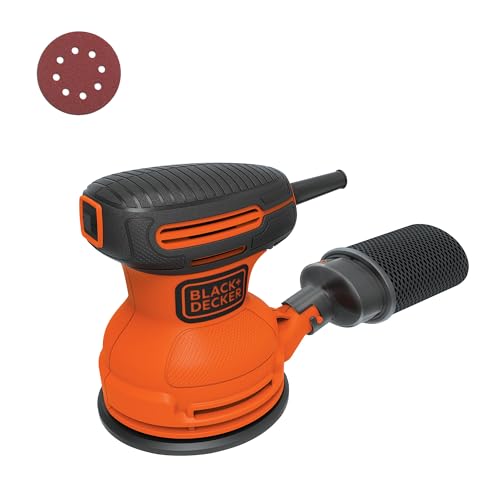
The BLACK+DECKER BDERO100 measures 7.0 inches long and weighs 3.2 pounds, a size that fits in tight spaces for more versatile sanding. Its comfort grip handle is designed for work with less fatigue. This orbital sander delivers 12000 OPM for a swirl-free finish and uses a hook and loop system for fast paper changes.
Its compact form is paired with a 2.0 Amp motor, which provides less aggressive material removal than workhorses like the 3 Amp CRAFTSMAN CMEW231. This is a dedicated single-speed tool, so you can’t dial down the pace for delicate surfaces. For sanding large tabletops or quickly stripping old paint, you’ll feel the limitation. But for finishing trim, furniture repairs, or any task where control and comfort are paramount, this sander’s design hits the mark.
Product photos
Makita BO4556K Sheet Finishing Sander

What We Like
- Lightweight 2.5-pound design reduces fatigue
- 14,000 OPM provides a fast, smooth finish
- Rubberized palm grip improves comfort and control
- Large clamping lever allows quick paper changes
Trade-offs
- Sheet-based design requires cutting paper, unlike disc sanders
- Larger 16.7-inch length requires more storage space
Weighing just 2.5 pounds, the Makita BO4556K is easy to handle for long sanding sessions without causing excessive fatigue. Its 14,000 orbits per minute speed helps achieve a smooth finish efficiently. A contoured, rubberized palm grip improves operator comfort, and the precision ball bearing construction is engineered to reduce vibration and noise during use. An efficient through-the-pad dust collection system connects to a Makita vacuum for a cleaner work area, so you can see your progress.
As a 1/4 sheet finishing sander, it requires you to cut your own sandpaper rather than using pre-cut discs. Compared to other models like the corded DEWALT DWE6423 Random Orbit Sander, which weighs 3.4 pounds, the Makita is lighter. This tool is designed for its specific role in finishing work, with features like a large clamping lever for quick paper installation that prioritize control and convenience for final surface preparation.
Product photos
DEKOPRO 5-Inch Random Orbital Sander

What We Like
- Six variable speeds for material and task control
- Includes a wide grit range of sanding discs
- Ergonomic grip with low-vibration counterweight design
- Hook-and-loop system for fast paper changes
Trade-offs
- Motor amperage is lower than several 3A+ competitors
- Dust box may fill faster than a cyclonic system
A 14,000 RPM top speed paired with six variable settings gives you the flexibility to tackle everything from aggressive stock removal to a fine finish on wood or metal. This sander is built for the DIYer who needs one tool to handle multiple stages of a project. The comprehensive kit of 16 sanding discs means you can start working right out of the box. The ergonomic grip and balanced design aim to reduce fatigue, making it easier to manage during longer sessions.
That versatility comes with a trade-off in raw power, as the 2.5A motor is less sturdy than the 3-amp units found in models like the CRAFTSMAN CMEW231. For heavy, continuous sanding on large surfaces, that difference may become noticeable. However, for most home workshop tasks where you’re frequently switching between grits and materials, the DEKOPRO’s adaptable speed control and complete sandpaper set make it a highly practical and ready-to-use package.
Product photos
How We Evaluated Corded Orbital Sanders
Our evaluation is based on researching manufacturer specifications, documented expert testing from round-ups, and consistent patterns in owner feedback. We focused on criteria that directly affect comfort and results: motor power for stock removal, vibration control for user fatigue, dust collection effectiveness for a clean shop, and features like variable speed for material control. A research-based approach like this can identify standout features and common trade-offs, but it can’t replicate the exact feel of a sander in your hand over a long project.
What To Look For In Corded Orbital Sanders
A good corded orbital sander balances power, comfort, and control to make sanding less of a chore. Key factors are the motor’s ability to remove material, how well the design manages vibration, and the system for containing dust.
Look for a 3-amp or higher motor for demanding work, a low-vibration design with a separate counterweight, and a dust port that works with your shop vacuum. Variable speed is crucial for delicate materials.
Motor Power and Control
Motor amperage, typically between 2.0 and 7.5 amps, indicates potential power. A higher-amp motor like the 7.5-amp unit in the Bosch GET75-6N is built for aggressive stock removal, while a 3.0-amp motor offers a good balance for most tasks. Variable speed control, measured in orbits per minute (OPM), lets you match the sander’s action to the material; slower speeds are better for delicate finishes or preventing heat buildup.
For general use, a sander with a dial offering a wide OPM range provides the most versatility, which is why we have a dedicated guide to orbital sanders.
Vibration and Ergonomics
Excessive vibration is the primary cause of hand fatigue and numbness during extended sanding sessions. Designs that incorporate a separate counterweight, like those on the DEWALT models, are proven to reduce this sensation significantly. Ergonomics also matter. Look for rubberized overmold in grip areas, a balanced weight distribution, and a form factor that fits your hand comfortably, whether you prefer a palm-grip or a taller body you can hold from the side.
A comfortable, low-vibration tool makes a huge difference, which is a key consideration in our broader look at orbital sanders.
Dust Collection
Effective dust collection keeps your workspace clean and your lungs safe. Systems range from simple cloth bags to integrated cyclonic boxes like the one on the SKIL SR211601, which are easier to empty. The most effective method is connecting the sander directly to a shop vacuum, but this requires a compatible dust port.
Many sanders use non-standard port sizes, necessitating an adapter, which can be a frustrating extra step. Check the port specification before you buy if you plan to use a vacuum. For a flawless final surface, pairing good dust collection with the right technique to avoid swirl marks is essential.
- Check if the dust port fits a standard 1-1/4″ or 1-1/2″ shop vacuum hose.
- Prefer a hard plastic collection box over a soft bag for easier cleaning.
- Ensure the dust-sealed switch is rated for fine particle exposure.
The best sander for you depends on your most common task: high power for removal, low vibration for comfort, or excellent dust collection for cleanliness.
Corded Orbital Sanders Compared
For a quick side-by-side view of key specs, the table below compares our top picks across several categories.
| Product | Motor | Orbit Speed | Weight | Dust Collection | Pad Size |
|---|---|---|---|---|---|
| DEWALT DWE6423 Random Orbit Sander | 3-Amp | 8,000 – 12,000 OPM | 3.4 Pounds | Fits DWV010/DWV012 collectors | 5-Inch |
| Bosch ROS10 Random Orbit Sander | 2.5 Amp | 12,000 OPM | 3.5 pounds | N/A | 5 inch |
| SKIL SR211601 Random Orbital Sander | 2.8 amp | 13,000 OPM | 3.4 pounds | Cyclonic dust box | N/A |
| Makita BO5041K Random Orbit Sander | 3.0 AMP | 4,000-12,000 OPM | 3.1 pounds | N/A | 5 inch |
| CRAFTSMAN CMEW231 Orbital Sander | 3.0 Amp | 12,000 OPM | 3.4 Pounds | On-board bag & vacuum port | 5 inch |
| Bosch GET75-6N Orbital Sander | 7.5 amp variable speed | 3300 to 7300 OPM | 5.7 pounds | Passive dust collection system | 6 inches |
| DEWALT DWE6421K Orbital Sander Kit | 3.0 amp | 12,000 OPM | 4.0 Pounds | Fits DEWALT DWV010/DWV012 | 5 inch |
| BLACK+DECKER BDERO100 Orbital Sander | 2.0 Amp | 12000 OPM | 3.2 Pounds | Integrated bag | 5 Inch |
| Makita BO4556K Sheet Finishing Sander | N/A | 14,000 OPM | 2.5 Pounds | Through-the-pad system with port | N/A |
| DEKOPRO 5-Inch Random Orbital Sander | 2.5A | 14,000 RPM | 3.6 Pounds | Detachable dust bag | 5" |
Frequently Asked Questions
What is the best corded orbital sander?
The DEWALT DWE6423 is our best overall pick for its powerful 3.0-amp motor, effective vibration-reducing counterweight, and durable, dust-sealed construction, making it a reliable choice for frequent, demanding woodworking and renovation projects.
Which brand is the best orbital sander?
No single brand dominates every category. DEWALT, Bosch, and Makita consistently produce high-performing models, but the best brand for you depends on your need. Bosch excels in smooth-finishing systems, while Makita is noted for precise variable speed control in its corded random orbital sanders.
Who makes the best corded detail sander?
While this guide focuses on standard 5-inch orbital sanders, for tight corners and detailed work, a dedicated detail sander with a triangular or rectangular pad is the better tool. Many of the same brands, like Bosch and Makita, offer strong options in that category.
Are Harbor Freight orbital sanders any good?
Owner feedback indicates that budget sanders from Harbor Freight can be adequate for very light, occasional DIY use. However, for any regular project work, investing in a tool from a major power tool brand typically provides better motor durability, vibration control, and part availability. These are key factors in our corded sander buying guide.
What’s the difference between an orbital and a random orbital sander?
A standard orbital sander moves in a consistent circular pattern, which can leave noticeable swirl marks on the workpiece. A random orbital sander adds a second, randomized motion to that orbit, which helps blend scratches for a much smoother, swirl-free finish. This makes the random orbital design the preferred choice for most woodworking.
The Bottom Line
The DEWALT DWE6423 is the best overall corded orbital sander for woodworkers and renovators who need a durable, powerful tool that manages vibration well for frequent use. If your budget is tight but you need raw power for removal, consider the CRAFTSMAN CMEW231; for those prioritizing a flawless final surface above all else, the Bosch ROS10 is the clear choice. Ultimately, matching the sander’s core strength, whether it’s power, finish quality, or dust control, to your most common task is the single most important step to a confident purchase.
