
10 Best Orbital Sanders in 2026
This post contains affiliate links. As an Amazon Associate, we earn from qualifying purchases.
Our research points to the DEWALT DWE6423 Random Orbit Sander as the best overall for its powerful, variable-speed motor and durable design that handles long sessions. The Bosch ROS20VSC stands out for fine dust collection, and the DEWALT DCW210B is our top low-profile cordless pick. Choosing the right orbital sander saves hours of tedious work and leaves a smoother finish. This guide compares ten researched models based on specs, expert insights, and patterns in owner feedback to match you with the right tool for your projects.
Top 10 Orbital Sanders in the Market
Certain content that appears on this site comes from Amazon. This content is provided "as is" and is subject to change or removal at any time.
The Best Orbital Sanders, Reviewed
DEWALT DWE6423 Random Orbit Sander

What We Like
- Variable speed up to 12,000 OPM for control
- Separate counterweight design reduces vibration
- Excellent dust-sealed switch for longer life
- Rubber overmold improves grip in critical areas
Trade-offs
- Requires universal connector for most shop vacs
- Corded power limits mobility
A 3-amp motor delivering up to 12,000 orbits per minute gives you the power to move through stock quickly while the variable speed dial lets you finesse a finish. This sander is built for the workshop, where its shorter height gets you closer to the work and the dust collection system, when paired with DeWalt’s own vacs, keeps things remarkably clean. The separate counterweight and rubber overmold mean you can sand all afternoon without your hands going numb. It’s the reliable, do-everything corded sander that has earned its place on countless benches.
The dust port is designed for DeWalt’s own dust collectors, requiring a universal quick connector to attach to other vacuum systems with 1-1/4 inch hoses. Compared to the cordless DeWalt DCW210B, this model is a corded sander, eliminating concerns about battery life during long tasks. One research mention suggests it is a top choice in the budget category for most people.
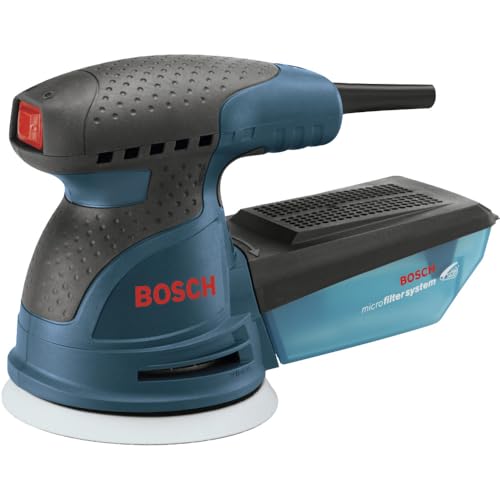
Bosch ROS20VSC Random Orbit Sander
What We Like
- Outstanding dust collection with microfilter system
- Hard plastic dust canister is easy to clean
- Includes adapter for shop vac connection
- Quiet operation at 84 dB per research
Trade-offs
- Corded design limits mobility versus cordless models
- Dust canister must be monitored and emptied
A microfilter system that traps particles as small as half a micron means this sander genuinely keeps the air and your workspace clean. It’s the standout choice for anyone sensitive to dust or working indoors where cleanup is a priority. The hard plastic dust canister is a practical upgrade over flimsy bags, making it simple to see the dust level and detach for disposal. At 84 decibels, it’s also notably quieter than the competition, which reduces fatigue during long sessions.
The trade-off for that superb dust control and quiet operation is a corded, slightly heavier build. You’re tethered to an outlet, and at 3.5 pounds, it’s not the lightest in hand for overhead work. If ultimate portability is your goal, a cordless model like the DEWALT DCW210B might be a better fit. But for bench work or detailed finishing where dust management is critical, the Bosch’s collection system is hard to beat.
DEWALT DCW210B Cordless Orbital Sander

What We Like
- Brushless motor for longer runtime and efficiency.
- Variable speed control matches task requirements.
- Low-profile body allows sanding close to surfaces.
- Texturized rubber grip for comfortable handling.
Trade-offs
- Tool only: requires separate 20V MAX battery and charger.
- Dust bag is one-handed but not a sealed extraction system.
A low-profile height of just over six inches lets you sand right up to edges and into corners without the motor housing getting in the way. This is a genuine advantage for detailed work like refinishing furniture or cabinets. That, combined with a brushless motor and a featherlight 2.5-pound frame, makes this cordless sander a standout for extended overhead sanding and precision tasks where maneuverability trumps raw power. It’s a fit for the DeWalt 20V ecosystem user who values a compact, ergonomic tool for finish work.
This bare-tool sander requires a separate purchase of a compatible 20V MAX battery and charger, which is a key cost consideration if you’re not already invested in the DEWALT cordless system. For extended sanding sessions on large surfaces, a corded model like the DEWALT DWE6423 provides continuous power without battery swaps. The DCW210B’s design is better suited for precise, controlled work where its portability is an advantage.
Makita BO5030K Random Orbit Sander

What We Like
- Rubberized grip for improved comfort and control
- Pad control system for smooth start-ups
- Includes a durable hard plastic case
- Relatively quiet operation at 86 dB
Trade-offs
- No variable speed control for delicate work
- Dust bag is difficult to clean effectively
- Requires an adapter to connect to a shop vacuum
A 1/8″ random orbit paired with a 12,000 OPM motor delivers the fast, super-smooth finish Makita is known for. At just under three pounds, it’s a lightweight workhorse that feels balanced in your hand, and the rubberized grip makes long sessions less fatiguing. This sander is a perfect fit for the weekend warrior or pro who values smooth, consistent performance above all and appreciates a tool that comes ready to store in its own hard case. It’s a straightforward, reliable machine built for knocking out big sanding jobs without fuss.
A key limitation is the lack of variable speed control, which can make delicate work on veneers or finishes tougher. Its dust collection uses a soft bag that reviewers report can be hard to clean, and the small dust port requires an adapter to connect to a shop vacuum. For users who need speed adjustment, Makita offers the BO5041 model with variable speed.
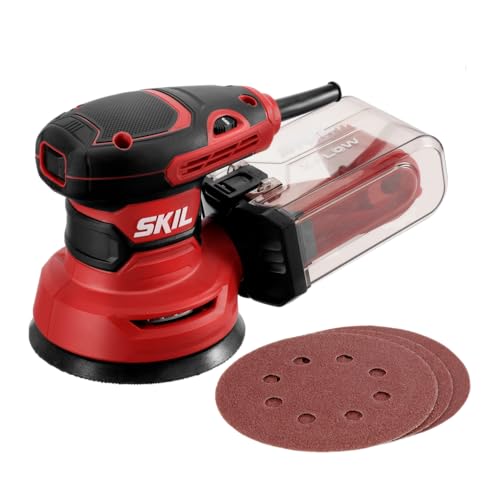
SKIL SR211601 Random Orbit Sander
What We Like
- Cyclonic dust box is easy to empty
- Compact size for sanding in tight spaces
- Ergonomic grip and low vibration design
- Dust-sealed on/off switch for reliability
Trade-offs
- Corded power limits mobility on large projects
- Dust container requires manual emptying, no direct hose hookup
The standout feature here is the cyclonic dust box. It uses airflow to trap dust in a clear, easy-to-empty container, which keeps your workspace noticeably cleaner than a standard bag. That 2.8 amp motor spinning at 13,000 orbits per minute provides plenty of power for smoothing tasks, while the variable speed dial lets you dial it back for delicate finishes. Combined with a soft grip and a design that minimizes vibration, this model suits the DIYer who wants to tackle a weekend project without spending half of it cleaning up.
Its corded design requires an outlet nearby, which trades some portability for consistent power. The tool weighs 3.4 pounds, more than the 1-pound cordless Milwaukee M12 Fuel. However, the integrated X-flow dust collector uses cyclone force to trap debris in a transparent, easy-to-empty container, which helps keep dust off surfaces during sanding.
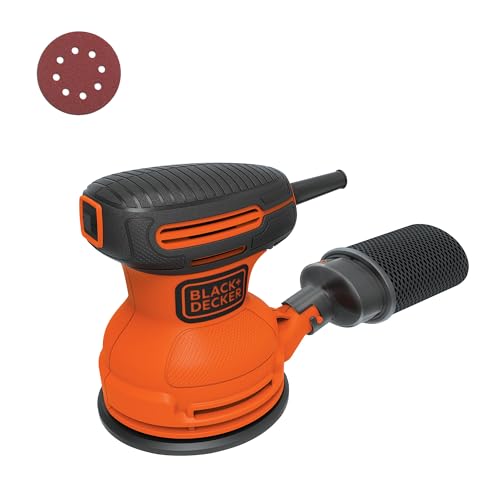
BLACK+DECKER BDERO100 Orbital Sander
What We Like
- Compact 7.0-inch length fits tight spaces
- Lightweight build reduces user fatigue
- Dust-sealed switch protects internal components
- Comfort grip handle for better control
Trade-offs
- Single, fixed speed offers no fine control
- Dust collection bag only; no shop-vac hose port
A 2.0 Amp motor provides enough power for common sanding tasks, and its speed of 12,000 orbits per minute helps you finish the work quickly. This corded sander is straightforward, suited for someone who needs a reliable tool for occasional projects without variable speeds. Weighing 3.2 pounds with a compact size, it is easy to maneuver in tight spaces, and the included dust collection bag helps keep your workspace cleaner.
The trade-off for simplicity is a lack of control, as it operates at a single, fixed speed. Compared to a variable-speed model like the DEWALT DWE6423, you give up fine-tuning capability for a plug-and-play experience. It remains a focused tool that handles fundamental sanding tasks.
Product photos
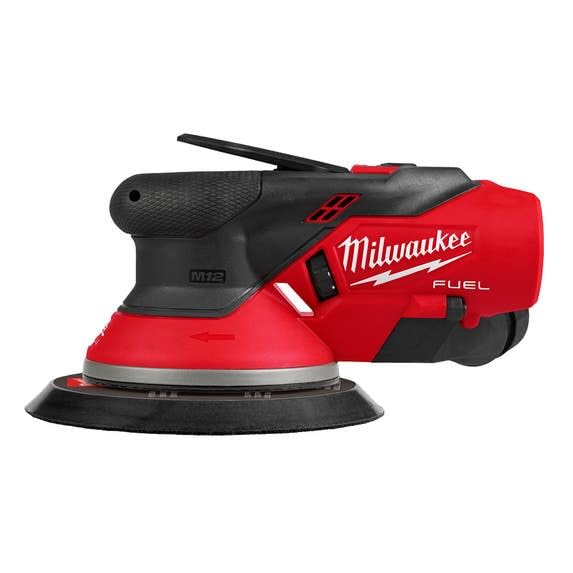
Milwaukee M12 Fuel Orbital Sander
What We Like
- Optimized vibration reduction system
- Compact 1-pound design for easy handling
- Brushless motor with REDLINK PLUS intelligence
- Solid runtime for a cordless tool
Trade-offs
- Tool only: battery and charger sold separately
- Smaller 6" orbit may be slower for large surfaces
Weighing just one pound, this sander is a genuine pleasure to use overhead or for extended sessions, drastically reducing arm fatigue. Its compact form factor and excellent vibration control make it a standout for detail work in cabinetry and automotive refinishing, exactly where control matters most. The brushless motor paired with a HIGH OUTPUT battery delivers enough stamina to handle a significant task like several doors on a single charge, proving cordless convenience is viable for serious sanding.
The trade-off is that you’re committing to the M12 battery platform, and runtime, while respectable, can’t match the endless power of a corded sander for marathon projects. For all-day sanding on a big furniture build, a corded model like the Bosch ROS20VSC is the more pragmatic choice.
Makita BO5041 Variable Speed Sander

What We Like
- Variable speed dial for matching speed to application.
- Ergonomic rubberized grip for improved comfort and control.
- Lock-on button for continuous use during long tasks.
- Adjustable front handle for sanding in corners.
Trade-offs
- Dust collection uses a soft bag that can be hard to clean.
- Dust collection port is small, requiring an adapter for a vacuum.
The Makita BO5041’s variable speed control dial adjusts from 4,000 to 12,000 orbits per minute. This allows the sanding speed to be matched to the application. A 3.0 AMP motor provides smooth and fast sanding. Operator comfort comes from an ergonomic rubberized palm grip, and an adjustable front handle aids work in corners and confined spaces.
Dust collection uses a soft bag, which reviewers report can be hard to clean. The dust collection port is quite small, so an adapter is needed to connect to a vacuum. In expert testing, most models besides the top performer needed longer sanding with each grit or progression to a finer grit to achieve a scratch-free surface.
Product photos
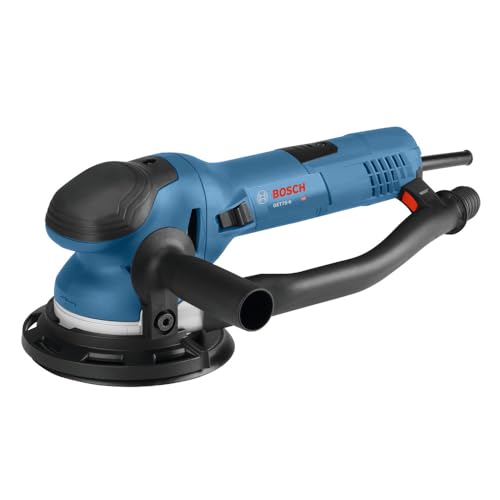
Bosch GET75-6N Orbital Sander
What We Like
- Turbo mode delivers aggressive stock removal
- Powerful 7.5 amp motor for demanding jobs
- Multi-hole pad accepts wide variety of discs
- Includes two vacuum hose adapters for shop vacs
Trade-offs
- Weighs 5.7 pounds, heavier than many 5-inch sanders
- Dust collection requires a separate vacuum purchase
- Larger 15-inch length demands more workspace
A direct-drive turbo mode that triples stock removal is the defining feature of the Bosch GET75-6N. That makes this 6-inch sander a legitimate alternative to a belt sander for leveling floors or stripping thick finishes, all while keeping a random orbit’s swirl-free finish in standard mode. It’s built for the user who needs one tool to handle both heavy material removal and final smoothing, backed by a 7.5-amp motor that won’t bog down. The variable speed dial offers fine control across that wide range of tasks.
The Bosch GET75-6N delivers aggressive stock removal with a turbo mode that operates five times faster than its standard sanding, making it a strong alternative to a belt sander for heavy material work. You pay for that power with a tool weighing 5.7 pounds, which demands more arm strength over long sessions compared to typical palm sanders. Its dust collection is passive, requiring connection to a separate vacuum cleaner using the included adapter or compatible Bosch hoses to keep the air clear.
Product photos
VEVOR Brushless Orbital Sander

What We Like
- Includes both 5-inch and 6-inch sanding pads
- Comes with 20 sandpapers (80-320 grit)
- Six-speed control from 4,000 to 10,000 RPM
- Integrated dust connector and hose
Trade-offs
- At 4.4 lb, it's heavier than several corded competitors
A 350W brushless motor paired with a complete kit of two pad sizes and a stack of sandpaper delivers a lot of utility for the dollar. This setup is ideal for the budget-conscious user who needs to tackle a variety of sanding tasks, from furniture refinishing to auto body work, without buying accessories separately. The six variable speeds and 5mm orbit give you the control to move from aggressive stock removal to fine finishing, making it a versatile single-tool solution for a crowded workshop.
You do feel that utility in your hand, however, as its 4.4-pound weight is noticeable during extended overhead work compared to lighter models like the Bosch ROS20VSC. The trade-off is a more substantial feeling tool with a motor designed for longevity. For someone building a tool collection from scratch or needing to cover both 5-inch and 6-inch work, this VEVOR package minimizes extra trips to the store and maximizes time at the workbench.
Product photos
How We Evaluated Orbital Sanders
Our selection is based on manufacturer specifications, professional woodworking round-ups, and consistent patterns in owner reviews. We focused on criteria that directly impact sanding results and user comfort: motor power and speed control for task versatility, the effectiveness of dust collection systems, and ergonomic design factors like vibration and grip. This research-led approach identifies reliable tools, but cannot replicate the long-term durability insights of years of daily professional use.
What To Look For In Orbital Sanders
An orbital sander should remove material efficiently while minimizing fatigue and dust. Your choice hinges on power delivery, dust management, and how the tool feels in your hand.
Look for a motor that matches your tasks, a dust collection system you’ll actually use, and an ergonomic design that reduces vibration for comfortable control.
Power & Speed Control
Corded models deliver consistent, unlimited power, ideal for prolonged sanding sessions on furniture or cabinetry. Variable speed control, measured in orbits per minute (OPM), is crucial for adapting to different materials; lower speeds prevent burning delicate woods, while high speeds accelerate stock removal. Our research on best corded orbital sanders shows that while professionals often run at full speed, DIYers appreciate the finesse variable settings provide for fine finishing.
Dust Collection
Effective dust collection protects your health and keeps your workspace clean, allowing you to see your progress. Systems range from simple cloth bags to hard plastic canisters and direct shop-vacuum hookups. A well-sealed system, like those found on professional orbital sanders, also extends the tool’s life by preventing abrasive particles from entering the motor. The best dust collection for your shop depends on whether you prioritize a self-contained unit or the superior extraction of a connected vacuum.
Ergonomics & Vibration
A sander that transmits less vibration to your hands drastically reduces fatigue, making longer projects more manageable. Key factors include the tool’s weight, the presence of a counterweight system, and the quality of the grip. For overhead work or detailed tasks, a compact, lightweight cordless orbital sander can be particularly beneficial. Ultimately, a comfortable tool you enjoy using leads to better, more consistent results.
.### Practical Checks Before You Buy
- Test the grip: Does it feel secure in your dominant hand, even when your palm is sweaty?
- Check the paper change mechanism: Is the hook-and-loop pad easy to access and does it hold paper securely?
- Inspect the dust port: If you plan to use a vacuum, does it include the right adapter or is one readily available?
- Consider the cord or battery: For corded tools, is the power cord long enough for your workspace? For cordless, do you already own compatible batteries?
- Listen for noise: While subjective, some models are consistently noted in reviews as being noticeably quieter than others.
A smoother, quieter sander with good dust collection will make you more likely to complete sanding properly, leading to a better final finish.
Orbital Sanders Compared
The following table provides a quick overview of key specifications and features across all ten models to help you compare at a glance.
| Product | Power Source | Motor / Power | Speed (OPM) | Weight | Dust Collection |
|---|---|---|---|---|---|
| DEWALT DWE6423 Random Orbit Sander | Corded Electric | 3-Amp | 8,000 – 12,000 OPM | 3.4 Pounds | Fits DWV010/DWV012 collectors |
| Bosch ROS20VSC Random Orbit Sander | Corded Electric | 2.5 AMP | 7,500-12,000 OPM | 3.5 Pounds | Dust canister & vacuum adapter |
| DEWALT DCW210B Cordless Orbital Sander | Cordless (20V MAX) | Brushless motor | 8,000 – 12,000 OPM | 2.5 Pounds | Dust-sealed switch |
| Makita BO5030K Random Orbit Sander | Corded Electric | 3.0 AMP | 12,000 OPM | 2.9 pounds | Through-the-pad dust collection |
| SKIL SR211601 Random Orbit Sander | Corded Electric | 2.8 amp | 13,000 OPM | 3.4 pounds | Cyclonic container |
| BLACK+DECKER BDERO100 Orbital Sander | Corded Electric | 2.0 Amp | 12000 OPM | 3.2 Pounds | Built-in dust bag |
| Milwaukee M12 Fuel Orbital Sander | Cordless (M12) | POWERSTATE brushless | N/A | 1.0 Pounds | N/A |
| Makita BO5041 Variable Speed Sander | Corded Electric | 3.0 AMP | 4,000-12,000 OPM | 3.1 Pounds | N/A |
| Bosch GET75-6N Orbital Sander | Corded Electric | 7.5 amp | 3300 to 7300 OPM | 5.7 pounds | Passive system, requires vacuum |
| VEVOR Brushless Orbital Sander | Corded Electric | 350W brushless | 4000 to 10,000 RPM | 4.4 pounds | Dust connector & hose |
Frequently Asked Questions
Which brand orbital sander is best?
No single brand is best for everyone, as it depends on your needs and existing tools. Brands like DEWALT and Bosch are frequently highlighted in research for their durable, high-performance corded models, while Milwaukee and DEWALT are strong contenders in the cordless orbital sanders space. The best brand for you offers the right balance of power, features, and ergonomics for your specific projects.
Which corded orbital sander is best?
The best corded orbital sander offers consistent power, effective dust collection, and comfortable handling. Our research identifies the DEWALT DWE6423 as a top choice for its variable speed control and durable construction, making it excellent for workshop use. For those prioritizing an ultra-clean shop, the Bosch ROS20VSC is a standout for its superior dust collection system.
What are the best air orbital sanders?
Air-powered (pneumatic) orbital sanders are a separate category not covered in this guide, as they require a substantial air compressor. They are typically used in professional auto-body shops and high-volume production environments due to their light weight and continuous run time, but are less common in home workshops.
Which orbital sander is the best value for money?
Value depends on what you need. The BLACK+DECKER BDERO100 is a capable, budget-friendly option for basic tasks. For more versatility at a mid-range price, the VEVOR Brushless Orbital Sander kit includes multiple pads and sandpaper. The best value is the tool that reliably performs the jobs you do most without paying for unnecessary professional-grade features.
What’s the difference between orbital and random orbital sanders?
A standard orbital sander moves in a consistent circular pattern, which can leave visible swirl marks on the workpiece. A random orbital sander adds a second, randomized movement to that rotation, which helps avoid swirl marks and creates a smoother, more uniform finish suitable for fine woodworking. For a deeper look at the mechanics, see our guide on orbital vs. Random orbital sanders.
The Bottom Line
For the workshop DIYer or pro tackling furniture and cabinetry, the DEWALT DWE6423 Random Orbit Sander is our best overall pick for its powerful variable speed and vibration-reducing design. If your budget is tight, the BLACK+DECKER BDERO100 handles basic tasks capably, while woodworkers obsessed with a dust-free shop should look to the award-winning Bosch ROS20VSC.
Ultimately, matching the sander’s power source and dust management to your workspace is more important than any single feature. The right tool makes the necessary chore of sanding far less tedious and yields a finish you can be proud of.
