
10 Best Metal Cutting Bandsaw Blades in 2026
This post contains affiliate links. As an Amazon Associate, we earn from qualifying purchases.
Our best overall metal cutting bandsaw blade is the Lenox Classic Tuff Tooth, a durable bimetal blade that handles a wide range of metals and reduces tooth strippage. For thick stainless steel, the Milwaukee Extreme Thick Metal Blade is our Best For Thick Metals pick, while the Bosch Soft-Metal Blade is our top choice for aluminum and copper. Choosing the wrong blade leads to poor cuts, broken teeth, and wasted money. We researched manufacturer specs and owner feedback to find blades that deliver clean cuts and long life for stationary and portable saws.
Top 10 Metal Cutting Bandsaw Blades in the Market
Certain content that appears on this site comes from Amazon. This content is provided "as is" and is subject to change or removal at any time.
The Best Metal Cutting Bandsaw Blades, Reviewed
Lenox Classic Tuff Tooth Band Saw Blade
What We Like
- Bimetal construction cuts a wide range of metals
- Tuff Tooth design reduces tooth strippage
- M-42 steel edge resists heat and wear
- Wavy set helps prevent stripping on thin work
Trade-offs
- 93-inch length only fits specific stationary saws
- 0.035-inch thickness may not suit all saw guides
- 18 TPI is a compromise, not specialized for ultra-thin or thick stock
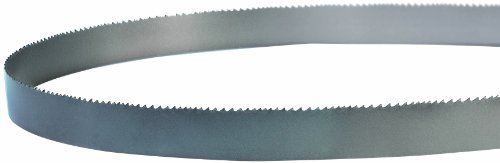
The Lenox Classic Tuff Tooth band saw blade uses a bimetal construction with an M-42 high-speed steel tooth edge. This allows it to cut carbon steel, alloy steel, tool steel, structural steel, stainless steel, aluminum, and other nonferrous metals, resisting the heat and wear from these varied materials. Its Tuff Tooth design reduces tooth strippage, and the wavy tooth set helps prevent stripping when cutting thin workpieces, making it good for cuts in cylindrical solids, rectangular tubes, and structural shapes. Research mentions position it as an ultimate multi-purpose blade for production cutting.
The trade-off is its specificity. At 93 inches long and 3/4 inch wide, it’s made for a full-size stationary bandsaw, not a portable unit. The 18 TPI wavy set is an excellent general-purpose choice, but if your work is exclusively cutting very thin sheet metal, a blade like the Milwaukee Extreme Thin Metal might be a better fit. For the vast middle ground of metal cutting, however, this Lenox blade’s durability and versatility are hard to beat.
Product photos
Bosch Metal Cutting Stationary Band Saw Blade
What We Like
- Extremely light at just 0.3 pounds
- Premium steel resists heat buildup
- Optimized tooth geometry for performance
- 64-1/2 inch length fits most common saws
Trade-offs
- 24 TPI is too fine for thick stock or fast cuts
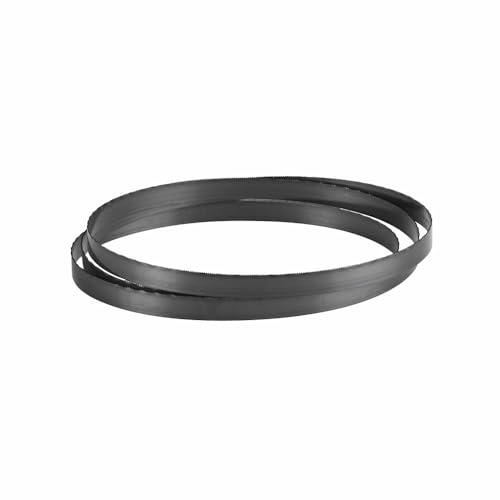
This Bosch blade is built for metal applications, making it a direct choice for cutting ferrous and non-ferrous materials. Its 24 teeth per inch geometry is optimized for performance, which typically delivers smoother cuts in thinner sections like tubing or sheet metal. Premium materials resist heat buildup, a design feature intended to contribute to longer blade life during extended use.
The trade-off for that lightness is a lack of heft. There’s simply less mass to absorb the chatter when you push into tougher or thicker materials. For those heavier jobs, you’d want a blade with more substance, like the Starrett Intenss PRO which comes in at a full pound. But if your workshop sees more precision metalwork than brute force, the Bosch’s optimized tooth geometry and manageable weight deliver exactly the finesse you need.
Milwaukee Extreme Thick Metal Band Saw Blade
What We Like
- 3X blade life in stainless steel.
- 2X faster cutting in thin metals.
- 25% more cuts per battery charge.
- Optimized tooth design for clean cuts.
Trade-offs
- 30-9/16 inch length fits only compact/portable saws.
- 12/14 TPI is coarse for precision work on thin-wall tubing.
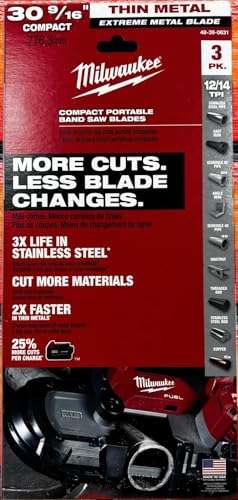
The headline claim is a 3X blade life in stainless steel and other extreme metals, so you can complete more cuts between blade changes during heavy-duty work. This is paired with a 2X faster cutting speed in thin metals, which adds versatility for shops handling a variety of metal thicknesses. For users prioritizing maximum uptime in demanding materials, these performance increases mean less downtime and more productivity.
Its design focuses on specific tools and tasks. The 30-9/16 inch length locks it into compatible compact or portable band saws, not larger stationary models. For intricate cuts on thinner materials, the 12/14 TPI tooth pitch will lack the fine finish of a blade with a finer 24 TPI. This Milwaukee blade is about brute-force durability and speed in tough metals, not delicate scrollwork.
Milwaukee Extreme Thin Metal Band Saw Blade
What We Like
- Triple the blade life in stainless steel.
- Optimized tooth design for clean cuts.
- Fastest cutting speed for thin, hard metals.
Trade-offs
- Packaged as a single blade, not a multi-pack.
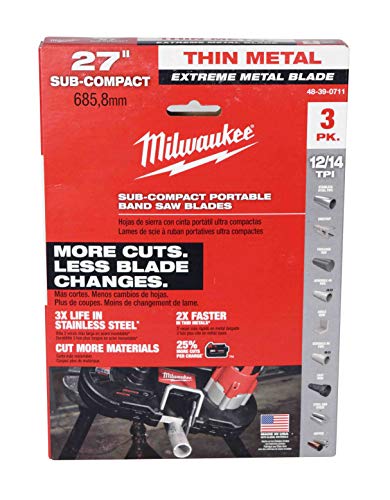
The claim of triple the life in stainless steel and other extreme metals is the standout feature here. For a fabricator or mechanic regularly slicing through sheet metal, stainless tubing, or other thin, hard alloys, that translates directly to fewer blade changes and less downtime. It’s a clear fit for professionals who need durability and speed when their work demands precision on thinner stock.
You need to check your saw’s compatibility first. The product listing omits key specifications like the blade’s exact length, width, and teeth per inch, which are critical for confirming a fit with your specific portable bandsaw model. While a 5-pack offers a higher blade count for high-volume users, the Milwaukee Extreme is built for endurance in the most demanding materials. If your shop runs a compatible portable saw and you are constantly battling thin, abrasive metals, this blade’s extended life likely justifies its place as your primary option.
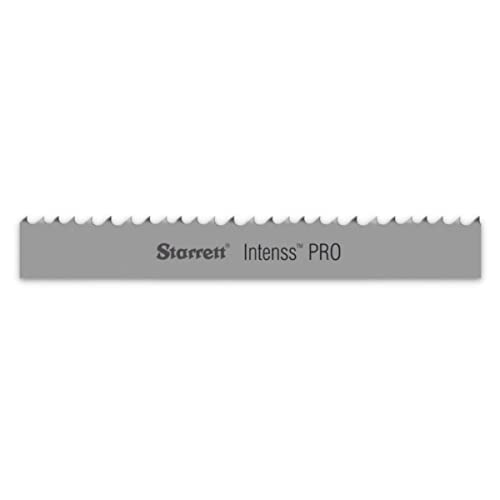
Starrett Intenss PRO Bi-Metal Band Saw Blade
What We Like
- Positive rake angle for easy penetration
- Variable pitch geometry reduces noise
- Engineered for steels, stainless, and alloys
- Wide range of widths and pitches available
Trade-offs
- At 7'9" length, fits only specific stationary saws
- 0.035" thickness requires proper machine tension
Starrett designed the Intenss PRO for intensive production cutting, a bi-metal blade suited for steels up to HRc 45, tool and stainless steels, and nickel-based alloys. Its positive rake angle and variable pitch tooth geometry are engineered for easy penetration, excellent chip clearance, and faster, straighter cuts. This combination aims for a quality surface finish and low noise levels during operation.
With a length of 7′ 9″ and a 3/4″ width, this blade fits a specific range of larger stationary band saws. The product line offers a wide range of widths and pitches to suit various cutting needs in a shop. For intensive production work on the stated materials, the blade’s engineered efficiency is the primary focus.
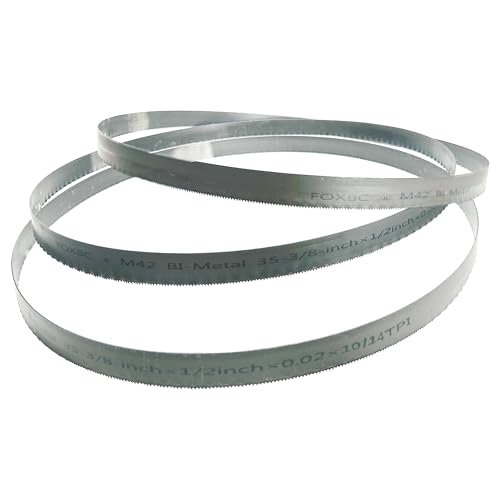
FOXBC Bi-Metal Portable Band Saw Blade 3-Pack
What We Like
- Bi-Metal M42 steel offers heat resistance.
- Three-blade pack provides immediate spares.
- Precision-sharpened teeth for clean cuts.
Trade-offs
- Specific 35-3/8-inch length fits only compatible portable saws.
A three-pack of bi-metal blades with heat-resistant M42 steel construction means you can work through a job and have a fresh blade ready without a trip to the store. The 10/14 TPI blade has a hook teeth profile. This pack is a practical choice for users of a compact portable bandsaw who value having backups on hand to minimize downtime.
This blade is designed for specific tasks. Its thin 0.020-inch gauge and specific tooth pattern are geared for portable, on-site cutting of common materials like conduit and strut. For heavy, continuous cutting of thick, hard metals on a stationary saw, a thicker, variable-pitch bimetal blade would be a more durable long-term investment. This FOXBC pack is about convenience and cost-effective readiness for the most common portable saw tasks.
Product photos
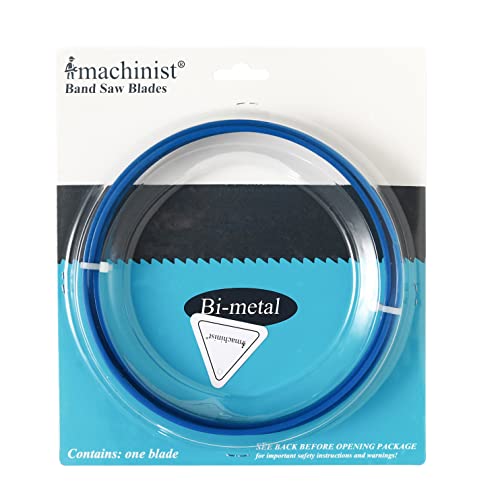
Imachinist Bi-Metal Bandsaw Blade for Stainless Steel
What We Like
- M42 bi-metal construction for hard metals
- 14 TPI profile optimized for thin profiles
- Specific design for stainless steel and ferrous metals
- Fits all 64-1/2" x 1/2" bandsaws
Trade-offs
- Fixed 14 TPI limits versatility on varied material thicknesses
- Not recommended for cutting non-ferrous metals like aluminum
An M42 bi-metal blade is built for the specific challenge of stainless steel, offering the heat resistance and durability needed to tackle hard ferrous metals without immediate dulling. This 14-tooth-per-inch blade is the right pick for a shop that regularly cuts thin-walled tubing, pipes, or sheet stock, where that tooth pitch provides the right balance of cut speed and finish. It’s a specialist tool for a specialist job.
A fixed 14-tooth-per-inch pattern makes this blade a specialist for specific cuts. It excels on thin materials like pipe and tube profiles, where its tooth spacing helps prevent snagging. That same profile, however, lacks the versatility for thicker solid bar stock where a coarser blade would remove material faster.
Product photos
Bosch Soft-Metal Stationary Band Saw Blade

What We Like
- Optimized tooth geometry for soft metals
- Long 93.5-inch length fits many stationary saws
- Premium materials resist heat buildup
- Laser-cut for precise manufacturing
Trade-offs
- 0.4-inch width limits cut radius on tight curves
- 18 TPI is too fine for efficient thick ferrous metal cutting
- Specialized solely for soft metals like aluminum and copper
The 93.5-inch length is the key here, designed to fit a wide range of standard stationary band saws. That makes it a straightforward upgrade for a shop saw dedicated to non-ferrous work. Combined with an 18 TPI tooth geometry engineered specifically for aluminum, copper, and bronze, this blade is built to deliver clean, controlled cuts in those materials while managing heat for longer life. It’s a purpose-built tool for the craftsman who needs a reliable, long-lasting blade for consistent soft-metal fabrication.
Its specialization is also its limitation. The 18 TPI tooth count will struggle and load up quickly on thicker steel stock, so keep it on its intended materials. For a more versatile bimetal blade that can handle a broader mix of metals including steel, you would look at a different model. But for a stationary saw that sees mostly aluminum extrusion and copper pipe, this Bosch blade’s laser-cut precision and application-specific design mean it just works without fuss.
Product photos
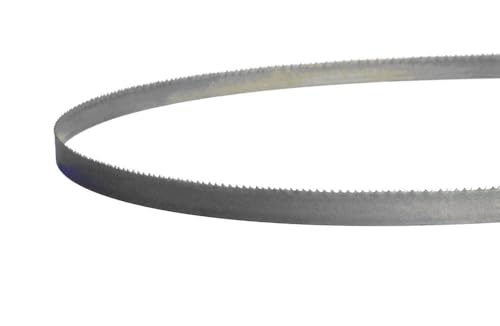
Lenox Wolf-Band Portable Band Saw Blade 5-Pack
What We Like
- Bimetal construction resists breaking for longer life
- Tuff Tooth design reinforces teeth against shattering
- Five-pack offers substantial replacement inventory
Trade-offs
- 10/14 TPI is a general-purpose range, not specialized for thin-wall tubing
- Five-pack is bulkier to store than a single blade
A five-pack of bimetal blades with high-speed steel teeth means you’re buying serious longevity, not just disposables. This is the set for the metalworker who burns through blades on jobsites and needs reliable performance without constantly reordering. The 10/14 TPI tooth pattern handles a broad mix of structural steel, pipe, and bar stock, making it a workhorse blade that justifies buying in quantity.
This pack is built for general ferrous metal work. For cutting exclusively stainless steel, a blade like the Imachinist Bi-Metal Bandsaw Blade for Stainless Steel would be a more precise choice. However, for the vast majority of portable band saw tasks on ferrous metals, this Lenox pack delivers consistent performance blade after blade, turning a consumable into a durable asset in your kit.
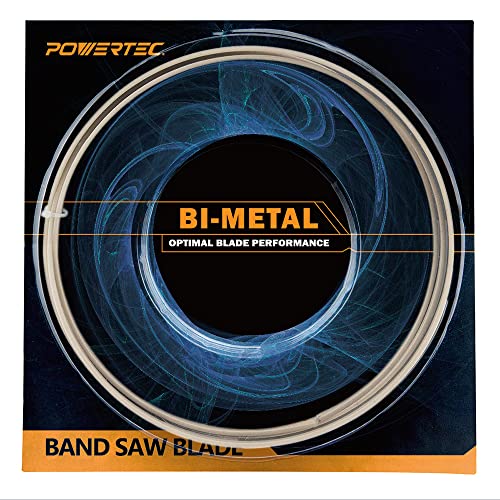
POWERTEC Non-Ferrous Metal Bandsaw Blade
What We Like
- Specifically designed for soft metals
- Triple-tempered M42 steel for durability
- Compatible with many 10-inch band saws
Trade-offs
- 0.025-inch thickness limits rigidity for heavy cuts
- 72-1/2-inch length fits only specific saws
A 14 TPI raker set blade is built for clearing the long, stringy chips you get when cutting aluminum. That tooth pattern, combined with the triple-tempered M42 cobalt steel, means this blade is engineered from the ground up for soft metals like copper and zinc, not just a general-purpose blade that can handle them. It’s the right pick when your shop work regularly involves non-ferrous stock, as the design prioritizes a clean cut in those materials over trying to be a jack-of-all-trades.
The 0.025-inch thickness keeps the blade flexible, which is fine for contour cuts in sheet aluminum but means it can deflect on heavier, straight-line cuts in dense material. Compared to a thicker, more rigid blade like the Starrett Intenss PRO, this Powertec blade excels in its specific lane. For a steady diet of aluminum extrusion and soft alloys, its specialized design is a clear advantage. Just make sure your saw takes a 72-1/2-inch blade.
Product photos
How We Evaluated Metal Cutting Bandsaw Blades
Our research focused on manufacturer specifications, documented construction details, and patterns in owner feedback across metalworking forums and retailer reviews. We prioritized blades that clearly matched specific saw types and material needs, from general-purpose bimetal blades to specialized options for stainless steel or soft metals.
Key criteria included blade construction for heat and wear resistance, tooth design and pitch for material compatibility, and precise length and width for saw fitment. Because this is a research-based evaluation, we cannot verify cutting speed or precise blade life claims, but we highlight designs that consistently earn praise for durability and performance in their intended applications.
What To Look For In Metal Cutting Bandsaw Blades
Selecting the right blade involves more than just picking a length. You need to match the blade’s construction and tooth geometry to your specific saw and the metals you cut most often.
The key factors are blade construction (bimetal for versatility, specialized alloys for specific metals), tooth pitch and design for your material thickness, and exact length/width compatibility with your saw model.
Blade Construction & Material
Bimetal blades are the versatile workhorses for most shops cutting a mix of metals. They combine a flexible steel backer with a hard high-speed steel tooth edge. The M-42 steel edge, found on picks like the Lenox Classic and Starrett Intenss PRO, offers excellent resistance to the heat and wear generated by cutting steels and stainless. For dedicated soft metal work, like cutting aluminum or copper, blades like the Bosch Soft-Metal or POWERTEC Non-Ferrous use specialized tooth geometry and tempering. This design prevents material loading and delivers clean cuts without the expense of a bimetal edge.
Tooth Pitch & Design
Tooth pitch, measured in teeth per inch (TPI), dictates the blade’s suitability for material thickness. A coarse pitch (like 10/14 TPI) is aggressive and best for thick solid stock, while a fine pitch (18 TPI or higher) provides smoother cuts in thin-walled tubing and sheet metal.
Variable pitch blades reduce harmonic vibration and noise during long cuts. Tooth set, the pattern in which teeth are bent left and right, determines the kerf width and helps clear chips. A wavy set, like on the Lenox Classic, helps prevent stripping on thin workpieces.
For a deeper dive on matching blade specs to your work, see our complete guide to band saw blades.
Saw Compatibility & Dimensions
This is the non-negotiable first step. A blade must physically fit your saw. Check your saw’s manual for the required blade length, which can vary dramatically from under thirty inches for portable saws to over ninety inches for stationary models.
Width and thickness are equally critical, as they must work with your saw’s guides and tensioning system. A blade that’s too thick or wide may not seat properly or could overstress the machine. Understanding your band saw operation manual is essential for this verification.
For those still selecting a machine, our review of metal cutting band saws can help.
- Measure twice: Confirm the exact blade length from your saw’s manual or the old blade.
- Check the guides: Ensure the blade width and thickness are compatible with your saw’s guide blocks or rollers.
- Know your work: Select tooth pitch based on the thickness of the material you cut most often.
Always prioritize a blade that fits your saw perfectly over one with ideal specs that doesn’t.
Metal Cutting Bandsaw Blades Compared
The table below compares key specifications like length, tooth pitch, and best-use materials to help you see the differences at a glance.
| Product | Blade Length | Teeth Per Inch (TPI) | Blade Material |
|---|---|---|---|
| Lenox Classic Tuff Tooth Band Saw Blade | 93 inches | 18 TPI | Bimetal |
| Bosch Metal Cutting Stationary Band Saw Blade | 64-1/2 inches | 24 | Premium grade steel |
| Milwaukee Extreme Thick Metal Band Saw Blade | 30-9/16 inches | 12/14 TPI | N/A |
| Milwaukee Extreme Thin Metal Band Saw Blade | N/A | N/A | N/A |
| Starrett Intenss PRO Bi-Metal Band Saw Blade | 7' 9" | N/A | Bi-Metal |
| FOXBC Bi-Metal Portable Band Saw Blade 3-Pack | 35-3/8" | 10/14 TPI | Bi-Metal M42 High Speed Steel |
| Imachinist Bi-Metal Bandsaw Blade for Stainless Steel | 64-1/2 inches | 14 TPI | M42 bi-metal |
| Bosch Soft-Metal Stationary Band Saw Blade | 93.5 inches | 18 | N/A |
| Lenox Wolf-Band Portable Band Saw Blade 5-Pack | 44-7/8 inches | 10/14 | Bi-metal |
| POWERTEC Non-Ferrous Metal Bandsaw Blade | 72-1/2 inches | 14 TPI | M42 cobalt bi-metal |
Frequently Asked Questions
What is the best bandsaw blade for cutting metal?
The best blade depends on your saw and primary materials. For a versatile blade that cuts a wide range of metals on a stationary saw, a bimetal option like the Lenox Classic Tuff Tooth is an excellent choice. For exclusive work with thick stainless steel or dedicated aluminum cutting, a specialized blade will deliver better performance and longer life.
What bandsaw blade can cut metal?
Only blades specifically designed for metal cutting should be used. These are typically constructed from bimetal (a hard steel tooth edge welded to a flexible back) or specially hardened steel. Wood-cutting blades have a completely different tooth geometry and hardness and will dull instantly or shatter on metal. Our guide to band saw blades for metal details the construction differences.
What is the best metal cutting saw blade for steel?
For cutting steel, a bimetal blade with an M-42 high-speed steel tooth edge is highly recommended for its balance of heat resistance and durability. The Starrett Intenss PRO is engineered for intensive production cutting of steels and alloys. For more focused advice, our resource on blades for cutting steel explores the topic in greater depth.
Who makes the best quality bandsaw blades?
Several manufacturers are renowned for quality in the metalworking space. Brands like Lenox, Starrett, and Milwaukee have strong reputations backed by specific engineering, such as Lenox’s Tuff Tooth design or Milwaukee’s Extreme series for extended life. Quality is reflected in consistent heat treatment, precise tooth grinding, and durable welds.
How do I choose the right TPI for my bandsaw blade?
A general rule is to have at least three teeth in contact with the workpiece at all times. For thick solid stock, use a lower TPI (like 10-14). For thin-walled tubing or sheet metal, a higher TPI (18-24) provides a smoother cut and reduces tooth snagging. Variable pitch blades offer a good compromise for cutting a mix of thicknesses by reducing vibration.
The Bottom Line
The Lenox Classic Tuff Tooth is our best overall pick for its durable bimetal construction and ability to handle a broad array of metals on a compatible stationary saw. This makes it a reliable choice for many shops. If your budget is tight and you use a portable saw, consider the FOXBC 3-Pack for its value. For exclusive aluminum work, the Bosch Soft-Metal Blade is a specialized standout. Ultimately, the single most important factor is confirming the blade’s length, width, and thickness match your specific saw before considering any other feature.
