
9 Best Orbital Sanders For Woodworking in 2026
This post contains affiliate links. As an Amazon Associate, we earn from qualifying purchases.
For a durable, powerful all-around performer, the DEWALT DWE6423 Random Orbit Sander is our best overall pick for its lower vibration and excellent dust-sealed switch. For superior dust extraction, the Festool ETS EC 125/3 leads, while the DEWALT DCW210B is the best lightweight cordless option.
Choosing the right sander dramatically affects both your workflow and the quality of your final finish. A poor match can mean unnecessary fatigue, a dusty shop, or visible swirl marks on your work. This guide is based on comparing specifications, analyzing manufacturer data, and reviewing expert round-ups and owner feedback to help you choose confidently.
Top 9 Orbital Sanders For Woodworking in the Market
Certain content that appears on this site comes from Amazon. This content is provided "as is" and is subject to change or removal at any time.
The Best Orbital Sanders For Woodworking, Reviewed
DEWALT DWE6423 Random Orbit Sander

What We Like
- Separate counterweight design reduces vibration.
- Shorter height allows closer access to the workpiece.
- Improved dust-sealed switch for longer life.
- Rubber overmold provides a secure grip.
Trade-offs
- Corded design limits mobility compared to cordless models.
- Requires an adapter for most standard 1-1/4 inch shop vac hoses.
- At 3.4 lb, it's slightly heavier than some 5-inch cordless sanders.
A 3-amp motor drives the pad from 8,000 to 12,000 orbits per minute, providing speed for stock removal. Its separate counterweight design reduces vibration, which can improve comfort during extended use. The shorter height allows the user to get closer to the workpiece, and its 3.4-pound weight makes it manageable. Improved dust collection works with a one-handed locking bag or when connected to compatible dust extractors.
Being corded electric means it requires a power outlet. The dust port is designed to fit directly to specific DEWALT dust collectors; for other vacuum systems, the DWV9000 Universal Quick Connector is needed. Based on research mentions, it has been considered a top choice in the budget to mid-range category for most people.
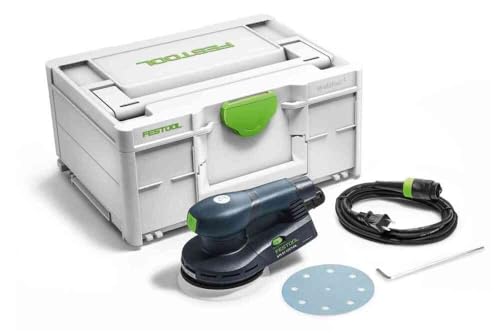
Festool ETS EC 125/3 Random Orbital Sander
What We Like
- Ergonomic grip and compact design reduce user fatigue
- Brushless motor provides constant power for tough tasks
- Superior dust extraction integrates with Festool's system
Trade-offs
- Weighs 8.0 pounds, which is heavy for a palm sander
- No dust-collection container is included with the sander
Superior dust extraction is the defining feature here, making this sander a workshop machine for those who prioritize a clean and healthy work environment. The brushless motor delivers consistent power with minimal vibration, a combination that expert round-ups consistently praise for producing exceptional finishes. It’s built for serious woodworkers who value efficiency and are already invested in, or willing to invest in, a dust extraction system. The ergonomic design helps manage its heft during long sessions, but this is a tool focused on results over portability.
You feel the trade-off in its 8-pound weight and larger footprint. It’s a dedicated bench tool, not something you’d casually carry up a ladder. Compared to a more compact option like the Makita BO5041, the Festool demands a commitment to its ecosystem for peak performance. The research shows it stands alongside premium sanders like the Mirka, delivering similar top-tier finish quality and dust control without the even higher price tag. For finish work where dust management is non-negotiable, this sander is in a class of its own.
DEWALT DCW210B Cordless Orbital Sander

What We Like
- Exceptionally light at just 2.5 pounds for less fatigue.
- Brushless motor for efficient runtime and durability.
- Low-profile design allows sanding close to edges.
- Texturized rubber grip provides secure, comfortable handling.
Trade-offs
- Tool only: requires separate DEWALT 20V battery and charger.
- Dust collectors (DWV010/DWV012) are sold separately.
- Slightly smaller sanding pad than some 6-inch corded models.
At 2.5 pounds, this sander feels almost weightless in your hand, making it a dream for overhead work or long sessions on vertical surfaces. The variable speed dial gives you control from 8,000 to 12,000 OPM to match the grit, and the low-profile body lets you get right into corners. It’s a fantastic choice for anyone already invested in the DEWALT 20V platform who needs a sander that won’t weigh them down. Owner feedback consistently highlights it as a top performer in its class.
The main trade-off is that you’re buying into a system. You need a battery and charger, and for serious dust collection, the dedicated vacuum attachments cost extra. For a permanent shop setup, a heavier corded model like the DEWALT DWE6423 offers consistent power without battery swaps. But for portability and convenience in a cordless workflow, the DCW210B’s lightweight design is hard to beat.
Makita BO5041 Random Orbit Sander

What We Like
- Variable speed dial for precise application matching
- Lightweight build and ergonomic grip reduce fatigue
- Adjustable front handle aids sanding in tight corners
- Lock-on button supports comfortable continuous operation
Trade-offs
- Dust collection port is small, requiring an adapter for a vacuum
- Performance trails top-tier models in achieving scratch-free surfaces at lower grits
The 3.0 AMP motor and wide 4,000 to 12,000 OPM speed range give you the control to tackle everything from aggressive stock removal to fine finish work. At just over three pounds with a rubberized grip, it’s a sander you can run all afternoon without your arm going numb. That combination of capable power and thoughtful ergonomics makes it a standout for pros who need a reliable daily driver without the flagship price tag, or serious hobbyists investing in their first serious sander.
The Makita BO5041 provides variable speed control from 4,000 to 12,000 orbits per minute, letting you match the sanding pace to different materials. Its 3.0 AMP motor aims for smoother and faster sanding, while the rubberized palm grip and adjustable front handle are designed for comfort and access in corners. A large trigger with a lock-on button supports continuous use during longer projects.
BOSCH GET75-6N Electric Orbital Sander
What We Like
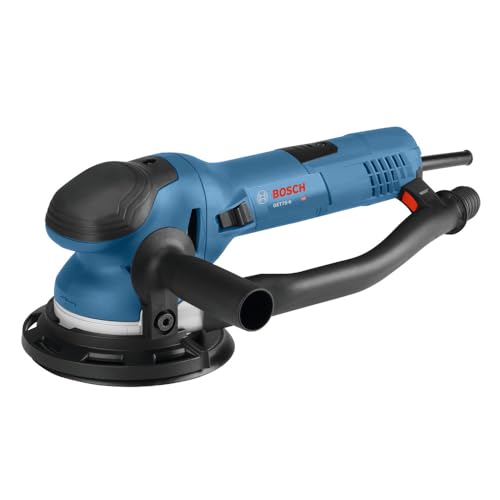
- Turbo mode for aggressive, belt-sander-like stock removal.
- Powerful 7.5-amp variable-speed motor for flexibility.
- Multi-hole pad system accepts a wide variety of abrasives.
- Includes front handle and two vacuum hose adapters.
Trade-offs
- Weighs 5.7 lb, heavier than many 5-inch sanders.
- Dust collection requires a separate vacuum and hose.
- Larger 15-inch length demands more space to maneuver.
Its turbo mode delivers three times the stock removal of its standard random-orbit operation, positioning it as an alternative to a belt sander for aggressive work. The 7.5-amp motor and variable speed, from 290 to 640 RPM, provide the power for this mode and the control to switch back to standard finishing. This dual capability means it can handle both rapid material reduction and the smoother finishes typical of orbital sanders on surfaces like wood floors and furniture.
Weighing 5.7 pounds, it is heavier than several five-inch models like the 3.4-pound DEWALT DWE6423. The passive dust collection system requires connection to a separate vacuum cleaner, using the included adapter or specific Bosch hoses. These factors contribute to a tool built for power and material removal over compact, lightweight convenience.
Product photos
Festool RTS 400 REQ-Plus Finish Sander

What We Like
- 25% more powerful 250-watt motor
- Exceptional dust extraction with interlocking port
- Low vibration and smooth-running operation
Trade-offs
- Heavy at 8.2 pounds for extended overhead work
- No dust-collection container included
A 250-watt motor, a 25% increase over its predecessor, delivers the consistent power needed to drive abrasive paper through hardwoods without bogging down. This makes the RTS 400 REQ-Plus a serious choice for woodworkers who demand a flawless final surface. The improved ergonomics and sturdy switch also mean it’s built to handle long sessions in the shop.
You pay for that performance in heft and size. At 8.2 pounds, it’s substantially heavier than workhorse models like the Makita BO5041, so it’s less ideal for detailed vertical sanding or all-day cabinet work. The dust extraction is superb, but it requires a vacuum. For those who prioritize raw smoothing power and impeccable results on flatwork, this sander is a premium tool that delivers. If ultimate portability is your goal, a lighter cordless model will serve you better.
Product photos
VEVOR Brushless Random Orbital Sander

What We Like
- Brushless motor for efficiency and long life
- Comprehensive kit includes two pads and 20 sandpapers
- Instant-stop safety function and dust collection hose
- Ergonomic, symmetrical grip for left or right hand
Trade-offs
- Lacks the premium build and refined balance of a Festool
- Large 10-inch length reduces maneuverability in tight spaces
A 350W brushless motor and a full kit with two sanding pads deliver serious capability straight out of the box, which is a rare find at this price point. This sander is built for the cost-conscious woodworker who needs a versatile, ready-to-work tool for a variety of tasks, from furniture refinishing to panel smoothing. The included range of sandpaper grits and the dust extraction hookup mean you can start a project immediately without hunting for accessories.
For a hobbyist setting up a first shop or a pro needing a reliable backup, the VEVOR represents a pragmatic choice that puts performance ahead of polish. Its 4.4-pound weight is more than some models like the 3.1-pound Makita BO5041, which can be noticeable during extended use. The tool includes a dust connector and hose for vacuum hookup, getting the job done without fuss.
Product photos
SKIL SR211601 Random Orbital Sander
What We Like
- Compact, ergonomic design for tight spaces
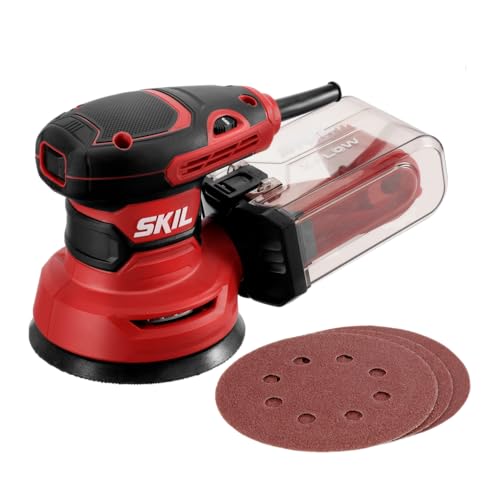
- Effective cyclonic dust box system
- Low-vibration grip reduces hand fatigue
- Sealed on/off switch for dust protection
Trade-offs
- Cyclonic box requires manual emptying versus a direct hose hookup
A 13,000 OPM motor and a clever cyclonic dust box deliver solid performance for the cost, making this sander a practical choice for hobbyists and DIYers who prioritize clean workspaces. Its compact, 3.4-pound frame and soft grip are built for comfort during extended sessions, while the variable speed adds needed control for different materials. This is a tool that gets the fundamentals right without overcomplicating things.
The SKIL SR211601 is a compact sander at 7.9 inches long and 3.4 pounds, so it fits easily into tight spaces. Its 2.8 amp motor and variable speed control provide adaptable power for different materials. The included cyclonic dust box collects debris effectively but requires manual emptying, unlike sanders designed for direct vacuum hookup.
Product photos
Bosch GEX18V-5N Cordless Orbital Sander

What We Like
- Lightweight at just 2.4 pounds for less fatigue.
- Brushless motor for longer tool life and efficiency.
- Compact design for maneuverability in tight spaces.
- Versatile for finishing, prep, and jobsite tasks.
Trade-offs
- Tool only: requires separate Bosch 18V battery and charger.
- Sanding discs are not included.
At just 2.4 pounds, the Bosch GEX18V-5N is one of the lightest cordless sanders available, so it reduces arm fatigue during longer sanding sessions. Its brushless motor contributes to this efficiency and is designed for longer tool life. The tool’s recommended uses include carpentry, cabinetry, and general remodeling tasks where cordless operation provides an advantage.
The obvious catch is that it’s a bare tool, so you’re investing in the Bosch 18V battery platform. If you already own those batteries, this sander slides right into your workflow. For someone starting fresh, however, the added cost of a battery and charger is a real consideration. Compared to a corded workhorse like the DEWALT DWE6423, you’re trading unlimited runtime for ultimate portability, a choice that defines the modern workshop.
Product photos
How We Evaluated Orbital Sanders For Woodworking
Our evaluation began with a detailed review of product specifications and manufacturer documentation to establish a baseline for power, weight, and features. We then cross-referenced this with expert round-ups from woodworking publications and patterns in owner feedback, focusing on real-world performance in the shop. The key criteria were motor power and finish quality, dust collection effectiveness, and ergonomics like weight and vibration.
Because this is a research-based assessment, we cannot account for the nuanced feel of a tool in your hand over hours of continuous use, which is an important limit to consider.
What To Look For In Orbital Sanders For Woodworking
The right orbital sander balances power with control, effectively manages dust, and feels comfortable during extended use. Your primary choice will be between corded models, which offer unlimited runtime, and cordless orbital sanders that provide ultimate mobility.
Look for a motor with enough amperage or wattage for your tasks, a dust port that fits your shop vacuum, and a weight and grip that minimize fatigue. Variable speed is useful for delicate finishes, while a low-vibration design is crucial for comfort.
Motor Power & Finish Quality
Motor power, measured in amps for corded tools or tied to battery voltage for cordless, determines how quickly a sander can remove material. More power generally means faster stock removal. However, raw power must be paired with a smooth, controlled orbit to achieve a scratch-free surface. Research indicates that while many random orbital sander models can produce a good finish at higher grits, the best leave fewer visible swirl marks at lower grits like 180.
Dust Collection
Effective dust collection is critical for a clean workspace, better visibility, and lung health. Systems range from simple cloth bags to advanced ports designed for shop vacuums or dedicated dust extractors. A well-sealed system that captures particles at the pad is far superior to one that allows dust to escape. For those seeking a pristine shop, exploring professional orbital sanders often reveals models with exceptional, integrated dust extraction.
Ergonomics & Vibration
Weight, balance, and grip design directly impact user fatigue. A lighter sander, often found among the best orbital palm sanders, is easier to manage for overhead or detailed work. Vibration dampening is equally important; excessive vibration can cause numbness during long sessions. Look for features like rubber overmold grips and designs that isolate the motor. The technique to avoid swirl marks also relies on letting the tool do the work without excessive pressure, which is only possible with a comfortable, stable tool.
- Check the tool’s weight and whether its center of gravity feels balanced in your grip.
- Look for a power switch placement that allows easy operation without shifting your hand.
- Ensure any front handle or auxiliary grip feels secure and doesn’t interfere with sanding near edges.
- Verify that the dust collection bag or port doesn’t make the tool awkward or top-heavy.
- Read owner reviews specifically mentioning “vibration” or “fatigue” over long periods.
A sander that feels like an extension of your arm will make any project more enjoyable and yield better results.
Orbital Sanders For Woodworking Compared
To see how these top picks stack up across key specifications, review the comparison table below.
| Product | Weight | Pad Size | Speed Range |
|---|---|---|---|
| DEWALT DWE6423 Random Orbit Sander | 3.4 Pounds | 5-Inch | 8,000 – 12,000 OPM |
| Festool ETS EC 125/3 Random Orbital Sander | 8.0 pounds | 5-Inch | N/A |
| DEWALT DCW210B Cordless Orbital Sander | 2.5 pounds | N/A | 8,000 to 12,000 OPM |
| Makita BO5041 Random Orbit Sander | 3.1 Pounds | 5" | 4,000-12,000 OPM |
| BOSCH GET75-6N Electric Orbital Sander | 5.7 pounds | 6 inch disc | 3300-7300 OPM |
| Festool RTS 400 REQ-Plus Finish Sander | 8.2 pounds | N/A | N/A |
| VEVOR Brushless Random Orbital Sander | 4.4 pounds | 5 & 6-Inch | 4000 to 10,000 RPM |
| SKIL SR211601 Random Orbital Sander | 3.4 pounds | 5” | 13,000 OPM |
| Bosch GEX18V-5N Cordless Orbital Sander | 2.4 pounds | 5-inch disc | N/A |
Frequently Asked Questions
Which orbital sander is the best rated for woodworking?
Based on our research of expert assessments and owner feedback patterns, the DEWALT DWE6423 consistently earns high marks as a top-rated, durable corded sander for general shop use. It balances power, a low-vibration design, and reliable performance.
What is the best orbital sander for home use?
For home use, a sander that is easy to manage and control is ideal. The DEWALT DCW210B cordless model is exceptionally lightweight at 2.5 pounds, reducing fatigue for DIY projects. For a budget-friendly corded kit that’s ready to use, the VEVOR Brushless Random Orbital Sander is a strong contender.
Are Harbor Freight orbital sanders any good?
This guide does not cover specific Harbor Freight models. In general, budget sanders can be suitable for light, occasional tasks. They often differ from models by established woodworking tool brands in areas like vibration control, dust collection, or construction.
What’s better, random orbital or orbital sander?
For woodworking, a random orbital sander is almost always the better choice. It combines a spinning disc with a simultaneous orbiting motion, which prevents the circular scratch patterns a standard orbital (or “finish”) sander can leave. This makes it superior for achieving a smooth, swirl-free surface on raw wood.
What should I look for in a sander for finishing?
For finishing work, prioritize a sander with a smooth, controlled orbit and minimal vibration to prevent swirl marks. Variable speed control is useful for applying lighter pressure at lower speeds on delicate surfaces. Excellent dust collection is also critical to keep abrasive particles from embedding in the finish.
The Bottom Line
The DEWALT DWE6423 Random Orbit Sander is our best overall pick for the woodworker who needs a dependable, powerful corded tool for frequent shop use, offering a great balance of performance and reduced vibration. If you’re on a tight budget, start with the VEVOR Brushless Random Orbital Sander kit, and for those who demand the cleanest possible workspace, the Festool ETS EC 125/3 is unmatched for dust extraction. Ultimately, matching the sander’s power and dust management to your specific projects will make the sanding process faster and leave you with a better-looking result.
