
9 Best Professional Orbital Sanders in 2026
This post contains affiliate links. As an Amazon Associate, we earn from qualifying purchases.
Our top professional orbital sander is the Bosch GET75-6N, a capable tool with a turbo mode for aggressive removal and effective dust control. For critical surface quality, the Festool ETS EC150/3 EQ-Plus performs well, while the lightweight Mirka DEROS II 550X offers notable comfort. Selecting the right sander can reduce labor time and influences a project’s final smoothness.
This guide helps you match a tool’s core strengths, like orbit size, vibration control, and dust management, to your specific workflow. We compared specifications, analyzed manufacturer data, and distilled patterns from expert and owner feedback across nine top contenders.
Top 9 Professional Orbital Sanders in the Market
Certain content that appears on this site comes from Amazon. This content is provided "as is" and is subject to change or removal at any time.
The Best Professional Orbital Sanders, Reviewed
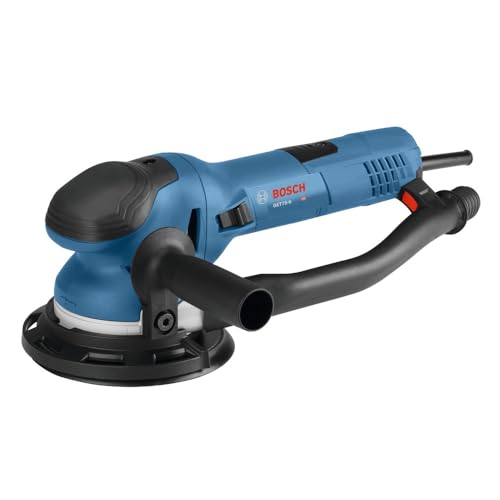
Bosch GET75-6N Electric Orbital Sander
What We Like
- Turbo mode for aggressive material removal
- Excellent passive dust collection system
- Variable speed motor for power and flexibility
- Multi-hole pad for wide abrasive compatibility
Trade-offs
- Dust collection requires a separate vacuum purchase
- Weighs 5.7 pounds, heavier than some 5-inch competitors
- Corded design limits mobility compared to cordless
With a 7.5-amp motor and a turbo mode designed for aggressive stock removal, this sander can strip material at up to three times the rate of its standard orbital mode. That dual capability, combined with a dust port that uses a rubber O-ring seal for good airflow, helps keep the abrasive pad cleaner for longer. The corded power supply offers unlimited runtime, which reviewers found convenient for extended tasks like refinishing a desk or tabletop.
The trade-off for that power and versatility is a tool that’s heavier than many 5-inch sanders, like the lightweight Mirka DEROS. Its dust collection is also only as good as the shop vac you hook it up to. For a mobile pro needing a cordless solution, the Festool ETSC 2 150 is the clear alternative. But if you work primarily in a shop with a dust extractor and need a single sander that can handle the full range of work, the Bosch GET75-6N delivers unmatched utility.
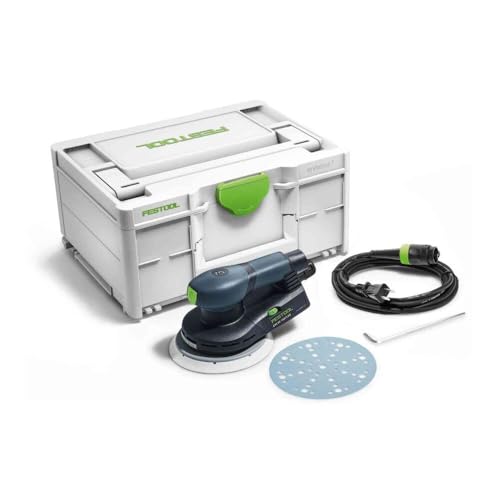
Festool ETS EC150/3 EQ-Plus Orbital Sander
What We Like
- Lightweight, compact design for comfortable handling
- 3 mm stroke creates a high-quality surface finish
- Maintains constant speed even under load
- Vibration Control System helps reduce user fatigue
Trade-offs
- Larger footprint than compact models like the Mirka DEROS II 550X
- Corded operation limits mobility compared to cordless options
The 3 mm sanding stroke creates a very high surface quality, which is the primary feature for achieving a fine finish. This small orbit, combined with stepless speed that remains constant even under load, allows for consistent results across different grits. A Vibration Control System and a weight of 2.5 lbs. are designed to help reduce fatigue during extended use.
Achieving that finish quality and smooth operation comes with a larger body than some ultra-compact sanders. It’s not as nimble in tight corners as something like the Mirka DEROS II 550X, and you’re also tethered by a cord. For a pro shop focused on cabinet finishing or a serious woodworker demanding perfection, these are minor concessions. For someone needing maximum maneuverability or complete cordless freedom for overhead work, a different model might be a better fit.
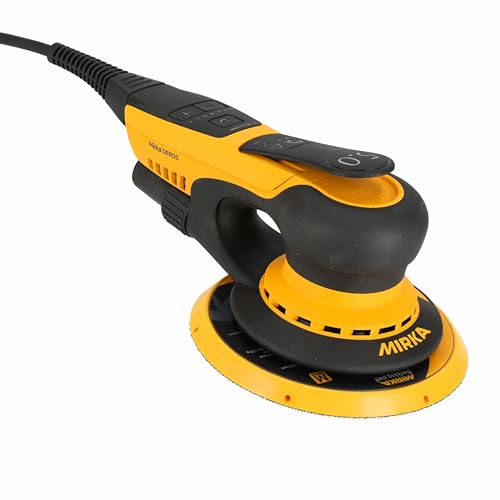
Mirka DEROS II 550X Random Orbital Sander
What We Like
- Extremely lightweight at just 2.2 pounds
- Low vibration operation for user comfort
- Integrated dust extraction keeps work area clean
- Brushless motor provides consistent power
Trade-offs
- Tool only: battery and charger sold separately
- Advanced Bluetooth features may be unnecessary for basic tasks
Weighing just over two pounds, the Mirka DEROS II 550X feels almost weightless in your hand, which fundamentally changes long sanding sessions. That featherweight build, combined with its low vibration, is why it stands out for pros who need to work overhead or for hours without fatigue. The brushless motor delivers smooth, consistent power for everything from fine woodworking to automotive prep, and the integrated dust collection means you can actually see your work. It’s a sander built for control and comfort above all else.
This sander is sold as a tool only, meaning the battery and charger are separate purchases. You are buying into a cordless system, which requires that additional investment. For a straightforward, corded sander that’s always ready to go, the DeWalt DWE6423 is a reliable alternative. However, if reducing arm strain with a lightweight design and having Bluetooth connectivity for accessing tool information matters for your workflow, the Mirka offers those specific features.
Product photos
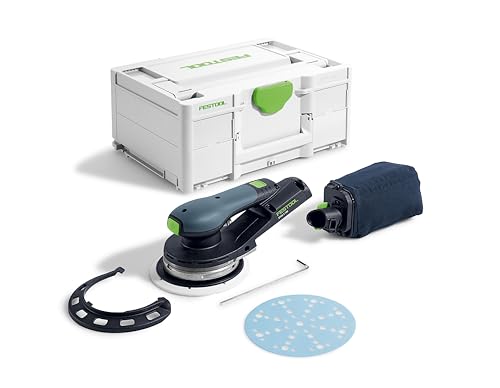
Festool ETSC 2 150 Cordless Sander
What We Like
- Integrated lighting for perfect work visibility
- Cordless design with effective dust collection bag
- Consistent power under load with variable speed
Trade-offs
- Basic version: no battery or charger included
With customizable lighting and an afterglow function, the Festool ETSC 2 150 lets you inspect surfaces clearly even as you work, reducing the chance of missing imperfections. This cordless sander suits finish carpenters who need a hose-free workspace, thanks to its integrated dust collection bag. Research comparing several brands found Festool sanders, equipped with brushless motors, delivered exceptional finishes with little vibration and earned a top award alongside Mirka.
The trade-off is committing to a premium cordless system. This ‘Basic’ version requires separate purchases for a battery and charger, increasing the initial cost. For users already invested in the Festool 18V platform, it allows effortless battery swaps between tools. A separate corded Festool ETS EC150/3 model exists, but its performance relative to this cordless version is not detailed in the available research.
DeWalt DWE6423 Random Orbit Sander

What We Like
- Separate counterweight design reduces vibration
- Improved dust-sealed switch for longer life
- Rubber overmold improves grip in critical areas
- One-handed locking dust bag for easier cleanup
Trade-offs
- Requires a universal connector for 1-1/4 in. vacuum hoses
- Corded design limits mobility compared to cordless models
- Dust collection optimized for DeWalt's own vacuum systems
The DeWalt DWE6423 uses a separate counterweight design to reduce vibration, which should mean less hand fatigue over time. Its 3-amp motor offers a variable speed range from 8,000 to 12,000 OPM. The sander’s shorter height is designed to let you work closer to the workpiece.
As a corded tool, it requires access to an outlet. Its dust collection is designed to fit directly to DeWalt’s DWV010 or DWV012 dust collectors, and an adapter is needed for other vacuum systems with 1-1/4 inch hoses.
DeWalt DWE6421K Orbital Sander Kit
What We Like
- Shorter height for getting closer to workpieces
- Separate counterweight design reduces vibration
- Rubber over-mold in critical areas for grip
- Improved dust-sealed switch for longer life
Trade-offs
- Requires a universal connector for most shop vacuums
- Corded operation limits mobility versus cordless models
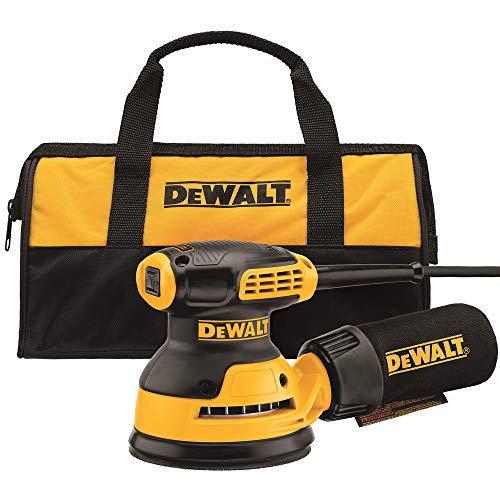
With a 3.0 amp motor and 12,000 orbits per minute, this sander has the power for efficient stock removal and can achieve a stain-ready smoothness, according to expert testing. Its ergonomic shape gives you the option to hold the oblong handle on top or wrap your hand around the base for more control, a feature one expert appreciated. The kit is a corded, ready-to-work package that includes a dust bag, and it’s built with rubber over-mold in critical areas and a dust-sealed switch for longer life.
The trade-off is its heft and vibration. At 4.0 pounds, it’s not the lightest, and while the separate counterweight design reduces vibration, one research mention notes a significant amount of vibration remains in the hands. For tasks demanding all-day comfort, a sander like the Festool ETS EC is engineered for that. But for most workshop projects, the DeWalt delivers proven performance without the premium price tag, and some other brands, like Hercules, even compare their products to it.
Product photos
Makita BO5041K Random Orbit Sander

What We Like
- Precise variable speed dial for material matching
- Lightweight and easy to maneuver
- Comfortable, ergonomic rubberized grip
- Smooth and fast sanding operation
Trade-offs
- May require sanding to 220 grit for scratch-free finish
- Corded design limits mobility
The Makita BO5041K puts a precise variable speed dial right at your fingertips, letting you dial in from 4,000 to 12,000 orbits per minute to match the task. That control is its standout feature, making it a smart choice for a pro who needs to switch between delicate veneer work and aggressive stock removal without swapping tools. Its lightweight build and rubberized grip reduce fatigue during long sessions, so you can focus on the finish, not your aching arm.
Research and owner feedback indicate the control and comfort come with a compromise in the final finish. Unlike a sander like the Festool ETS EC150/3, the Makita often needs a bit more work at each grit stage or a progression to 220 grit to fully eliminate scratches. It’s a highly capable workhorse for general sanding and preparation. If your workflow demands a flawless, scratch-free surface right out of the gate at 180 grit, however, you’ll be making a few more passes.
Product photos
Makita XOB01Z Cordless Sander

What We Like
- Three speed settings for material removal control
- Large 1/8-inch orbit for fast, swirl-free sanding
- One-touch electronic speed control switch
- Cordless design offers full worksite mobility
Trade-offs
- Tool only: requires separate purchase of battery and charger
That aggressive action, combined with its cordless freedom, makes it a natural fit for contractors or serious DIYers. They can power through sanding tasks on decks, furniture refinishing, or drywall patches without hunting for an outlet. You get the flexibility to match the speed to the job, from rough stock removal to a finer finish.
You gain cordless convenience, but you’re buying just the tool. You’ll need to already own Makita’s 18V LXT batteries or factor in that extra cost. If a dedicated dust collection system is a priority, the corded Makita BO5041K model from the same family might be a more straightforward choice for the workshop.
Product photos
3M Elite Non-Vacuum Sander
What We Like
- Compact pad shape fits into tight corners.
- Ergonomic design reduces fatigue during long sessions.
- Durable aluminum body resists cracked housings.
- Balanced workings minimize vibration for smoother operation.
Trade-offs
- Pad size is smaller than standard 5-inch or 6-inch models.
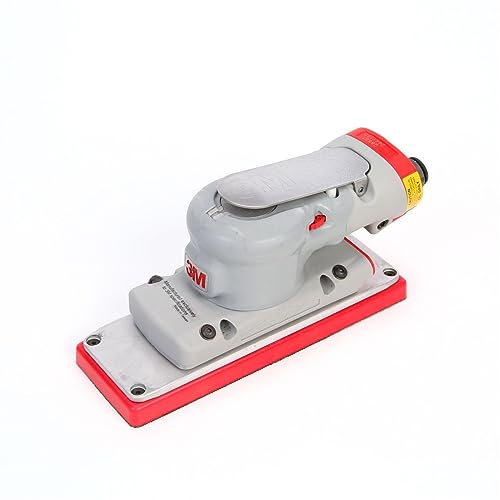
With a 70 mm by 198 mm pad, this sander reaches into tight corners and along edges that typical round sanders cannot, making it ideal for flat surface finishing and sealer sanding. For prolonged use, the design includes an extended curved wrist support and 3M Gripping Material for increased operator comfort, while the aluminum body is intended to reduce cracked housings.
The sander is a non-vacuum model, requiring separate dust extraction for a cleaner workspace. Its pad area is smaller than the 5-inch or 6-inch discs on models like the Bosch GET75-6N, so covering large surfaces will take more time. The tool’s features are oriented toward detailed flat work and operator comfort during extended tasks.
Product photos
How We Evaluated Professional Orbital Sanders
Our research focused on the specifications and design features that define a professional-grade tool. We pored over manufacturer documentation to understand motor power, orbit stroke, and dust collection systems, while cross-referencing these claims with expert round-ups and consistent patterns in owner feedback. The key criteria were power and control for efficient material removal, ergonomics and vibration for all-day use, and effective dust management for a clean workspace and better visibility.
This research-based approach identifies the tools with the right specifications for the job, but it cannot replicate the feel of a sander in your hand over a full workday. For more on the differences in tool types, our guide on orbital sanders vs random orbital sanders is a useful resource.
What To Look For In Professional Orbital Sanders
The right sander turns a tedious chore into an efficient process. Focus on the features that affect your speed, comfort, and the quality of your finished surface.
Prioritize a balance of power and control. Look for a variable speed motor (typically 7,000-13,000 OPM) to match the task, an effective dust collection system to keep your work visible, and a design that minimizes vibration for less fatigue.
Power & Control
A professional sander needs enough power to maintain speed under load, preventing it from bogging down during aggressive stock removal. Variable speed control is essential; you’ll use high speeds for leveling surfaces or paint removal and lower speeds for fine finish sanding or working with delicate veneers.
The size of the orbital stroke also dictates performance; a larger orbit, like 1/8-inch, removes material faster, while a smaller 3 mm stroke is often preferred for achieving a flawless final surface. For those who need maximum power without battery limitations, a dedicated review of best corded orbital sanders explores top plug-in options.
Ergonomics & Vibration
Fatigue is the enemy of quality work. Weight and balance are critical; a lighter tool, like one under three pounds, is easier to manage for overhead work or long sessions. Manufacturers use various technologies to dampen vibration, such as separate counterweights or advanced motor mounts, which significantly reduce hand and arm strain. The grip shape and placement of controls also contribute to comfort, allowing for secure handling whether you hold the tool from above or wrap your hand around its body.
Dust Collection & Design
Effective dust collection maintains a visible work surface and can extend sandpaper life. Look for a system that seals well, whether it’s a bag, canister, or direct vacuum hookup. A sander designed to work well with a shop vacuum will capture most dust. The pad design is also important; a multi-hole pad offers compatibility with many abrasive discs, while a compact pad shape can access corners and tight spaces a standard pad cannot.
- Check the dust port size and determine if you need an adapter for your shop vacuum hose.
- Inspect the sanding pad for hook-and-loop integrity and hole alignment for dust extraction.
- Consider whether a corded model’s unlimited runtime or a cordless model’s mobility better suits your job sites.
A well-sealed dust collection system connected to a vacuum is the single most effective upgrade for any sanding task.
Professional Orbital Sanders Compared
The table below summarizes the key specifications and trade-offs to help you compare these top professional models at a glance.
| Product | Weight | Pad Size | Power Source |
|---|---|---|---|
| Bosch GET75-6N Electric Orbital Sander | 5.7 pounds | 6-inch disc | Corded Electric |
| Festool ETS EC150/3 EQ-Plus Orbital Sander | 2.5 lbs | 6-Inch | Corded Electric |
| Mirka DEROS II 550X Random Orbital Sander | 2.2 pounds | 5 inch disc | Cordless |
| Festool ETSC 2 150 Cordless Sander | 2.6 pounds | N/A | Cordless |
| DeWalt DWE6423 Random Orbit Sander | 3.4 Pounds | 5-Inch | Corded Electric |
| DeWalt DWE6421K Orbital Sander Kit | 4.0 pounds | 5 inch | Corded |
| Makita BO5041K Random Orbit Sander | 3.1 pounds | 5-inch | Corded Electric |
| Makita XOB01Z Cordless Sander | N/A | 5" | Cordless |
| 3M Elite Non-Vacuum Sander | N/A | 70 mm x 198 mm | Corded Electric |
Frequently Asked Questions
What is the top rated orbital sander?
Based on our research into performance and owner feedback, the Bosch GET75-6N stands out for professionals. It combines a powerful turbo mode for fast removal with a highly effective passive dust collection system, making it a versatile and reliable choice for demanding shop work.
Which is better, a Makita or a DeWalt orbital sander?
Both brands offer excellent professional tools, but for different priorities. Makita models, like the BO5041K, are often praised for precise variable speed control and smooth operation. DeWalt sanders, such as the DWE6423, frequently receive high marks for their vibration reduction technology and durable construction. The “better” choice depends on whether you value fine control or all-day comfort more.
What are the best air orbital sanders?
This guide focuses on electric orbital sanders, which are more common for professional woodworking due to their consistent power and lack of required air compressor infrastructure. For tasks specifically requiring pneumatic tools, you would need to look at a different category of equipment altogether.
How do I avoid swirl marks when sanding?
Swirl marks are often caused by using too aggressive a grit or skipping grit steps. Always progress through the grits sequentially (e.g., 80, 120, 180, 220) and let the sander do the work without applying excessive pressure. Using a random orbital sander with a true random orbit pattern and ensuring your sandpaper is clean and sharp are also crucial steps for a swirl-free finish.
What should I look for in a cordless orbital sander?
For a cordless model, prioritize a brushless motor for efficiency and runtime, and ensure it’s part of a battery ecosystem you already own. Look for models that maintain consistent power under load and have effective dust collection, even when running on battery. Our exploration of the best cordless orbital sanders details the top performers in this category.
The Bottom Line
For the professional woodworker or serious refinisher who needs one sander for both aggressive stock removal and fine finishing, the Bosch GET75-6N is the best overall choice. Its turbo mode and effective dust collection make it a strong option for large projects. If your budget is lower or you need a tool for extended overhead work, consider the well-regarded DeWalt DWE6423 for its vibration reduction or the Makita BO5041K for its good speed control.
Ultimately, matching the sander’s power, stroke, and dust management to your most common tasks is the surest path to a better finish with less effort.
