
10 Best Sanders For Stairs in 2026
This post contains affiliate links. As an Amazon Associate, we earn from qualifying purchases.
Our top pick for sanding stairs is the Festool Rotex RO 90 DX Random Orbital Sander, which masters both fast material removal and fine finishing in one tool. For flush cuts and corners, the Bosch GOP40-30C Oscillating Multi-Tool excels, while Milwaukee tool owners will want the compact RKBUDOL Brushless Detail Sander.
Staircases demand tools that can handle flat treads, vertical risers, and tight corners around balusters. You need a sander that fits the space, controls dust, and won’t cause fatigue on a multi-day project. This guide is based on a review of manufacturer specifications, expert project advice, and patterns in owner feedback to help you match a tool to your specific staircase and skill level.
Top 10 Sanders For Stairs in the Market
Certain content that appears on this site comes from Amazon. This content is provided "as is" and is subject to change or removal at any time.
The Best Sanders For Stairs, Reviewed
Festool Rotex RO 90 DX Random Orbital Sander

What We Like
- Tool-free switch between round and delta pads
- Gear-driven aggressive mode for fast material removal
- Random orbital mode for fine finish sanding
- Includes dedicated polishing mode and accessories
Trade-offs
- At 8.9 lb, it's heavier than most detail sanders
- Significantly larger footprint than compact options like the Bosch GOP40-30C
The tool-free ability to switch from a round pad to a delta-shaped pad in seconds is what makes this sander the most versatile solution for a staircase. You can tackle the broad, flat surfaces of treads with the round pad and then instantly adapt to sand into the tight corners and against the risers with the delta profile. Combine that with its gear-driven aggressive mode for stripping old finish and its fine random orbital mode for final smoothing, and you have one tool that handles every phase of the job.
That versatility comes with a physical presence. It offers more control and power on a large flat surface than a tiny detail sander, but it can feel cumbersome when working on a confined step. For a user who needs maximum capability from a single tool and doesn’t mind the heft, the RO 90 DX is unmatched. If your priority is a lightweight tool for quick touch-ups in corners, a compact option like the Skil SR232301 would be a more maneuverable choice.
Bosch GOP40-30C Oscillating Multi-Tool

What We Like
- Tool-less accessory release prevents burned fingers
- LED light illuminates dark work areas
- Constant circuitry maintains speed under load
Trade-offs
- Corded design limits mobility on a long staircase
- At 3.3 lb, it's heavier than cordless detail sanders like the SHALL
The 4.0 amp motor and reinforced metal gearing provide heavy-duty power for demanding tasks like grinding. A 3.0° oscillating arc improves accessory utilization, which can lead to more productive cutting and sanding. Its no-touch accessory release lever prevents burned fingers during blade changes.
This corded tool maintains speed under load via constant response circuitry, so it doesn’t bog down in dense material. It utilizes all Starlock and StarlockPlus accessories for multi-tool versatility across flush-cutting, plunge-cutting, sanding, and grinding. The included LED light illuminates dark work areas for better visibility.
RKBUDOL Brushless Detail Sander
What We Like
- Uses existing Milwaukee 18V battery platform
- Brushless motor for efficient, consistent power
- Extremely compact design for tight corners and stairs
- Comes with five grits of sandpaper for versatility
Trade-offs
- Tool only: requires separate Milwaukee battery and charger
- Dust collection is a basic bag, not a sealed system
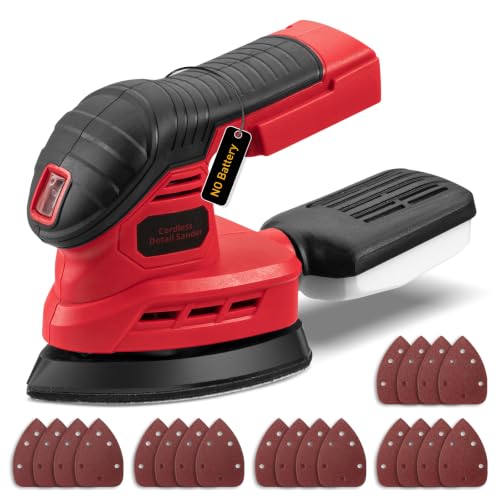
Compatibility with Milwaukee’s 18V batteries is the whole story here. If you’re already invested in that platform, this sander becomes a no-brainer add-on, letting you tackle detail work without the hassle of a new charger or a cord. Its compact, mouse-shaped pad is built for the very specific challenge of stairs, slipping into corners and along balusters where a larger orbital sander would just bounce off. The brushless motor isn’t just marketing fluff; it delivers the sustained 12,000 RPM you need to work efficiently without burning out the tool or your arm.
This cordless detail sander runs on Milwaukee 18V batteries, making it a practical add-on for anyone already invested in that power tool system. Its compact, mouse-shaped pad is designed to reach corners, edges, and narrow gaps where larger sanders can’t fit. The tool includes a detachable dust collection bag to help keep the workspace cleaner.
Product photos
DeWalt DCW211B Cordless Random Orbital Sander
What We Like
- Exceptionally low vibration for reduced fatigue
- Collects up to 95% of dust with a vacuum
- Wireless vacuum activation from the tool
Trade-offs
- Dust extractor for full system is sold separately
- At 3.8 lb, it's heavier than some dedicated detail sanders
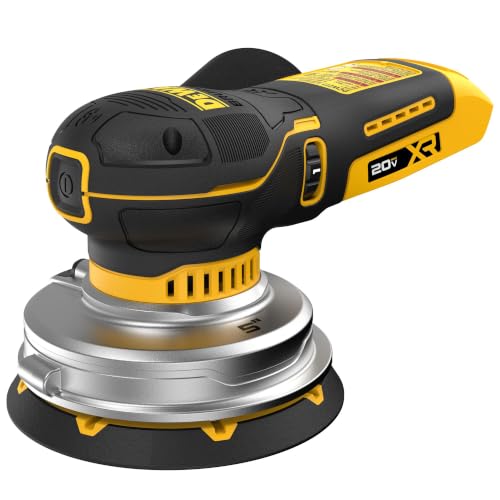
Collecting up to 95% of dust makes this sander a standout for any indoor stair project, drastically cutting down on cleanup and keeping your workspace breathable. Its low-vibration design and 50-square-foot battery runtime let you work comfortably through long sessions without cord hassles. For anyone in the DeWalt 20V ecosystem needing to sand treads and risers with minimal mess, this is a pragmatic choice.
The trade-off is its heft and size; at 3.8 pounds and with a 5-inch pad, it won’t tuck into corners as nimbly as a dedicated detail sander like the Bosch GOP40-30C. You’re getting pro-grade dust control and cordless convenience, but for intricate baluster sanding, you’ll still want a more compact tool. It excels at the broad, flat surfaces where dust management matters most.
Product photos
Black+Decker BDEMS600 Detail Sander

What We Like
- Compact design for tight corners and stairs.
- Three-position grip enhances control and reduces fatigue.
- Dust collector keeps the work area cleaner.
- Detail finger attachment accesses hard-to-reach spots.
Trade-offs
- Corded design limits mobility on a staircase.
Its compact design allows the sander to navigate cramped corners and tight spaces for detailed work, like on staircases. A 1.2 Amp motor supplies 16,000 orbits per minute for material removal. The three-position grip and detail finger attachment provide control and access to hard-to-reach spots, making it a straightforward tool for foundational sanding tasks.
The corded design offers unlimited runtime for continuous power, but limits mobility in areas like a staircase where a cord can snag. This contrasts with cordless models like the DeWalt DCW211B, which provide greater freedom of movement. The Black+Decker focuses on core function, delivering consistent power to confined spaces without complex extras.
Skil SR232301 Multi-Function Detail Sander
What We Like
- Includes three tool-free change attachments
- Low 2.6-pound weight reduces arm fatigue
- Hook-and-loop sandpaper system for quick swaps
- Dust-sealed switch and dual dust control options
Trade-offs
- Corded design requires outlet access.
- 1.2 amp motor for 13,500 OPM operation.
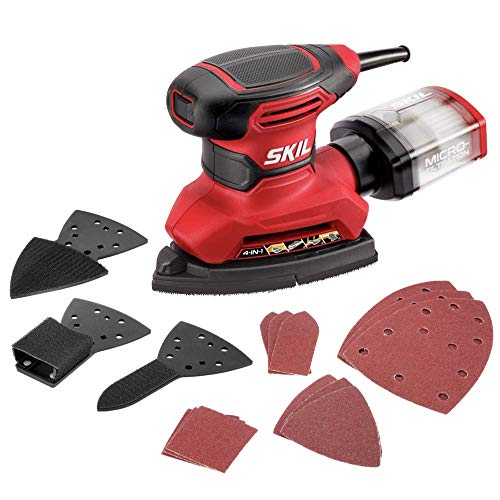
Its 4-in-1 design with three tool-free attachments is the core advantage, allowing it to handle large surfaces, corners, and contoured areas with one sander. Weighing 2.6 pounds, the tool is lightweight for general use, and its counterweight balance is designed to reduce hand fatigue from vibration during longer jobs. This configuration suits tasks requiring switching between different sanding profiles without needing separate tools.
As a corded tool, it requires access to a power outlet during operation. For sanding tasks demanding higher power, the listed Festool Rotex RO 90 DX has a larger, heavier build. The Skil sander’s combination of attachments and compact size provides focused utility for multi-surface detail work.
Product photos
Festool DTS 400 Delta Finishing Sander
What We Like
- Fast material removal with MMC electronics
- Ergonomic shape and SoftGrip for overhead work
- Tool-free abrasive and pad changes
- Maintains operating speed under load
Trade-offs
- Premium system requires a compatible dust extractor for best results
- Weighs 17.1 pounds, which is heavy for a finishing sander
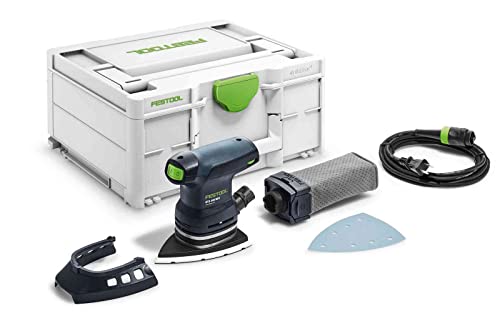
The DTS 400’s 250-watt motor and MMC electronics deliver a level of aggressive, controlled material removal that’s rare for a finishing sander. This makes it a standout for stripping old finish and flattening treads on a stair project, especially on hardwoods like white oak. It suits the craftsman who values speed and a flawless final surface in one tool, and who already plans to invest in a dust extraction system. The tool-free abrasive system keeps you moving quickly between grits, which is crucial when you have dozens of treads and risers to address.
Weighing 17.1 pounds, this sander requires more arm strength for overhead or extended use than lighter models like the 8.9-pound Festool Rotex. Its 250-watt motor and design provide 25% faster material removal than older versions, which speeds up work on large, flat areas. The system is built for use with Festool abrasives and a dust extractor to manage debris efficiently.
Bosch GSS12V-40N Cordless Sheet Sander

What We Like
- Compact, cordless design for tight spaces
- Balanced grip for control close to workpiece
- Brushless motor for long runtime and power
- Soft-start technology eases into sanding
Trade-offs
- Tool only: requires separate Bosch 12V battery and charger
- Orbital sheet sander format may not fit into the tightest corners like a detail sander
You can work on risers, balusters, and tight corners without a cord dragging over your arm or getting tangled. The interchangeable sanding plates and balanced grip give you the control needed for finish work in these awkward spots. This tool is a logical fit for anyone tackling detailed stair refinishing who values maneuverability above all else.
The trade-off is the bare-tool format; you must already own or budget for the Bosch 12V battery system. For sanding flat stair treads, a larger random orbital sander like the DeWalt DCW211B would cover area faster. But for the complex geometry of a staircase, the Bosch’s compact, cordless form is specifically engineered to get into places where bulkier tools simply cannot fit.
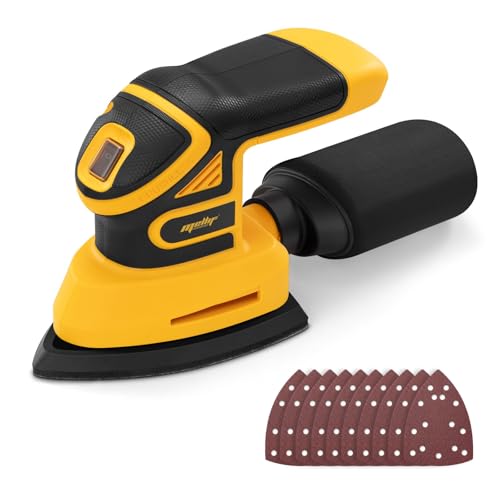
Mellif Brushless Cordless Detail Sander
What We Like
- Leverages existing DeWalt 20V battery ecosystem.
- Lightweight, cordless design for easy maneuvering on stairs.
- Effective dust box keeps work area cleaner.
- Brushless motor promises longer tool lifespan.
Trade-offs
- Tool only: requires a separate DeWalt battery and charger.
- Not a Festool: lacks premium dust extraction and multi-mode sanding.
Compatibility with the DeWalt 20V MAX platform is the key feature here, turning a single battery system into a versatile workshop. For anyone already invested in those batteries, this sander becomes a remarkably convenient add-on. Its featherlight build and cordless operation let you perch on a ladder or crouch on a stair tread without wrestling a cord. The brushless motor also provides efficient, cooler-running power for detail work on trim or refinishing stair risers.
This tool operates within a specific niche. It is a detail sander designed for precision work in corners and on contoured surfaces. Its primary role is finishing, not heavy stock removal. For users already invested in the DeWalt 20V MAX battery platform who need these focused tasks, the Mellif offers a straightforward way to expand their toolkit without the cost of a new battery system.
Product photos
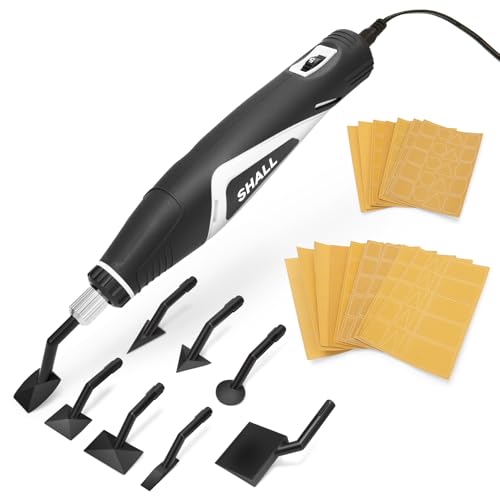
SHALL Mini Pen Reciprocating Sander
What We Like
- Extremely lightweight at only 0.3 pounds.
- Four adjustable speeds for material control.
- Eight included heads for tight spaces and corners.
- Tool-free head changes for quick swaps.
Trade-offs
- Corded design limits mobility on large staircases.
- Miniature size is inefficient for sanding large, flat treads.
The SHALL Mini Pen Sander weighs 0.3 pounds and has a slender, pen-like design, making it comfortable to hold for detailed work without hand fatigue. It comes with eight differently shaped sanding heads, which are intended for sanding and polishing small surfaces and tight corners. Four adjustable speed settings from 5000 to 10000 SPM allow for control based on the task and material.
With a focus on small surfaces and tight spaces, this tool is suited for detail sanding and polishing tasks. For sanding larger areas, other products like the Festool Rotex RO 90 DX Random Orbital Sander have different dimensions and pad sizes. The SHALL sander is positioned as a precision tool for finishing work after bulk material removal.
Product photos
How We Evaluated Sanders For Stairs
The selection process was based on research. Manufacturer specifications for motor power, pad size, weight, and dust extraction compatibility were examined. Expert project guides detailing the specific challenges of stair sanding, such as accessing corners and managing dust on a confined work surface, were consulted. Patterns in owner feedback were also analyzed to understand real-world performance regarding vibration, battery life for cordless models, and durability.
The most important criteria were tool size and maneuverability for fitting between balusters, effective dust collection to keep the work area visible, and power delivery suited for both large treads and detailed spindles. A sander that excels on a flat benchtop may fail on a staircase if it’s too bulky or heavy for overhead work on risers.
The main limitation of a research-based evaluation is that we cannot measure subjective factors like hand fatigue after hours of use or the precise feel of a tool’s balance in awkward positions. We rely on consistent reports from owners who have completed similar projects.
What To Look For In Sanders For Stairs
Choosing a sander for a staircase means finding a tool that can adapt to several distinct tasks: leveling flat treads, smoothing vertical risers, and finishing intricate corners and spindles. Your project’s scope and your existing tool battery ecosystem are key starting points.
Look for a sander that balances power with a compact footprint. A low-profile tool fits between balusters, while variable speed and swappable pads let you tackle both aggressive stripping and fine finish work. Prioritize models with effective dust collection to maintain a clear view of your progress.
Size & Maneuverability
A sander’s physical profile is critical on a staircase. You need a tool that can fit into the corner where a tread meets a riser and maneuver around balusters without constant repositioning. Compact, low-weight designs reduce arm strain, especially when sanding overhead on risers or working in tight quarters for extended periods. For the tightest spaces, a dedicated detail sander or mini sander is purpose-built for corners. A heavier, full-size random orbital sander is powerful for treads but may be cumbersome for detailed work.
Sanding Versatility
Stair projects often require multiple grits and sanding modes. You might start with coarse grits to strip old finish from treads, switch to a finer grit for a smooth surface, and then use a detail pad for corners and spindles. Some tools, like the Festool Rotex, offer a gear-driven aggressive mode and a fine-finishing orbital mode in one tool.
Others, like multi-tools or sanders with quick-change pad systems, allow you to swap attachments for different surfaces. For final smoothing before applying stain or paint, a dedicated finishing sander provides a consistently smooth result.
Dust Collection & Power Source
Effective dust collection is non-negotiable. Sanding creates a huge amount of fine dust that can obscure your sight lines and create a major cleanup burden. Look for sanders with integrated dust bags or, better yet, a port for connecting a shop vacuum.
Some premium systems offer tool-activated vacuum control. The power source also affects mobility. Corded sanders offer unlimited runtime but require careful cord management on a staircase.
Cordless sanders provide excellent freedom of movement but require you to manage battery life and are often part of a specific brand’s ecosystem, like the Milwaukee or DeWalt models in our list.
- Check the tool’s height and pad dimensions against the gaps in your staircase balusters.
- Ensure the dust collection bag or port is positioned so it won’t snag on the workpiece.
- For cordless models, verify you have enough batteries to cycle through charges during a long sanding session.
A good rule of thumb: if the sander feels bulky in the store, it will feel even more cumbersome when you’re contorted on a staircase.
Sanders For Stairs Compared
The following table compares key specifications across our top picks to help you see the differences in power source, weight, and primary use at a glance.
| Product | Weight | Pad Shape | Power Source |
|---|---|---|---|
| Festool Rotex RO 90 DX Random Orbital Sander | 8.9 pounds | Round and delta | Corded |
| Bosch GOP40-30C Oscillating Multi-Tool | 3.3 pounds | N/A | Corded |
| RKBUDOL Brushless Detail Sander | N/A | Compact mouse-shaped | Cordless (Milwaukee 18V) |
| DeWalt DCW211B Cordless Random Orbital Sander | 3.8 Pounds | Orbital | Cordless (20V MAX) |
| Black+Decker BDEMS600 Detail Sander | N/A | Detail | Corded |
| Skil SR232301 Multi-Function Detail Sander | 2.6 pounds | N/A | Corded |
| Festool DTS 400 Delta Finishing Sander | 17.1 pounds | Delta (triangular) | Corded |
| Bosch GSS12V-40N Cordless Sheet Sander | 4.2 pounds | 1/4 and 1/3 sheet | Cordless (12V Max) |
| Mellif Brushless Cordless Detail Sander | 1.76 lbs | Triangle | Cordless (DeWalt 20V MAX) |
| SHALL Mini Pen Reciprocating Sander | 0.3 pounds | 8 different shapes | Corded |
Frequently Asked Questions
What is the best sander to use on stairs?
There is no single best sander, as stairs require different tools for different parts. A random orbital sander is efficient for large, flat treads. For corners, tight spots, and detailed work on spindles and risers, a detail sander or oscillating multi-tool with a sanding pad is ideal. Many projects benefit from using two tools: one for bulk work and one for detail.
What is the best wood to use on stairs?
While sander selection is independent of wood type, hardwoods like oak or maple are common for stair treads due to their durability and resistance to wear. Softer woods like pine are more affordable but will dent more easily. Your sander needs to handle the wood’s hardness, but the sanding technique and sandpaper grit progression are more critical for the final finish.
What is the 27 rule for stairs?
A common building code guideline for stairs states that the sum of one stair tread and one riser should equal approximately twenty-seven inches. This relates to comfort and safety but does not directly impact the choice of sander, other than defining the dimensions of the work area.
What’s better, orbital or palm sander?
For stairs, it’s not about one being universally better. A random orbital sander (a type of palm sander) is superior for quickly sanding the flat surfaces of treads with a swirl-free finish. A standard palm or sheet sander, often with a square pad, is good for getting into tread-to-riser corners. For the best results, you might use both: an orbital for the tread faces and a small sander for the corners and detailed areas.
Can I use a belt sander on stairs?
It is generally not recommended to use a belt sander on stairs. Belt sanders are extremely aggressive and difficult to control, making it very easy to gouge the wood, round over sharp edges, or create an uneven surface. For stair treads, a random orbital sander provides much more control and a smoother finish suitable for refinishing.
The Bottom Line
The Festool Rotex RO 90 DX is the best overall sander for stairs because it combines aggressive stock removal with fine finish sanding in one tool, ideal for the varied surfaces of a staircase. Its ability to switch between round and delta pads covers both treads and corners.
If you’re on a tight budget, the capable Black+Decker BDEMS600 provides essential detail sanding functions. For those already invested in a cordless tool system, the RKBUDOL (Milwaukee) or Mellif (DeckWalt) models offer convenient, battery-powered detail work. Ultimately, the single most important factor is choosing a sander whose size and shape allow you to work comfortably and effectively in the confined, multi-plane space of a staircase.
