
6 Best Wide Belt Sanders in 2026
This post contains affiliate links. As an Amazon Associate, we earn from qualifying purchases.
Our best overall wide belt sander is the Powermatic 1632 Open-End Belt Sander for its efficient stock dimensioning. For heavy-duty floor operations, we recommend the JET 6×48 Industrial Belt Sander, and the WEN Belt and Disc Sander is our top budget combo. Choosing the right wide belt sander means matching its industrial power and footprint to your shop’s capacity and workflow.
These aren’t casual tools; they are significant investments in precision and productivity. Our research focused on specifications, expert evaluations, and patterns in professional feedback to identify which models excel at specific tasks. This guide will help you understand the key differences so you can invest with confidence.
Top 6 Wide Belt Sanders in the Market
Certain content that appears on this site comes from Amazon. This content is provided "as is" and is subject to change or removal at any time.
The Best Wide Belt Sanders, Reviewed
Powermatic 1632 Open-End Belt Sander
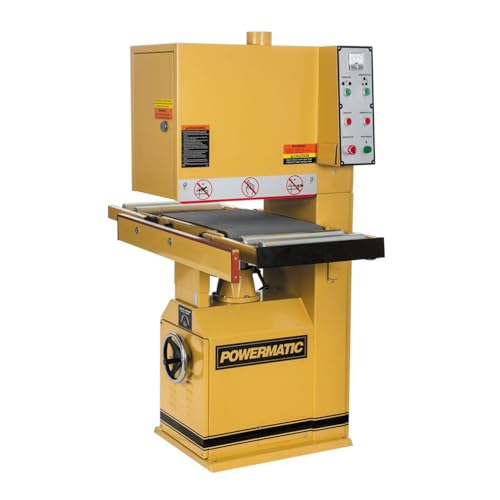
What We Like
- Air-oscillating head for smoother surfaces
- Dual feed speed for material control
- Pneumatic belt tracking keeps belt centered
- Side door allows for easy belt changes
Trade-offs
- Lacks a powered feed table
- Requires 230V single-phase power
- Weighs 996 pounds, requiring permanent shop space
A 16-inch open-end belt and 5 HP motor put this sander in a sweet spot for serious shop work. It’s wide enough to handle large panels efficiently but maintains a relatively compact footprint compared to industrial behemoths. The dual feed speed and air-oscillating movement give you the control needed for a consistent finish, from rough stock to final passes. For a woodworker ready to move beyond the limitations of a drum sander, this Powermatic delivers professional-grade capacity without completely overwhelming a dedicated workshop.
A manual feed table requires the operator to push the workpiece through, a process suited for batch work on stable stock. The research mention specifically notes the lack of a powered table as a drawback for this model. Compared to a tool like the JET 16-Inch Drum Sander, which includes SandSmart Auto Feed Control, this Powermatic offers a different method of operation rather than automated feeding.
JET 6×48 Industrial Belt Sander
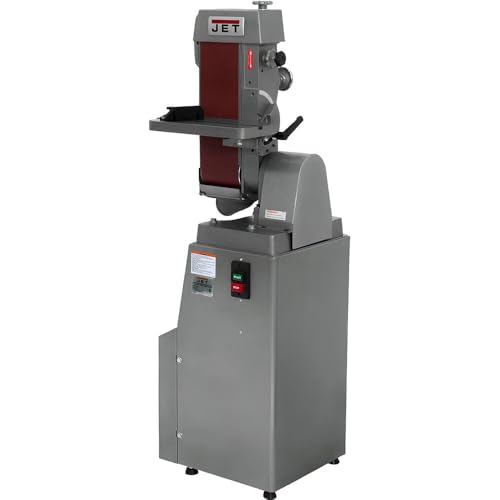
What We Like
- Completely enclosed drums and guarded belt for safety.
- Table tilts for angle finishing operations.
- Removable platen and upper guard for contour work.
- Fine-thread adjustments for simple belt tracking.
Trade-offs
- Requires a 3-phase power supply, limiting shop compatibility.
- At 211 lb, it demands permanent floor space and a sturdy stand.
A 1-1/2 HP three-phase motor on a 211-pound machine is built for the long haul. This sander shrugs off day-in, day-out use in a professional shop, where removing material quickly and holding a precise angle matters more than portability. The fully guarded belt and enclosed drums are thoughtful touches for a safe, clean environment. It’s a fixture, not a benchtop toy, designed for a shop that needs a dedicated, always-ready station for edge work and finishing.
That industrial-grade stability comes with real shop requirements. You need three-phase power and the floor space to commit to it. Compared to a lighter combo unit like the WEN Belt and Disc Sander, this Jet is a single-purpose, focused tool. It forgoes versatility for superior rigidity and control in its core task. For heavy stock removal and precision work on large pieces, its heft is a feature. For a home garage needing occasional use on various materials, its fixed nature and power needs could be a constraint.
JET 16-Inch Drum Sander

What We Like
- SandSmart Auto-Feed Control for consistent results
- Engineered dust hood with 4-inch port
- Toolless parallelism dial and belt trackers
- Complete steel stand included
Trade-offs
- Designed only for wood, not metal or plastic
- Requires two passes for material over 16 inches wide
- Optional casters and extension tables are extra
A 16-inch wide drum lets you dimension solid wood, veneer, and full panels in a single pass, which is the core task for any serious cabinet or furniture shop. The SandSmart system is the real star here, automatically adjusting the feed rate based on motor load so you get uniform stock removal without constantly fiddling with a dial. This machine is built for the woodworker who needs to process a lot of material to a precise thickness with repeatable, hands-off efficiency. The integrated dust control directs chips straight to the port, a critical feature for maintaining a clean and healthy workspace when running miles of abrasive.
This machine is built exclusively for wood, not metal or plastic, which means it’s a dedicated tool for thicknessing solid stock, veneer, and panels. Its SandSmart system automatically adjusts the conveyor speed based on the drum’s load, so you get consistent sanding results without constantly monitoring a control dial. The design includes toolless adjustments for conveyor alignment, keeping the workflow focused on high-volume wood processing rather than machine setup.
Powermatic Oscillating Edge Sander
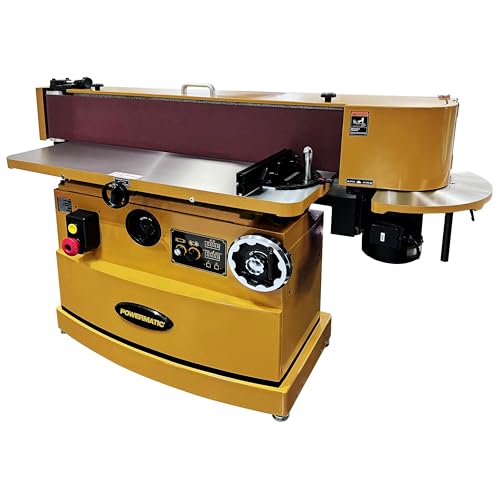
What We Like
- Massive 9" x 138" belt handles large workpieces
- Large, stay-flat table supports oversized projects
- Oscillation extends belt life and maintains cut quality
- Variable belt speed and 0-45° tilt offer precise control
Trade-offs
- At 810 pounds, it requires dedicated floor space
- Requires a 230V 3-phase electrical supply
A 9-inch by 138-inch abrasive belt is the defining feature here, giving you an enormous sanding surface perfect for long cabinet sides or intricate curves on large pieces. The accompanying 13″ x 46″ table is built to keep those projects flat and supported. This sander is built for the serious woodworker whose projects routinely exceed the capacity of standard benchtop or even floor-standing machines. The oscillation function is a smart touch, helping to keep the belt clean and extending its life during long sessions.
You pay for that capacity with a substantial footprint and weight, so this isn’t a tool you’ll be moving around the shop. The lack of a powered feed table means you’ll be hand-feeding stock, which is typical for an edge sander but a notable step down in convenience compared to a true wide-belt sander like the Powermatic 1632. That machine automates the feed for flat stock, but it doesn’t offer the vertical belt and intricate shaping capabilities this oscillating edge sander provides. Your choice hinges on whether you need to dimension flat panels or shape large, complex edges.
Product photos
WEN Belt and Disc Sander

What We Like
- Combines a 6×48 belt and 9-inch disc sander
- 9 Amp motor provides ample power for home shop tasks
- Heavy-duty frame reduces vibration during operation
- Includes stand, miter gauge, and dust ports
Trade-offs
- At 83.8 lb, it's a substantial benchtop unit requiring a dedicated space
- Fixed belt and disc sizes offer less flexibility than open-end models
A 9 Amp motor driving both a 6-by-48 inch belt and a 9-inch disc gives you two essential shop tools in one affordable footprint. For the home woodworker setting up a first serious shop or the DIYer tackling varied projects, this WEN model delivers core sanding functions without breaking the bank. The included stand gets it to a comfortable working height right away, and the heavy-duty construction keeps things stable when you’re working an edge flat or smoothing a face on the disc.
The trade-off is specialization. This is a capable generalist, but its fixed belt orientation and size can’t match the dedicated edge work of a machine like the Powermatic Oscillating Edge Sander. Research and owner feedback indicate it’s a reliable workhorse for its class, perfect for someone who needs both belt and disc functions but isn’t ready to invest in separate industrial units. You’re buying foundational capability, not niche performance.
Product photos
Jinlida 2×72 Belt Grinder Sander
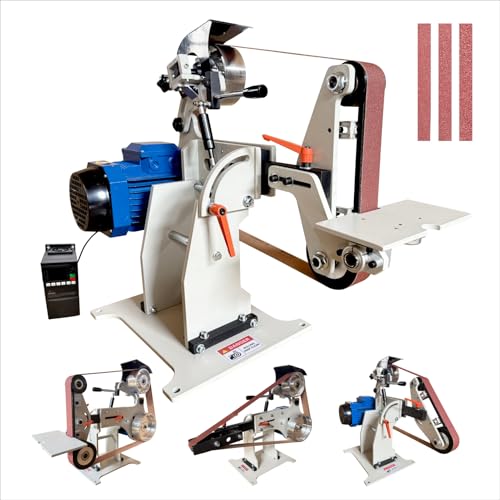
What We Like
- Pure copper 1500W motor for heavy-duty work
- Stepless VFD speed control for material adaptation
- Multiple grinding kits for versatile shaping
- Industrial-grade steel frame resists vibration
Trade-offs
- Belt size is 2 inches wide.
- Requires 30 by 24 inches of floor space.
A 2.2kW variable frequency drive provides precise control from a stop up to 2800 rpm, allowing speed to be matched to material hardness like steel or softwood for different grinding tasks. This supports versatile processing from coarse to fine work on materials including metal and wood. The included kits enable circular grinding for curved workpieces, flat grinding for plates, and arc grinding for irregular structures.
Its 2×72 inch belt size is narrower than larger industrial machines like the 16-inch wide Powermatic 1632, which is designed for flattening broad surfaces. The three included belts range from 60-grit for coarse work to 180-grit for fine polishing, covering a full grinding sequence. The one-piece steel frame is built for industrial stability with minimal vibration during heavy use.
Product photos
How We Evaluated Wide Belt Sanders
Our evaluation was research-based, analyzing manufacturer specifications, technical documentation, and professional woodworking and metalworking round-ups. We focused on the criteria that matter most for these substantial machines: sanding capacity and power requirements, build quality and stability, and operational features for shop efficiency. This included comparing belt sizes, motor specifications, dust collection systems, and the physical footprint each model demands.
We also examined patterns in owner feedback from professional forums to understand real-world performance and common trade-offs. This research-based guide emphasizes the importance of verifying your shop’s power supply and spatial constraints against a machine’s specific requirements before purchasing.
What To Look For In Wide Belt Sanders
Selecting a wide belt sander is a major shop decision. You must balance the machine’s industrial capabilities with your available space, power, and the specific materials you work with. It’s crucial to understand what a wide belt sander is and how it differs from other stationary sanders like a drum sander or handheld unit.
Key buying criteria are power and electrical requirements, sanding capacity and belt size, and the machine’s overall footprint and build. Always match the sander’s capabilities to your most common workpiece dimensions and material types.
Power and Electrical Requirements
Wide belt sanders are power-hungry. Motors often range from 5 HP to 30 HP in industrial models, and they rarely operate on standard household circuits. Many require a dedicated 230V supply, and some professional floor models specifically need 3-phase power, which is uncommon in home garages. Sufficient horsepower is critical to maintain speed and avoid bogging down when dimensioning hardwoods or working at full capacity.
Sanding Capacity and Belt Size
The belt dimensions dictate what you can sand. Open-end models, like our best overall, use a 16-inch wide belt that can handle stock over 30 inches long. For panel sizing, a 16-inch drum sander is designed for width, while an edge sander uses a long, narrow belt for shaping. A 2×72-inch belt is standard for versatile metal grinding. Consider both the maximum workpiece width the machine accepts and the abrasive belt’s contact area for your tasks.
Footprint and Build Quality
These are not portable tools. Benchtop units like our best budget combo still weigh over 80 pounds and demand a dedicated, sturdy surface. Floor models often weigh several hundred pounds, requiring permanent shop space and sometimes a custom stand. A heavy, rigid frame minimizes vibration, which is essential for a consistent finish. Look for features like included dust ports and easy-access side panels for belt changes to improve daily workflow.
- Measure your available floor or bench space, including clearance for feeding long stock.
- Verify the machine’s weight and ensure your shop floor or bench can support it.
- Check for standard dust port sizes (like 4-inch) to connect to your existing collection system.
Always choose a sander with a capacity that exceeds your current largest common project to allow for future work.
Wide Belt Sanders Compared
To see how these six models compare across key specifications, review the table below.
| Product | Motor Power | Belt Size | Weight |
|---|---|---|---|
| Powermatic 1632 Open-End Belt Sander | 5 HP | N/A | 996.0 Pounds |
| JET 6×48 Industrial Belt Sander | 1-1/2 HP | 6" x 48" | 211.0 Pounds |
| JET 16-Inch Drum Sander | N/A | N/A | N/A |
| Powermatic Oscillating Edge Sander | 3 HP | 9" x 138" | 810.0 Pounds |
| WEN Belt and Disc Sander | 9 Amp | 6 x 48 in. | 83.8 Pounds |
| Jinlida 2×72 Belt Grinder Sander | 1500W | 2×72 inch | N/A |
Frequently Asked Questions
What is the best wide belt sander?
The best model depends on your primary task. For general stock dimensioning and efficient material removal in a woodshop, our best overall, the Powermatic 1632 Open-End Belt Sander, is an excellent choice due to its air-oscillating head and dual feed speed.
Who makes the best belt sander belts?
Abrasive belt quality is separate from the machine. Manufacturers like 3M, Norton, and Klingspor produce highly regarded belts for industrial sanding. The best belt for you depends on your material (wood, metal, composite) and the grit sequence needed for your finish.
Which is the best belt sander to buy?
For most home workshops needing a versatile station, a combination belt and disc sander like our budget pick offers great value. For professional shops, dedicated floor models like our heavy-duty or large workpiece picks provide the specialized power and precision required.
Is a wide belt sander better than a drum sander?
They serve different purposes. A wide belt sander, particularly an open-end model, is generally faster for stock removal and dimensioning. A drum sander is specifically designed for thicknessing panels and achieving a perfectly parallel finish, often with an automated feed table, but is slower and typically only for wood.
What should I consider for metalworking with a belt sander?
Metalworking demands variable speed control to prevent overheating and damaging the material. Look for a sander with a VFD controller, like our metalworking pick, and a powerful motor. A 2×72-inch belt size is standard for metal grinding and shaping, offering a good balance of width and versatility.
The Bottom Line
For the serious woodworker or small shop needing to dimension stock efficiently, the Powermatic 1632 Open-End Belt Sander is a leading choice. If your budget is tight or you need a versatile benchtop station, the WEN Belt and Disc Sander provides good value. For shops focused on metal fabrication, the Jinlida 2×72 Belt Grinder Sander‘s variable speed and durable build are key features. Before committing, the single most important factor is confirming your shop’s electrical supply can safely and adequately power your chosen industrial sander.
