
10 Best Sanders in 2026
This post contains affiliate links. As an Amazon Associate, we earn from qualifying purchases.
Our top choice is the DEWALT DWE6423 Random Orbit Sander for its excellent vibration control and durable design. For aggressive stock removal, the BOSCH GET75-6N is best, while the DEWALT DCW210D1 excels for cordless freedom. The right sander can turn a tedious chore into an efficient, comfortable part of your project.
The wrong one can leave you with swirl marks, dust everywhere, and a sore arm. For this guide, we researched specifications, expert round-ups, and patterns in owner feedback to sort through the options. You’ll find picks for every need, from furniture finishing to heavy-duty refinishing.
Top 10 Sanders in the Market
Certain content that appears on this site comes from Amazon. This content is provided "as is" and is subject to change or removal at any time.
The Best Sanders, Reviewed
DEWALT DWE6423 Random Orbit Sander

What We Like
- Separate counterweight design reduces vibration.
- Shorter height allows closer access to workpieces.
- Improved dust-sealed switch for longer life.
- Rubber overmold improves grip in critical areas.
Trade-offs
- Corded design limits mobility compared to cordless models.
- Requires an adapter for universal 1-1/4-inch vacuum hoses.
A 3-amp motor provides a variable speed range from 8,000 to 12,000 orbits per minute, allowing control for different sanding pressures. The separate counterweight design reduces vibration, which can help with comfort during long tasks. A shorter overall height lets the user get the sander closer to the workpiece.
The trade-off is the power cord, which keeps you tied to an outlet but delivers consistent, unlimited runtime, a clear advantage over a cordless model like the DEWALT DCW210D1 when you’re working on large projects. Its dust collection is effective, especially when hooked directly to a DEWALT vacuum, but the included bag is a simpler solution than the integrated cyclonic systems on some other models. You’re getting a professional-grade tool engineered for durability and control, not the latest cordless convenience or the most advanced dust extraction.
BOSCH GET75-6N Electric Orbital Sander
What We Like
- Turbo mode for aggressive material removal
- Powerful 7.5 amp variable speed motor
- Accepts a wide variety of 6-inch abrasives
- Includes vacuum hose adapters for dust collection
Trade-offs
- Requires a separate vacuum for dust collection
- At 5.7 lb, it's heavier than many 5-inch sanders
- Front handle is removable, not integral
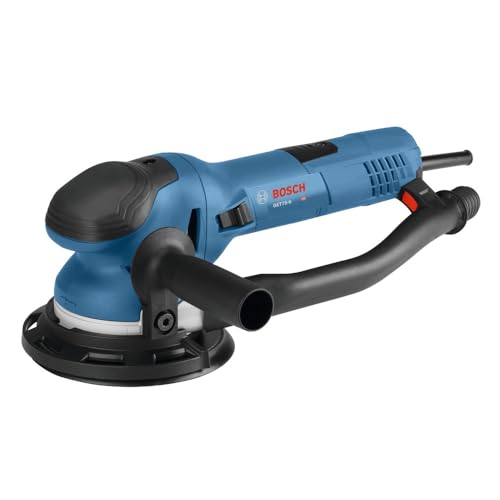
A turbo mode that triples stock removal transforms this from a finishing tool into a legitimate alternative to a belt sander. Its 7.5-amp variable speed motor provides power and flexibility for jobs, with a no-load orbit speed ranging from 3300 to 7300 OPM. This sander is designed for normal removal, most sanding jobs, wood floors, furniture finishing, and polishing applications.
The trade-off for that raw power is heft and a dependency on shop infrastructure. At 5.7 pounds, it demands more arm strength over long sessions than a compact palm sander like the 3.5-pound BOSCH ROS20VSC. Its passive dust collection system requires a vacuum cleaner and compatible hoses, which are sold separately, to keep the workspace clean.
DEWALT DCW210D1 Cordless Orbital Sander
What We Like
- Brushless motor for runtime and efficiency
- Wide variable speed range for application matching
- Low-profile design for precise sanding near edges
- Dust-sealed switch for long-term durability
Trade-offs
- At 4.3 lb, it's heavier than some 5-inch corded sanders
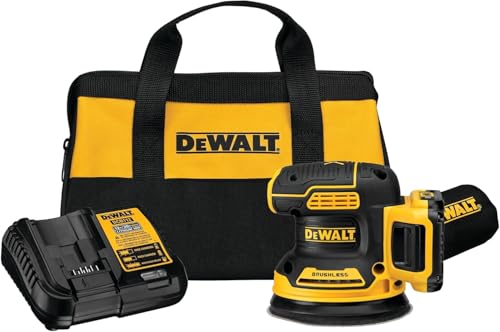
A cordless 5-inch orbital sander with a brushless motor means you can move freely around a project without hunting for an outlet, a major advantage for quick touch-ups or working in an unfinished space. The low-profile body lets you get into corners and right up to trim without the housing getting in the way. This combination of portability and precision is why it stands out for the user who needs to sand in places a cord can’t easily reach.
Moving to cordless operation adds some heft, with this sander weighing 4.3 pounds. That makes it feel more substantial than its 3.4-pound corded cousin from DEWALT. While a corded tool avoids battery runtime concerns for marathon tasks, the cordless design eliminates the hassle of a power cord for most on-site finishing jobs.
BOSCH ROS20VSC Palm Sander
What We Like
- Pad dampening system minimizes swirl marks
- Variable speed control for different tasks
- Effective microfilter dust collection system
- Compact and lightweight at 3.5 pounds
Trade-offs
- Corded design limits mobility on large jobs
- Dust canister requires regular emptying
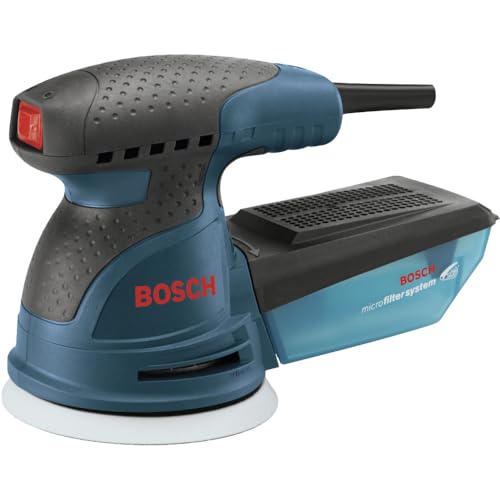
The pad dampening system is the key here, designed specifically to minimize those frustrating swirl marks on flat and contoured surfaces. That makes this sander a prime candidate for anyone whose final step is applying a clear coat or a stain where every imperfection shows. Its variable speed dial, from 7,500 to 12,000 orbits per minute, lets you dial down for delicate veneers or crank it up for faster shaping. Combine that with a dust collection system that filters particles as fine as half a micron, and you have a tool built for clean, finish-ready work, not just rough stock removal.
This sander is a dedicated finishing tool, not a heavy-duty workhorse. Its variable-speed motor adjusts from 7,500 to 12,000 orbits per minute, allowing you to match the speed to your material for a smooth, swirl-minimized surface. The combination of a 3.5-pound weight and a pad dampening system means you can work on contoured areas for extended periods without tiring your arm, leaving a surface ready for stain or paint.
Makita BO4556K Finishing Sander

What We Like
- High 14,000 OPM speed for fast finishing
- Light 2.5 lb weight reduces user fatigue
- Effective dust collection keeps workspace clean
- Comfortable rubberized grip improves control
Trade-offs
- Sheet sanders require more frequent paper changes than disc models
- Corded design limits mobility compared to a cordless sander
With a 14,000 OPM stroke rate, the Makita BO4556K sands quickly for a smooth finish, reducing the chance of visible swirls. Its 2.5-pound weight and rubberized palm grip allow for comfortable control on vertical surfaces and overhead, which is helpful for extended work on trim or cabinets. The sander has an efficient through-the-pad dust collection system with a built-in port for easy connection to a Makita vacuum, aiding in a cleaner work environment.
This is a dedicated sheet sander, which dictates its work style. You’ll be changing paper more often than with a random orbit model like the **DEWALT DWE6423**, and the rectangular pad can’t get into tight corners like a detail sander. It’s a specialist, not a generalist. For the specific job of fine finishing on flat or gently contoured wood, however, the **Makita BO4556K** delivers a comfortable, vibration-minimized experience that gets the work done right.
SKIL SR232301 Multi-Function Detail Sander
What We Like
- Four-in-one versatility with three tool-free attachments
- Hook-and-loop sanding sheet changes are quick and simple
- Effective dual dust control with filter box and vacuum port
- Low-vibration design with counterweight reduces hand fatigue
Trade-offs
- Corded design limits mobility compared to battery-powered models
- Dedicated detail sander, not suited for large, flat surface work
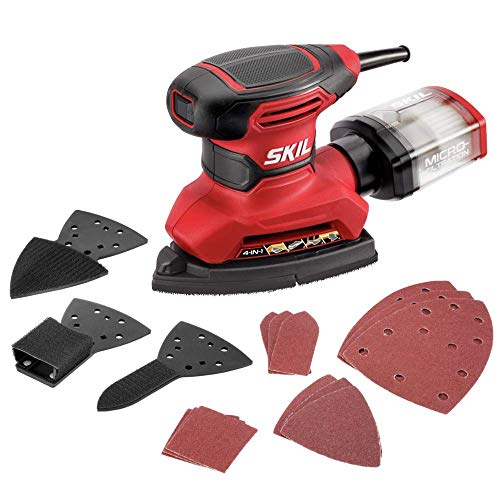
With a 1.2 amp motor and 13,500 orbits per minute, this sander delivers a smooth performance over a variety of sanding applications, providing enough power for the tight corners and contours that define detail work. The three included attachments swap without tools, letting you shift from a broad pad to a pointed tip in seconds to tackle edges, corners, and curved surfaces. Combined with a dual dust-collection system and a lightweight, low-vibration body, it’s built for meticulous, often messy jobs like refinishing furniture or smoothing cabinet interiors where control and cleanliness are paramount.
This is a dedicated detail machine, not a substitute for a palm or orbital sander for large surfaces like a tabletop. For those bigger jobs, you would want to pair it with something like the **BOSCH ROS20VSC**. Its real strength is consolidating several specialty sanders into one compact package. This makes it a logical choice for DIYers or craftsmen who frequently need to finish complex shapes and hard-to-reach spots without constantly switching tools.
Product photos
SKIL SR211601 Random Orbital Sander
What We Like
- Effective cyclonic dust collection system
- Compact, ergonomic design for tight spaces
- Variable speed control for material versatility
- Low-vibration design reduces hand fatigue
Trade-offs
- Corded power limits mobility compared to cordless models
- Dust container requires manual emptying
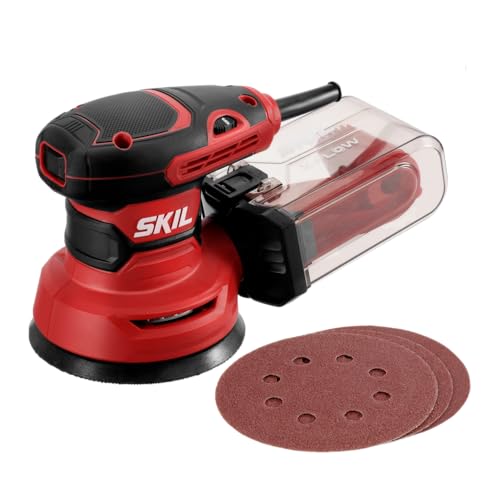
A 13,000 OPM motor and effective cyclonic dust collection deliver solid performance for general sanding tasks without filling your workspace with sawdust. This SKIL sander suits the budget-conscious DIYer who needs a reliable, capable tool for weekend projects. Its compact size and soft grip let you work comfortably in corners and on vertical surfaces, while the variable speed dial provides enough control for different materials.
A 2.8 amp motor spins the pad at 13,000 orbits per minute, providing consistent power for a smooth finish across various materials. Its corded design means you never have to pause for a battery swap, making it a straightforward choice for a workshop. The tool weighs 3.4 pounds, which helps reduce fatigue during extended use, and its compact size lets it reach into tighter spaces than many larger sanders.
Product photos
Festool ROTEX RO 90 Multi-Mode Sander

What We Like
- Tool-free switch between round and delta pads
- Gear-driven aggressive mode for fast material removal
- Produces a fine finish in random orbital mode
- Includes a dedicated polishing mode for shine
Trade-offs
- At 8.9 lb, it's heavier than most 5-inch palm sanders
- Requires a specific 90mm paper size, not common 5-inch
- Larger footprint than dedicated detail sanders
Switching from a round pad to a delta-shaped pad in seconds, with no tools required, gives this sander its unique flexibility. You can quickly strip material from a flat surface, then sand into tight corners or detailed mouldings without a pause. The gear-driven aggressive mode removes material fast, while the random orbital mode delivers a fine finish, and a dedicated polishing mode adds shine. Research mentions it’s a compact, well-balanced tool that offers a taste of Festool performance.
That capability does come with some heft and size. At 8.9 pounds, it’s substantially more tool to maneuver than a dedicated detail sander like the SKIL SR232301 or a standard 5-inch orbital sander. It’s a strong performer for a multi-tool, not a featherweight for overhead work. For someone who needs a dedicated sander for one specific task, like all-day finish sanding on cabinetry, a lighter model like the BOSCH ROS20VSC might be less fatiguing. But if your projects demand constantly switching between heavy stock removal, fine finishing, and detailed work, this is the machine that eliminates the clutter of three separate tools.
Product photos
BLACK+DECKER BDEMS600 Detail Sander

What We Like
- Compact size for tight corners and detailed work
- Three-position grip enhances comfort and control
- Corded design provides unlimited runtime and consistent power
- Dust collection canister keeps the work area cleaner
Trade-offs
- Corded design limits mobility compared to battery-powered models
- The 1.2 Amp motor is less powerful than larger orbital sanders like the BOSCH GET75-6N
A 1.2 Amp motor spins the pad at 16,000 orbits per minute, which provides fast material removal for smaller tasks. Its compact design navigates cramped corners and tight spaces for detailed and precise work. An ergonomic comfort grip enhances control and reduces fatigue during use, while a detail finger attachment allows access to hard-to-reach spots. The corded design offers unlimited runtime, and a dust collection canister keeps the work surface clean.
The sander’s single speed of 16,000 OPM is suited for fast, thorough material removal. A more powerful tool like the DEWALT DWE6423 orbital sander, which offers variable speed, would handle broader, faster work on large flat surfaces differently. This model excels where space is tight.
Product photos
BLACK+DECKER BDERO100 Orbital Sander
What We Like
- Lightweight and compact for tight spaces
- Comfort grip handle reduces user fatigue
- Dust-sealed switch protects internal components
- Quick paper changes with hook and loop system
Trade-offs
- Dust bag only, lacks advanced collection port
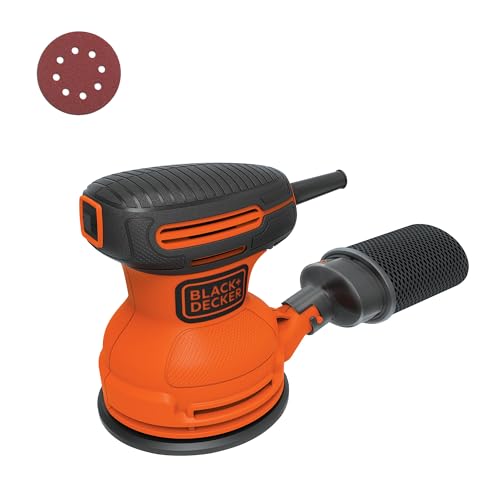
Its pad spins at up to 12,000 orbits per minute, giving it the muscle to remove material quickly without leaving swirl marks. This is a key promise for any orbital tool. The sander weighs 3.2 pounds and has a compact shape, letting you maneuver into corners and work overhead without your arm tiring out. For a homeowner tackling furniture refinishing or a DIYer preparing surfaces for paint, it delivers the core function of a random orbit sander without extra complexity. The included dust bag and comfort grip are practical touches that make the job cleaner and more comfortable.
This tool is built as a straightforward, corded workhorse for getting the job done, not for fine-tuning your technique. For sanding large, flat areas where speed and a swirl-free finish are the only goals, its high-removal orbital action and simple dust collection are perfectly adequate. Think of it as a good first orbital sander, not your last.
Product photos
How We Evaluated Sanders
Our selection is based on a detailed review of manufacturer specifications, design features, and professional woodworking round-ups. We focused on criteria that directly impact a sander’s performance and user experience. These include stock removal speed for efficiency, vibration control for comfort during prolonged use, and dust collection effectiveness for a cleaner workspace and better finish quality.
We also considered specialized features like variable speed control and pad dampening systems that cater to specific tasks from rough shaping to final finishing. A research-led evaluation cannot replicate years of hands-on wear, so we prioritized documented reliability features like dust-sealed switches and brushless motors, which owners report as key to long-term durability.
What To Look For In Sanders
Choosing a sander means matching the tool’s action and features to your most common tasks. A good sander should feel like an extension of your hand, not a fight against vibration and dust.
The core decision is between sander types: random orbital for general work, detail for corners, and sheet sanders for fine finishing. Key factors are dust collection quality, vibration levels for comfort, and motor power or speed control for the material you’re sanding.
Sander Type and Action
The sander’s movement defines its job. A random orbital sander, like our overall pick, uses a spinning and orbiting disc to remove material quickly without leaving swirl marks, making it the most versatile choice for general woodworking. For intricate work on furniture or trim, a detail sander with a triangular or pointed pad is essential for reaching into corners.
If your primary goal is producing a glass-smooth surface on flat panels, a dedicated sheet sander that moves in a straight line may be the best tool for the job. Understanding these types of sanders is the first step to narrowing your search.
Dust Collection and Cleanup
Effective dust collection is not just about shop cleanliness; it directly impacts your health, your sander’s lifespan, and the quality of your finish. Systems range from simple cloth bags, which require frequent emptying, to ports that connect to a shop vacuum for near-total dust capture.
Many modern random orbital sanders feature cyclonic systems in a canister that trap most debris before it reaches the filter. For fine finishing work, dust can become embedded in stain. That’s why a sander with excellent dust extraction is a critical feature and a focus in our guide to the best sander for furniture restoration.
Control and Comfort
Comfort dictates how long you can work effectively. The two biggest factors are vibration and weight. Excessive vibration causes hand fatigue and numbness; look for models with counterbalanced motors or isolated grips.
Weight matters for overhead work or long sessions; a lightweight palm sander around 3 pounds is ideal for finish work, while a heavier, more powerful tool may be necessary for fast stock removal. Other comfort features include a variable speed dial to match the sander’s pace to the material and an ergonomic grip that allows for multiple hand positions.
For ultimate portability and convenience, many users are turning to cordless sanders that eliminate the hassle of a power cord.
Performance Features
- Motor Power (Amps): A higher amp rating (e.g., 7.5A vs. 2.0A) generally indicates more power for aggressive material removal.
- Orbits Per Minute (OPM): A wider OPM range, controllable via variable speed, lets you slow down for delicate surfaces and speed up for rough work.
- Pad Size: A 5-inch or 6-inch pad is standard for random orbit sanders, balancing surface coverage and control. Smaller pads are for detail work.
- Paper Attachment: Hook-and-loop (Velcro) systems allow for the fastest paper changes, while some budget models may use a clip system.
A good rule of thumb: prioritize low vibration and good dust collection for any sander you plan to use for more than a few minutes at a time.
Sanders Compared
The table below compares the key specifications and features of our top picks at a glance.
| Product | Power Source | Orbit Speed (OPM) | Weight | Dust Collection |
|---|---|---|---|---|
| DEWALT DWE6423 Random Orbit Sander | Corded Electric | 8,000 – 12,000 OPM | 3.4 Pounds | Fits DWV010/DWV012 collectors |
| BOSCH GET75-6N Electric Orbital Sander | Corded Electric | 3300-7300 OPM | 5.7 pounds | Passive dust collection system |
| DEWALT DCW210D1 Cordless Orbital Sander | Cordless | 8,000 – 12,000 OPM | 4.3 pounds | Dust-sealed switch |
| BOSCH ROS20VSC Palm Sander | Corded Electric | 7,500-12,000 OPM | 3.5 pounds | Vacuum dust collector |
| Makita BO4556K Finishing Sander | Corded Electric | 14,000 OPM | 2.5 pounds | Through-the-pad dust collection |
| SKIL SR232301 Multi-Function Detail Sander | Corded | 13,500 OPM | 2.6 pounds | Micro-filter box & vacuum port |
| SKIL SR211601 Random Orbital Sander | Corded Electric | 13,000 OPM | 3.4 pounds | Cyclonic dust box |
| Festool ROTEX RO 90 Multi-Mode Sander | N/A | N/A | 8.9 pounds | N/A |
| BLACK+DECKER BDEMS600 Detail Sander | Corded | 16,000 OPM | N/A | Integrated canister |
| BLACK+DECKER BDERO100 Orbital Sander | Corded Electric | 12000 OPM | 3.2 pounds | Built-in bag |
Frequently Asked Questions
What is the best sander on the market?
The “best” depends entirely on your project. For most woodworking and DIY tasks, a 5-inch random orbit sander offers the best balance of speed and finish quality. Our overall pick, the DEWALT DWE6423, is a standout in this category due to its effective vibration reduction and durable construction, making it a reliable choice for prolonged use.
Which type of sander is best?
The best type is the one that matches your work. Random orbital sanders are the most versatile for general surfacing. For fast, aggressive removal on large, flat areas, a belt sander is most effective. For final smoothing and finishing, a dedicated finishing sander or a random orbital with a pad dampening system is ideal.
Are sheet sanders or orbital sanders better?
They serve different purposes. Sheet sanders (which move in a straight line) are traditionally favored for final finishing on bare wood, as they can produce a slightly smoother surface with less chance of swirls. Orbital sanders (including random orbit) are far more common, remove material faster, and are versatile enough for both stock removal and finishing with the right technique.
Who makes the best detail sander?
Several brands produce excellent detail sanders for tight corners and intricate work. Our picks include the versatile SKIL SR232301 Multi-Function model and the budget-friendly BLACK+DECKER BDEMS600. The “best” depends on whether you need multiple attachments or just a simple, compact tool for basic detail sanding.
What should I look for in a sander for woodworking?
For woodworking sanders, focus on a smooth, swirl-free finish and user comfort. Key features include variable speed control to handle different woods and grits. You also want superior dust collection to keep your workspace and workpiece clean, plus a low-vibration design to reduce fatigue during long sanding sessions on furniture or cabinets.
The Bottom Line
For a reliable, high-performance sander that tackles most workshop tasks, the DEWALT DWE6423 Random Orbit Sander is our best overall choice. Its separate counterweight design significantly cuts vibration, making it comfortable for extended use on furniture, cabinets, and general prep work. If your budget is tight, start with the BLACK+DECKER BDERO100 Orbital Sander for basic tasks, or if you need to power through paint and old finish, the BOSCH GET75-6N is built for fast stock removal.
No matter your pick, don’t underestimate the importance of good dust collection, it protects your lungs, your tool, and your final finish.
