
10 Best Random Sanders in 2026
This post contains affiliate links. As an Amazon Associate, we earn from qualifying purchases.
Our best overall pick is the Mirka DEROS II 550X for its exceptionally lightweight design and integrated dust extraction. We also highlight the Makita BO5041 for precise variable speed control and the Skil Random Orbital Sander with Dust Box for great budget-friendly dust management. Choosing the right sander shortens a tedious chore and yields a better finish.
The best tool depends on your projects, budget, and need for features like cordless freedom or variable speed. We built this list by researching specifications, manufacturer documentation, expert round-ups, and patterns in owner feedback. You’ll find clear picks for every priority, from weekend DIY to professional shop work.
Top 10 Random Orbital Sanders in the Market
Certain content that appears on this site comes from Amazon. This content is provided "as is" and is subject to change or removal at any time.
The Best Random Orbital Sanders, Reviewed
Mirka DEROS II 550X Random Orbital Sander
What We Like
- Exceptionally lightweight and low-vibration design
- Integrated dust extraction for cleaner workspaces
- Brushless motor for consistent power delivery
- Bluetooth connectivity for custom settings
Trade-offs
- Tool only, requires separate battery and charger purchase
- Premium positioning may not suit casual users
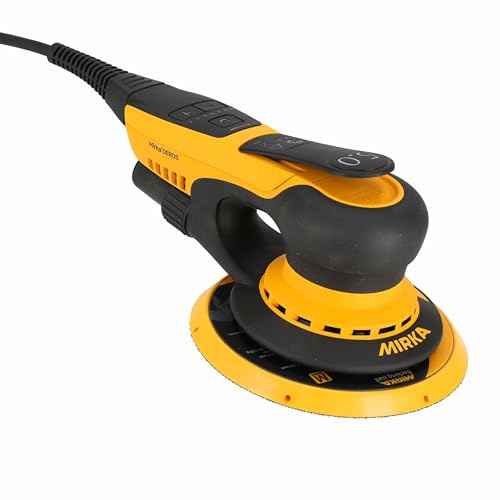
Weighing 2.2 pounds, the Mirka DEROS II 550X is a notably lightweight tool, so it’s easier to handle during long sanding sessions. Its low vibration operation and ergonomic build are designed to improve control and reduce user fatigue across various applications. An integrated dust extraction system helps maintain a cleaner workspace by collecting particles, which supports better visibility of the work surface.
The trade-off is that this is a system, not just a tool. You’re buying into a premium ecosystem where the battery and charger are separate purchases. Its smart features, like Bluetooth connectivity for tuning settings via an app, are brilliant for dialing in perfect results but are overkill for someone just looking to scuff up a paint job. For a straightforward, corded workhorse that still offers excellent dust collection without the extra tech, the Makita BO5041 remains a compelling and simpler alternative.
Product photos
Makita BO5041 Random Orbit Sander

What We Like
- Variable speed dial for matching sanding to the application.
- Large two-finger trigger with lock-on button for continuous use.
- Adjustable front handle allows sanding in corners and confined areas.
- Ergonomic rubberized grip improves operator comfort and control.
Trade-offs
- At 3.1 pounds, it is heavier than some compact models like the Mirka DEROS II.
The Makita BO5041’s variable speed control, dialing from 4,000 to 12,000 orbits per minute, lets you tackle everything from delicate finish work to aggressive stock removal. This makes it a versatile choice for woodworkers who handle a mix of projects and need one sander to adapt. Its 3.0 AMP motor provides smooth, fast sanding, and the ergonomic rubberized grip helps maintain control during long sessions, which is a real comfort on bigger jobs like refinishing a tabletop. The adjustable front handle is a thoughtful touch for getting into tight spots.
The trade-off comes with dust collection. It uses a soft bag that owners report can be a hassle to clean, and the port is quite small, so you’ll likely need an adapter to connect it to your shop vacuum. For a user who prioritizes a completely clean workspace, this is a notable compromise. If dust management is your primary concern, the Skil model with its integrated cyclonic dust box might be a more suitable choice, though you would sacrifice the Makita’s fine-tuned speed control.
Skil Random Orbital Sander with Dust Box
What We Like
- Effective cyclonic dust box is easy to empty
- Low vibration design reduces hand fatigue
- Compact size reaches tight spaces
- Sealed on/off switch prevents dust intrusion
Trade-offs
- At 3.4 lb, it's heavier than the 2.2 lb Mirka DEROS II
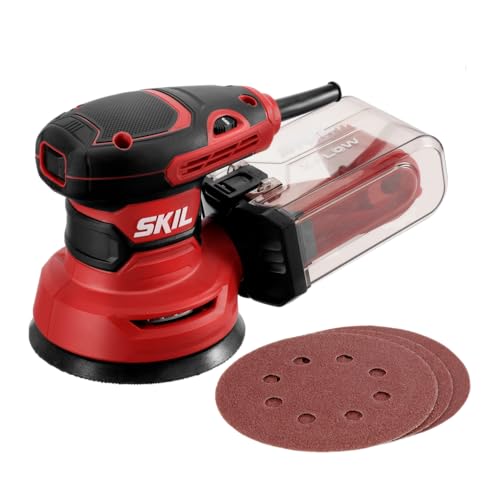
The integrated cyclonic dust box is the standout feature here, capturing a significant amount of debris directly into its transparent container for easy disposal. This makes it a remarkably practical choice for the DIYer or weekend warrior who wants to keep the mess contained without the hassle of dragging a vacuum hose around. Its 2.8-amp motor delivers plenty of power for common sanding tasks, and the variable speed control lets you dial it in for different materials. For someone prioritizing a clean workspace on a budget, this sander hits a very sweet spot.
This sander includes its own dust-collection system, a practical advantage over models like the Festool or Mirka that require a separate vacuum. Its 2.8 amp motor and 13,000 orbits per minute provide enough power for smooth work across various materials. An ergonomic rubber grip and counterweight design help reduce vibration, which can lessen hand fatigue during longer sessions. Variable speed control also allows you to adjust for different surfaces, while the compact shape makes it easier to handle in confined spaces.
DeWalt DWE6420 Random Orbit Sander

What We Like
- Improved dust-sealed switch for longer life
- One-handed locking dust bag for easy collection
- Separate counterweight design reduces vibration
- Rubber over-mold in critical grip areas
Trade-offs
- No variable speed control
- At 3.4 lb, it's heavier than some cordless models
A dust-sealed switch protects against the fine powder that can kill lesser sanders, which should mean longer switch life during dusty work. This model’s motor provides a strong 12,000 orbits per minute for fast material removal. The design uses a separate counterweight to reduce vibration for improved comfort, and rubber over-mold is placed in all critical areas for a solid grip.
This sander does not have variable speed control. Its strength lies in dust management; the port fits directly to DeWalt’s DWV010 or DWV012 dust collectors, and the one-handed locking dust bag is designed to stay put. For other vacuum systems, a universal quick connector is required.
DeWalt DCW210B Cordless Orbital Sander

What We Like
- Lightweight and low-profile for precise control.
- Variable-speed brushless motor offers efficient runtime.
- Texturized rubber grip provides comfortable handling.
- Dust-sealed switch protects against debris for longevity.
Trade-offs
- Tool only: requires a separate 20V MAX battery and charger.
At 2.5 pounds, this sander is light enough to handle comfortably for long sanding sessions. Its low-profile height allows users to get close to the work surface for precise sanding. A brushless motor provides runtime and efficiency, while variable-speed control from 8,000 to 12,000 OPM lets users match the speed to the application.
The trade-off is that you’re buying into a system. You need a DeWalt 20V MAX battery and charger, which adds to the initial outlay if you aren’t already invested. For a dedicated shop user who rarely moves from an outlet, a corded model like the DeWalt DWE6420 might be simpler. But for anyone sanding decks, furniture, or drywall repairs where a cord is a hassle, this sander’s balance of power and portability is hard to beat.
Makita BO5030K Random Orbit Sander

What We Like
- Rubberized grip for comfort and control
- Large 1/8" orbit for fast, smooth finish
- Comes with a protective hard case
- Pad control system for smooth start-up
Trade-offs
- No variable speed control for delicate work
- Dust bag is difficult to clean effectively
- Small dust port requires an adapter for shop vacs
Reviewers report the Makita BO5030K runs a bit quieter than most, which makes using it more pleasant. Its motor and large 1/8″ random orbit action deliver fast and super smooth sanding. This sander comes with a hard plastic case, a bonus over models that include soft cases or none at all.
The trade-off for that simplicity is the lack of variable speed, which can make feathering edges or working with softer materials a bit trickier. Dust collection is functional with its bag, but you’ll want an adapter to connect it to a vacuum for serious cleanup. If you need that speed control, Makita’s own BO5041 model is the logical step up, but you’ll sacrifice the included hard case. This model proves you don’t need every bell and whistle for excellent results on a budget.
Craftsman CMEW231 Orbital Sander
What We Like
- Strong 3-amp motor for aggressive stock removal
- Includes both a dust bag and vacuum hose connection
- Dust-sealed switch for improved tool longevity
- Backed by a substantial three-year warranty
Trade-offs
- At 3.4 lb, it's heavier than the 2.2 lb Mirka DEROS II
- Lacks variable speed control for finer finish work
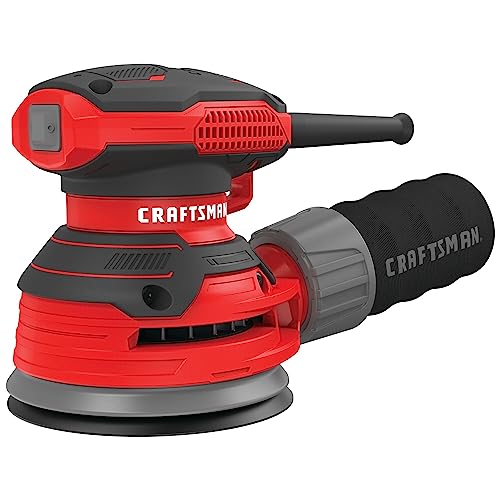
A 3.0-amp motor gives this sander plenty of muscle for quickly leveling surfaces and stripping old finish, spinning at 12,000 orbits per minute. It’s built for the user who needs to power through demanding material prep without bogging down, and the dust-sealed switch adds a layer of durability for workshop life. The included dust bag and standard vacuum hookup help manage the considerable mess that kind of power creates.
This Craftsman sander provides substantial power for aggressive stock removal, with its 3-amp motor delivering a high orbit speed. It is a straightforward, corded workhorse that prioritizes driving force over finesse. Research indicates it was less smooth in operation than the Ryobi RS290G model. For tasks where finish quality is critical, you would look to a model with variable speed like the Makita BO5041, but for sheer power in a budget-friendly package, this Craftsman delivers.
Product photos
WORKPRO Random Orbit Sander

What We Like
- Variable speed control for versatile material handling
- Lightweight 2.7-pound design reduces arm fatigue
- Quick-change hook-and-loop sandpaper system
- Random orbit motion prevents visible sanding marks
Trade-offs
- AC-only operation limits cordless workspace mobility
- Dust collection relies on a basic bag, not an integrated system
- At 2.7 lb, it is heavier than the 2.2 lb Mirka DEROS II
A 2.5-amp motor spins at 14,000 orbits per minute, delivering enough power for grinding wood, iron, and plastic without bogging down. Variable speed control lets you dial in the aggression, making this sander a logical fit for the DIYer who needs one tool for a mix of projects but isn’t ready to invest in pro-grade gear. It handles the fundamentals without fuss.
You do feel the trade-off in its dust collection, which depends on a simple bag rather than a sealed system or shop-vac hookup. It gets the job done, but for a truly dust-free workspace, you’d look at something like the Skil model with its cyclonic box. The WORKPRO shines when your priority is getting a capable, variable-speed sander into your hands without stretching the budget.
Product photos
VEVOR 6-Inch Dual Action Orbital Sander

What We Like
- High-power 850W motor for aggressive material removal
- Large 6-inch pad covers surface area quickly
- Six-speed control for fine finish or coarse work
- Includes ten sandpapers from 80 to 320 grit
Trade-offs
- At 6.8 lb, it's significantly heavier than 5-inch sanders
- Large 6-inch body is less nimble for tight corner work
With an 850-watt motor and a 6-inch pad, this sander offers more power and coverage than typical 5-inch models, making it suitable for large, flat surfaces like tabletops. Its dual-action design includes both a standard orbital mode for smooth, swirl-free finishes and a forced eccentric mode for more aggressive material removal. This combination of a powerful motor and a large sanding area allows for faster work on substantial projects.
That capability comes with a trade-off in size and weight. At nearly seven pounds, it’s a handful compared to something like the featherweight Mirka DEROS, and its bulk can be cumbersome for detailed work or overhead sanding. You’re trading finesse for sheer work rate. This is a dedicated tool for the heavy stock removal phase of a project. Its power and large sanding area will save you time before you switch to a finer, more maneuverable tool for the final passes.
Product photos
DEKOPRO Random Orbital Sander

What We Like
- Includes 16 sanding discs for coarse to fine work
- Six variable speeds for material adaptability
- Ergonomic rubber grip and low-vibration design
- Detachable dust bag for improved cleanup
Trade-offs
- At 3.6 lb, it's heavier than the 2.2 lb Mirka DEROS II
- Corded operation limits mobility versus cordless models
Coming with sixteen sanding discs and six speed settings, this sander is ready for tasks from coarse material removal to fine finishing without additional purchases. Its 2.5A motor can reach up to 14,000 RPM for smooth performance in various applications. A detachable dust bag is included, which the manufacturer states increases work efficiency by reducing clean-up time.
At 3.6 pounds, this sander carries more weight than some models like the 2.2-pound Mirka DEROS II, which could affect user comfort over extended use. An ergonomic rubber grip and a balanced counterweight design are intended to provide control and reduce vibration fatigue. The manufacturer cites a ventilation design to dissipate heat and increase overload capacity for a longer service life.
Product photos
How We Evaluated Random Orbital Sanders
Our research focused on specifications from manufacturers, findings from expert round-ups, and consistent patterns in owner feedback. We prioritized three key criteria for this category: sanding performance (encompassing both aggressiveness and finish quality), effective dust collection for a cleaner workspace, and ergonomics to minimize user fatigue during extended use.
Long-term durability and personal comfort are evaluated based on the consensus of experienced user reports and professional reviews. A comprehensive guide to the best sanders shows how random orbital models fit within the broader tool category.
What To Look For In Random Orbital Sanders
A good random orbital sander removes material efficiently, leaves a smooth surface free of swirl marks, and is comfortable to use. Balancing power, control, and convenience is key.
Look for a tool that offers a balance of aggressive stock removal and a fine finish, integrates well with your dust collection, and feels comfortable in your hand for extended periods. Cordless models offer mobility, while corded ones provide consistent power.
Sanding Performance
Performance involves both aggressiveness for fast material removal and the ability to deliver a flawless final surface. Models with higher orbital speeds and larger orbit diameters often sand more aggressively. The best top-rated random orbital palm sanders combine a compact size with a powerful stroke. Variable speed control is highly valuable, allowing you to slow down for delicate finishing or speed up for rough stock. A quality motor ensures consistent power delivery, whether you choose a corded model for unlimited runtime or a battery-powered random orbital sander for cord-free convenience.
Dust Collection
Effective dust collection is essential for a healthy workspace and a clear view of your work. The best systems connect directly to a shop vacuum or have a self-contained collection box that is easy to empty. Consider the dust port size and whether adapters are included or needed; a non-standard port can be frustrating.
Sealed switches and bearings protect the tool’s internals from abrasive dust, extending its life. Models with excellent onboard collection allow you to work without being tethered to a vacuum, which is a major convenience for quick tasks.
Ergonomics And Weight
A sander’s weight, grip design, and vibration levels directly impact user comfort and control. Lightweight, low-vibration models are far less fatiguing during long sanding sessions, which is a significant advantage for large projects. Ergonomics matter: look for comfortable rubberized grips, balanced weight distribution, and a trigger or switch placement that feels natural. A lower-profile design can help you sand closer to edges. For insights on how different shapes affect use, you can read about the difference between orbital and random orbital.
To manage fatigue, let the sander’s weight do the work instead of pressing down.
- Check the grip shape and padding where your fingers naturally rest.
- Consider if you prefer a palm-grip design or a model with a secondary handle.
- Look for a smooth start-up feature to prevent the tool from jerking.
- Evaluate the ease of sandpaper changes; a good hook-and-loop system should hold securely.
Random Orbital Sanders Compared
The table below compares key features of our top picks at a glance to help you see the differences.
| Product | Motor Power | Orbit Speed | Weight | Dust Collection |
|---|---|---|---|---|
| Mirka DEROS II 550X Random Orbital Sander | Brushless motor | N/A | 2.2 pounds | Integrated dust extraction |
| Makita BO5041 Random Orbit Sander | 3.0 AMP | 4,000-12,000 OPM | 3.1 Pounds | N/A |
| Skil Random Orbital Sander with Dust Box | 2.8 amp | 13,000 OPM | 3.4 lb | Cyclonic dust box |
| DeWalt DWE6420 Random Orbit Sander | 3.0-amp | 12,000 OPM | 3.4 pounds | Improved dust collection |
| DeWalt DCW210B Cordless Orbital Sander | Brushless motor | 8,000 to 12,000 OPM | 2.5 Pounds | Dust port compatibility |
| Makita BO5030K Random Orbit Sander | 3.0 AMP | 12,000 OPM | 2.9 pounds | Through-the-pad system |
| Craftsman CMEW231 Orbital Sander | 3.0 Amps | 12,000 OPM | 3.4 Pounds | On-board bag & vacuum port |
| WORKPRO Random Orbit Sander | 2.5 Amp | 14000 orbits per minute | 2.7 pounds | Dust Bag |
| VEVOR 6-Inch Dual Action Orbital Sander | 850W | 3300 to 7400 RPM | 6.8 Pounds | Dust Connector |
| DEKOPRO Random Orbital Sander | 2.5A | 14,000 RPM | 3.6 pounds | Detachable dust bag |
Frequently Asked Questions
Which random orbital sander is the best?
Our best overall pick is the Mirka DEROS II 550X. It wins for its exceptionally lightweight, low-vibration design and integrated dust extraction, which provide outstanding comfort and a cleaner workspace during long sanding sessions.
What is the best all-round sander?
For most woodworking tasks, a 5-inch random orbital sander offers the best balance of speed, control, and finish quality. They work on both flat and curved surfaces and are suitable for everyone from beginners to professionals, as detailed in many random orbital sander reviews.
What is a random orbital sander best used for?
Random orbital sanders excel at fine finishing and preparing surfaces for stain or paint, as their dual-motion pattern helps avoid visible swirl marks. They are versatile tools for smoothing wood, metal, and primed surfaces on projects like furniture, cabinets, and auto body panels.
What is a good cheap sander?
Look for budget-friendly models that still offer key features like decent dust collection and a comfortable grip. Our picks like the WORKPRO Random Orbital Sander provide variable speed at a budget price, while the Skil model includes a practical cyclonic dust box, making them good values.
How do I choose a sander for a beginner?
Beginners should look for a 5-inch random orbital sander with a comfortable rubber grip, efficient dust collection, and a simple hook-and-loop paper system. Variable speed control is helpful but not essential for starting out. Choosing a model with a good reputation for reliability will serve you well as you learn how to use a random orbital sander.
The Bottom Line
The best overall choice for woodworkers and auto refinishers is the Mirka DEROS II 550X, especially if you value comfort and a dust-free workspace for long, precise sessions. Shoppers on a tight budget should consider the Skil Random Orbital Sander with Dust Box for its self-contained dust control. If you need cordless freedom and already own compatible batteries, the DeWalt DCW210B is a strong option. Ultimately, a sander that feels good in your hand and connects easily to your dust extraction makes the process much more productive and enjoyable.
