
10 Best Drills For Masonry in 2026
This post contains affiliate links. As an Amazon Associate, we earn from qualifying purchases.
For most DIYers tackling concrete and brick, the Deshuo SDS-Plus Lightweight Rotary Hammer Drill stands out as our best overall pick for its capable, dedicated design. We also highlight the DeWalt 20V MAX for pros needing a cordless solution and the Milwaukee M18 Fuel for superior bind-up protection.
Drilling masonry requires a specialized tool; a standard drill will struggle and likely overheat, making hole placement difficult and wear on the tool excessive. Our research, drawing from manufacturer specifications and owner feedback patterns, identifies ten distinct tools for tasks ranging from overhead work to full-scale demolition.
Top 10 Drills For Masonry in the Market
Certain content that appears on this site comes from Amazon. This content is provided "as is" and is subject to change or removal at any time.
The Best Drills For Masonry, Reviewed
Deshuo SDS-Plus Lightweight Rotary Hammer Drill

What We Like
- Lightweight 7.2 lb design for overhead work
- Four-mode selector for varied masonry tasks
- Safety clutch prevents torque bind
- Variable speed trigger with lock button
Trade-offs
- SDS-Plus only, incompatible with standard drill bits
- 3 Joules impact energy limits heavy-duty demolition
- Corded design requires outlet access
A 7.2-pound corded rotary hammer hits the sweet spot for serious DIY masonry work. The 9-amp motor delivers a solid 3 joules of impact energy, which is more than enough for drilling into concrete or brick without being unwieldy. Its four operating modes make it versatile enough to handle drilling, light chiseling, and even tile removal, while the vibration control system means your hands won’t be numb after a morning’s work. This combination of capable power and thoughtful ergonomics makes it a reliable, go-to tool for homeowners tackling substantial projects.
The trade-off is its specialization. It only accepts SDS-Plus bits, so you can’t just grab a standard drill bit from your kit. While its power is ample for most tasks, it’s not built for all-day professional demolition like the heavier Bosch Bulldog Xtreme. For the majority of weekend warriors facing foundation anchors, block walls, or a bathroom remodel, the Deshuo provides the right amount of muscle without the bulk or complexity of pro-grade gear.
Product photos
DeWalt 20V MAX SDS Rotary Hammer Drill
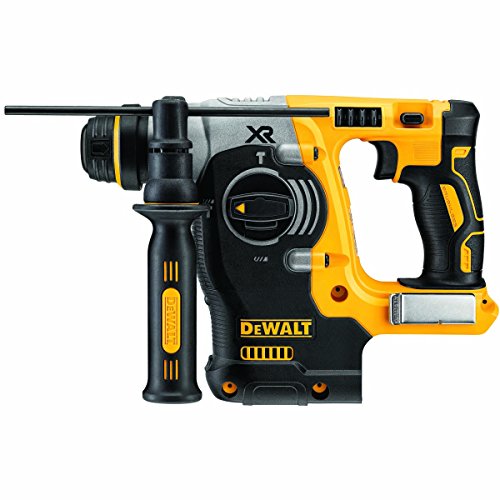
What We Like
- Active vibration control reduces user fatigue
- Lightweight 6.4-pound design for overhead work
- Brushless motor for efficient power and runtime
- OSHA compliant with optional dust extractor
Trade-offs
- Bare tool only; battery and charger sold separately
- 6.4 pounds is heavier than compact hammer drill/drivers
- Lower impact energy than heavy-duty SDS-Max models
This cordless SDS rotary hammer delivers 2.1 Joules of impact energy for fast drilling in concrete. Its SHOCKS ACTIVE VIBRATION CONTROL system reduces vibration felt at the handles compared to models without this feature, which can lessen user fatigue during prolonged tasks like strut mounting. A brushless motor and durable German-engineered mechanism are included for efficient performance and runtime.
The main trade-off is that it’s a bare tool, so you need to already own or budget for a DeWalt 20V MAX battery and charger. Its 6.4-pound weight is light for its class, lighter than the Bosch Bulldog Xtreme, for example. Still, it’s substantially heftier than a compact hammer driver-drill like the DeWalt DCD806B. Choose this rotary hammer when you need dedicated masonry power and the convenience of cordless operation. Opt for a standard hammer drill if your work is mostly wood and metal with only occasional light concrete.
Milwaukee M18 Fuel SDS Plus Rotary Hammer
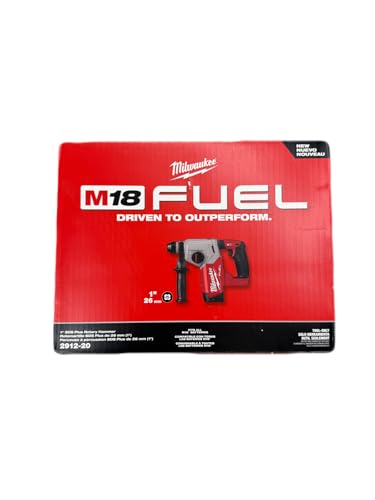
What We Like
- Cordless design boosts on-site mobility
- AUTOSTOP Control senses and reacts to bind-ups
- Fastest drilling speed in its class
- Part of a large 200+ tool system
Trade-offs
- At 7.5 lb, it's heavier than some compact driver-drills
- 13-inch length can be cumbersome in tight spaces
The AUTOSTOP Control feature is the real story here. It actively senses when the bit binds in masonry and shuts the tool down, which dramatically reduces the risk of a violent kickback that can twist your wrist or damage the workpiece. For anyone drilling into reinforced concrete or overhead where control is critical, this built-in safety makes the Milwaukee a standout. Its cordless design provides mobility for working away from an outlet.
You do pay a bit for that protection in size and weight. At 7.5 pounds, it is heavier than other SDS-Plus rotary hammers like the DeWalt DCH273B, which is 6.4 pounds. This makes the Milwaukee a more substantial tool to handle. For dedicated masonry work where bind-up is a real concern, however, the AUTOSTOP feature is worth the extra bulk.
Bosch Bulldog Xtreme SDS-Plus Rotary Hammer

What We Like
- High 2.0 ft/lb impact energy for tough masonry
- Three-mode selector for drilling, hammering, or chiseling
- Vibration control and D-handle for all-day comfort
- Tool-free SDS-plus bit changes with 36-position Vario lock
Trade-offs
- At 10.4 lb, it's heavier than many cordless models like the DeWalt DCH273B (6.4 lb).
- Corded operation limits mobility compared to battery-powered tools.
Delivering 2.0 ft/lbs of impact energy from a 7.5 amp motor, this rotary hammer is built to power through reinforced concrete and dense block without bogging down. It suits users who need relentless, high-performance drilling and chiseling on a jobsite with ready power access. The three-mode selector and vibration-dampening design make it versatile and manageable for prolonged overhead or horizontal work.
The trade-off for that raw power is significant bulk and a cord. At 10.4 pounds and 22.5 inches long, its size and weight exceed many other SDS-Plus models, such as the 7.5-pound Milwaukee M18 Fuel. For a contractor running conduit holes or anchors all day from a stable outlet, the corded power is a clear advantage.
Makita XPH14Z Hammer Driver-Drill

What We Like
- Brushless motor delivers high 1,250 in.lb. torque
- Compact 7" length for tight spaces
- High 31,500 BPM for faster masonry drilling
- Durable all-metal chuck improves bit grip
Trade-offs
- Tool only: requires separate battery and charger purchase
- Heavier than dedicated compact models like the Milwaukee M12
Makita’s brushless motor provides 1,250 inch-pounds of torque, which gives it the power for a wide range of drilling and fastening jobs. Its two-speed transmission and hammer function operating at up to 31,500 blows per minute make it suitable for tasks from woodworking to drilling into masonry materials. The tool is 7 inches long, a design that makes it easier to use in tight spaces while still delivering substantial power.
The trade-off is its weight and purpose. For drilling into concrete all day, a dedicated rotary hammer like the DeWalt 20V MAX SDS will be faster and less fatiguing. But if your work mixes wood, metal, and the occasional concrete anchor, this Makita’s high-torque versatility is hard to beat.
Makita XPH16Z Compact Hammer Driver-Drill

What We Like
- Brushless motor provides up to 70% more power
- Up to 50% longer run time per charge
- Compact size for working in tight spaces
- Two-speed design covers a wide range of tasks
Trade-offs
- Tool-only listing requires separate battery purchase
- Hammer function is for drilling, not dedicated demolition
The efficient brushless motor is electronically controlled to optimize battery energy, delivering up to 50% longer run time per charge. That translates to fewer interruptions swapping batteries on a big job. For the pro or serious DIYer who needs a drill that can push through a full day of mixed drilling and driving, from wood screws to concrete anchors, this Makita’s endurance is a major asset. It means you won’t be constantly reaching for a charger. Its compact size makes it easy to handle in tight spots, too.
The Makita XPH16Z is a compact hammer driver-drill, not a dedicated rotary hammer. Its hammer function is used for drilling into masonry for anchors or mounting hardware, as reported by a carpenter who used it for such tasks. However, it lacks the pure impact energy of a dedicated rotary hammer for serious chipping or breaking. This makes it a versatile choice for general drilling and driving, with the added capability for masonry work, rather than a tool for frequent, heavy-duty concrete demolition.
Milwaukee M12 Fuel Hammer Drill-Driver

What We Like
- Lightweight for tool belt portability and less fatigue
- Brushless motor for power across wide applications
- All-metal chuck for durability and bit retention
- Mechanical clutch for consistent fastener driving
Trade-offs
- Subcompact size trades raw power for portability
Weighing 2.6 pounds, this drill reduces arm fatigue for users who carry a tool all day. Its brushless motor and mechanical clutch provide fast drilling and driving under load, covering a wide range of applications for a subcompact. That lightweight design makes it a strong choice for professionals or serious DIYers who prioritize a portable tool belt.
The trade-off for that featherweight feel is in raw torque, which research shows is lower than what you’d get from a full-size 18-volt drill. For drilling larger holes in concrete or all-day demolition, you’d want a dedicated rotary hammer. But for installing anchors, drilling pilot holes, and general fastening in brick or block, the Milwaukee M12 Fuel provides more than enough punch in a remarkably portable package.
Product photos
DeWalt 20V MAX XR Brushless Hammer Drill

What We Like
- Makes up to 175 holes per charge
- Anti-rotation system for control
- Bright 3-position LED work light
- Compact 3.1-pound, brushless design
Trade-offs
- Tool only: battery and charger sold separately
- Hammer drill, not a dedicated rotary hammer
Making up to 175 holes per charge means you can drill all day on a single battery, a major advantage for jobs far from an outlet or when swapping packs is a hassle. This DeWalt is a compact, brushless hammer drill that balances serious power with an easy-to-manage 3.1-pound frame, suited for pros and DIYers who need a cordless workhorse for frequent masonry tasks without the bulk of a dedicated rotary hammer.
Remember, this is a conventional hammer drill, so it’s designed for drilling into brick or block, not for heavy-duty chiseling or daily core drilling in thick concrete. For those bigger demolition jobs, you’d want to step up to a dedicated rotary hammer. But for most framing, anchoring, and general masonry work, this tool’s endurance and controlled power make it a reliable go-to.
Product photos
Seesii SDS-Plus Lightweight Rotary Hammer
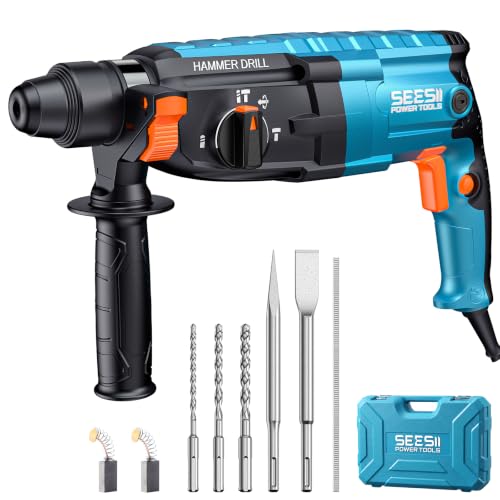
What We Like
- High 3J impact energy for tough concrete
- Lightweight 6.8 lb design reduces fatigue
- Includes bits, chisels, and a case
- Safety clutch protects against rebar kickback
Trade-offs
- Corded design limits mobility on large sites
With 3 joules of impact energy, this hammer punches above its weight class, making it a serious option for drilling anchor holes or chipping away tile without wrestling a heavy tool. That 850-watt motor delivers enough power for most home remodeling tasks, and the included set of bits and chisels means you can start working right away. It’s a well-rounded package for the DIYer who needs real hammering force but appreciates the manageable 6.8-pound frame, especially for overhead work or longer sessions.
Being corded means you’ll need an extension cord for any project more than a few feet from an outlet, which can be a hassle on an unfinished site. For cordless convenience, the DeWalt DCH273B weighs 6.4 pounds, making it slightly lighter, but it’s sold as a bare tool without a battery. The Seesii handles drilling up to 1-1/32″ in concrete, which is ideal for anchors and shelf brackets but not for larger core drilling.
Product photos
ENEACRO SDS-Max Rotary Hammer

What We Like
- High 9 ft-lbs impact energy for heavy demolition
- SDS-Max chuck for large-diameter drilling
- Dual-layer anti-vibration system reduces fatigue
- Complete kit includes bits, chisel, and case
Trade-offs
- Corded design limits mobility compared to cordless rivals
With 9 ft-lbs of impact energy, the ENEACRO SDS-Max Rotary Hammer delivers the brute force needed to chew through thick concrete and brickwork without hesitation. Its industrial motor and SDS-Max chuck support bits up to 1.57 inches, making it a natural fit for serious demolition, foundation work, or commercial masonry tasks where lighter tools would stall. This is a tool built for all-day, high-impact jobs, not occasional light duty.
With a shipping weight of 12.6 pounds and a bare tool weight of 15.2 pounds, the ENEACRO SDS-Max is a heavy-duty tool built for stationary demolition and large-diameter drilling. Its substantial mass provides stability against high impact forces, but demands significant user strength, especially for overhead tasks. This corded hammer occupies a different physical class than lighter cordless SDS-Plus models, such as the DeWalt DCH273B at 6.4 pounds.
Product photos
How We Evaluated Drills For Masonry
Our selection process uses specifications, manufacturer data, professional round-ups, and consistent patterns in owner feedback. We prioritized three key factors for this category. These are the tool’s mechanical action, its impact energy rating for efficiently breaking through concrete, and features that enhance safety and control, like vibration dampening. This is a research-based evaluation of available product information.
What To Look For In Drills For Masonry
Choosing the right tool starts with understanding the different mechanisms available for breaking into hard materials. Knowing the primary differences between tool types and their capabilities will guide you to a better match for your projects.
Start by deciding between a combi drill’s hammer function for occasional brickwork and a dedicated rotary hammer’s superior concrete drilling. Key factors include impact energy for power, a chuck type compatible with masonry bits, and features like vibration control for comfort during extended use.
Action Type: Hammer Drill vs. Rotary Hammer
The first major decision is whether you need a hammer drill/driver or a dedicated rotary hammer. A hammer drill adds a percussive “tapping” motion to the drill’s rotation, suitable for occasional holes in brick or soft block. For frequent work in concrete or stone, a rotary hammer uses a more forceful piston mechanism, delivering significantly higher impact energy with less user fatigue. This fundamental difference between a hammer drill and a rotary hammer determines your tool’s core capability and efficiency on tough materials.
Power & Impact Energy
For hammer drills, look at the rate of blows per minute (BPM) for speed, but raw torque is a key indicator of power. For rotary hammers, the critical metric is impact energy, measured in joules or foot-pounds. Higher impact energy translates to faster drilling and the ability to handle larger diameter holes or demolition tasks.
Lower-powered rotary hammers or hammer drills are sufficient for installing small anchors in block, but drilling for large pipe penetrations or chiseling requires higher energy. Our research on best drills for concrete emphasizes that insufficient power makes the job a frustrating chore.
Chuck System & Bit Compatibility
The chuck is the connection between your tool and the drill bit, and the wrong type will limit your options. Standard keyless chucks on most hammer drills accept round-shank bits, but dedicated rotary hammers typically use SDS-Plus or SDS-Max systems. These specialized chucks allow for tool-free bit changes and are designed to handle the intense hammering action without damaging the bit shank. It’s essential to choose a tool whose chuck matches the masonry drill bits you plan to use, as they are not universally interchangeable.
- Check the tool’s specifications for “SDS-Plus” or “SDS-Max” if you anticipate frequent concrete work.
- Ensure a hammer drill has a secure, all-metal chuck to prevent bits from spinning under load.
- Verify that a rotary hammer kit includes a basic set of bits and chisels, or budget for them separately.
Remember, a standard hammer drill is fine for drills for brick walls, but concrete demands the higher impact energy of a rotary hammer.
Drills For Masonry Compared
The following table summarizes how our top picks compare across the most important specifications for masonry work.
| Product | Impact Energy | Weight | Chuck Type |
|---|---|---|---|
| Deshuo SDS-Plus Lightweight Rotary Hammer Drill | 2.21 ft.lbs. | 7.2 pounds | SDS Plus |
| DeWalt 20V MAX SDS Rotary Hammer Drill | 2.1 Joules | 6.4 pounds | SDS |
| Milwaukee M18 Fuel SDS Plus Rotary Hammer | N/A | 7.5 pounds | SDS Plus |
| Bosch Bulldog Xtreme SDS-Plus Rotary Hammer | 2.0 ft/lbs | 10.4 Pounds | SDS-plus |
| Makita XPH14Z Hammer Driver-Drill | N/A | 4 lbs | 1/2" |
| Makita XPH16Z Compact Hammer Driver-Drill | N/A | N/A | N/A |
| Milwaukee M12 Fuel Hammer Drill-Driver | N/A | 2.4 Pounds | 1/2" |
| DeWalt 20V MAX XR Brushless Hammer Drill | N/A | 3.1 pounds | 1/2 inch |
| Seesii SDS-Plus Lightweight Rotary Hammer | 3J | 6.8 lb | SDS-Plus |
| ENEACRO SDS-Max Rotary Hammer | 9 ft-lbs | 12.6 Pounds | SDS-Max |
Frequently Asked Questions
What is the best type of drill for masonry?
For dedicated, efficient masonry drilling, a rotary hammer is the best type of drill. Its piston-driven hammering action delivers much higher impact energy than a standard hammer drill, making it significantly faster and less taxing on the user when drilling into concrete, stone, or dense block.
What drill to use for masonry?
For occasional, small-diameter holes in brick or soft block, a hammer drill/driver is adequate. For regular work, drilling into poured concrete, or any holes larger than a small diameter, a rotary hammer (corded or cordless) is the right tool. The process for drilling into concrete is much smoother with the proper power tool.
Should you drill masonry fast or slowly?
Start slowly to establish a clean pilot point and prevent the bit from walking. Once the bit is engaged, you can increase speed, but you should never force it or apply excessive pressure. Let the tool’s hammering action do the work; pushing too hard can overheat the bit, dull it prematurely, or strain the drill’s motor.
Can I drill into masonry with a regular drill?
Technically, yes, with a masonry drill bit and a lot of patience, but it is not recommended. A regular drill lacks the hammering action needed to pulverize the material efficiently. It will struggle, overheat, and is likely to burn out the motor on anything harder than soft brick, making it an unreliable and potentially costly choice.
How do corded and cordless masonry drills compare?
Corded models, like many powerful corded hammer drills, offer continuous, maximum power without runtime concerns, ideal for long demolition sessions. Modern cordless rotary hammer drills provide excellent power and ultimate mobility for job-site versatility, though they require battery management and often represent a higher initial investment.
The Bottom Line
The Deshuo SDS-Plus Lightweight Rotary Hammer Drill offers the best balance of power and manageability for DIYers who need a dedicated tool for concrete anchors and brickwork. If your budget is tighter or you need a single drill for both wood and masonry, look at the Makita XPH14Z for its high torque. Professionals tackling heavy demolition should consider the raw power of the ENEACRO SDS-Max.
Ultimately, matching the tool’s impact energy and action type to your specific material, whether it’s soft brick or reinforced concrete, is the most critical factor for a successful and frustration-free project.
