
10 Best 7 Inch Wet Tile Saw Blades in 2026
This post contains affiliate links. As an Amazon Associate, we earn from qualifying purchases.
We researched dozens of 7-inch wet tile saw blades to help you find the right one for your project. Our best overall pick is the DEWALT DW4791 Tile Blade for its durable diamond matrix that cuts fast and clean across many materials. For specialized needs, consider the Pearl P4 for hard porcelain or the QEP Continuous Rim for general-purpose value.
The wrong blade leads to chipped edges, slow progress, and a ruined tile job. For a 7-inch wet saw, the key is matching the blade’s construction to your primary material, whether that’s soft ceramic, dense porcelain, or natural stone.
Our evaluation is based on manufacturer specifications, expert round-ups, and patterns in owner feedback. We’ll explain what makes a blade excel at its job and point you to the right one for your needs.
Top 10 7-Inch Wet Tile Saw Blades in the Market
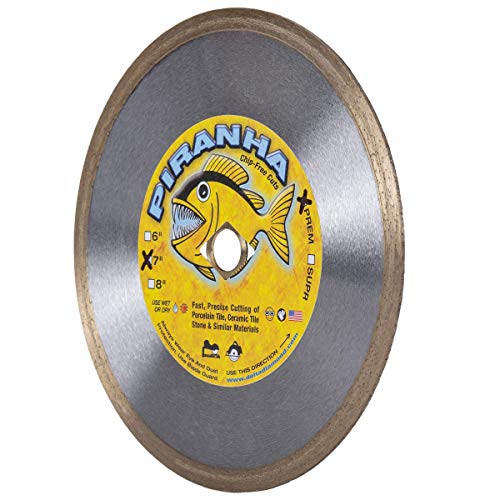
Certain content that appears on this site comes from Amazon. This content is provided "as is" and is subject to change or removal at any time.
The Best 7-Inch Wet Tile Saw Blades, Reviewed
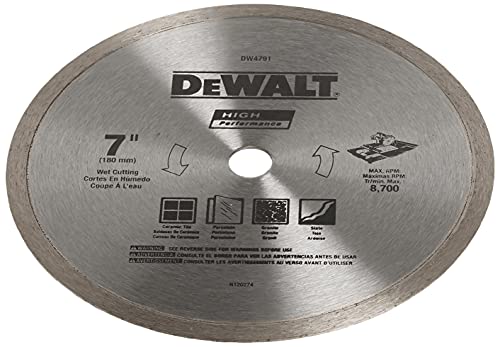
DEWALT DW4791 Tile Blade
What We Like
- Long-lasting diamond matrix for fast cutting
- Chip-free cutting on tile and stone
- Thin kerf minimizes dust and speeds cuts
Trade-offs
- Wet cutting only, no dry use
- Thin 0.5-inch profile limits some saw guards
It’s the right pick for DIYers and pros who need a dependable, fast-cutting blade for a mix of ceramic, porcelain, and stone. The thin kerf design means less strain on your saw’s motor and a cleaner work area with minimized dust. This balance of durability and performance across materials is what makes it a reliable workhorse.
The trade-off is that its segment depth, while substantial, isn’t the same as you’d find on a larger-diameter blade like DeWalt’s own 10-inch model, which is built for extended heavy-duty use. For a dedicated workshop cutting mostly porcelain, a specialized blade like the Pearl P4 Thin Turbo might offer a slight edge in precision. But for the vast majority of all-around tile work, the DW4791 delivers consistent, chip-free results without fuss.
Product photos
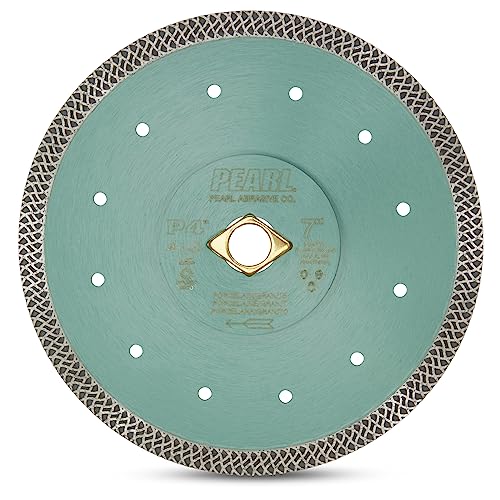
Pearl P4 Thin Turbo Mesh Blade
What We Like
- Extra thin kerf for fast, clean cuts
- Mesh pattern rim keeps blade running cool
- Laminated hub adds stability for straighter cuts
- Premium diamond bond reduces chipping on brittle materials
Trade-offs
- Wet cutting only: requires a water source.
- Heavier than some 7-inch rivals at 0.8 pounds.
Engineered with an extra thin kerf and a turbo mesh rim, this blade specializes in fast, clean cuts through hard porcelain and ceramics. Its premium diamond bond minimizes chipping, which protects expensive tile from flaws that ruin a piece. A laminated center hub reinforces the core for straighter cuts on long passes. For a kitchen full of high-end porcelain, this blade delivers the controlled results the job demands.
The trade-off is that this is a purpose-built tool. Its cool-running mesh design excels on dense porcelain and hard ceramics, but that same focused engineering might not be the most economical choice for a mixed bag of softer ceramic and natural stone. For more general-purpose tile work, a blade like the DEWALT DW4791, with its thicker 0.5-inch profile, could offer a broader utility. But when the material is specifically hard porcelain, the Pearl P4’s clean-cutting performance is what gets the finish right the first time.
MK Diamond MK-225 Hot Dog Blade

What We Like
- Thin rim design helps prevent tile chipping
- Stiffening slots guarantee straight cuts in dense materials
- Cooling slots aid performance with hard porcelain
- Lightweight at just half a pound
Trade-offs
- Lacks the heft of blades like the 1.0-pound Makita for deep cuts
A 0.1-inch thin rim is the defining feature here, engineered specifically to minimize chipping on delicate porcelain and hard tile. This blade is built for the installer who values a clean, precise cut over brute-force versatility. The stiffening and cooling slots are a smart design touch, fighting the heat and deflection that can ruin a straight line on dense materials. If your project list is filled with high-end porcelain or vitreous tile, this blade’s focused design makes it a precision instrument.
Designed for porcelain and hard vitreous tile, this blade’s focus means it excels at clean cuts in those specific materials. Its thin rim and stiffening slots are intended to prevent chipping and guarantee straight cuts in dense porcelain. For a general-purpose option, the Pearl P4 Thin Turbo Mesh is heavier and has different dimensions.
QEP Black Widow Diamond Blade

What We Like
- 7mm rim height extends blade life and cutting contact.
- Diamond-shaped laser cutouts reduce wobble and cool the blade.
- Premium-grade diamond edge for fast cutting of hard tile.
Trade-offs
- Thin rim design is specialized, not for general-purpose masonry.
- Wet cutting only limits its use on dry saws.
- Weighs 0.7 lb, heavier than some thin-rim competitors like the MK-225.
A 7mm rim height gives this blade a longer life and more diamond edge in contact with the material, translating to faster, more consistent cuts through hard porcelain and stone. It’s built for the contractor or serious DIYer who needs a blade that can withstand high-speed, high-volume work without deflection or overheating, thanks to its unique laser-cut cooling vents. If you’re regularly tackling dense tiles and want to minimize downtime for blade changes, this is the specialized tool for the job.
The trade-off for that performance is a strict focus. This isn’t a blade you’d grab for a quick dry cut or for softer materials; it’s engineered for a specific, demanding task. Compared to a more general-purpose continuous rim blade like the QEP Continuous Rim Diamond Blade, the Black Widow’s thin, aggressive profile excels on hard masonry but lacks versatility. You’re paying for precision and endurance in a narrow lane.
Product photos
QEP Continuous Rim Diamond Blade

What We Like
- Continuous rim design for smooth, precise cuts.
- Specifications engineered for a wobble-free blade.
- General purpose for versatile wet ceramic cutting.
- Lightweight at half a pound for easy handling.
Trade-offs
- General purpose, not specialized for hard porcelain or stone.
- At 0.2 inches thick, it creates a wider kerf than thin-rim blades.
- The 0.625-inch arbor may require an adapter for some saws.
The QEP Continuous Rim Diamond Blade is engineered for wobble-free operation, which means it produces smooth and precise cuts in ceramic tile. Its general purpose design is for wet cutting of ceramic, making it suitable for jobs where clean edges are a priority. The diamond blade is built for long-lasting performance with minimal chipping.
The trade-off for that smooth, chip-resistant cut is a slightly wider kerf and a focus on ceramic rather than harder materials. For slicing through dense porcelain, you’d want a dedicated blade like the QEP Black Widow. But for the vast majority of common tile installations, this QEP blade delivers dependable performance without any fuss, covering the most ground for the least investment in your toolkit.
Product photos
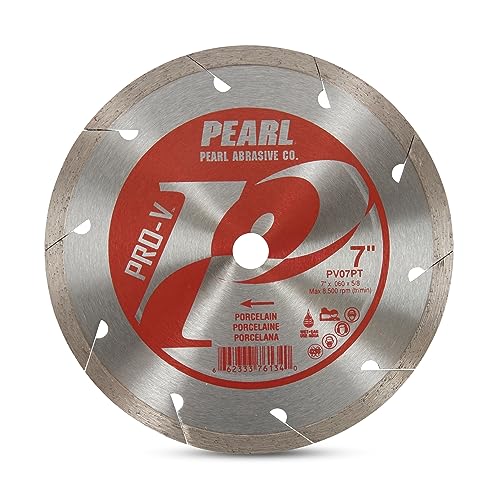
Pearl P2 Pro-V Tile Blade
What We Like
- 8mm rim provides extra durability for tough materials
- Direct Sintering Technology for consistent diamond bond
- Designed specifically for porcelain and stone
- Wet cutting reduces dust and extends blade life
Trade-offs
- Specific to wet saws, not for dry cutting applications
Direct Sintering Technology fuses the diamond segments to the core, which aims to extend the blade’s working life during tough cutting tasks. Its 8mm rim provides a thicker cutting edge, designed to withstand the abrasion of materials like porcelain. This construction suits users needing a blade for extended projects, as noted in general research about diamond blades for dense materials.
You trade a bit of cutting speed for that durability, as the thicker rim requires more power to push through the material compared to a feather-light option like the MK Diamond MK-225 Hot Dog. For intricate cuts or large volumes of softer ceramic, a thinner blade might be more efficient. But when you’re up against hard porcelain and want a blade that won’t quit, the P2 Pro-V’s sturdy construction delivers the reliable performance you need.
Product photos
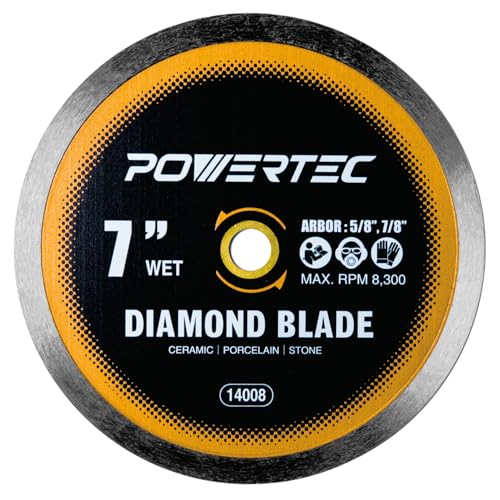
POWERTEC Continuous Rim Diamond Blade
What We Like
- Continuous rim for clean, reduced-chipping cuts
- Includes 5/8 inch adapter ring for wide compatibility
- Wet-cutting design maximizes blade life
- Spring steel core for durability
Trade-offs
- A single dry cut can ruin the blade
- Not suitable for any dry cutting applications
- Designed for tile and stone, not general-purpose materials
This blade is designed exclusively for wet cutting, relying on water to cool it and clear debris. That approach extends its life and maintains smooth cuts on ceramic, porcelain, and natural stone. It’s a solid, no-frills choice for DIYers or contractors who use a wet saw for all their tile work, as it’s built specifically for that job.
Users must be disciplined about keeping the water flowing, as even one dry pass can ruin the blade. Compared to a model like the DEWALT DW4791, which is a full half-inch thick, the Powertec prioritizes precision cutting over brute-force durability. It delivers professional-grade results for its intended wet applications when used as directed.
Product photos
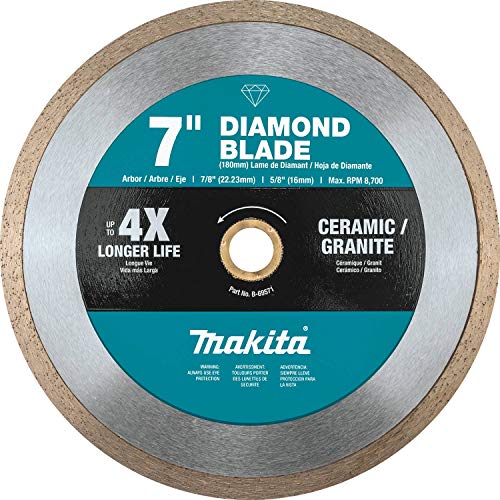
Makita B-69571 Diamond Blade
What We Like
- Continuous rim for precise, smooth cuts
- General-purpose design handles tile, porcelain, and stone
- Optimized bond matrix for faster cutting and longer life
- High-quality diamond concentration extends blade durability
Trade-offs
- At 1.0 lb, it's heavier than the 0.5 lb MK-225 Hot Dog blade.
This blade’s claim of up to four times longer life than competitive options means you can tackle a whole backsplash or floor project without worrying about premature wear. Its continuous rim design makes constant contact with the material, delivering a cleaner edge that often needs less finishing work. That makes it a solid, reliable choice for the DIYer or pro who needs one blade to handle a mix of common ceramic, porcelain, and stone jobs without swapping.
Makita’s B-69571 diamond blade is designed for general purpose cutting of tile, porcelain, and stone, which makes it a versatile single-blade solution. Its continuous rim delivers a more precise and smoother finish than segmented blades, so it’s a good choice for cleaner cuts. The blade weighs 1.0 pounds, a noticeable mass on the saw arbor during long cutting sessions compared to lighter specialty blades.
Product photos
DELTA DIAMOND PRODUCTS INCORPORATED DM-7 7 Inch Wet Tile Saw Blade
What We Like
- Higher diamond concentration for professional use
- Continuous rim enables chip-free cuts
- Lifetime warranty against warping and defects
- Fits many saws from angle grinders to tile saws
Trade-offs
- Dressing process required when dull, adding a maintenance step
- Warranty requires at least 50% of the blade material remains
The ability to cut wet or dry is the defining feature here, making this a uniquely versatile blade for a jobsite where you might not always have a water source handy. It’s built for pros who need one reliable blade that can handle porcelain, ceramic, and stone in any situation. The higher diamond concentration and continuous rim are engineered for smooth, chip-free results, which is exactly what you want on visible tile edges. This is a workhorse designed to be your go-to, not a specialty tool you swap out.
This blade works for both wet and dry cutting, so you can use it indoors on a tile saw or outside with an angle grinder. It carries a lifetime warranty against defects, which means the manufacturer will replace it if the segments separate or the core fails under normal use. The continuous rim design aims for chip-free cuts on materials like porcelain, ceramic, marble, and granite.
Product photos
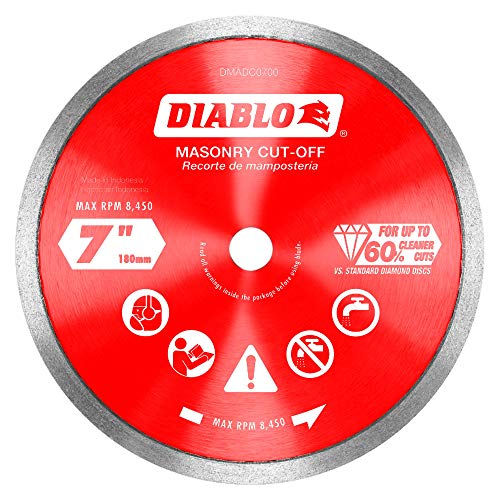
Diablo Diamond Continuous Rim Blade
What We Like
- Ultra-thin continuous rim for precise cuts
- Industrial diamond rim for durable, chip-free results
- Up to 60% smoother cuts without burn marks
- High 8,450 RPM rating for fast-paced work
Trade-offs
- Blade body is 9.5 inches long, requiring ample saw clearance
- Weighs only 0.1 pounds, a lighter build than some competitors
- Continuous rim design prioritizes finish over aggressive material removal
An ultra-thin continuous diamond rim is the key to achieving up to 60 percent smoother, chip-free cuts. This makes the blade a specialist for finish work on delicate tile and stone. Its industrial-grade diamond edge and hardened body deliver that clean edge consistently, so it’s built for the contractor or serious DIYer who needs a polished result on porcelain or marble.
The design prioritizes a flawless cut over brute speed. While it handles a high 8,450 RPM, its continuous rim won’t chew through material as aggressively as a turbo-style blade like the Pearl P4. Its very light 0.1-pound weight and larger 9.5-inch length profile mean it’s engineered for precision in the cut, not for maximum heft in the hand.
How We Evaluated 7-Inch Wet Tile Saw Blades
We compiled specifications and manufacturer data on dozens of 7-inch blades, cross-referenced with professional installer recommendations and owner feedback patterns. This research-based approach identifies which features translate to real-world performance.
Our core criteria were cutting performance for specific materials, blade longevity, and compatibility with common 7-inch wet saws. We prioritized blades that deliver chip-free edges on their intended materials, whether through a thin kerf design or a specialized diamond bond. We also noted weight and arbor size, as these affect handling and fit.
A limitation of this method is that we cannot quantify a blade’s total lifespan in linear feet of cut material. Owner reports on durability vary based on use, so we focused on construction features, like rim height and diamond concentration, that experts link to longer blade life.
What To Look For In 7-Inch Wet Tile Saw Blades
Choosing the right blade is about matching its design to your most common cutting tasks. The wrong blade will wear quickly or damage your tile.
Key factors are the blade’s rim type (continuous for smoothness, turbo mesh for speed), kerf width (thinner for less chipping), and intended material (porcelain, ceramic, or stone). Always verify the arbor size fits your saw.
Rim Design & Cutting Action
The blade’s rim design dictates how it interacts with the material. A continuous rim provides the smoothest, most chip-free finish, ideal for porcelain and stone where the cut edge will be visible. A turbo mesh rim, with its segmented pattern, cuts faster and runs cooler, which can benefit high-volume work but may leave a slightly rougher edge. Some blades, like the Pearl P4 Thin Turbo Mesh, blend a thin profile with a mesh pattern to balance speed and a clean finish.
Kerf & Chip Resistance
Kerf is the width of the cut the blade makes. A thinner kerf, like the 0.5-inch profile on the DEWALT DW4791, removes less material, creates less dust, and reduces the chance of chipping brittle tiles. This is critical for hard porcelain and glass tile. Thicker blades can be more durable for tough materials but may produce a wider, more wasteful cut. When selecting blades for porcelain, a thin-kerf design is often a top priority.
Material Specialization
No single blade is perfect for everything. Blades are engineered with specific diamond bonds and matrixes for different materials. A general-purpose blade, like the QEP Continuous Rim, handles ceramic tile well. For dense porcelain, you need a specialized blade with a premium diamond grade and often a stiffening core, like the QEP Black Widow. Using a blade outside its intended range accelerates wear and leads to poor results. Our guide to wet tile saw blades delves deeper into matching blades to materials.
Arbor Size & Compatibility
The arbor is the hole in the center that mounts the blade to your saw. Most 7-inch wet saws use a 5/8-inch arbor, but some blades come with a different size or include an adapter ring, like the POWERTEC blade. Always check your saw’s manual before buying. A mismatched arbor means the blade won’t fit, or worse, could be unsafe. The process for changing a tile saw blade is straightforward once you have the right fit.
- Check your saw’s manual for the required arbor size.
- Look for blades that include a reducer ring if your saw’s arbor is smaller.
- Ensure the blade’s maximum RPM rating exceeds your saw’s no-load speed.
- Confirm the blade is for wet cutting only, unless your saw is designed for dry use.
- Store blades in a protective case to prevent nicks on the diamond edge.
A blade designed for your primary material will last longer and give better results than a general-purpose blade used on everything.
7-Inch Wet Tile Saw Blades Compared
The following table compares key specifications across our top picks to help you see the differences at a glance.
| Product | Cutting Method | Rim Design/Type | Rim Height |
|---|---|---|---|
| DEWALT DW4791 Tile Blade | Wet cutting | Thin | 5mm |
| Pearl P4 Thin Turbo Mesh Blade | N/A | Thin Turbo Mesh | 10mm tall |
| MK Diamond MK-225 Hot Dog Blade | N/A | Thin rim | N/A |
| QEP Black Widow Diamond Blade | Wet cutting only | Thin rim | 7mm |
| QEP Continuous Rim Diamond Blade | N/A | Continuous rim | N/A |
| Pearl P2 Pro-V Tile Blade | Wet Cutting | 8mm Rim | 8mm |
| POWERTEC Continuous Rim Diamond Blade | Exclusively for wet cutting | Continuous rim | N/A |
| Makita B-69571 Diamond Blade | N/A | Continuous Rim | N/A |
| DELTA DIAMOND PRODUCTS INCORPORATED DM-7 7 Inch Wet Tile Saw Blade | Wet or dry | Continuous rim | N/A |
| Diablo Diamond Continuous Rim Blade | Dry or wet | Ultra-thin continuous | N/A |
Frequently Asked Questions
What is the best saw blade for cutting wet tile?
The best blade depends on your tile material. For a versatile blade that performs well on many types, the DEWALT DW4791 is an excellent choice. If you primarily cut hard porcelain, a specialized blade like the Pearl P4 Thin Turbo Mesh will provide cleaner, faster cuts with less chipping.
What is the best 7 inch wet tile saw blade for cutting porcelain tile?
For cutting porcelain tile, look for blades labeled specifically for porcelain or hard materials. The Pearl P4 Thin Turbo Mesh is a strong choice for this task due to its thin kerf and mesh rim designed to reduce chipping. The MK Diamond MK-225 Hot Dog is another good option for precision work on porcelain.
How long should a wet tile saw blade last?
Blade life varies greatly based on the material being cut and the blade’s quality. A good diamond blade cutting standard ceramic tile can last for many projects. Cutting harder materials like porcelain or stone wears the diamond matrix down faster. Features like a taller rim height, as on the Pearl P2 Pro-V, can indicate a longer-lasting blade.
Can you use a 7-inch blade on a 10-inch tile saw?
No, you should not use a smaller diameter blade than your saw is designed for. The blade guard and water containment system are set for a specific blade size. For larger saws, you need to shop for 10-inch wet tile saw blades or 8-inch wet tile saw blades that match your tool’s specifications.
How to keep tile from chipping on a wet saw?
Use a sharp blade designed for your tile material, ensure the water pump is working to keep the blade cool, and feed the tile into the blade slowly and steadily. A blade with a continuous rim or thin turbo design, like the Diablo Diamond blade, is engineered specifically for chip-free cuts. Proper technique when using a wet tile saw is just as important as the blade itself.
The Bottom Line
For most users needing a reliable, all-around performer, the DEWALT DW4791 Tile Blade is the best overall choice. Its long-lasting diamond matrix handles a wide range of materials from ceramic to stone with clean, fast cuts.
If your budget is tight or you only cut basic ceramic tile, the QEP Continuous Rim Diamond Blade offers great value. For pros tackling hard porcelain daily, invest in a specialized blade like the Pearl P4 Thin Turbo Mesh or QEP Black Widow.
Ultimately, the single most important factor is matching the blade to your primary tile material. Using a blade outside its design limits leads to frustration, wasted tile, and a blade that wears out prematurely.
