
10 Best Tabletop Belt Sanders in 2026
This post contains affiliate links. As an Amazon Associate, we earn from qualifying purchases.
For a heavy-duty, full-capacity benchtop sander, our best overall is the JET Benchtop 6″ x 48″ Belt & 9″ Disc Sander, thanks to its durable cast iron table and graphite-coated platen. We also highlight the powerful DEWALT 4″ x 36″ Belt and 8″ Disc Sander and the budget-friendly WEN Benchtop Belt and Disc Sander.
Choosing the right tabletop sander means matching its power, footprint, and features to your shop’s space and your most common tasks. We built this guide by researching specifications, expert round-ups, and patterns in owner feedback to help you find a machine that fits your bench and your workflow.
Top 10 Tabletop Belt Sanders in the Market
Certain content that appears on this site comes from Amazon. This content is provided "as is" and is subject to change or removal at any time.
The Best Tabletop Belt Sanders, Reviewed
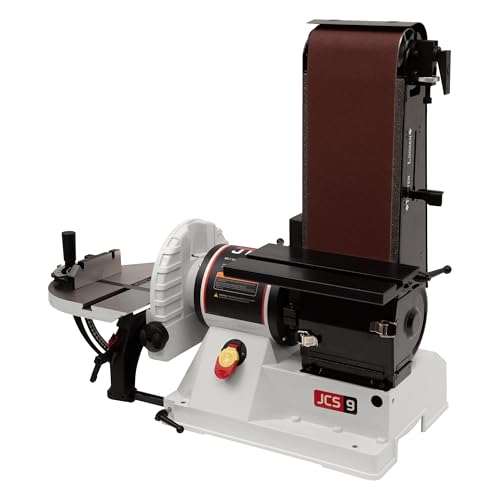
JET Benchtop 6" x 48" Belt & 9" Disc Sander
What We Like
- Large cast iron table tilts to 45° and 90°.
- Graphite-covered platen runs cooler for belt life.
- Rubber-coated drive drum reduces belt slippage.
- Built-in handles aid in moving the 91-pound unit.
Trade-offs
- Weighs 91 pounds, requiring a sturdy, permanent bench.
- Large 31-inch width demands significant shop space.
A 6-inch by 48-inch belt paired with a 9-inch disc provides a large sanding surface for serious material removal and versatility, handling everything from shaping table legs to finishing small parts. Its heavy, 91-pound cast iron construction dampens vibration during use, while details like a graphite-covered steel platen help it run cooler to extend belt life. The rubber-coated drive drum improves belt grip to reduce slippage, making it suitable for frequent, demanding work in a wood or metal shop.
The trade-off for its capacity is a substantial 91-pound weight and a width over 30 inches, requiring dedicated space on a solid bench rather than easy storage. For more compact shops, a model like the DEWALT with a 4×36-inch belt occupies less room. If space allows, the Jet’s full-size abrasives and heavy build deliver performance smaller sanders cannot match.
WEN Benchtop Belt and Disc Sander

What We Like
- Cast iron base minimizes heavy vibrations
- Belt tilts fully for edge and horizontal sanding
- Tension lever simplifies belt changes
- Two-in-one belt and disc sanding functionality
Trade-offs
- 4.3 Amp motor is less powerful than some 3/4 HP models
- 6-inch disc is smaller than 8 or 9-inch competitors
- Belt size is narrower than 6-inch models for wider stock
A 4.3 Amp motor driving both a 4-inch belt and a 6-inch disc gives you capable two-in-one sanding without a complex setup. The cast iron base is the key here, providing a solid foundation that keeps the sander planted during work. This combination of essential function and fundamental stability makes it a straightforward choice for the workshop that needs reliable shaping and finishing without frills. It suits the woodworker who values a simple, effective tool for sharpening blades, smoothing edges, or prepping small projects.
You trade some capacity and power for that simplicity and value. The 4-inch belt is effective for tool sharpening and smaller parts, but it can’t handle the wide surface area a model like the JET JSG-96 with its 6-inch belt can. Think of it as your shop’s dedicated station for detailed work and finishing, not for dimensioning large panels. For the budget-conscious builder needing a permanent, vibration-free sander on the bench, it delivers core performance where it counts.
DEWALT 4" x 36" Belt and 8" Disc Sander

What We Like
- 7.0 AMP motor for demanding sanding tasks
- Two-in-one belt and disc sander design
- Separate die-cast aluminum tables for stability
- Adjustable tables for precise bevel work
Trade-offs
- 4" belt is narrower than some 6" benchtop models
- Disc is 8", not the 9" found on larger sanders
- No variable speed motor specified
A 7.0 AMP motor is the heart of this machine, delivering the consistent grunt needed for heavy stock removal and long sessions without bogging down. This sander is built for the woodworker who values muscle and durability in a compact footprint, pairing that power with a versatile two-in-one design. The separate, tiltable cast aluminum tables add a layer of precision for angled work, making it a solid anchor for a general workshop.
You get a capable 4-inch belt and an 8-inch disc in this compact, powerful package. The trade-off is in surface area. If your primary work involves smoothing the face of wide boards, the narrower belt and smaller disc will require more passes. For broader surfacing tasks, a sander with larger abrasive surfaces is available, though it occupies significantly more bench space.
Product photos
RIKON Power Tools 50-112 Tabletop Belt Sander

What We Like
- Heavy cast iron base minimizes vibration.
- 1900 SFPM belt speed for fast material removal.
- Direct-drive disc provides reliable torque.
- Compact 21-inch length fits on most benches.
Trade-offs
- The 6-inch disc is smaller than many 8 or 9-inch models.
- No variable speed control for different materials.
Heavy cast iron and steel construction provides a vibration-free base, which helps maintain consistent contact between the workpiece and the abrasive surfaces. The belt runs at 1900 SFPM and the disc at 3450 RPM. This combination fits into a footprint 21 inches long by 10 inches wide.
This stability comes from a fixed-speed setup and includes a 6-inch disc, which is fine for smaller parts but can feel limiting on larger pieces. If you regularly need to sand big tabletops or want to fine-tune your speed for different metals, you’ll want to look at a variable-speed model. But for a dedicated, vibration-free workhorse that just works every time you flip the switch, this Rikon is hard to beat.
Product photos
WEN 6 x 48 in. Belt and 9 in. Disc Sander

What We Like
- Large 6-by-48 inch belt capacity
- Combined belt and 9-inch disc sanding
- Heavy-duty body minimizes vibration
- Includes stand and miter gauge
Trade-offs
- At 83.8 pounds, it's not a portable benchtop unit
- Fixed-speed motor lacks variable control
A 6-by-48 inch sanding belt paired with a 9-inch disc creates a serious footprint for larger projects. This machine’s 9-amp motor and heavy-duty build are designed for steady, full-size stock removal, not quick touch-ups. It’s a natural fit for a dedicated workshop where you need to flatten table legs, shape large cabinet parts, or quickly smooth long hardwood edges. The included stand gets it to a comfortable working height right out of the crate.
That substantial capacity comes with a physical footprint. This sander is a floor-standing tool, not something you’ll tuck away on a shelf. For shops where space is tight, a compact benchtop model offers a similar 6-by-48 belt on a much smaller frame, though you sacrifice the included stand. The WEN’s tension release lever makes belt changes straightforward, a welcome feature when you’re cycling through grits on a big job.
BUCKTOOL Dual Speed Belt Disc Sander

What We Like
- Dual-speed brushless motor for 25% more efficiency
- All-metal construction built for metalworking
- Hoop & loop disc design eliminates messy glue
- Quick-release system for fast belt changes
Trade-offs
- The 1-inch belt width is narrow for large surface sanding
- Weighs 20.2 inches tall, requiring a sturdy benchtop
- Lacks the variable speed control of models like the RIKON 50-161VS
A 3/4 HP brushless induction motor running at two set speeds delivers direct power with no belts to maintain, a core advantage for grinding and polishing hard metals. This Bucktool sander is purpose-built for detailed metalwork like knife making, evident in its all-metal frame, dust ports, and work tables. The dual-speed flexibility lets you match the RPM to the material, while the tool-free belt and disc changes keep you working instead of fiddling with hardware.
It uses a dedicated 1-inch belt, which excels at profiling blades but is not meant for sanding broad surfaces. This makes it a specialist compared to sanders with wider belts. The machine is compact and durable enough to handle the heavy sparks and grit of a metal shop. However, its fixed speeds mean you adjust your technique to the tool rather than dialing in a perfect RPM for every task.
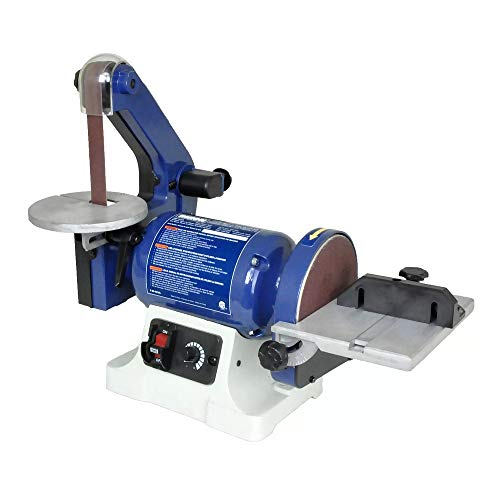
RIKON Power Tools 50-161VS Tabletop Belt Sander
What We Like
- Variable speed control from 2,000 to 3,400 RPM.
- Separate dust ports for belt and disc sanding.
- Includes miter gauge for disc table slot.
- Compact 19.0-inch length for benchtop use.
Trade-offs
- A 1×30-inch belt is narrow for large surface work.
- Smaller 6-inch disc versus typical 8 or 9-inch models.
The ability to dial the belt speed from 1,909 to 3,248 surface feet per minute is this sander’s defining trait. That range lets you match the abrasive to the material. You can run slower for metal or fine finishing and faster for aggressive wood shaping. It’s a compact unit with both a belt and a disc, making it a solid fit for a small shop. You get controlled, versatile sanding for smaller projects like knife handles, tool sharpening, or detailed woodworking. The separate dust ports and adjustable tables are practical touches for a cleaner, more precise workspace.
This sander’s 1-inch wide belt is a defining feature, making it a specialist for detail work and small parts rather than a tool for smoothing broad surfaces. It is narrower than the 4-inch belt on RIKON’s own 50-112 model, which limits its use for bulk material removal. The design trades sanding capacity for a compact, variable-speed package that delivers a useful level of control in a modest footprint for focused, speed-sensitive tasks.
Product photos
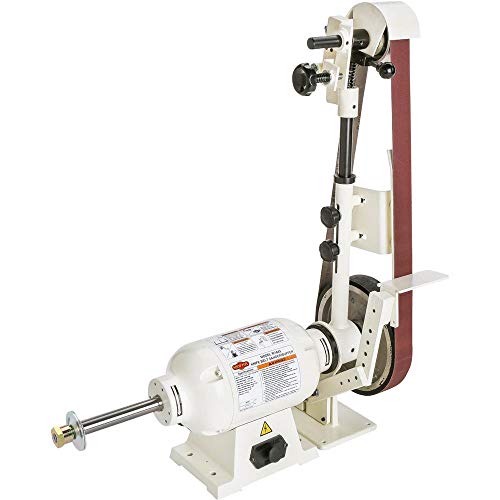
Shop Fox Knife Belt Sander/Buffer
What We Like
- Large 2×72" belt accommodates full knife blanks.
- High 4500 FPM belt speed for efficient material removal.
- 1 HP motor provides substantial power for grinding.
- All ball bearing construction promises smooth, durable operation.
Trade-offs
- At 105 pounds, it requires a dedicated, sturdy bench.
- Lacks the integrated disc sander common on benchtop models.
A 2-inch by 72-inch belt, adjustable up to 76 inches, provides the continuous abrasive surface needed for working long items like knife blades. This is driven by a 1 HP motor that turns the belt at 4500 feet per minute, a combination designed for heavy stock removal. The machine’s all ball bearing construction contributes to smooth operation under that load.
Its 105-pound weight and 39-inch width mean this is a stationary machine requiring a dedicated shop space. Unlike the combined belt-and-disc design of the JET JSG-96, this unit is a dedicated belt sander. The 1 HP motor and 4500 FPM belt speed are specifications commonly associated with metalworking machinery.
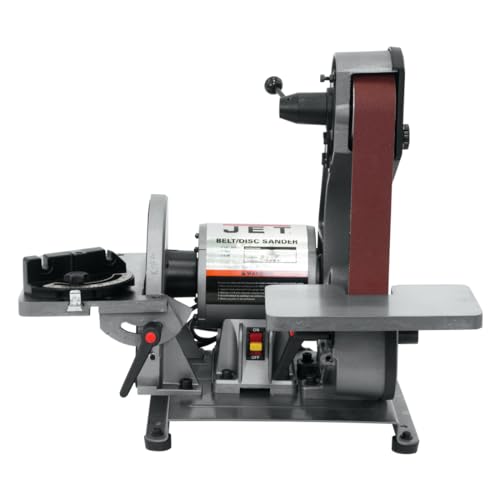
JET 2" x 42" Belt & Disc Sander
What We Like
- Cast iron and steel base ensures vibration-free operation
- Removable platen allows sanding of outside curves
- Deluxe miter gauge locks at 45 degrees left and right
- Dust chute and deflector aid in shop cleanup
Trade-offs
- The 2-inch belt is narrow for large surface work
- At 60 pounds, it's a substantial bench anchor to move
Cast iron construction and a 60-pound steel base give this sander a rock-solid feel that pays off in smooth, chatter-free finishes. That mass, combined with the 3/4 HP motor, handles tough material removal without bogging down. The removable platen and a miter gauge that locks at common angles make it versatile for detailed shaping and precise edge work. This is a tool built for the woodworker or metalworker who values a machine that won’t walk across the bench and delivers consistent results over years of hard use.
A 2-inch wide abrasive belt removes material and finishes at the same time, allowing the operator to get into small openings. This makes it suitable for detailed work, not for dimensioning wide boards. For wider sanding, the JET Benchtop 6″ x 48″ Belt & 9″ Disc Sander has a larger belt.
Product photos
VEVOR Oscillating Belt & Spindle Sander
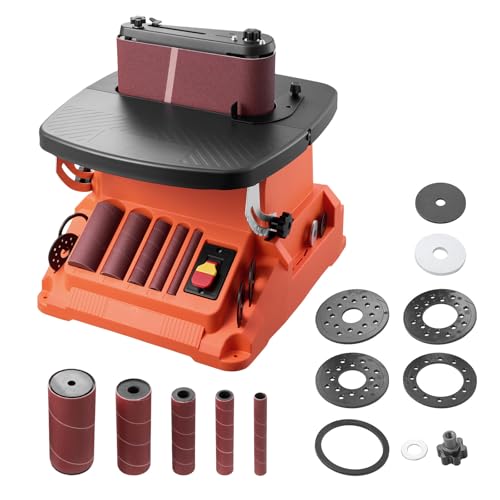
What We Like
- Includes five spindle sleeves for detailed curved work
- Oscillating stroke reduces heat and marks on workpieces
- Tilting worktable adjusts from 0 to 45 degrees
- Integrated storage for sleeves and table inserts
Trade-offs
- 37.5 lb weight requires a sturdy, dedicated bench space
- No disc sander for large flat surfaces
A 5/8″ oscillating stroke paired with five spindle sleeves makes this sander exceptionally adept at handling intricate interior curves and tight contours. The 2400 RPM motor provides the speed needed for smooth finishing on wood and softer materials, while the tilting table adds precision for angled edges. This combination of features is tailor-made for furniture makers, crafters, and DIYers who regularly need to shape and finish curved components without burning the workpiece.
This sander’s specialization is its defining trade-off. Its 24-inch belt excels at sanding edges and smaller convex curves, making it ideal for detailed shaping. You cannot, however, flatten large panels or square long board edges like on a larger 6×48-inch belt and disc sander. For a shop that already owns such a machine, this model becomes a dedicated station for fine work others struggle with.
Product photos
How We Evaluated Tabletop Belt Sanders
Our evaluation focused on manufacturer specifications, professional tool reviews, and consistent patterns in owner feedback. We prioritized motor power for sustained material removal, the construction and adjustability of tables and platens for precision work, and the physical footprint to ensure the sander would fit on a typical workshop bench.
We also considered specialized features like variable speed control for different materials. This research-based approach identifies reliable tools, but it cannot replicate the hands-on feel of using a belt sander or the long-term durability insights that come from years of shop use.
What To Look For In Tabletop Belt Sanders
The right benchtop sander becomes a permanent, go-to station in your shop. It should remove material efficiently, provide a stable platform for precise work, and fit your available space without compromise.
Look for a powerful motor (measured in amps or HP), a sturdy, adjustable table, and a belt size that matches your typical workpieces. Consider if you need a dedicated belt sander or a versatile combination sander that includes a disc.
Motor Power and Belt Speed
Motor power determines how aggressively you can sand without bogging down. Look for amperage ratings for universal motors or horsepower for induction motors; a motor of seven amps or three-quarter horsepower handles demanding tasks well. Belt speed, measured in surface feet per minute (SFPM), affects material removal rate. A speed around nineteen hundred SFPM is common for general woodworking, while higher speeds near forty-five hundred SFPM are geared for metal grinding. For the most control across different materials, a variable speed motor is a significant advantage.
Table and Platen Construction
The work table and the platen (the metal plate behind the sanding belt) are critical for accuracy. A cast iron table is heavier and resists vibration better than aluminum, providing a more stable surface for bevel sanding. The table should lock securely at common angles like 45 and 90 degrees. A longer platen provides more usable sanding area for flattening edges. Some high-end benchtop belt sanders feature graphite-coated platens that reduce friction and heat, extending belt life.
Size, Configuration, and Dust Collection
Benchtop sanders are not small. Measure your available space, considering both the machine’s footprint and the clearance needed for long workpieces on the belt. A classic 6″ x 48″ belt is ideal for large panels, while a 1″ x 42″ belt suits smaller, detailed work. Decide if a belt and disc sander combo offers the versatility you need. Effective dust collection is essential for visibility and shop cleanliness; look for a model with a standard-sized port that easily connects to your shop vacuum.
- Check the belt change mechanism for simplicity and tool-free operation.
- Ensure the belt tracks easily and stays centered during use.
- Look for included accessories like a miter gauge or stand if you need them.
For general woodworking, a 6″ x 48″ belt with a 9″ disc on a sturdy cast iron base is a versatile, shop-ready standard.
Tabletop Belt Sanders Compared
The following table details the key specifications of our top picks to help you compare them at a glance.
| Product | Belt Size | Disc Size | Motor |
|---|---|---|---|
| JET Benchtop 6" x 48" Belt & 9" Disc Sander | 6" x 48" | 9" | 3/4 HP, 115V |
| WEN Benchtop Belt and Disc Sander | 4 x 36 inches | 6 inch | 4.3 Amp |
| DEWALT 4" x 36" Belt and 8" Disc Sander | 4" x 36" | 8" | 7.0 AMP |
| RIKON Power Tools 50-112 Tabletop Belt Sander | 4" x 36" | 6" Disc | N/A |
| WEN 6 x 48 in. Belt and 9 in. Disc Sander | 6 x 48 inches | 9 x 9 inches | 9 Amp, 3450 RPM |
| BUCKTOOL Dual Speed Belt Disc Sander | 1×42" | 8 inches | 4.8A 3/4 HP |
| RIKON Power Tools 50-161VS Tabletop Belt Sander | 1×30 in. | 6 in. disc | 3/4 HP, 120V |
| Shop Fox Knife Belt Sander/Buffer | 2" x 72"-76" | N/A | 1 HP, 110V, 14A |
| JET 2" x 42" Belt & Disc Sander | 2" x 42" | 8" disc | 3/4 HP, 115V |
| VEVOR Oscillating Belt & Spindle Sander | 24" x 3.86" | N/A | 2400 RPM |
Frequently Asked Questions
What is the best benchtop belt sander for a home workshop?
For a home workshop needing a versatile, stable tool, a combination belt and disc sander is often the best choice. Models like our Best Overall, the JET Benchtop 6″ x 48″ Belt & 9″ Disc Sander, offer a large sanding surface and a disc for finishing. For smaller shops or tighter budgets, the WEN Benchtop Belt and Disc Sander provides essential functions on a solid base.
Can you use a tabletop belt sander for metal?
Yes, but you need the right sander. General woodworking belt sanders may overheat or wear belts quickly on metal. Look for a model designed for metalworking, like our award winner for Best For Metalworking, the BUCKTOOL Dual Speed Belt Disc Sander, which features a brushless motor and all-metal construction. For serious knife making, a dedicated grinder like the Shop Fox model with a 2″ x 72″ belt is necessary.
What’s the difference between a belt sander and an orbital sander?
A belt sander uses a continuous loop of abrasive paper moving in one direction at high speed, making it ideal for rapid stock removal, flattening, and shaping. An orbital sander uses a pad that moves in a small, random circular pattern, which is better for final surface preparation and avoiding visible scratch patterns. Understanding the distinction between belt and orbital sanders is key to selecting the right tool for your sanding stage.
How important is variable speed on a belt sander?
Variable speed is very useful for versatility. It allows you to slow the belt for delicate materials like plastics or for fine finishing work, and speed it up for aggressive stock removal on hardwoods or metal. It’s a premium feature, as seen on our Best Variable Speed Control pick, the RIKON 50-161VS, that provides greater control for detailed woodworking tasks with a belt sander.
Do I need a separate disc sander if I have a belt sander?
Not necessarily. While a belt sander excels at straight edges and flat surfaces, a disc sander is superior for sanding perfect right angles and convex curves. A combination benchtop sanders provides both functions in one unit, saving space and cost. If your work frequently involves detailed curved sanding, however, a dedicated oscillating spindle sander might be a better companion tool.
The Bottom Line
The JET Benchtop 6″ x 48″ Belt & 9″ Disc Sander is our best overall for its professional-grade capacity and vibration-dampening cast iron construction. This makes it ideal for serious hobbyists and craftsmen with the shop space for it. For workshops on a budget, the WEN Benchtop Belt and Disc Sander delivers reliable core functions, while metalworkers should look directly to the specialized BUCKTOOL Dual Speed model. Ultimately, choosing the right sander comes down to honestly assessing the size of your typical workpieces and the permanent footprint you can dedicate on your bench.
