
10 Best Handheld Belt Sanders in 2026
This post contains affiliate links. As an Amazon Associate, we earn from qualifying purchases.
Our best overall handheld belt sander is the DeWalt 20V MAX Cordless Belt Sander for its quick-release belt changes and cordless freedom. For woodworking, we like the powerful Metabo HPT SB8V2, and the Milwaukee M18 Fuel offers top cordless power. Choosing the right one depends on whether you need cordless mobility, maximum material removal, or compact size for detail work.
Our research focused on power, control, and ease of use across ten models. This guide helps you find the perfect sander for your projects, from large-scale flattening to fine finish work.
Top 10 Handheld Belt Sanders in the Market
Certain content that appears on this site comes from Amazon. This content is provided "as is" and is subject to change or removal at any time.
The Best Handheld Belt Sanders, Reviewed
DeWalt 20V MAX Cordless Belt Sander

What We Like
- Quick-release, tool-free belt changes
- Comfortable two-handed overmolded grip
- Wireless control for compatible vacuums
Trade-offs
- Tool only: requires separate 20V MAX battery and charger
- Dust collection airlock accessory is sold separately
A brushless motor provides up to 22% more power under ideal conditions, allowing this cordless sander to complete jobs that typically require a corded tool. Its larger sanding surface area tackles big projects faster than a key competitor, while a variable speed dial with 25 settings gives precise control for different materials. Reviewers report it delivered the smoothest finish of any battery-powered sander they tested, and its ergonomic design with an overmolded handle stays comfortable during long sessions.
The obvious trade-off is that you’re buying into the DeWalt 20V MAX ecosystem. You need to already own, or be willing to invest in, compatible batteries and a charger. While its dust collection is highly effective, the proprietary Airlock adapter isn’t included. For a user who already has DeWalt batteries and values cordless convenience above all, this sander is hard to beat. If you’re always near an outlet and want a ready-to-run package, the corded Makita 9903 remains a classic workhorse.
Metabo HPT SB8V2 Belt Sander

What We Like
- Powerful 9-amp motor for aggressive stock removal.
- Variable speed dial for control on different materials.
- Clear front cover for visibility near edges.
- Flush surface design for sanding into corners.
Trade-offs
- Corded design limits portability compared to battery models.
A 1,020-watt motor delivers the grunt needed to flatten table tops and level glued-up panels without bogging down. The variable speed dial lets you dial back for finer finish work, while the clear front cover and flush design help you sand right up to an edge without gouging the adjacent surface.
Research mentions indicate this model performed as effectively as the Metabo HPT in aggressiveness and control and even better at dust collection. It also topped tests in tracking and ease of belt changes. Belt swaps were quick and easy thanks to the lever release system, and the grip and handle positioning kept it comfortable during longer sanding sessions.
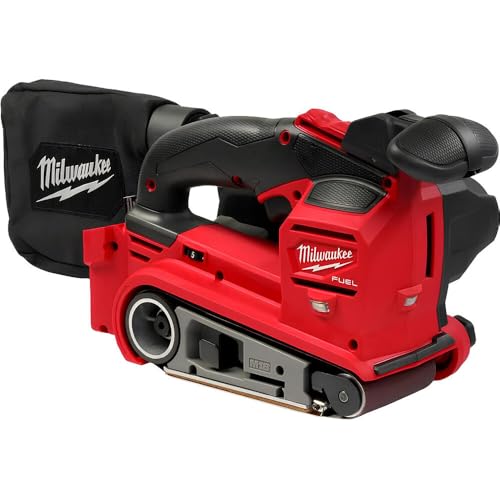
Milwaukee M18 Fuel Belt Sander
What We Like
- Brushless motor delivers corded-level power
- Variable speed dial for precise material removal
- REDLINK PLUS protects against overload and overheating
- Quick belt changes minimize downtime
Trade-offs
- Compatible only with 3×18 belts, not 3×21
- Tool-only model requires separate M18 battery and charger
A brushless motor matches the power of an 8-amp corded sander, so you can tackle serious stock removal without hunting for an outlet. This cordless freedom is combined with a variable speed dial for fine control from 750 to 1350 surface feet per minute. That makes it a go-to for tradespeople and serious DIYers who need to move fast on a job site. It’s built for the user who already lives in the M18 battery ecosystem and demands pro-grade performance.
The commitment to the 3×18 belt size is a notable trade-off, as the more common 3×21 belts won’t fit, which can limit material choices at the hardware store. Compared to the lighter DeWalt DCW220B, the Milwaukee carries more heft at 8.8 pounds, which could lead to fatigue during extended overhead work. This sander trades some versatility and a bit of weight for its substantial, corded-like power in a cordless package.
DeWalt 20V MAX XR Cordless Bandfile

What We Like
- Brushless motor delivers high power for a cordless tool.
- Variable speed dial and trigger provide precise user control.
- Compact 3.7-pound weight offers excellent maneuverability.
- 104° rotating arm adds flexibility and convenient storage.
Trade-offs
- Bare tool only: requires separate 20V MAX battery and charger.
- Half-inch belt width is narrower than standard 3-inch models.
With a compact build weighing under four pounds and a narrow, half-inch belt, the DeWalt DCM200B is built for getting into corners and curves where bulkier sanders can’t reach. Its brushless motor spins that belt at a serious 5,600 feet per minute, so it doesn’t sacrifice material removal for its size. This makes it a standout choice for finish carpenters, furniture makers, or any DIYer who needs to smooth welds, shape contours, or sand in confined areas without the hassle of a cord. The variable speed dial lets you back off the power for delicate work, while the tool-free belt changes keep you in your workflow.
The trade-off for that compact, cordless freedom is that it’s not a sheet-stock sander. You’re not going to flatten a tabletop with a half-inch belt. For larger surfaces, you’d want a full-size belt sander like the Makita 9903. This DeWalt excels as a specialized companion tool. Research and owner feedback consistently highlight its smooth finish and well-balanced feel in the hand, noting that the textured rubber grip provides comfort during extended use on detailed projects.
Makita 9903 Belt Sander

What We Like
- Powerful 8.8 AMP motor for material removal.
- Low 85dB noise level for a belt sander.
- Variable speed dial for matching speed to the job.
- Flush sanding design for work near walls.
Trade-offs
- Corded design lacks the cordless freedom of some competitors.
An 85dB noise level makes this one of the quietest belt sanders you can find for serious work. That’s a huge benefit in a home shop or on a job site where you need to hear your surroundings or avoid ear fatigue. The 8.8 AMP motor and variable speed control mean it has the guts to handle aggressive stock removal, yet you can dial it down for finer finishing tasks. This Makita is a solid pick for anyone who needs a capable, hardworking sander but values being able to hold a conversation while using it.
With a weight of 9.5 pounds, the Makita 9903 demands some arm strength, especially during extended overhead work. Its 8.8 AMP motor provides power while operating at only 85dB, so it won’t scream in your ear. This combination makes it a reliable, straightforward tool for demanding material removal.
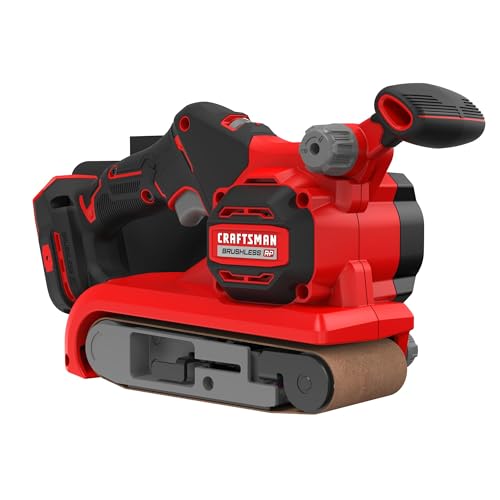
CRAFTSMAN V20 Brushless Belt Sander
What We Like
- Brushless motor for fast material removal
- Five speed settings for multiple applications
- Tool-free belt tracking for easy adjustments
- Three-position handle improves control
Trade-offs
- At 8.0 lb, it's heavier than the cordless DeWalt DCW220B.
- Requires separate V20 battery and charger purchase.
A brushless motor provides up to 950 FPM for a fast material removal rate, delivering solid cordless power for weekend projects. Five variable speed settings allow for multiple applications, from aggressive stock removal to finer finish work. That versatility, combined with tool-free belt tracking for accurate and easy adjustments, makes setup and operation straightforward.
The sander weighs 8.0 pounds, which you may feel during extended overhead sanding compared to lighter options like the 1.0-pound DeWalt cordless model. It delivers reliable cordless convenience for garage woodworking and home renovations, with airlock or dust bag compatibility to help keep work areas clean.
Product photos
WEN 4-by-24-Inch Combination Belt Sander

What We Like
- Variable speed from 660 to 1310 FPM for material control
- Converts to upward-facing stationary sander with benchtop mount
- Lock-on switch enables hands-free continuous operation
- Quick-release lever simplifies belt changes
Trade-offs
- Larger 4-by-24-inch size is less agile for handheld work
- Requires a benchtop for stationary mode, not included
A 10-amp variable-speed motor driving a 4-by-24-inch belt gives you the muscle and real estate for serious material removal, but the real clincher is its dual-purpose design. This sander easily bolts to a workbench, transforming into a stable, upward-facing stationary unit perfect for squaring edges or shaping small parts. It’s built for the workshop tinkerer or furniture maker who needs one tool that can switch between handheld brute force and a fixed sanding station, all without taking up extra floor space.
This WEN sander’s key advantage is its dual nature, easily converting from a handheld tool to an upward-facing benchtop machine with the included mounting pad and clamps. That means a single purchase covers both freehand sanding and precise stationary work, eliminating the need for a second dedicated sander in a versatile workshop. The lock-on power switch allows for continuous operation without holding the trigger, and the included dust bag with a 1.2-inch port helps manage debris.
Product photos
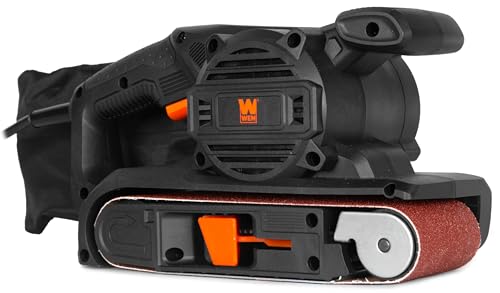
WEN 3-by-21-Inch Variable Speed Belt Sander
What We Like
- Lightweight design limits user fatigue
- Lock-on switch for continuous operation
- Quick-release lever for fast belt changes
- Variable speed offers control for different tasks
Trade-offs
- Corded design limits mobility on large jobs
- Single included 80-grit belt requires immediate purchase of others
At 6.4 pounds, the WEN HB321V is a sander you can run for an hour without your arm going numb. That’s the core of its appeal. Its 7.5-amp motor and variable speed range from 620 to 1200 feet per minute give you enough muscle to tackle a deck board or dial down for finer finish work on a tabletop. The lock-on power switch and quick-release tension lever are practical features that keep you sanding, not fumbling. This is a straightforward, capable tool for the DIYer or hobbyist who needs to remove material efficiently but doesn’t want a heavy, wrist-jarring machine.
This is a corded sander, which provides consistent power in a shop or near an outlet. Its light weight makes it a reliable choice for extended work on stationary projects where managing fatigue is key. For jobs requiring movement over a large area without a cord, a cordless model from the other-products list would be a different consideration.
Product photos
Makita 9924DB Dustless Belt Sander

What We Like
- Extended base enables true flush sanding.
- Quick belt changes with easy-release lever.
Trade-offs
- 3-inch belt width is narrower than standard 3×21 models.
- Requires a nearby outlet due to its corded design.
An extended base allows this sander to work flush against walls and into corners, a key advantage for detail work. Research indicates it removes material nearly as quickly as the Metabo HPT and Makita 9903 models, despite its smaller belt. This combination makes it a specialist for carpenters fitting trim or DIYers refinishing floors right up to the baseboard, offering control where it counts most.
You trade a bit of belt length for that flush-sanding ability, so it’s not the primary choice for sanding vast, open floor areas. For that, a model like the Makita 9903 with its standard 3×21 belt might be more efficient. But for the specific job of getting into tight spots without sacrificing power, this Makita’s focused design and reported performance make it a pragmatic and highly effective solution.
Product photos
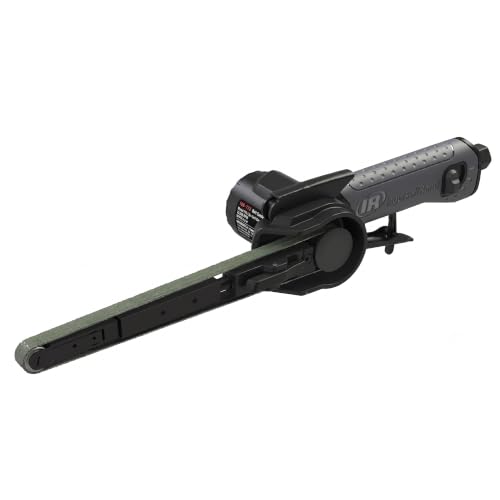
Ingersoll Rand 360-418 Air Belt Sander
What We Like
- Exceptionally lightweight at just 2.4 pounds.
- Tool-free belt changes and articulating arm.
- Compact right-angle design for tight spaces.
- Power regulator for adjustable air flow.
Trade-offs
- Requires a separate air compressor to operate.
- Uses a narrower 1/2-inch belt than most electric models.
Its 2.4-pound weight and compact right-angle build make this sander a standout for overhead work and confined areas where fatigue and maneuverability are primary concerns. The tool-free belt swaps and articulating arm let you switch tasks and angles quickly. This is why it’s the clear choice for metal shops and auto body technicians who need continuous pneumatic power for grinding welds or polishing contours. It’s a specialist’s tool, built for environments where air lines are already part of the infrastructure.
This pneumatic sander requires a separate air compressor, making it less suitable for typical home shops without that setup. Its 2.4-pound weight and continuous air power reduce user fatigue during long tasks, unlike battery-powered models that need recharging. The tool-free belt changes and included sanding belts in three grits let you start working immediately on materials like rust or spot-welds.
Product photos
How We Evaluated Handheld Belt Sanders
Our evaluation is research-based, drawing on specifications, manufacturer documentation, expert round-ups, and patterns in owner feedback. We prioritized criteria that directly impact real-world use: motor power and design for effective material removal, control features like variable speed and ergonomics, and practical design elements such as belt-change mechanisms and dust collection compatibility. You can explore more in our guide to the best belt sanders.
We focused on the power source first, comparing the raw power and runtime of cordless belt sanders against the consistent, high-torque performance of corded belt sanders. For control, we looked at variable speed dials, handle placement, and overall weight, as a sander that’s fatiguing to use leads to poor results. Finally, we assessed ease of maintenance, favoring models with tool-free belt changes and effective dust ports that connect to standard shop vacuums.
The main limit of our research-led approach is that we cannot replicate the feel of a tool in your hand during a long project. While we can identify models praised for balance and low vibration, personal comfort varies. For a broader look at smoothing tools, see our reviews of other handheld sanders.
What To Look For In Handheld Belt Sanders
A belt sander is for aggressive material removal, whether flattening a tabletop or shaping an edge. The right choice balances power with control to prevent gouging your workpiece. Consider where you’ll use it most, a busy jobsite favors cordless, while a workshop can handle a powerful corded model.
Your key decisions are power source (corded for max power, cordless for portability), motor strength (measured in amps or brushless design), and control features like variable speed and ergonomic handles. Belt size and dust collection are also critical for your specific tasks.
Power Source and Motor
Corded sanders plug into an outlet and typically deliver higher, sustained power measured in amps, like the 9-amp motor in our woodworking pick. They are ideal for long sessions of heavy stock removal in a shop. Cordless models offer complete mobility, powered by battery platforms like DeWalt’s 20V MAX or Milwaukee’s M18. Look for brushless motors in cordless tools for better efficiency and runtime, as seen in our top brushless pick.
Control and Ergonomics
Control prevents the sander from running away from you. Variable speed is crucial; it lets you slow down for delicate shaping or speed up for fast removal. A lock-on switch allows for continuous operation without holding the trigger, reducing hand fatigue. Weight and handle design matter immensely; a sander around 9-10 pounds often offers the best balance of control without being overly heavy, while compact models under 4 pounds excel in tight spaces.
Belt Size and Practical Features
Standard belt sizes are 3×21 inches or 3×18 inches, with the longer belt offering more fresh abrasives per pass. Some specialized tools use narrower belts, like 1/2-inch widths for detail work. Always check the dust collection system; a port that accepts a standard shop vacuum hose is far more effective than a bag alone. For technique, learning to use a belt sander properly is key to avoiding dips and swirls.
- Check the belt change mechanism: A quick-release lever is vastly preferable to fiddling with tools.
- Consider flush-sanding capability: If you often work against walls, a sander with an extended base or open side gets closer.
- Evaluate the dust port: An odd-shaped port that requires tape is a hassle during a dusty job.
- Look at handle positions: Multiple grip options, like a three-position front handle, improve control for different tasks.
- Weigh cordless runtime: For larger projects, ensure you have spare batteries or a fast charger.
For general woodworking, a variable-speed corded sander in the 8-10 amp range with a 3×21-inch belt is a versatile starting point.
Handheld Belt Sanders Compared
The table below compares key specifications and features across all ten of our picks to help you see the differences at a glance.
| Product | Belt Size | Motor Type/Power | Max Speed | Weight |
|---|---|---|---|---|
| DeWalt 20V MAX Cordless Belt Sander | 3 in. x 18 in. | Brushless | 5,600 FPM | 1.0 Pounds |
| Metabo HPT SB8V2 Belt Sander | 3 x 21 Inch | 9.0 Amp | N/A | 9.5 pounds |
| Milwaukee M18 Fuel Belt Sander | 3 x 18 inches | POWERSTATE Brushless | 1350 SFPM | 8.8 pounds |
| DeWalt 20V MAX XR Cordless Bandfile | N/A | Brushless, 700 MWO | 5,600 ft/min | 3.7 Pounds |
| Makita 9903 Belt Sander | 3" x 21" | 8.8 AMP | 1,440 ft./min | 9.5 pounds |
| CRAFTSMAN V20 Brushless Belt Sander | N/A | Brushless | 950 FPM | 8.0 pounds |
| WEN 4-by-24-Inch Combination Belt Sander | 4-by-24-inch | 10-amp | 1310 FPM | N/A |
| WEN 3-by-21-Inch Variable Speed Belt Sander | 3-by-21-inch | 7.5-amp | 1200 FPM | 6.4 pounds |
| Makita 9924DB Dustless Belt Sander | 3"X24" | 7. 8 motor | N/A | 10.6 Pounds |
| Ingersoll Rand 360-418 Air Belt Sander | 1/2" x 18" | 0.6 hp | 4,700 sfpm | 2.4 pounds |
Frequently Asked Questions
Which handheld belt sander is the best?
The best sander depends on your needs. For most users wanting cordless freedom and professional performance, the DeWalt 20V MAX Cordless Belt Sander is our top choice due to its quick belt changes and balanced power. For maximum power in a shop, the corded Metabo HPT SB8V2 is an excellent option for woodworking.
What’s the difference between a belt sander and an orbital sander?
A belt sander uses a continuous loop of sandpaper on two drums for fast, aggressive material removal in a straight line, ideal for leveling and shaping. An orbital sander uses a pad that moves in small, random circles to create a fine, swirl-free finish. Understanding the belt sander vs orbital sander differences helps you choose the right tool for the job stage.
What should I look for in a sander for woodworking?
For woodworking, prioritize a powerful motor (9 amps or more), variable speed for control on different woods, and effective dust collection to keep your workspace clean and your lines visible. A design that allows sanding flush to edges is also valuable. Our dedicated guide on sanders for woodworking offers more focused advice.
Are cordless belt sanders powerful enough?
Modern brushless cordless belt sanders are very powerful and suitable for many professional tasks, offering corded-level performance with greater mobility. Their limitation is runtime; for all-day sanding on a large project, you’ll need multiple batteries, whereas a corded tool provides unlimited continuous power.
Can I use a belt sander for finishing?
A belt sander is primarily for rough shaping and stock removal due to its aggressive nature. It is not typically used for final finishing, as it can leave deep scratches. You should follow belt sanding with a finer-grit tool like a random orbital or finish sander to achieve a smooth surface.
The Bottom Line
For professionals and dedicated DIYers who need cordless freedom without sacrificing performance, the DeWalt 20V MAX Cordless Belt Sander is the best overall choice. Its quick-release belt changes and comfortable grip make demanding jobs more efficient, provided you’re already invested in the battery system.
If you’re on a budget, the CRAFTSMAN V20 Brushless Belt Sander offers cordless convenience, while woodworkers needing maximum shop power should look at the Metabo HPT SB8V2. For detail work in tight corners, the compact DeWalt Bandfile is unmatched. Ultimately, your decision between corded and cordless power will be the single most important factor, dictating where and how effectively you can work.
