
10 Best Woodworking Dust Collectors in 2026
This post contains affiliate links. As an Amazon Associate, we earn from qualifying purchases.
Our best overall woodworking dust collector is the WEN DC1300 1300 CFM Dust Collector for its powerful airflow and ability to serve two tools at once. For a high-efficiency cyclone, consider the Jet Cyclone Dust Collector, and the WEN DC3474 600 CFM Dust Collector offers excellent budget-friendly value. Choosing a collector means balancing your shop’s space, your tools’ dust ports, and your health needs for fine dust filtration. We researched specifications, expert insights, and owner feedback patterns to bring you this focused list of ten top-rated options.
Top 10 Woodworking Dust Collectors in the Market
Certain content that appears on this site comes from Amazon. This content is provided "as is" and is subject to change or removal at any time.
The Best Woodworking Dust Collectors, Reviewed
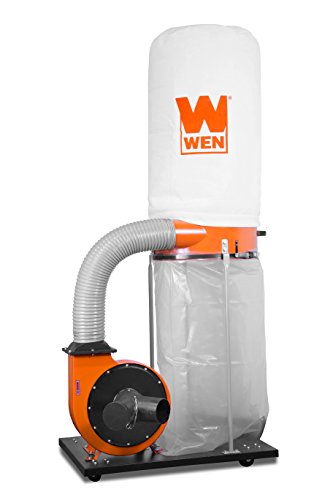
WEN DC1300 1300 CFM Dust Collector
What We Like
- High 1300 CFM airflow for effective chip and dust capture
- Dual 4-inch inlets allow two-tool connections
- Large 50-gallon bag reduces emptying frequency
- Included mobile base for easy shop repositioning
Trade-offs
- 5-micron bag filter is less fine than 2-micron canister systems
- Requires dedicated floor space for its footprint
A maximum airflow of up to 1,300 cubic feet per minute provides substantial suction for capturing debris from larger tools. You can attach two tools simultaneously using the dual 4-inch inlets, which allows you to set up a primary and secondary work station. The vertical collection bag holds up to 50 gallons of dust, so you can complete extended work sessions, and the included mobile base with four swivel casters lets you reposition the unit around the shop.
The included collection bag filters particles down to 5 microns, which captures visible sawdust but allows finer particles to pass compared to other collectors with 2-micron filters. This places it between wall-mount units and more expensive cyclone systems in terms of filtration. It offers a balance of high air volume and practical features like mobility for core workshop tasks.
Jet Cyclone Dust Collector

What We Like
- Two-stage cyclone improves effective CFM
- Manual filter cleaning system is quick
- Remote includes programmable timer settings
- Swivel casters for easy shop mobility
Trade-offs
- Floor footprint requires significant shop space
- At 235 pounds, moving requires solid flooring
Its pleated filter captures particles down to 1 micron, which helps remove fine dust from the air in a shop. The two-stage cyclone separation is designed to provide more working CFM than comparable single-stage units, aiming to sustain airflow. Research that prioritized filtration and airflow placed a premium on these characteristics in dust collectors.
The unit measures 50.7 inches wide and 72.2 inches tall, requiring substantial floor space. It also needs a dedicated 230V electrical outlet. This contrasts with smaller, lower-capacity wall-mount models like the Bucktool, which has a 660 CFM airflow rating.
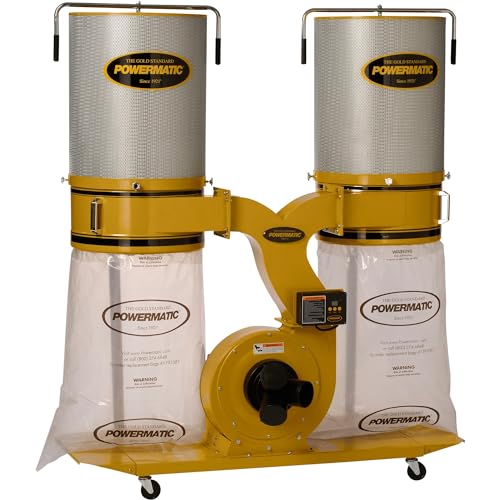
Powermatic TurboCone Dust Collector
What We Like
- TurboCone improves chip separation and bag packing
- All-metal ducting for rigidity and airflow
- Remote-controlled timer for automated shut-off
- Powerful 3-HP motor with steel impeller
Trade-offs
- Weighs 268 pounds, requiring a permanent, sturdy floor space
- Large footprint at 46L x 23W x 45H inches
- Requires a dedicated 230V single-phase electrical circuit
A 3-HP motor paired with a steel impeller moves enough air to handle multiple machines at once, making it the right choice for serious shops running larger equipment like cabinet saws and planers. The TurboCone design is key here. A cone-shaped diverter inside forces debris toward the outer rim as it enters the separation chamber, which better slows down and settles heavier particles into the collection bag rather than clogging the filter. This is built for woodworkers who need sustained, high-volume collection and have the shop space and electrical setup to support it.
The trade-off is its substantial physical presence and power requirements, which place it in a different class than compact wall-mount units like the Bucktool or even larger mobile collectors. Expert round-ups that placed a premium on filtration and airflow gave a Top Tool nod to models like the Jet DC-1100VX-5M for combining both, while noting a similar Powermatic model had ineffective filtering. If your priority is maximum chip and dust removal from big tools, this design focuses on separation and bag packing.
Product photos
WEN DC3474 600 CFM Dust Collector

What We Like
- Powerful 600 CFM airflow for a compact unit
- Includes both mobile base and wall-mount option
- Zippered 15-gallon bag simplifies disposal
- Two-year warranty provides peace of mind
Trade-offs
- 5-micron bag allows finer dust to pass compared to 1 or 2-micron filters
- 15-gallon bag fills faster than 35 or 50-gallon models
- Lower CFM than larger stationary collectors like the WEN DC1300
A 600 CFM airflow from a 7.4-amp motor makes this dust collector a capable workhorse for a single tool setup in a small to mid-size shop. It hits a sweet spot of substantial suction without demanding a massive footprint or electrical upgrade. The combination of swivel casters for mobility and the option for permanent wall mounting offers exceptional flexibility for shop layout. This model suits anyone needing serious chip collection from a planer or table saw but who can’t dedicate a large corner to a cyclone unit.
Collection happens in a 15-gallon bag rated at 5 microns, which handles chips and debris during common woodworking tasks. Compared to stationary units like the Jet Cyclone, the bag’s capacity is more limited, so emptying frequency depends on your project scale. For a single user connecting one tool at a time, the system offers a straightforward approach to managing waste.
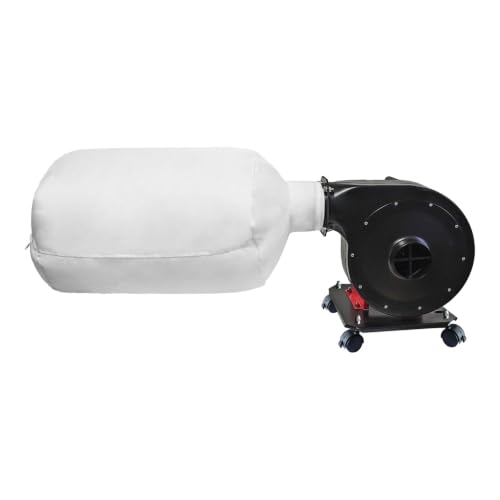
Bucktool Wall Mount Dust Collector
What We Like
- Sealed TEFC motor for quiet, low-maintenance operation
- Dual-mount design offers flexible shop installation
- Captures fine dust down to 2 microns
- Locking casters provide stable portable use
Trade-offs
- 660 CFM is lower than large stationary collectors like the Jet Cyclone
- Relies on a bag for final filtration, not a canister filter
A 660 CFM airflow from a wall-mounted unit means you can effectively hook it to a single machine like a table saw or planer without sacrificing floor space. The 1.2 HP TEFC motor is built for daily shop use, running quieter and requiring less upkeep than universal motors, which makes it a reliable daily driver. This collector suits a woodworker who needs dedicated, efficient dust control for a primary workstation and values a cleaner air environment, thanks to its ability to capture particles down to 2 microns.
With a wall-mount design, this dust collector fits in tighter spaces but delivers up to 660 CFM of airflow for single-tool use. Its dual-mount design with locking caster wheels allows it to be fixed to a wall or moved as a portable unit, offering layout flexibility for a small to mid-size shop. The TEFC induction motor is built for frequent use, running quieter and with less maintenance than brushless motors, which supports a daily workflow.
Product photos
POWERTEC Wall Mount Dust Collector

What We Like
- 1-micron bag captures fine dust effectively.
- Compact wall-mount design saves floor space.
- Vortex base improves dust removal efficiency.
- Built-in bag window shows dust level.
Trade-offs
- 560 CFM is lower than many stationary collectors.
- Requires regular port cleaning to prevent clogging.
The 1-micron filter bag is the key feature here, making this unit exceptionally good at trapping the fine, airborne particles that are a major health concern in any shop. For a hobbyist or small pro shop where floor space is tight, its compact, wall-mounted design is a genuine solution. The 560 CFM airflow is sufficient for connecting to a single machine at a time, like a benchtop sander or small table saw, which fits the typical workflow in a compact workspace.
Its 560 CFM airflow capacity and 1-micron filter bag prioritize fine dust capture over maximum suction, making it suitable for single-tool use in tight spaces. The wall-mount design and compact 19-inch square footprint keep it off the workshop floor entirely. A built-in grate over the 4-inch inlet protects the impeller from large debris, though the instructions note this requires regular checking to prevent clogging and maintain efficiency.
Rockler Dust Right Wall Mount Collector

What We Like
- Compact vertical design saves floor space
- Supports multiple tool connections at once
- Clear bag with bottom zipper simplifies cleanup
- Filter can be upgraded for finer filtration
Trade-offs
- Requires permanent wall mounting, limiting mobility
A 650 CFM airflow from a wall-mounted unit is the core appeal here, letting you connect several tools without sacrificing precious shop floor space. This collector is built for the constrained workshop where every square foot counts. Its vertical design and included Z-bracket mount easily with keyhole slots, clearing the floor for lumber and machinery. It’s a sensible fit for a small to mid-sized shop running a planer, jointer, or small table saw, where central dust collection is needed but a cyclone or large mobile unit isn’t an option.
Consider the filtration. The included 30-micron bag will capture chips and coarse dust, but it lets the finer, more hazardous particles circulate back into the air. For a healthier shop, upgrading to the optional 1-micron canister is practically a necessity. Compared to a free-standing unit like the WEN DC1300, you gain floor space but lose the higher CFM rating and mobile base. For a one-person shop with stationary tools against a wall, this design is a clever solution.
VEVOR 1 HP Wall Mount Dust Collector

What We Like
- Powerful 560 CFM airflow for strong suction.
- Large 21-gallon bag reduces emptying frequency.
- Zippered bottom on bag allows for easy cleanup.
- Wall-mount design saves valuable floor space.
Trade-offs
- 2.5-micron bag filtration lags behind 1-micron competitors.
- 560 CFM is modest for multiple large tools.
With 560 CFM of suction, this collector pulls a solid amount of air for a single tool, making it a practical choice for smaller shops where floor space is at a premium. The 21-gallon bag means you can run a planer or a sander through a decent session before needing to stop and empty it, and the bottom zipper simplifies that messy job. It’s a straightforward, no-frills unit designed for the hobbyist who needs effective dust control without a complex installation or a major financial commitment.
Filtration is the key trade-off, with its 2.5-micron bag capturing visible dust and fine shavings to improve air quality. That rating means it won’t catch the very finest particles like a model with a 1-micron bag, such as the POWERTEC wall-mount unit. For a single user operating one tool at a time, this level of filtration is often sufficient.
Product photos
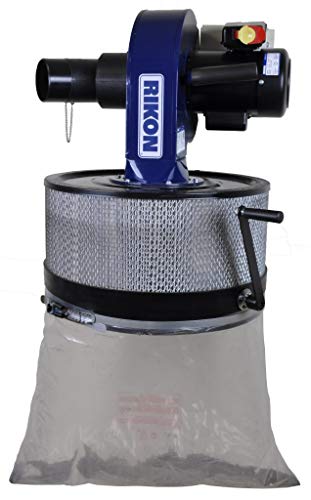
Rikon 1 HP Wall Mount Dust Collector
What We Like
- Space-saving wall-mounted footprint
- Fine 1-micron pleated canister filter
Trade-offs
- No built-in mobility; fixed to the wall
This wall-mounted dust collector is designed to save shop space, fitting into a 24 by 18 inch footprint on your wall. Its 1 HP motor provides powerful suction, rated for either 800 or 1,100 CFM, so it can handle a single large tool under ideal conditions. The included pleated canister filter captures particles down to one micron, which helps keep the air clean.
The trade-off for that compact, wall-mounted design is raw capacity. It can’t match the sustained suction or chip volume of a dedicated cyclone unit like the Jet on a large drum sander or when ducted to multiple tools. For a one or two-machine station in a garage or basement shop, however, the Rikon delivers a powerful, clean-air punch that stays completely out of your way when not in use.
Product photos
VEVOR 1100 CFM Vortex Dust Collector
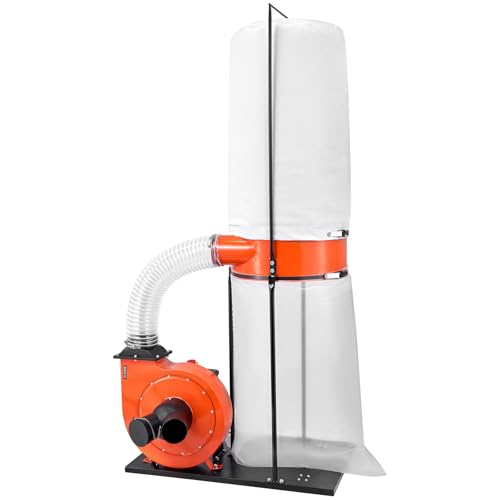
What We Like
- High 1100 CFM airflow for efficient debris collection
- Large 42-gallon bag minimizes emptying frequency
- 2.5-micron filtration improves air quality
- Clip-style bag design simplifies maintenance
Trade-offs
- At 75.6 inches tall, it requires significant vertical clearance
- The 68.1 lb weight makes repositioning a two-person job
Its 1100 CFM airflow and large 42-gallon collection bag mean this collector can handle substantial sawdust from continuous small to medium woodworking jobs, reducing how often you stop to empty it. The 1.5HP induction motor delivers strong, stable suction for both fine and coarse debris, which efficiently clears dust from your workspace. With 2.5-micron filtration trapping fine particles, the exhaust air is cleaner, contributing to a healthier shop environment during operations.
You must account for its substantial footprint. At over six feet tall, you’ll need to check your ceiling height before rolling it in. While the filtration is effective, it doesn’t match the sub-2-micron performance of a dedicated cyclone like the Jet model. For users who prioritize high volume more than ultra-fine filtration, this VEVOR offers a compelling balance of capacity and power without stepping into premium cyclone pricing.
Product photos
How We Evaluated Woodworking Dust Collectors
Our evaluation began with manufacturer specifications and expert round-up reviews to establish a baseline for performance and features. We prioritized three key criteria: airflow measured in CFM for effective debris capture, filtration rating in microns for air quality, and physical footprint for shop compatibility.
What To Look For In Woodworking Dust Collectors
Selecting the right dust collector hinges on matching its capabilities to your shop’s size, your tools, and your health priorities.
Key factors include airflow (CFM), which must be strong enough for your largest tool; filtration fineness (in microns) for clean air; and the unit’s physical footprint, which can be a wall-mount or floor-standing design.
Airflow (CFM)
Cubic Feet per Minute (CFM) measures a collector’s ability to move air and debris. A higher CFM, like the 1300 from the WEN DC1300, is necessary to capture large chips from planers or serve multiple tools. Lower CFM units, often around 560-660 CFM, are sufficient for single-tool collection from sanders or saws. Our research shows that inadequate CFM leads to poor capture at the source in dust collection systems.
Filtration Rating
Filtration is measured in microns, indicating the smallest particle size the filter can trap. Fine sanding dust requires a 1 or 2-micron filter, like on the POWERTEC or Rikon wall-mount units, to protect your lungs. Many general-purpose collectors use a 5-micron bag, which is effective for chips but allows fine dust to pass. For the cleanest air, look for a two-stage cyclone dust collector that separates bulk debris before air reaches the fine filter.
Physical Footprint & Design
Your shop’s available space dictates your collector’s form factor. Large floor-standing units like the Powermatic TurboCone need dedicated floor space but offer high capacity. For cramped shops, small shop dust collectors with wall-mount designs, such as the Rockler Dust Right, save crucial floor area. Consider if you need mobility, many units include casters, or a permanent installation.
- Measure your ceiling height and floor space before shopping.
- Check the inlet port size (commonly 4 inches) matches your tool’s ports.
- Decide if you need a bag for chip collection or a canister for finer dust.
- Consider electrical requirements; some powerful motors need a dedicated 230V circuit.
A good rule of thumb: match the collector’s CFM and port size to your most dust-producing tool.
Woodworking Dust Collectors Compared
The following table provides a quick comparison of our top picks across key specifications to help you narrow your choice.
| Product | Motor Power | Airflow (CFM) | Filtration (Micron) |
|---|---|---|---|
| WEN DC1300 1300 CFM Dust Collector | 14-amp | 1300 CFM | 5-micron |
| Jet Cyclone Dust Collector | 2 HP | N/A | 2-micron |
| Powermatic TurboCone Dust Collector | 3 HP | N/A | 2-micron |
| WEN DC3474 600 CFM Dust Collector | 7.4-amp induction | 600 CFM | 5-micron |
| Bucktool Wall Mount Dust Collector | 1.2 HP TEFC induction | 660 CFM | 2-micron |
| POWERTEC Wall Mount Dust Collector | 1 HP induction | 560 CFM | 1 micron bag |
| Rockler Dust Right Wall Mount Collector | N/A | 650 CFM | 30 micron |
| VEVOR 1 HP Wall Mount Dust Collector | 1 HP induction | 560 CFM | 2.5-micron |
| Rikon 1 HP Wall Mount Dust Collector | 1 HP TEFC 120/240V | N/A | 1 Micron |
| VEVOR 1100 CFM Vortex Dust Collector | 1.5HP induction | 1100 CFM | 2.5-micron |
Frequently Asked Questions
What is the best dust collection system for woodworking?
The best system depends on your shop. For most home shops needing to connect one or two stationary tools, a high-CFM single-stage collector like our top pick, the WEN DC1300, is excellent. For larger shops prioritizing air quality, a two-stage cyclone dust collector like the Jet model is a superior choice.
What is the best dust collector for home use?
For home use, consider space and the number of tools. The WEN DC3474 provides good value and flexibility with wall or mobile mounting. If floor space is very limited, a dedicated wall-mount unit like the Bucktool is a solid solution. More compact options are covered in this guide to dust collectors for small shops.
Which dust extractor is better, Bosch or Festool?
Our research focused on larger workshop dust collectors, not portable extractors. For fine dust capture at a single tool like a sander, a HEPA-rated shop vac is often a better match than a large collector. You can explore the differences between dust collector types to understand their distinct roles.
Which is the best dust collector?
The “best” is the one that fits your specific shop. Our best overall is the WEN DC1300 for its balance of power and utility. However, the best for a cramped garage is the Rockler Dust Right, and the best for fine dust is the POWERTEC with its 1-micron filter. Review our full list of top dust collectors to compare all ten.
Do I need a two-stage dust collector?
A two-stage system, which uses a cyclone separator to remove bulk debris before the filter, is ideal for high-volume shops. It keeps fine filters cleaner longer, maintaining strong airflow. For hobbyists with a single tool, a quality single-stage collector is often sufficient and more budget-friendly.
The Bottom Line
The WEN DC1300 1300 CFM Dust Collector is our best overall pick for woodworkers needing to manage chips and dust from one or two stationary tools effectively. If your budget is tight, the WEN DC3474 provides serious value, while those with dedicated shop space should look at the high-power Jet Cyclone or Powermatic TurboCone systems.
Ultimately, the most important factor is matching the collector’s airflow and footprint to your actual shop and tools. A powerful collector you can’t fit or plug in is less useful than a right-sized unit that runs every time you flip a switch.
