
Heat Gun Alternatives for DIY Projects: How to Choose
This post contains affiliate links. As an Amazon Associate, we earn from qualifying purchases.
A hair dryer, household iron, or even a soldering iron can work as a heat gun alternative for low-temperature tasks like removing stickers, gentle thawing, or shaping thin plastics. For jobs requiring over 300°F, like stripping paint, bending PVC, or professional-grade heat shrink tubing, a dedicated heat gun is essential. The core mismatch is temperature: hair dryers max out around 170°F, while heat guns start at 392°F and reach over 1,000°F.
That temperature gap isn’t a minor detail. It’s the line between a successful workaround and a melted project, or worse, a fire. Choosing the right substitute means matching the tool’s maximum output to the material’s specific heat requirement. Some plastics become pliable at 150°F; others need 400°F. Adhesive remover works cold. Shrink tubing needs a brief, intense blast. Understanding heat gun alternatives for diy projects is key to this selection.
What follows is a breakdown of five common heat gun alternatives for diy projects, the exact tasks each can handle, and the point where you must stop and buy the real tool. We’ll walk through specific techniques for using an iron on craft foam and a hair dryer on shrink wrap, with the timelines and distances that actually work.
Key Takeaways
- According to one industry analysis, a typical hair dryer maxes out at around 170°F, while heat guns start at 392°F and reach over 1,000°F. Using a hair dryer for high-heat tasks will fail and may overheat the dryer.
- For shaping materials like EVA foam, a household iron on a cotton setting provides broad, consistent heat and works better than a hair dryer.
- Never use a heat gun or any high-heat alternative to strip lead-based paint. The Wagner 1000-series manual explicitly states this should only be done by a professional.
- Heat shrink tubing needs about 300°F to properly contract. A hair dryer cannot reach this, but a butane torch or soldering iron with a heat attachment can in a pinch.
- If you’re regularly tackling tasks beyond sticker removal, a budget corded heat gun is a safer and more effective long-term investment than constantly adapting inadequate tools.
Hair Dryer vs. Heat Gun: The 600-Degree Gap
The most common reach-for substitute is the hair dryer. It blows hot air. It’s right there in the bathroom. It seems perfect. This is where projects go sideways.
The numbers don’t lie. According to manufacturer specs, a Wagner Furno 500 heat gun outputs approximately 600°C (about 1,112°F) on its HIGH setting. A hair dryer, per industry analysis, typically operates between 100°F and 140°F, with some professional models possibly reaching 170°F. That’s a difference of over 900 degrees Fahrenheit. You aren’t just getting less heat; you’re working in an entirely different thermal league.
Where this goes sideways: Trying to shrink standard 3:1 polyolefin heat shrink tubing with a hair dryer. The tubing requires about 300°F to properly contract. At 170°F, you’ll hold the dryer on it until the motor overheats and shuts off, and the tubing will barely tighten. It creates a weak, unreliable seal.
So when does a hair dryer work? It’s all about low-energy applications.
- Removing stickers or decals: The heat softens the adhesive. Hold the nozzle a short distance away and keep it moving until the adhesive softens.
- Thawing a frozen door lock or pipe: The broad, safe heat is ideal. Just keep it moving to avoid concentrating heat on one spot.
- Drying paint or glue on crafts: The low temperature won’t bubble your project. Use the low setting.
- Embossing powder: It works, but the high airflow will blow powder everywhere. Use the low setting and hold the dryer at a steep angle above the project.
The airflow is also a problem. Hair dryer airflow is designed to be voluminous and diffuse to dry hair quickly. A heat gun focuses its air into a concentrated stream. That’s why a hair dryer is terrible for tasks like bending plastic, it heats a large, uncontrolled area instead of a specific bend line.
The Household Iron: Your Best Bet for Flat Work
If you need to apply broad, consistent heat to a flat or gently curved surface, look past the hair dryer to other heat gun alternatives for diy projects. Your household iron is a more capable substitute. An iron’s soleplate can reach high temperatures on its cotton/linen setting, which bridges a crucial part of the gap between a hair dryer and a heat gun.
I learned this reshaping EVA foam for a costume. A hair dryer made the surface warm and pliable for about ten seconds before it cooled and stiffened mid-shape. Switching to an iron on a wool setting gave me a longer work window, as the heat penetrated the entire thickness evenly.
Technique for shaping EVA foam with an iron:
- Set the iron to a medium heat setting appropriate for the material.
- Place a thin cloth (like a pillowcase) between the iron and the foam to prevent scorching.
- Apply the iron to the area for a short time, applying light pressure.
- Quickly remove the iron and mold the foam. It will hold its shape as it cools.
This method is also excellent for:
- Activating iron-on adhesives (which is its actual job).
- Flattening warped plastic sheets or thin wood veneer.
- Softening old vinyl flooring for patch repairs.
The metal nozzle requires approximately 20 minutes to cool to a point when it can be touched. ITM Mobile Heat MH3/MH5 Manual
That warning from a heat gun manual applies doubly to an iron. Its large metal plate stays dangerously hot long after you unplug it. Always rest it on its heel and keep it away from cords and flammable materials.
When You Need Focused, Extreme Heat
For tasks in the true heat gun domain, stripping paint, bending PVC pipe, soldering, household substitutes fail. Here, your alternatives are other tools designed for high heat, each with major caveats.
| High-Heat Task | Possible Substitute | Critical Limitation |
|---|---|---|
| Paint Stripping | Chemical stripper | Toxic fumes, long dwell time, messy cleanup. |
| Bending PVC Pipe | Propane torch | Extreme fire risk; can scorch/burn plastic easily. |
| Thick Shrink Tubing | Butane torch | Flame can melt insulation; requires precise, quick movement. |
| Desoldering | Soldering iron | Only heats a tiny point, not an area; slow for connectors. |
A butane torch or propane torch can deliver the necessary BTU output. I’ve used a butane torch to shrink large, adhesive-lined tubing on automotive wiring when my heat gun died. It works if you keep the flame moving constantly in a sweeping motion, never pausing. Hold it in one spot for two seconds and you’ll melt the insulation.
The paint-stripping warning is critical. The manual for the Wagner 1000-series heat gun states: “Lead-based paint should only be removed by a professional and should not be removed using a heat gun.” This isn’t scare talk. Heating lead-based paint creates toxic fumes and contaminated dust. If your home was built before 1978, assume the paint contains lead and use a chemical method or hire a pro. This is a paint stripping process that demands respect.
Building a DIY “Heat Gun” (And When To Just Buy One)
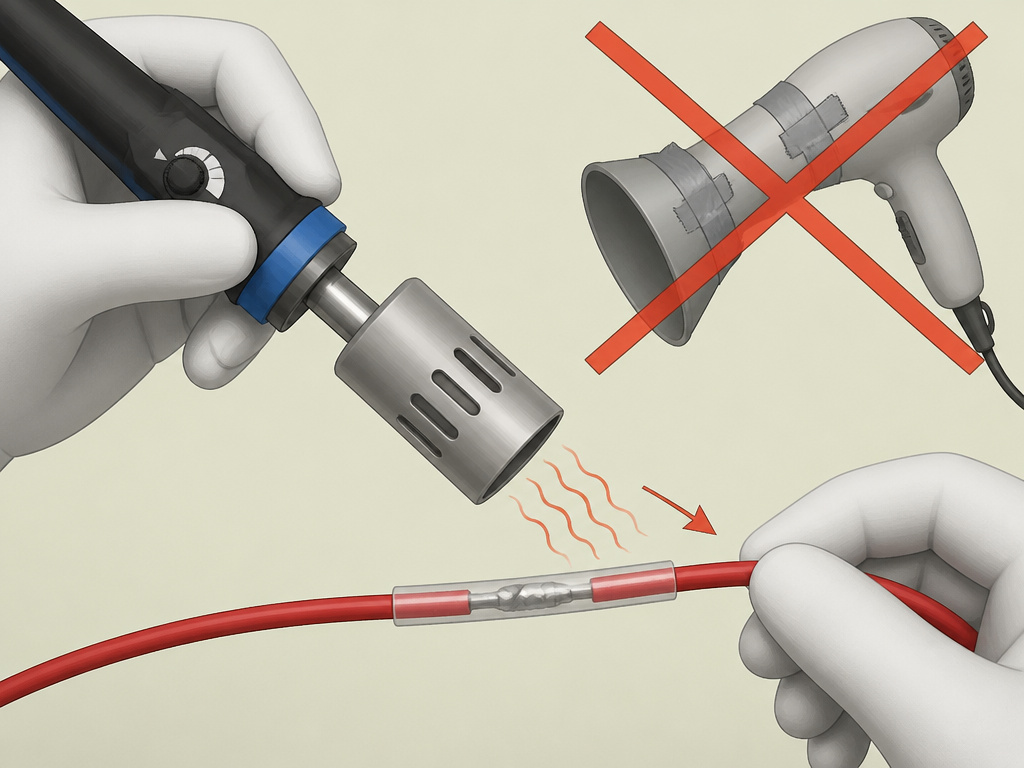
The internet is full of DIY heat gun ideas: attaching a metal tube to a soldering iron, duct-taping a hair dryer to a funnel, or using a space heater and a fan. Most are fire hazards. One marginally plausible method uses a variable-temperature soldering iron with a heat-blower attachment.
These attachments fit over the iron’s element and use a small fan to blow air across it. They can generate high air temperatures, which may overlap with low-end heat gun territory. They’re decent for:
- Localized heat-shrink tubing on electronics.
- Softening small areas of plastic for repairs.
- De-icing locks (though a hair dryer is safer).
They fail at any task requiring sustained, broad heat output. The element overheats, the fan is weak, and the airflow is minimal. You’ll spend more time waiting for it to reheat than working.
| Scenario | Tool to Use | Reason |
|---|---|---|
| One-time sticker removal | Hair Dryer | Already owned, safe, sufficient heat. |
| Weekly craft foam projects | Household Iron | Consistent, broad heat; better control. |
| Wiring a car stereo | Butane Torch | Portable, high heat for shrink tubing. |
| Restoring furniture | Chemical Stripper | Safer than heat for potential lead paint. |
| Any task needing >300°F repeatedly | Corded Heat Gun | Correct tool, safe, designed for the job. |
The reality is, if a project needs more than a minute of heat above 300°F, you’re better off buying a $30-$50 corded heat gun. The time and frustration saved outweigh the cost. A proper tool like the Bosch GHG 180 Professional offers variable heat gun settings and safety features a DIY hack can’t match. It’s the difference between wrestling with a workaround and having the right tool for the job.
Safety First: The Non-Negotiables
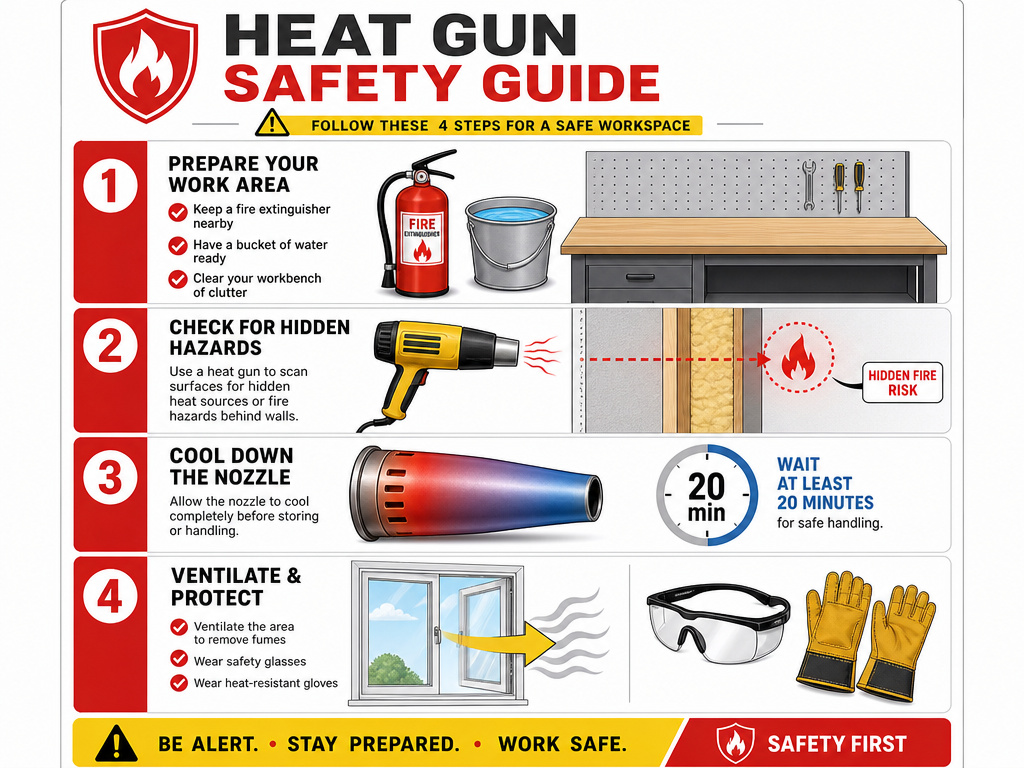
Heat is a fire hazard. Substituting tools multiplies the risk because you’re using equipment outside its design parameters. These rules aren’t optional.
Before you start: Clear your work area of all rags, paper, and solvents. Have a fire extinguisher or a bucket of water within reach. Never leave a heating tool unattended while plugged in, even for a moment.
1. Know Your Material.
Is it plastic? What type? PVC softens around 160°F, but acrylic can crack under direct heat. Is there foam inside a wall or under flooring? The ITM heat gun manual warns that hidden flammable materials behind walls can ignite from hot air tools, and the fire might not be immediately apparent. When in doubt, don’t apply heat.
2. Respect the Cool-Down.
Metal parts stay hot long after the tool is off. The ITM manual notes its metal nozzle takes about 20 minutes to cool to a touchable temperature. Always place a hot tool on a non-flammable, stable surface like concrete or metal, and keep the cord clear. Don’t store it until it’s completely cool.
3. Ventilation is Critical.
Heating plastics, paints, or adhesives releases fumes. The Bosch GHG 180 manual explicitly states to “keep your work area well-ventilated.” Use a fan to push air out a window, or work outside. This is especially crucial if you’re using a hot glue gun or any adhesive, as the fumes can be irritating.
4. Use the Right Protective Gear.
Wear safety glasses to protect from popping debris or hot flecks. Heat-resistant gloves (like leather welding gloves) are essential when handling recently heated materials or tools. A simple cotton glove won’t stop a 400°F burn.
Blow torch as a high-heat alternative
A blow torch provides a direct, focused flame that generates significantly more heat than most heat guns. While heat guns can reach high temperatures, a blow torch delivers intense, localized heat suitable for tasks like soldering pipes, brazing, or removing stubborn paint. This tool operates in a different thermal league, making it effective for metalwork and heavy-duty applications where a broad, hot air stream is insufficient. However, the open flame presents a serious fire hazard and can easily damage sensitive materials like plastics or electronics. It requires careful handling and is not a substitute for the controlled, diffuse heat a heat gun provides for tasks like adhesive removal or plastic shaping.
Frequently Asked Questions
Can a hair dryer melt plastic?
It can soften thin, low-temperature plastics like polyethylene sheeting if held close for a long time. It cannot melt or properly shape engineering plastics like PVC or ABS, which require temperatures above 300°F. You’re more likely to overheat and damage the hair dryer’s motor.
Is a heat gun the same as a glue gun?
No. A hot glue gun melts solid adhesive sticks and extrudes the liquid glue. A heat gun blows hot air to heat objects externally. They are completely different tools for different jobs. You cannot use a heat gun to apply glue, nor a glue gun to shrink tubing. The choice between a high temp glue gun and a low-temp one depends on the materials you’re bonding.
What is the safest alternative to a heat gun?
For low-heat tasks (under 170°F), a hair dryer on its lowest setting is the safest common alternative. Its built-in thermal cut-off will shut it down before it reaches dangerous temperatures. For tasks needing more heat, a household iron is safer than open flames, provided you use a cloth barrier and keep it moving.
Can I use a lighter instead of a heat gun for shrink tubing?
You can, but it’s risky. A lighter produces soot that can dirty the tubing and an open flame can easily burn or melt the insulation. If you must, use a butane torch lighter for a cleaner flame, keep it moving constantly 3-4 inches away, and use the lightest touch possible. For clean, reliable results, a heat gun is the only right tool for applying heat shrink tubing.
How do I choose between a corded and cordless heat gun?
Corded models (like the Bosch GHG 180) provide consistent, unlimited power and higher maximum temperatures. Cordless models (like the Makita DHG180) offer ultimate portability but are limited by battery life and often have lower max temps. For shop use, go corded. For fieldwork where outlets are absent, a cordless model is worth the trade-off.
Before You Go
The right alternative depends on a single number: the temperature your material needs. Match that to the tool’s output. Under 170°F? A hair dryer might work. Between 200°F and 450°F? An iron could be your answer. Above 450°F? You’re in dedicated tool territory.
If you find yourself repeatedly searching for workarounds for basic tasks, just buy an entry-level heat gun. The mental load of calculating workarounds, combined with the risk of failure, costs more than the tool. For the occasional, low-heat job, your bathroom drawer holds a perfectly serviceable substitute. But know the line, when the project demands real heat, only the real tool will do.
